The Fall of the Riders
EragonThe Fall of the Riders is the destruction of the ancient Dragon Rider order and the decisive turning point that made Galbatorix the ruler of Alagaësia. Once protectors whose power sustained peace, prosperity, and cooperation among humans, elves, dwarves, and dragons, the Riders were brought down not by an external army but by betrayal within their own ranks. Their defeat left behind ruined citadels, a scattered memory of their former greatness, and a continuing struggle over whether dragons and Riders would ever return.
The Golden Age and Its Vulnerability
Before the fall, the Dragon Riders had existed for thousands of years as guardians of the land. Their mission was to protect and guard, and their martial prowess was said to equal the strength of ten men. They were effectively immortal unless killed by a blade or poison, and they used their powers for good. Under their tutelage, cities and towers were built from living stone; while the Riders maintained peace, Alagaësia flourished, wealth entered its cities, and human prosperity expanded. Elves were allies and dwarves were friends, so the order represented not merely a military force but a political and cultural bond among several peoples.
That golden age had already been shaped by an earlier catastrophe. A long war between elves and dragons began after an elven youth killed a dragon while treating it as ordinary game. The dragons retaliated against the elf and then attacked the elven nation, while the elves struggled to communicate with them and eventually fought for survival. The conflict lasted five years and might have continued much longer if an elf named Eragon had not found a dragon egg. In this history, the Rider order emerges as the answer to a failure of understanding: a means of binding former enemies into a lasting peace. The later fall therefore reverses the order’s original achievement, turning internal mistrust and violence against the institution that had once reconciled opposing peoples.
Galbatorix and the Internal Betrayal
The collapse began with Galbatorix, a powerful boy born in Inzilbêth, a province that no longer exists. Tested at the age of ten, he was accepted by the Riders because great power was found within him. His catastrophe began after his dragon died. Galbatorix survived the attack that killed it, was carried to the Riders’ holdings, healed, and slept for four days. When he awoke, he showed no outward sign of the fevered state that had seized his mind. Before the council convened to judge him, however, he demanded another dragon. The desperation of that demand revealed his madness, and when the council denied him, he came to believe that the Riders themselves were responsible for his loss.
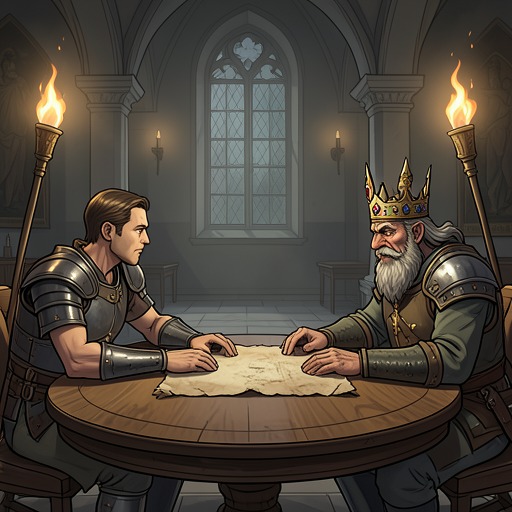
Galbatorix converted grievance into conspiracy. He found a sympathetic Rider, planted resentment through persistent reasoning, and used dark secrets learned from a Shade to turn the Rider against the elders. Together they lured an elder into a trap and killed him. Once the murder was complete, Galbatorix immediately betrayed his accomplice and slaughtered him as well. The Riders discovered him with blood on his hands, but he escaped into the night and remained hidden for years in wastelands, living like a hunted animal while watching for pursuers. The order’s greatest danger was thus not simply Galbatorix’s power. It was his ability to exploit the order’s own knowledge, grievances, and trust until its ideals became instruments of destruction.
His return was enabled by Morzan, a young Rider described as physically strong but weak-minded. Galbatorix persuaded Morzan to leave a gate unbolted at the citadel of Ilirea, later called Urû’baen. Through that opening he entered and stole a dragon hatchling. Galbatorix and his new disciple then hid in a place where the Riders dared not go. There Morzan underwent a dark apprenticeship, learning forbidden magic and secrets that should never have been revealed. When the black dragon Shruikan had fully grown and Morzan’s instruction was complete, Galbatorix revealed himself to the world with Morzan beside him.
The Destruction of the Order
Galbatorix and Morzan attacked every Rider they encountered. Each victory increased their strength, and twelve additional Riders joined them, driven by desire for power or revenge against perceived wrongs. Together with Morzan, those twelve became the Thirteen Forsworn. The Riders were unprepared for the onslaught and fell beneath it. The rebellion that had begun as one man’s private grievance became an organized conquest, with treachery, forbidden knowledge, and accumulated victories supplying the force that the original order could no longer contain.
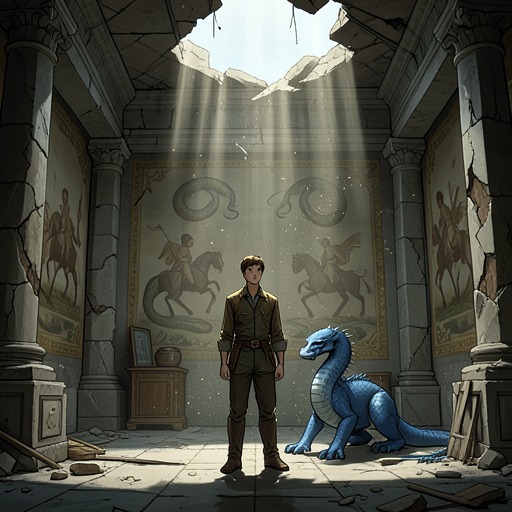
The elves resisted bitterly, but Galbatorix’s forces eventually overthrew them and drove them into secret places from which they no longer emerged openly. The fall therefore extended beyond the Riders themselves: it shattered the alliance that had helped sustain Alagaësia and displaced one of the realm’s major peoples. The order’s ancestral home, Vroengard, was later remembered as a looted and empty shell haunted by strange beasts. At its center stood Dorú Areaba, the abandoned city that had once embodied Rider glory. The geography of the surviving world preserves this defeat as a pattern of absence: a former center becomes a ruin, a homeland becomes forbidden emptiness, and a living order survives only in stories and relics.
Only Vrael, the leader of the Riders, could still resist Galbatorix and the Forsworn. Ancient and wise, he attempted both to save what remained of the order and to keep the remaining dragons from falling into enemy hands. In the last battle, fought before the gates of Dorú Areaba, Vrael defeated Galbatorix but hesitated before delivering the final blow. Galbatorix exploited that hesitation, struck Vrael in the side, and forced the wounded leader to flee to Utgard Mountain in hope of recovering his strength. He was found there before he could do so. During their final fight, Galbatorix used an underhanded kick to the fork of Vrael’s legs, gained dominance over him, and removed his head with a blazing sword. The death of Vrael is consequently both a military defeat and a symbolic severing: the last figure capable of embodying the old order is physically and politically cut down.
Ruins, Memory, and Galbatorix’s Rule
With power surging through his veins after Vrael’s death, Galbatorix proclaimed himself king over all Alagaësia. From that day onward, he ruled the realm. The fall therefore ends not with the disappearance of a military faction alone but with the installation of a new sovereignty founded on conquest and the destruction of its predecessor. The Riders’ former mandate was to protect and guard; Galbatorix’s authority arises from killing, betrayal, and the concentration of power in one ruler and his black dragon, Shruikan.
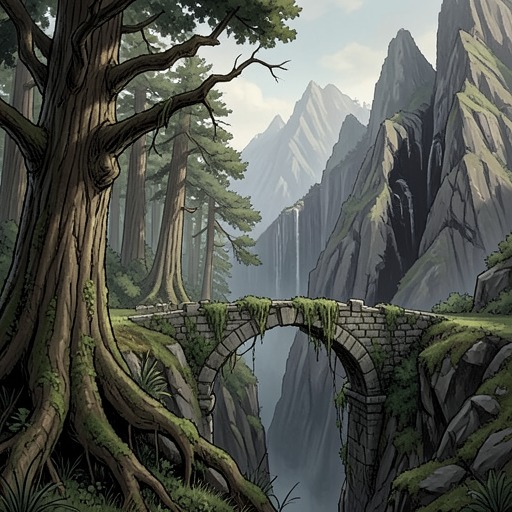
Utgard preserves the fall in physical form. A crumbling tower stands on the mountain’s peak as an outpost of the Riders that survived from the order’s founding. It was the refuge where Vrael was found and defeated through treachery. The bastion had once been called Edoc’sil, meaning “Unconquerable,” because the mountain was so steep that no one could reach its summit without flight. After Vrael’s death, commoners called the mountain Utgard, but the Riders knew the outpost by another name, Ristvak’baen, the “Place of Sorrow.” The altered names register the movement from confidence to grief: an impregnable stronghold becomes a memorial to defeat, while the ruined tower remains as a tangible remnant of a tradition that time has tarnished but not erased.
The historical consequences remain active long after the order’s destruction. Galbatorix salvaged three dragon eggs during his last great battle with the Riders and kept them in his possession. After Saphira hatched, only two remained. The Varden and the Empire therefore fought not simply for territory or population but for control of the next generation of Riders. Galbatorix sought people for whom his eggs would hatch, while the Varden tried to kill his candidates or steal the eggs. The old fall thus produces a new political race: the vanished order’s future is treated as the decisive resource in the struggle against the king who destroyed it.
Narrative and Thematic Significance
The Fall of the Riders reaches Eragon first as a spoken memory rather than as an event he witnesses directly. Brom presents the account as incomplete and fragmented, asking his listeners to treasure what memory preserves because without the act of hearing it, the past would not continue to exist. His narration gives the fall the shape of a lament: the story begins with a golden age, pauses over betrayal, and ends with the blunt fact that Galbatorix has ruled ever since. Brom’s sadness makes history emotionally present while also emphasizing its imperfection; what Eragon inherits is not a complete archive but a damaged tradition that must be understood through ruins, relics, and partial testimony.
The fall also establishes the central inheritance imposed on Eragon. Zar’roc, a Rider’s sword with a wine-red sheath, a ruby in its gold pommel, an iridescent red blade, and a black symbol repeated on the sheath and metal, survives as an artifact of the destroyed order. Its elven forging makes it eternally sharp and resistant to staining, giving the weapon a physical endurance that contrasts with the Riders’ political extinction. Likewise, Vroengard and Dorú Areaba remain on the map as names attached to glory, plunder, abandonment, and danger. Even the revelation that further dragons exist transforms the past into an immediate obligation: the end of the old Riders has not ended the contest over their legacy.
The memory of the fall finally points beyond Galbatorix’s apparent victory. After Eragon defeats Durza, a hidden figure identifies himself as Osthato Chetowä, the Mourning Sage, and Togira Ikonoka, the Cripple Who Is Whole, claiming to have answers and directing Eragon to trust Arya and go to Ellesméra. The message does not undo the Riders’ destruction, but it implies that knowledge survived in forms the Empire failed to erase. The fall is therefore both an ending and a buried beginning: a vanished order becomes the historical wound through which new Riders, new alliances, and a possible challenge to Galbatorix’s rule enter the story.