The War Between Elves and Dragons
EragonThe War Between Elves and Dragons was an ancient, five-year conflict between two powerful peoples who initially lacked any means of communication. A young elf’s killing of a dragon provoked retaliatory slaughter, and the resulting cycle of violence threatened the survival of both sides. The war’s eventual settlement created the Dragon Riders as mediators, turning an apparently irreconcilable feud into the foundation of a political and cultural order that later shaped the history of Alagaësia.
Origins and Misunderstanding
The war belongs to the deepest history of Alagaësia, a period when dragons, dwarves, and a few other peoples were regarded as the land’s original inhabitants. The dragons had lived there before the arrival of the elves, powerful and proud in what Brom describes as their elemental nature. The arrival of the elves disrupted that previously unchanging world, but the first decisive violence came from an error in perception rather than an announced campaign.
The elves initially treated dragons as ordinary animals. An impetuous elven youth hunted and killed a dragon as though he were hunting a stag. The dragons answered by ambushing and slaughtering the elf, then widened their retaliation into an attack on the entire elven nation. The elves recognized the terrible misunderstanding and attempted to stop the hostilities, but they could not find a way to communicate with the dragons. Without communication, grief and fear became indistinguishable from deliberate aggression, and a single killing expanded into collective war.
Course and Participants
The conflict lasted five years. At first, the elves fought defensively because they were reluctant to intensify the fighting, but the dragons’ ferocity eventually forced them to attack for their own survival. The opposing sides were therefore not presented as simple embodiments of good and evil: each acted under pressure from the other’s violence, while the original cause of the war remained a catastrophic failure of understanding.
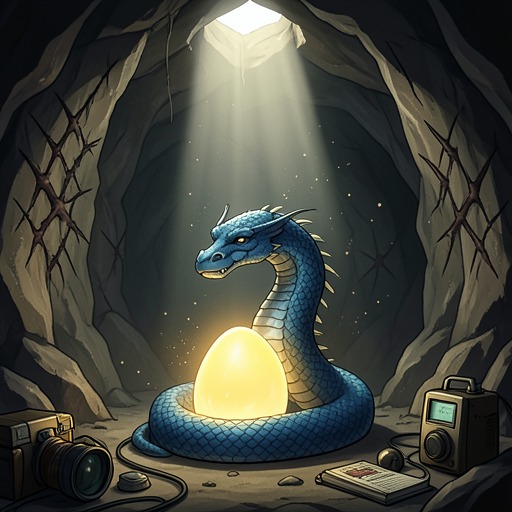
The war would have continued much longer if an elf named Eragon had not found a dragon egg. This ancient Eragon is distinct from the later human character who bears his name, a coincidence that unsettles the younger Eragon when Brom reveals it. The discovery supplied the possibility that weapons and retaliation could not: a relationship formed through care, knowledge, and shared experience.
Settlement and the First Riders
The ancient Eragon secretly raised the dragon, naming him Bid’Daum in the Ancient Language. When Bid’Daum grew large enough, the two traveled among the dragons and persuaded them to live peacefully with the elves. The narrative therefore makes reconciliation a lived achievement rather than a treaty imposed from outside. The dragon and elf first establish trust between individuals, and that trust becomes the basis for peace between peoples.
Treaties followed between elves and dragons. To prevent another war, the two races established the Dragon Riders. Their original purpose was practical and limited: they served as a means of communication between elves and dragons. Over time, however, the Riders’ value was recognized and their authority expanded. Their institution became the principal political consequence of the war, transforming an emergency mechanism for translation into a major power in Alagaësia.
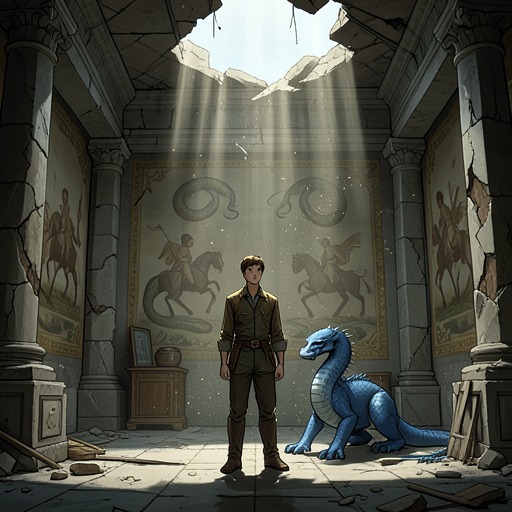
The Riders eventually made Vroengard their home and built Dorú Areaba there. Before Galbatorix overthrew them, they held more power than all the kings of Alagaësia. Their rise thus contains an important historical reversal: an institution created to mediate between species became a civilization-shaping authority, while the peace it embodied later became part of the lost golden age remembered by Brom.
Historical Memory and Later Conflict
Brom presents the war as part of the origin story of the Dragon Riders, whose mission was to protect and guard. In the Riders’ later golden age, their unmatched prowess and long service helped the land flourish; elves were allies, dwarves were friends, cities and towers were built, and human prosperity expanded. The war’s settlement therefore reaches far beyond its immediate participants. It creates the conditions for cooperation among peoples that had once been separated by fear and bloodshed.
The conflict also provides a structural contrast with the later collapse of the Riders. The ancient war is resolved through communication and shared institutions, whereas Galbatorix’s rebellion exploits secrecy, forbidden knowledge, betrayal, and the desire for power. Galbatorix and Morzan later use violence to destroy the order the first Riders were created to preserve. The memory of the elves and dragons learning to coexist consequently stands behind the political crises of Eragon’s own time, when the Varden, the Empire, the elves, the dwarves, and the dragons remain divided by suspicion and war.
Vroengard and Dorú Areaba survive in Eragon’s geographical imagination as an emptied, looted remnant of former glory. Their ruined condition makes the war’s legacy tangible: reconciliation produced a civilization, but civilization was not permanent. Even the ancestral home of the Riders has become a haunted shell, so that the landscape records both the success of the original peace and the fragility of the order built upon it.
Narrative Significance
The War Between Elves and Dragons functions as a founding myth for the world’s central relationship between dragons and Riders. It joins opposites that first appear irreconcilable: animal and person, instinct and language, nature and culture, inherited hostility and chosen partnership. The Dragon Riders are the story’s mediating form, created not because conflict was inevitable but because communication was finally made possible.
Its significance also lies in the way history is transmitted. Brom recounts the war as an imperfect, abbreviated memory, placing it within a larger tradition of stories whose details may be uncertain but whose consequences remain decisive. Eragon’s accidental inheritance of the ancient Rider’s name further links personal identity to buried history. The younger Eragon enters a world whose institutions, ruins, legends, and political struggles all descend from a peace achieved long before his birth.
By connecting the first dragon-human partnership to the later Dragon Riders, the war establishes a pattern that the wider narrative repeatedly revisits: violence may begin through ignorance, but survival depends on recognizing the other as a participant rather than an object. The war is therefore not merely an ancient battle. It is the formative crisis from which the Riders, their authority, their golden age, and the possibility of renewed cooperation all emerge.