Bill's coming out and family breakdown
ErasureBill Ellison’s disclosure that he was gay marks a rupture in his marriage and family life, but the scene also shifts the burden of caregiving onto Thelonious Ellison. Bill recounts the consequences at a kitchen table; his acceptance of responsibility earns his brother’s respect, while his financial and personal collapse makes Thelonious feel that leaving Washington is no longer a viable choice.
The Disclosure and Its Consequences
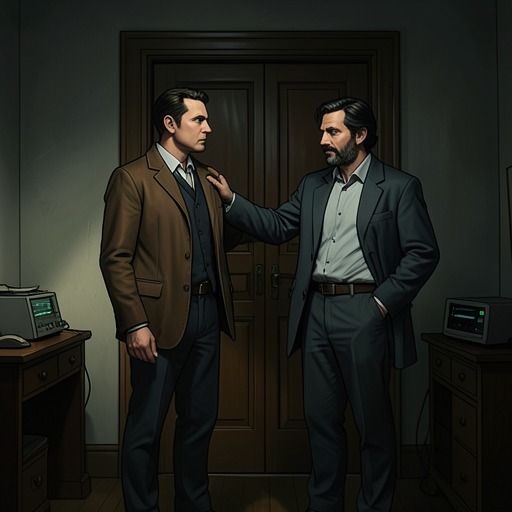
When Thelonious asks where Bill’s wife and children are, Bill explains that he told Sandy he was gay. Sandy took him to court and, as Bill describes it, took the children, the house, the money—everything. He says that his medical practice is failing because everyone now knows he is gay. The disclosure thus reaches beyond the marriage: it is followed by legal and financial losses and the erosion of his professional life.
Bill’s account makes clear that the crisis has a longer history. He says he lied to Sandy for fifteen years and acknowledges that she believes he endangered her life. He accepts that the judge believed her, and that his children are confused and may take time to understand what happened—if they ever do. Rather than present himself as wronged, he says he deserves what he got. His account holds the consequences together: estrangement from his children, debt exceeding his income, and a life in Arizona that he describes as having been reduced to almost nothing.
Bill’s Accountability and Thelonious’s Response
Thelonious feels sorry for Bill and is impressed by the understanding with which he responds to Sandy’s anger and the children’s confusion. That respect does not erase the devastation of the situation. Thelonious notes that the most significant part of Bill’s admission of guilt and failure is that he owes more money than he makes, a detail that makes the family crisis concrete in economic terms.
The exchange also turns Thelonious’s attention toward their mother. She needs care, and he does not believe Bill is capable of providing it. Lorraine is nearly as old as their mother and, as far as Thelonious knows, has no family of her own who might take responsibility. Bill’s circumstances therefore do more than reveal the state of his own household: they leave Thelonious facing the practical question of who will care for the people still at home.
The Pull Back to Washington
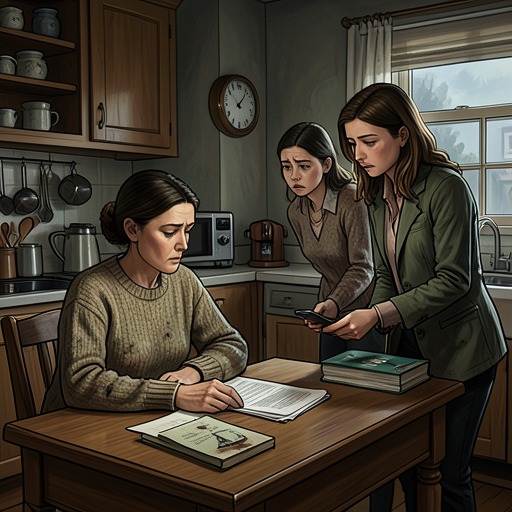
As the implications settle in, Thelonious describes a physical reaction: his skin crawls, his head aches, and his neck itches. Sitting with Bill at the kitchen table, he is already packing up his apartment in Santa Monica in his thoughts. He imagines telling his mother he will return, taking leave from teaching, putting his belongings into storage, flying east, and moving in with her and Lorraine. The sequence is presented as an imagined course of action, not as a completed move in this scene.
Later, alone in the old family house, Thelonious tries to control his anxiety over a pot of tea while Bill and the others sleep. The house’s creaks and groans draw his attention as he considers whether his reasoning for coming to Washington and entering that household has been premature; he cannot dispel the thought. Bill’s disclosure has made the family’s needs harder to ignore. Thelonious concludes that, through guilt if not yet through a completed decision, he is already as good as there.