Die Gesellschaft als Irrenhaus
FabianDie Gesellschaft als Irrenhaus is a satirical concept in which social “madness” is not confined to the people labeled insane: it describes a city whose ordinary routines coexist with exploitation, political violence, and an alarming refusal to recognize danger. The novel’s warning is sharpened by its form. Erich Kästner calls the book a satire that deliberately distorts the urban conditions it depicts, using caricature to force attention to a crisis that ordinary representation might leave unseen.
The City as a Social Diagnosis
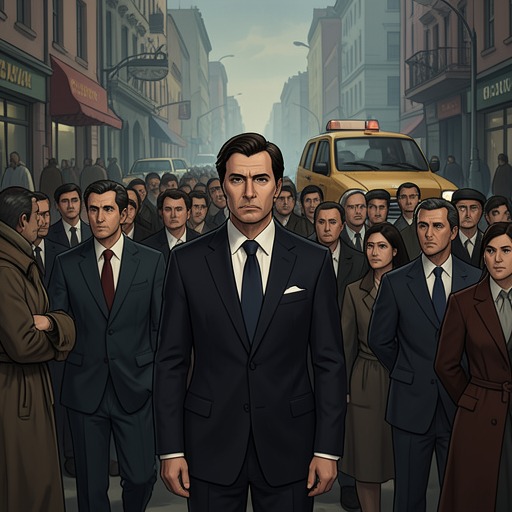
Fabian’s nighttime account to Fräulein Battenberg divides the city into territories of crime, swindling, misery, and sexual exploitation. The stone city, he says, remains almost as it was, but its inhabitants have become like people in an asylum; the list of neighborhoods culminates in the judgment that downfall lives in every direction. The catalogue is deliberately compressed and extravagant, turning the urban map into a moral diagnosis rather than a neutral description. When Fräulein Battenberg asks what comes after downfall, Fabian answers that he fears stupidity. The exchange makes folly not a private defect but the force that may follow—and perpetuate—social collapse.
That diagnosis also unsettles the distinction between the sane observer and the disordered world. Fabian presents his rule of thumb as a practical hypothesis: everyone, except children and the elderly, should be regarded as mad until the contrary is proved beyond doubt. Its deadpan usefulness depends on treating social behavior itself as suspect. The rule is not offered as a medical classification; it is a defensive reading practice for navigating a world in which respectable appearances cannot be trusted.
Institutions and the Uses of Madness
The novel makes institutional confinement part of this unstable boundary. An elderly inventor, expecting his family to have him taken back to an asylum, says he does not object because the park is pleasant and the doctor tolerable; he has escaped before and expects he can leave again. He describes his relatives as hoping to seize his notes and turn them into money, then insists that he is not mad but too sensible for them. His account reverses the expected authority of diagnosis: the institution may offer quiet, while the family’s interest in his papers gives the supposed custodians a less reassuring motive.
A different form of vulnerability appears when a man with a wooden leg enters an artist’s gathering looking for Kulp. Money changes hands, and he asks the others to leave, only to retract his request as a joke. The scene places bodily disability, payment, sexual bargaining, and the room’s shifting performance of amusement together without making them equivalent. Elsewhere, Fabian identifies a doctor in evening dress as a medically trained former student who now writes morphine prescriptions and fears eventual arrest. Medical knowledge, legal permission, addiction, and disguise coexist in the character’s precarious livelihood; the scene makes social abnormality difficult to separate from the institutions that regulate it.
Political and Historical Disorder
The image of a society behaving like an asylum extends beyond private and sexual life into politics. During a conversation about whether the reasonable and just will ever gain power, a burst of gunfire draws Fabian and Labude toward the Märkisches Museum. They find a wounded young man who explains that an argument began in a tavern after another man drew a swastika on a tablecloth; after an exchange and a blow, the landlord expelled them, but the other man followed and shot him. The incident’s immediate cause is small, yet its political symbols and retaliatory violence make the street an extension of a wider conflict.
As Fabian goes for a taxi, his heart pounds, and the gunfire opens into memories of men mutilated in the First World War. He imagines the wounded soldiers still living in isolated provincial institutions, fed through glass tubes, while their families have been told they are missing. The contrast is bitter: killing such men would be called a sin, but the war was allowed to destroy their faces; private grief is meanwhile organized around the fiction that they are dead. The memory turns the present shooting into a warning about the persistence of violence and the society’s capacity to conceal its human consequences.
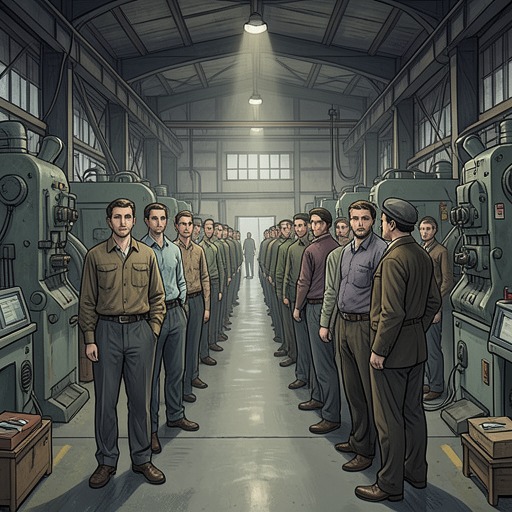
The Wedding clashes make that political disorder collective and visible. At Weddingplatz, police block the route as workers approach; mounted police wait behind the line, while uniformed working-class policemen face civilian workers. Songs give way to angry shouting, then the police advance and the two sides collide. Mounted officers charge, shots break windows, stones fly, an officer is stabbed, and police with batons drive the crowd away as reinforcements arrive on trucks. A few streets later, the noise has receded enough for the city to seem orderly again. The sudden return of apparent calm is itself part of the indictment: violence can be cordoned off, dispersed, and treated as though it had not exposed a deeper rupture.
Moral Warning and the Ending
The book’s preface makes explicit that its exaggeration serves a warning. Its original title, Der Gang vor die Hunde, was meant to signal Germany’s and Europe’s approach to an abyss. Mass unemployment, the depression that followed economic crisis, the desire for intoxication, and the activity of unscrupulous political parties are named as storm signs; alongside them stands the “paralysis of hearts,” a widespread inability to respond. Those who tried to resist were pushed aside while crowds listened to sellers of poisonous, supposedly ready-made solutions. The asylum image gathers these conditions into a judgment on collective perception: the danger lies not only in destructive acts, but also in the public’s readiness to accept them as normal.
Kästner describes the novel as a moral satire, not a photographic record: the moralist holds up a distorting mirror and uses caricature as a last means of making himself heard. The concept therefore joins the book’s comic grotesques to its political alarm. Its final test is action. When a boy falls into the water, Fabian removes his jacket and jumps in to save him; the boy reaches shore, but Fabian drowns because he cannot swim. The ending does not erase the novel’s portrait of social folly. It leaves instead a sharp contrast between a society habituated to looking on and a man who, at the decisive moment, acts—and dies in the attempt.