Ava Jane Halloway
FirebugAva Jane Halloway lives between the ordinary life she performs and the dangerous supernatural identity she keeps concealed. A Firebug capable of setting fires by thought alone, she disguises that power even in small, intimate moments; meanwhile, the Coterie claims her through blood and demands that she treat its authority as family. Her story’s central tension is therefore not simply whether she can use her power, but whether she can decide who she belongs to and what her hidden life will cost the people close to her.
Identity and Concealment
Ava presents herself to Ryan James as an ordinary human girl. When he needs a light for his cigarette, she uses an old-fashioned Zippo, though it is an empty prop with neither fluid nor flint. The performance is necessary because Ryan does not know what she is. In reality, she can set the bench beneath them and every boat in the harbor on fire simply by willing it. The contrast between a useless lighter and power that could engulf the harbor condenses the double life she maintains: what Ryan sees is an everyday gesture; what she hides could become a catastrophe.
Her ability is not shown as an effortless freedom. Concealment shapes what she can reveal and how she behaves around someone she is dating. In the scene with Ryan, the lighter lets her participate in an ordinary exchange without exposing the supernatural force behind it. The detail also makes the danger of discovery concrete: her apparent normality is not the absence of a secret, but a practiced cover for a power with a far wider reach than the object in her hand suggests.
Name and Coterie Claim
During a Coterie ceremony, Venus addresses her as Ava Jane Sheppard. Ava corrects the name: she is Halloway now. She has no family she feels compelled to honor through her former name, and her mother’s name carries Coterie associations she would rather avoid. Taking Cade’s surname makes sense to her. The correction is brief, but it is one of the clearest acts of self-definition in a scene designed to take control of her identity.
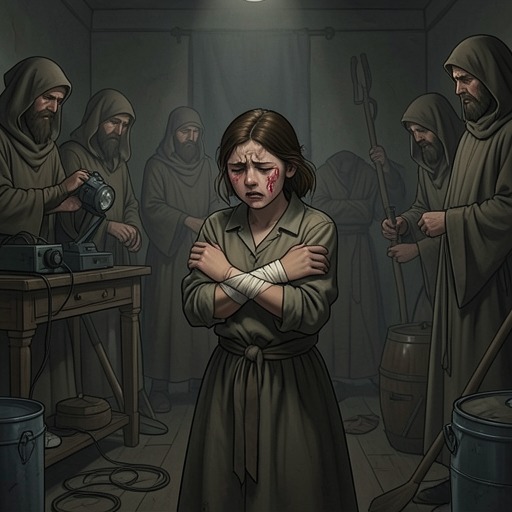
The ceremony makes that struggle physical. A witch’s ash activates marks drawn on Ava’s skin, and the warding burns badly enough to bring her to her knees. Venus then takes her hand and cuts it with a silver knife. She places her fire-rune ward in Ava’s palm, where it disappears into the blood and ash. While the ritual is under way, Venus declares that Ava belongs to the Coterie and that it is now her family and lifeblood. She speaks of Ava’s heart, thoughts, speech, movement, and direction as belonging to the organization. The words frame obedience not as a limited obligation but as a claim over the whole person.
Ava cannot pull her hand from Venus’s grip. Her wound is handled by the witch, who draws blood into a vial, while Venus retrieves her own ward from the hot coals. Ava presses her bandaged hand close and considers turning her power against Venus, but keeps her fingers covered. Even as the ceremony asserts control over her body and allegiance, her thoughts retain a measure of defiance. Her choice to name herself Halloway and her impulse to burn Venus do not undo the Coterie’s claim, but they show that the ritual has not made her inwardly willing.
Family History and the Cost of Belonging
Ava’s understanding of intimacy has been shaped by what her mother taught her about loving a Firebug. Her mother treated serious commitment as something to avoid: keep relationships light, do not invite complications, and especially avoid having children. When she discovered she was pregnant, she disappeared to escape the Coterie. She had already spent much of her young life working for the organization and for Venus, and feared that it would claim her child as well.
That fear extended to two possible futures for Ava. If Ava inherited Firebug abilities, the Coterie might force her to work for it for her entire life. If she were human, she could still be used as leverage against her mother. Her mother also worried that Venus might force Ava’s father into serving as a breeder. The flight from the Coterie was thus an attempt to protect both parents and child from an organization that could turn a family relationship into a means of control. Ava’s own ceremony repeats the threat in another form: the Coterie calls itself her new family at the very moment it asserts authority over her blood and choices.
Relationships and the Ordinary Life She Performs
Ava and Ryan date, hold hands, and share intimate moments, but Ava does not regard him as a true friend. Their relationship lacks the ease and candor she associates with close companionship: they would not spend an unguarded evening in pajamas watching movies or exchange best-friend bracelets. The obstacle is not a lack of time together but the persistent deception between them. Ava is a walking secret, and she often invokes a sick grandmother to cancel a date when she is actually carrying out Venus’s work. Even as Ryan’s girlfriend, she cannot let him see the life that governs her choices.
Their exchanges show both the pull and the limits of that connection. Ryan sprawls across a bench and uses Ava’s lap as a pillow; when he asks her to discuss Lord of the Flies rather than write his paper, she resists the request as cheating. He tries to persuade her with an exaggeratedly pleading expression and his hazel eyes, which she recognizes as an effective tactic. Elsewhere, they talk about the book: Ava objects that the stranded boys do not try fishing or digging for clams, even though she understands the symbolism of the pig. These mundane details establish a shared, youthful setting, but they also sharpen the divide between Ryan’s visible problems and Ava’s concealed obligations.
Ava’s sense of family is broader than romance. She counts Cade, Lock, Ezra, and Duncan among the people closest to her, while describing Cade as more family than friend and placing him first in part because he regularly feeds her. Sylvie occupies a more qualified place: Ava considers her a friend in some respects, but keeps the supernatural truth about herself, Lock, and Ezra from her for safety. These relationships reveal a pattern of care governed by secrecy. Ava can feel close to people while withholding the very knowledge that would explain why she is often absent or constrained.
Narrative Significance
Ava’s concealed power and divided attachments make the gap between outward appearance and private reality a defining feature of her characterization. The empty Zippo, the cover story used to cancel dates, and the bloody hand at the Coterie ceremony are different forms of the same pressure: she must manage what others are allowed to know about her. Her mother’s escape shows that this pressure predates Ava, while the ceremony brings it into the present by converting family language into an instrument of institutional possession.
Against that coercion, Ava’s acts of self-definition are often small and sharply concrete. She chooses the Halloway name, notices the deception inside her relationship with Ryan, and keeps her covered hand from betraying the heat gathering beneath it. None of these actions erases the danger surrounding her, but together they distinguish compliance from consent. Ava’s struggle is to protect the people she cares about without mistaking secrecy for genuine closeness or the Coterie’s claim of family for freely chosen belonging.