Grandma Rose
FirebugGrandma Rose is a familiar presence in Lock’s life and a decisive source of practical care when the injured group reaches her home. She treats Olive’s corrosive wound, tends to Lock and Sid, and gives Ava a warning that reframes what it means to ask others for help. Her care is direct rather than soft-spoken: she assesses, orders, cleans, and repairs, while making clear that protection carries obligations for the person who asks for it.
Identity and Introduction
Grandma Rose first appears at her door, squinting at the visitors before lifting a pair of battered glasses from a chain around her neck. She recognizes Angela and Lock at once. Her memory of Lock reaches back to his childhood, when he hid in her broom cupboard because he was the only boy among the girls; she also recalls that he would sweep her floor after emerging. The exchange establishes long familiarity without suggesting that she is his relative: Angela identifies Lock as her son and introduces the visitors to Rose as friends in need of help.
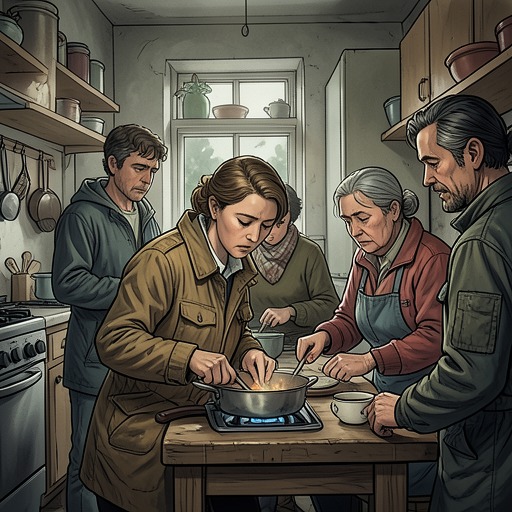
The group includes Sid, Ikka, Ava, Ezra, and Olive, and Grandma Rose quickly takes charge of their arrival. She sends away the other Dryads, keeping Lock’s mother, Angela, and directs the injured Olive to a padded, wipe-clean medical table. The room and its equipment suggest a space arranged for treatment, not merely an improvised response to an emergency. Grandma Rose’s manner is brisk, but her welcome is embodied in action: the visitors have brought her a problem, and she begins assessing it.
Care for Olive
Olive is a member of the Were-hares, whose usual fast healing has been impaired by the corrosive substance spat by the Vodyanoy. Grandma Rose examines Olive’s face, checks her pulse, and listens to her heart with a stethoscope. She has Lock help sit Olive up and assists her in swallowing a thick liquid for pain, then has Lock and Ikka hold her steady while the wound is treated. The sequence is careful and practical, attending both to pain and to the limits of Olive’s natural healing.
Grandma Rose identifies the corrosive as the reason Olive’s body cannot heal normally and explains that cleaning and salving the wound should allow her to recover by morning. Afterward, she applies a thick ointment intended to keep the skin pliant as it heals. She orders rest and has Lock carry Olive to a small guest room with several cots, clean sheets, and quilts. The room’s hospital-like function sits alongside its domestic comforts: treatment does not end when the wound is dressed, but continues through rest and Ikka’s promise to stay with Olive until she falls asleep.
A Working Medical Practice
Once Olive is settled, Grandma Rose turns to the other wounded visitors. She cleans Lock’s injuries, sutures him, and bandages Sid, speaking mainly to tell them to stop moving or to direct the work. Ava fetches what she needs. Rose’s medical authority is shown through concrete tasks rather than a stated title: she examines, cleans, sutures, dresses wounds, and handles medical supplies with practiced decisiveness.
Her working space also has its own routines. After treatment, she puts away unused supplies, rinses tools, and places them in a plastic tub before using a small machine she identifies as an autoclave. Ava helps with the cleanup, receiving a mop and a bucket of water after handing Rose a bottle of cleaner and a cloth. Rose’s care is therefore not just a dramatic intervention at the bedside; it includes the repetitive labor of cleaning, sterilizing, and preparing the space for what may come next. Ava, who dislikes being ordered about, finds that being useful in this work feels good—and, unusually for her, feels like healing rather than causing harm.
Advice and Responsibility
While the tools soak, Grandma Rose gives Ava a broader warning: “Always think what you ask of people, what you’re really asking them to do for you, before you tempt them with it. That goes for weres, and for others, too.” She has just seen Lock put himself into the work of helping the group, and her advice asks Ava to consider not only what she needs but also the cost that others may bear in responding. Her point extends beyond the immediate medical crisis, but it remains rooted in the scene’s visible labor: the injured are being held, treated, and helped by people who have their own risks and limits.
Ava initially receives the warning as an accusation, recognizing that she had not adequately considered what she was asking of Lock or the Were-hares. The thought also takes her back to Ryan and the possibility that her choices have asked things of him without her fully reckoning with them. Overwhelmed, she manages only to move the mop near the bucket before rushing outside. Grandma Rose does not need to know every detail of Ava’s life for her counsel to reach beyond the treatment room; the lesson lands because it names a responsibility Ava already fears she has neglected.
Relationships and Narrative Role
Grandma Rose’s connection with Lock is marked by the intimacy of remembered childhood mischief and by her present willingness to treat him alongside his friends. She does not indulge him during the medical work; she expects him to cooperate, just as she expects the others to follow instructions. That combination of familiarity and discipline makes her home a dependable refuge without turning her into a merely comforting figure.
For Ava, Grandma Rose is both caregiver and moral interlocutor. She accepts the group’s wounded bodies without hesitation, but she also insists that help cannot be separated from the consequences of asking for it. Her role links physical recovery to the novel’s wider concern with chosen obligations: the same network that carries someone through danger can also be placed at risk by their decisions. Grandma Rose’s importance lies in making both sides tangible—in the clean wound, the sterilized instruments, the work shared around the medical table, and the question of what that work has cost the people who stepped forward.