Brittany
FirebugBrittany is a sharp-edged presence in Ava’s early encounters with Ryan and his social circle: she turns private insecurity into public teasing, then treats Ava’s discomfort as an inconvenience. Her insults, a deliberately provocative photograph, and a dismissive exchange at a party establish her as a recurring source of social pressure, while the scenes also show how little she knows about the life Ava is concealing.
Introduction and Social Position
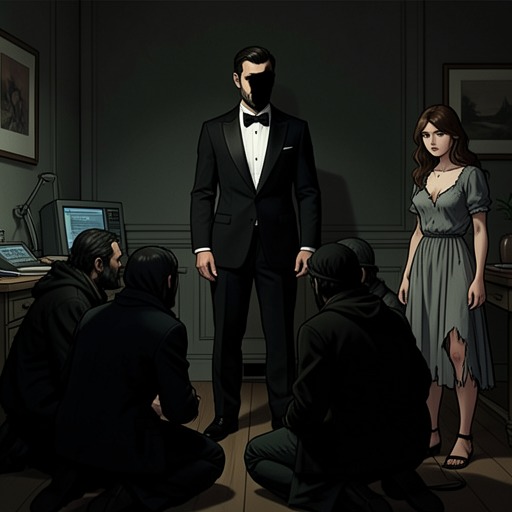
The narration introduces Brittany with an openly hostile label: the “sullen bitch queen of Currant, Maine.” That description conveys Ava’s view of her as a local social ruler, but Brittany’s conduct supplies the evidence behind the judgment. She enters a moment between Ava and Ryan with a disgusted scoff, greets Ryan, and addresses Ava as “homeschool.” The greeting immediately sorts the pair into different positions: Ryan receives casual familiarity, while Ava is reduced to a label.
Brittany’s next word is “Orphan.” The insult targets a painful uncertainty rather than a settled fact. Ava’s mother is dead, but Ava believes her father may still be alive; she simply does not know where he is or who he might be. Ava refuses Brittany’s framing with “Get new material,” then makes a joke about the effort Brittany must expend inventing insults. The exchange establishes a contrast in their methods: Brittany attacks a vulnerable point, while Ava answers with a performance of indifference and wit.
Provocation Around Ryan
The early encounter takes place as Ryan is about to kiss Ava. After Brittany’s interruption and insult, Ava kisses Ryan on the cheek and starts to leave, calling Brittany’s insult-making an adequate reason to go. Ryan grabs Ava’s arm and tells her she does not have to leave. His response places him between the two girls, but it does not end Brittany’s ability to provoke Ava.
Later, while Ava is using her fire to help Cade boil something down, a photograph arrives on her phone. It shows Brittany with her arm around Ryan and her lips pressed to his cheek; Ryan is leaning away, one eyebrow raised in question. The accompanying message addresses Ava as “homeschool” and says Ryan seems lonely, then poses friendship as Brittany’s excuse for being there. The image and message are a calculated pairing: the photograph supplies an intimate-looking scene, while Ryan’s posture complicates its meaning. Brittany’s implication is clear, but the image does not show Ryan willingly returning the kiss.
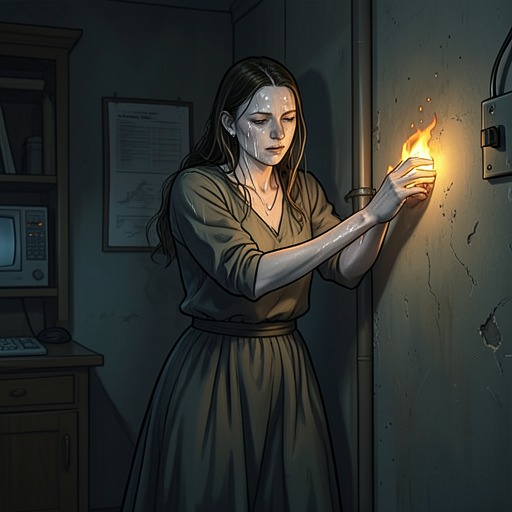
The message affects Ava physically as well as emotionally. The flames rise in a sudden whoosh toward the ceiling, and she has to pull them back before anything is scorched. The smoky ceiling remains to be washed. The scene does not establish Brittany’s knowledge of Ava’s powers; instead, it shows the gap between Brittany’s ordinary social provocation and the hidden danger in Ava’s response.
Clothes, Class, and Social Performance
On Friday night, Ava expects to go out with Ryan but finds herself sharing a Volvo with him, Brittany, and Brittany’s latest conquest. The cramped group setting extends the pressure beyond a one-to-one exchange: Ava is among Ryan’s friends but does not know how to join their conversation. When one of them discusses a party, Ava privately imagines how impossible it would be to contribute the truth about burning creatures for work. Her supernatural life makes the ordinary topics of the car ride feel like a separate social language.
Brittany makes Ava’s clothes the subject of that language. She calls Ava’s outfit “hobo chic” and asks where she got the shirt, using a compliment-shaped question to suggest that it is shabby. Ava shops at thrift stores because her work regularly leaves her clothes scorched, ripped, scuffed, or stained, and because Cade pays for them. That practical explanation remains unspoken. Instead, Ava says the clothes are secondhand and counters with a claim about designer clothing being made in sweatshops by children. She admits to herself that she does not know whether the statistic is true, but Brittany cannot tell; Brittany frowns, traces a seam on her jacket, and looks away first. Ava wins the exchange by making Brittany examine the garment she had used to judge someone else.
Dismissal at the Party
At a later party, Ava feels unwell and tells Ryan she will be less trouble if she leaves before she passes out. Ryan reluctantly takes her to the corner where Brittany and Jeff are making out and explains that Ava wants to go. Brittany barely looks at Ava before answering, “So let her go.” Her lack of attention is part of the slight: Ava’s condition matters less to her than the interruption.
Ava reminds Brittany that they came together. Brittany continues tracing Jeff’s lip and suggests that one of the boys downstairs will give Ava a ride, then proposes the couch in the ladies’ room as a place to lie down. She tells Ava to wait for the feeling to pass and ends by ordering her to go away because she is busy. The exchange makes Brittany’s earlier cruelty more than a verbal game. When Ava needs practical consideration from the group, Brittany will not provide it, and her attention stays with Jeff.
Narrative Role
Across these encounters, Brittany repeatedly measures Ava by visible social markers: whether she is an orphan, whether her clothes look fashionable, and whether her presence interrupts a party. Ava’s concealed circumstances make those judgments especially incomplete. Her clothes are worn because of her work; her awkwardness around Ryan’s friends coexists with a life she cannot disclose; and the orphan insult simplifies a family history Ava herself does not fully know. Brittany functions as a foil to Ava’s guarded humor, but the scenes do not give her a corresponding explanation or change of heart. Her defining pattern here is the ability to make ordinary social settings—an almost-kiss, a car ride, a night out—into tests of who belongs and whose discomfort counts.