Lock
FirebugLock is a half-Dryad, a Coterie operative, and one of Ava’s most steadfast friends. His distinctive power over trees and his steady presence in danger make him a practical ally; his insistence that friendship means following Ava into peril makes him something more intimate: a chosen family member who can challenge her without abandoning her.
Identity and Background
Lock describes himself as “half-dryad, all man.” His mixed heritage also shapes his understanding of family and responsibility. In a conversation with his mother, he explains that his Dryad cousins have children at thirteen, but that he is half-human, was partly raised by a human, and does not consider himself capable of raising children. When his mother suggests he could simply bring a baby—and perhaps the mother—to live with her, Lock refuses, then kisses her forehead. The exchange shows both his firm boundary and his affection: he can say no without turning the disagreement into a break in their relationship.
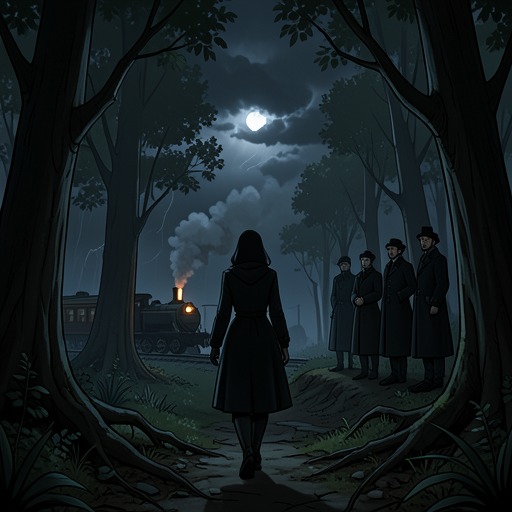
His connection to trees is present even in ordinary life. When Ava joins a maple-sugaring effort, Lock explains that he is there to keep the trees calm because, for some reason, they become nervous around her. The work takes place amid the practical routines of the group: sap must be kept cold, boiled down over several hours, and reduced at a rate of forty gallons to one gallon of syrup. Ava supplies part of the fire, while Lock’s presence addresses the trees themselves. His supernatural nature is not separated from daily labor; it belongs among the group’s shared chores, teasing, and company.
Work, Powers, and Tactics
Lock works alongside Ezra on missions for the Coterie and helps collect Ava when Venus sends the group out. Their safety arrangements are explicit: Lock and Ezra show Ava their wards before she gets into the car, and she checks for the rune for fire on the silver charms around their necks. The routine exists because Ezra once forgot his ward and had to pay a Coterie witch to regrow his eyebrows. Lock’s role in this procedure is part of a broader pattern: he anticipates danger and treats precautions as necessary, not ceremonial.
His abilities prove far greater than Ava initially knows. During a fight in a pool, Lock picks up wood shards, works on them, and throws them across the room. The pieces fall short, but the attempt is a prelude: at his raised arms and a loud crack, trees burst from the floor and grow toward the ceiling. Lock halts their upward growth with a slashing gesture, then directs them outward until their trunks are too wide for the group to circle easily. Ava realizes that he has grown entire trees from pieces of wood, not seeds—a power she had not known he possessed and suspects Venus did not know about either. In the middle of combat, the trees turn debris into cover and a means of changing the shape of the battlefield.
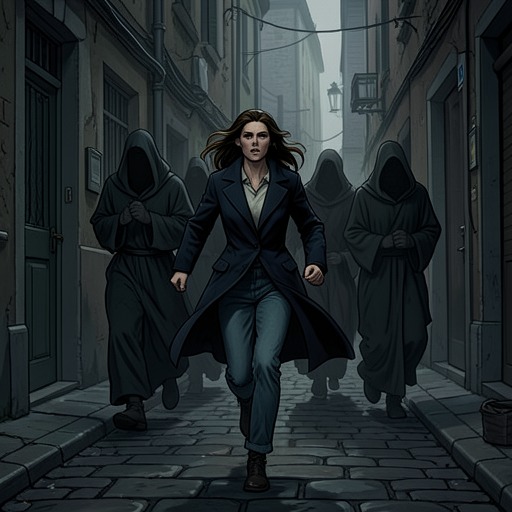
Lock’s tactical instincts also show in less spectacular moments. During the escape from the Inferno, he rejects the elevator because a fire alarm would stop it working and moves the group toward the back hallway stairs. He takes point, keeps hold of Ava’s hand, and has Ezra follow behind her with a hand on her shoulder so they will not be separated. His concern is not abstract heroism; it becomes a sequence of concrete decisions that keep the three friends moving together while Venus may be shutting down the building.
Friendship and Protection
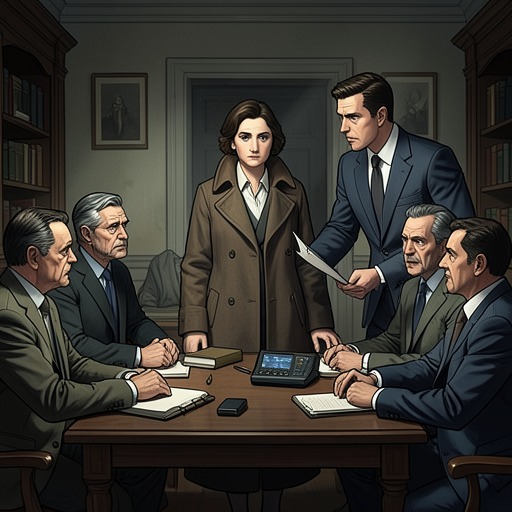
Lock and Ava’s closeness is built on honesty as much as reassurance. When Ava reports that Venus slapped her, Lock recognizes the apparent lenience as a warning rather than a reprieve. He says the group must watch its step because Venus would not let Ava walk away with only a slap unless she had something planned. He has also heard that Venus has become more unpredictable than usual. When Ava says she is worried, Lock answers that she has spoken for all of them: Venus could terminate both him and Ezra if she chose. He neither dismisses Ava’s fear nor treats the threat as hers alone.
When Ava’s plan takes her toward danger, Lock makes his position unmistakable. He puts his hand in the path of her fireball, forcing her to extinguish it before it reaches him, and explains that he is not afraid of her: they are friends, so if she goes into danger, he will follow with marshmallows and roasting sticks. He understands that Ava did not grow up with ordinary friendships, and tells her that this is how friendship works: she goes in, and he follows. His dramatic humor does not soften the commitment; it makes the commitment easier to hear. He also says that the group could not lose Ezra even if they tried, framing Ava’s circle as a bond that includes all three of them.
Lock’s protection extends beyond immediate danger. Before the island confrontation, Ava asks him to make sure Cade and Ryan survive if she does not. Lock agrees, including Ryan, though he jokes that he and Ezra will want to thrash him. The exchange combines a serious promise with familiar teasing: Lock accepts the responsibility Ava places in his hands while refusing to let her speak as if her death is settled.
Judgment, Conflict, and Loyalty
Lock’s loyalty does not make him accept Ava’s judgments without question. When she treats the Coterie as wholly evil and deserving of punishment, he agrees that Venus is dangerously unhinged but resists making the same claim about the entire organization. He argues that the Coterie can help some people, particularly when there is no Council to rely on, and warns Ava that her black-and-white thinking is dangerous. His position is not an endorsement of Venus’s abuse: he distinguishes opposition to a leader from condemnation of every possible function of the institution.
That distinction gives Lock a different role from Ava’s in their shared conflict. Ava tends toward decisive moral categories; Lock insists on the possibility of gray. He can still help her fight Venus while asking her to consider what her choices mean beyond the immediate enemy. When he challenges her, he is not withdrawing his friendship. The combination matters: he can resist her reasoning and still be the person who holds her hand, follows her into danger, and takes her fears seriously.
The Island and the Limits of Fire
During the final confrontation, Lock’s ability to grow trees becomes essential to restraining Venus. Venus is partly trapped inside a tree, as though its trunk grew around her while she stood still. Lock reaches into her pockets and finds what he has been searching for, then later helps remove her protective chains and wards. The restraint is not permanent, especially after Ava’s transfusion strengthens Venus, but it creates the opening the others need. Lock’s power is both force and temporary containment: it buys time without making the danger disappear.
Ava, weak and close to unleashing a destructive nova, asks Lock to trust that she can finish what she has begun. She tells him he must stop her if she loses control, invoking Cade’s likely anger and the prospect of Lock being left alone with Ezra. Lock is visibly defeated by the request, but he stays. He helps remove Venus’s chain and other backup wards, and then removes Ava’s chains so she can act. When Ava’s flame finally erupts, she recognizes that without Lock she would have gone nova and probably destroyed a large part of the island. The fire stops only when he speaks softly in her ear: “Enough, Aves. Enough.” His friendship becomes a literal limit on her power—not by denying her agency, but by helping her survive the moment when her own strength threatens to exceed her control.
Aftermath and Narrative Role
After Venus’s defeat, Lock looks toward a life no longer organized around working in the restaurant. He tells Ava that he and Ezra have discussed moving near her and the others, helping rebuild Broken Spines and spending more time together. Ezra protests that he may not be ready to give up his city-boy lifestyle, but Lock presses on with the possibility. Ava freezes rather than answering, so the move remains a proposal, not an accomplished change. Even so, the offer extends Lock’s pattern of care beyond emergencies: he imagines rebuilding a shared everyday life after the violence.
Lock’s narrative importance lies in the combination of functions he holds together. He is a lookout and tactician, a powerful but initially underestimated Dryad, an affectionate son who can maintain a boundary, and a friend who does not confuse loyalty with agreement. Most decisively, he remains beside Ava when her anger and fire threaten to become catastrophic. The trees he grows can alter a battlefield, but his quieter contribution is to give Ava a person who will challenge her, protect her, and call her back.