The “basic fire conflict”
FirestarterThe “basic fire conflict” names the opposing demands placed on Charlie McGee: her father has told her not to make fires, while The Shop presses her to do so. The phrase sounds like a neat psychological diagnosis, but the conflict it describes is neither abstract nor settled. Charlie remembers the destructive consequences of her power, feels guilty about the Manders farm, and fears the increasing pleasure and strength she experiences when she uses it. At the same time, the people controlling her keep asking her to ignite things. Her refusal is therefore both a moral decision and a difficult effort to resist pressure from outside and desire within.
The Conflict’s Definition and Stakes
The Shop’s psychologists call Charlie’s predicament her “basic fire conflict,” explaining it as the opposition between her father’s prohibition and the institution’s encouragement. The explanation captures the two authorities competing for her obedience, but it does not by itself account for the guilt that complicates the choice: Charlie’s feelings about using her power are also bound up with the incident at the Manders farm. The conflict concerns not simply whether she can produce fire, but whether she should, and what using it might make possible next.
John Rainbird rejects the other explanations offered for Charlie’s condition. He does not believe that her distress is caused by medication, constant confinement and observation, or separation from her father; he concludes instead that she is tough. That judgment contrasts with the medical and psychological attention surrounding her, but it does not remove the pressures she faces. The Shop continues to test and watch her, while Charlie’s own memories give her reasons to resist even when another authority asks her to comply.
Pleasure, Power, and the Manders Farm
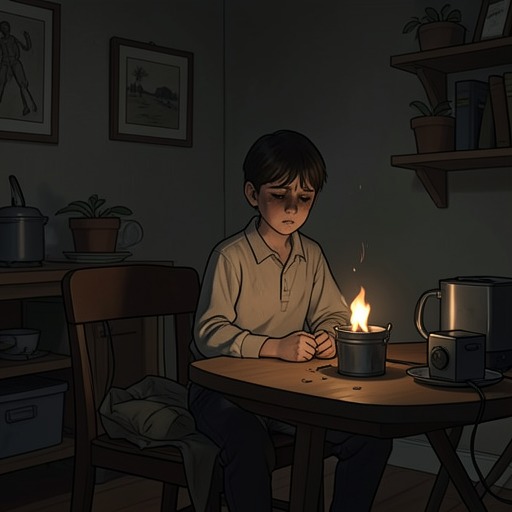
Charlie’s private recollections show why the conflict cannot be reduced to obedience. At night, she pictures men on the porch crowned with flame, cars exploding, chickens burning, and the smoldering stuffing of her teddy bear. These images gather separate fires into a sequence of remembered destruction, ending in an object associated with her childhood. She knows that she caused the teddy bear to burn, and the memory makes the consequences of her power intimate rather than theoretical.
The difficult admission is that using the ability has not felt only frightening or regrettable. Charlie recognizes that the more she has made fires, the more she has liked doing it and the more strongly she has felt the power as something alive and growing. She imagines the process as an upside-down pyramid balanced on its tip: each use makes stopping harder. Resisting the power hurts, while using it can be fun. The pleasure is not separate from the danger; in her account, it helps explain why control becomes more difficult with repetition.
Her response is an absolute vow: she will not make another fire, even if she dies in confinement. The thought of dying there does not seem frightening to her in the same way as the prospect of using her power again. That resolve gives the conflict a stark measure of its stakes. Charlie is not merely avoiding a test or delaying compliance; she is prepared to accept death rather than risk returning to an activity she believes grows harder to stop.
Pressure and Physical Fear
The Shop’s requests give the conflict a concrete, recurring form. Patrick Hockstetter takes Charlie to rooms prepared with crumpled newspaper, small glass dishes of oil, or other materials, and the request ultimately remains the same: make the object burn. His repeated questions and apparent sympathy do not alter what he is asking her to do. Charlie is frightened by him because she senses that he can use many means to make her comply, and she fears that his pressure might succeed even though she refuses.
That fear also enters her dreams. In one, Charlie sets Patrick Hockstetter on fire and wakes with her hands stuffed into her mouth to stifle a scream. The dream does not erase her refusal or show her carrying it out in waking life; instead, it registers how thoroughly the pressure and fear have occupied her imagination. The conflict takes shape both in the testing rooms where others demand a fire and in the involuntary images through which Charlie confronts what she fears doing.
After the Manders farm, even thinking about making fires produces a physical reaction. When John Rainbird raises the subject again, Charlie trembles, feels cold and tense, and repeats that she cannot and will not do it. Hockstetter’s reports label this a mild phobic reaction. The description makes the refusal visible in her body as well as in her words: the possibility of using her power is enough to provoke distress before any fire is made.
Rainbird’s Approach and the Conflict’s Meaning
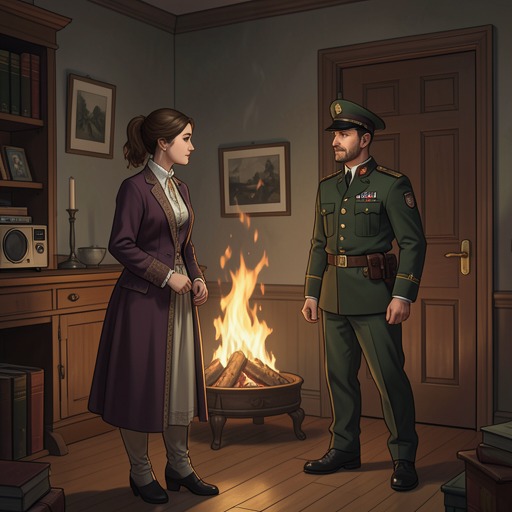
John Rainbird approaches the subject differently from Patrick Hockstetter. After the blackout, he waits almost ten days before raising it again; when the two discuss it, they speak quietly in the kitchen, which he says has no listening devices. On this occasion he asks whether Charlie has thought any more about the fire business. He now calls her Charlie rather than kid, at her request. The familiar form of address and the private setting contrast with Hockstetter’s repeated testing, but Rainbird still returns to the question of whether she will make fires.
The scene preserves the conflict’s asymmetry. Charlie is trying to maintain a boundary while adults around her control her circumstances and continue to frame her power as something to be used. Her bodily fear, memories of burning, guilt about the Manders farm, and awareness of the power’s appeal all bear on her decision; none makes the decision effortless. The “basic fire conflict” is thus both the Shop’s label for her divided instructions and a continuing struggle over agency: whether Charlie can hold to her refusal when coercion and the remembered pleasure of power press from opposite sides.