U.S. Postal Service
FirestarterThe U.S. Postal Service is the rural mail network that carries Andy’s six letters from Bradford, New Hampshire, toward sorting and delivery. Its ordinary routines become a point of vulnerability when government agents seize the letters on the road, using threats to force a carrier to surrender the mail and discourage him from reporting the theft.
Rural Mail Service
Bradford has no post office, so its mail is collected from a standing box beside the general store by a postal truck from Teller, New Hampshire. On March 10, the truck’s load includes Andy’s six letters and a postcard. The route continues through Williams before the mail returns to Teller for sorting and onward dispatch. The account establishes how a small-town mailing depends on a chain of stops and workers rather than a local post office.
That routine places the letters in the hands of Robert Everett, the postal carrier serving the route. As he drives back toward Teller, two men stop him on the road and show credentials. Their demand is not a standard postal procedure: they want the out-of-town mail from Bradford and Williams, and one displays a weapon while pressing Everett to hand over the bag.
Seizure of the Letters
Everett gives up the mailbag. The men open it beside the road and sort through its contents, selecting Andy’s six letters, which Everett recognizes by their handwriting and origin. Orville Jamieson takes the letters; the agents leave the opened bag behind and drive away. Their intervention removes the letters from the postal chain before they can be sorted and delivered.
The scene makes the breach concrete: the agents do not intercept the correspondence through a disclosed postal process, but by stopping a carrier on a public road and compelling him to surrender mail in his custody. Everett protests that robbing the mail carries a serious penalty, yet the threat to his livelihood follows the seizure. Jamieson warns him to speak to his postmaster before speaking to anyone else and invokes the possibility of losing his Postal Service pension.
Fear and Silence
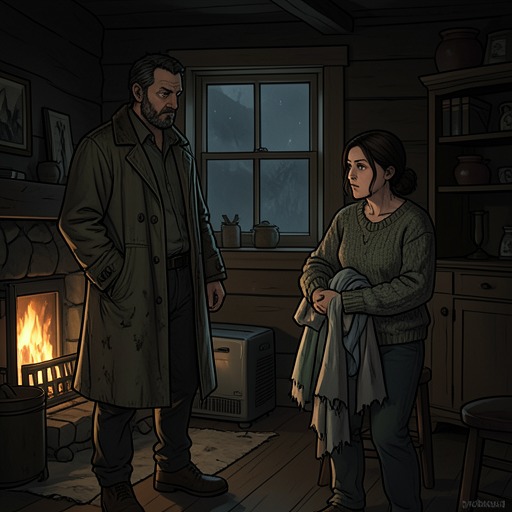
Everett returns to Teller and speaks with postmaster Bill Cobham for more than an hour. Their voices are sometimes loud and angry, but Cobham is badly frightened, and Everett absorbs that fear. He never tells even his wife what happened on the road. The incident stays with him, however, leaving lasting anger, shame, and disillusionment.
The account does not show the U.S. Postal Service as an institution authorizing the seizure or successfully investigating it. Instead, the carrier and postmaster appear as workers caught between their public duties and the power asserted by the agents. The threatened pension turns employment into leverage, while Cobham’s fear helps ensure that the theft remains unspoken.
Narrative Significance
The intercepted letters reveal how a routine public network can be exploited to reach private correspondence. The postal route’s predictable movement makes Andy’s mail traceable, and the agents’ coercion converts that vulnerability into a means of surveillance. The consequences extend beyond the missing letters: intimidation also suppresses the account of what happened, leaving the carrier with a private grievance rather than a public complaint.