An everyday-operation trigger mechanism
FirewallAn everyday-operation trigger mechanism is the hidden logic at the heart of Falk and Carter’s planned attack on the global financial system: an ordinary action, performed at the right place and time, could set a destructive computer process in motion. The idea makes routine behavior the plan’s camouflage. A cash-machine withdrawal seems unremarkable to the person making it, yet Wallander comes to fear that one such transaction could launch a crisis whose consequences reach far beyond Ystad.
Definition and Operating Logic
The mechanism first takes shape as a general possibility rather than a known device. Modin explains that a virus can be hidden inside an innocent, common command, with several conditions needing to coincide before it activates. Timing could be one condition: a command might have to be carried out at a precise moment. The investigators do not know what the command is, where it will occur, or what the virus will do once released. They infer only that Falk’s computer contains a connection to a threat against major financial institutions, and that people are willing to kill to keep the system and countdown in operation.
Martinsson makes the mechanism easier to picture by comparing it to a coffee machine. Someone could alter its program so it dispensed tea instead of coffee, then arrange for the alteration to take effect only after a date and time had arrived and a chosen number of buttons had been pressed. The eleventh press is merely an example; any selected number could serve. Unplugging and restarting the machine might interrupt its operation, but would not replace the altered program. The analogy gives the police a practical model: an everyday interface can hide a prepared sequence, while the person using it may have no reason to notice that anything is wrong.
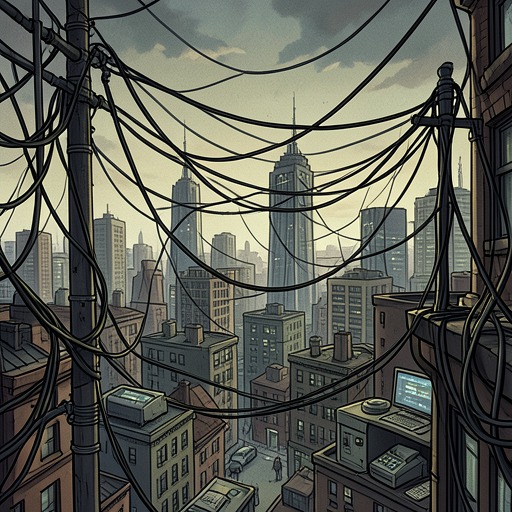
The metaphor also establishes the mechanism’s most unsettling feature. Its trigger need not look like an act of sabotage. It could be an action people perform repeatedly, in ordinary life, without thinking twice. Nor would the person who unknowingly set off the process necessarily be near its origin or understand what had happened. Wallander and Martinsson therefore describe their search as a hunt for the symbolic equivalent of a coffee machine, possibly anywhere in the world.
From Analogy to Cash Machine
The investigation gradually narrows the metaphor. Modin’s notes say that the trigger may be something right under the investigators’ noses, but the phrase initially offers no clear lead. Later, Wallander recalls that Martinsson is going to stop at a cashpoint on his way to buy food. The familiarity of that small errand supplies the missing connection: putting a card into a cash machine and receiving cash and a printed receipt is exactly the kind of routine action the hypothesis predicts.
Alfredsson then finds the relevant clue in Modin’s crumpled notes. Among drawings of hens and cats and calculations Wallander cannot decipher, Modin has underlined the words indicating a workable trigger so heavily that he has torn the paper. The note does not by itself identify a machine or explain the process. Its importance lies in helping Wallander connect the cash-machine idea to the broader theory: the machine could be the ordinary interface through which a hidden sequence begins.
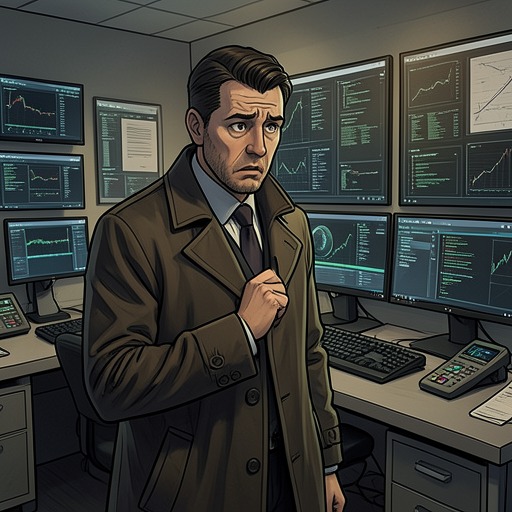
The practical search is immediately uncertain. The police do not know which cash machine is involved, whether more than one is necessary, or what precisely a transaction would set in motion. Wallander learns that Ystad has four cash machines: three in the town centre and one in the shopping precinct, where Falk was found. He orders the team to prevent withdrawals while officers cover the machines. The intervention rests on speculation, and he knows it will provoke public anger and may lack the prosecutor’s and bank directors’ approval. He accepts that risk because, in his view, doing nothing is worse.
The Threat at the Machine
The theory becomes urgent at the department-store cash machine, where Wallander waits in the early hours of Monday, October 20. A tall, suntanned gunman appears with Modin and forces Wallander to approach the machine. He takes Wallander’s gun, puts it in a rubbish bin, and gives him a credit card and a PIN. Wallander understands that he is being made to perform the very kind of routine transaction the police have been trying to stop. At first, his overriding concern is that Modin is alive; he sees no safe way to attack the gunman without putting the young man in greater danger.
The episode turns the abstract model into a physical confrontation. The gunman watches his wristwatch and points Wallander toward the machine, behaving with growing nervousness as the decisive moment approaches. Wallander feeds the card into the machine; a shot rings out, and Martinsson, positioned across the street, intervenes. Wallander shoots the gunman, who collapses. The evidence later identifies the card as Carter’s Visa card and fixes the danger at 5:31 a.m. on October 20: had Wallander or Modin put that card into the machine at precisely that time, the attack would have begun. The card’s presence and the gunman’s coercion reveal how close the mechanism came to being activated, but the transaction that would have completed the trigger does not take place.
Modin explains that the gunman had threatened to kill his parents if he failed to obey. He had also been held in a bathroom and heard the man berating a woman for failing in her task and showing weakness; he then heard shots. The account makes clear that the cash-machine operation is not an isolated technical puzzle. It is enforced through hostage-taking and violence, with the planned attack protected by the same coercion that brought Modin to the scene.
Consequences and Significance
The mechanism is stopped, but the wider plan remains only partly understood. Experts tracing Falk’s infiltrations into bank networks are astonished by how vulnerable major financial institutions have proved to be. Security specialists work to correct the weaknesses, while others try to establish what would have happened had the attack begun. The investigation cannot supply a definitive account of the electronic avalanche or its precise effects; the possibility of a collapse in world financial markets had been discussed, but the police never know exactly what the trigger would have unleashed.
The actual consequence is narrower and puzzling. A selection of cash machines in Skåne malfunctions for the day; many are shut down, no problem is located, and they later resume normal operation. This disruption does not amount to the planned collapse, and the narrative does not establish that the machines’ temporary failure was itself the intended attack. The distinction matters: the threatened mechanism is enormous in reach, while the observable aftermath offers no complete technical explanation.
As a narrative idea, the trigger turns the ordinary into a point of vulnerability. The coffee machine clarifies the logic before the cash machine reveals its stakes: a familiar action can conceal a dangerous program, and people may participate in an attack without knowing what they are setting in motion. Wallander’s response depends on recognizing the pattern in everyday behavior, but recognition does not grant certainty. He cannot identify the exact machine or confidently predict the consequences. He can only act on the possibility that an ordinary transaction, at a particular place and minute, might connect a local gesture to the stability of the world’s financial systems.