The girl’s relationship with John Kinsella
FosterThe girl’s relationship with John Kinsella is formed less through explanation than through acts of care: he makes room for her in his home, takes her hand on the walk to the sea, gives her permission to remain silent, and later returns to hold her as she leaves. For Unnamed girl, these gestures have particular force because she recognizes how unlike her life with Dan they are. Their bond is intimate but not defined by blood; it takes shape in shared time and in a farewell that neither can make easy.
Welcome and the Household
When Dan worries that Unnamed girl will eat the household out of house and home, John rejects the idea that she should earn her keep. He says there is no need for that and that she will have no more to do than help Edna Kinsella around the house. Edna echoes his welcome. The exchange establishes a distinction between being treated as labor and being received as a child who belongs there: John speaks up for her before the summer has properly begun.
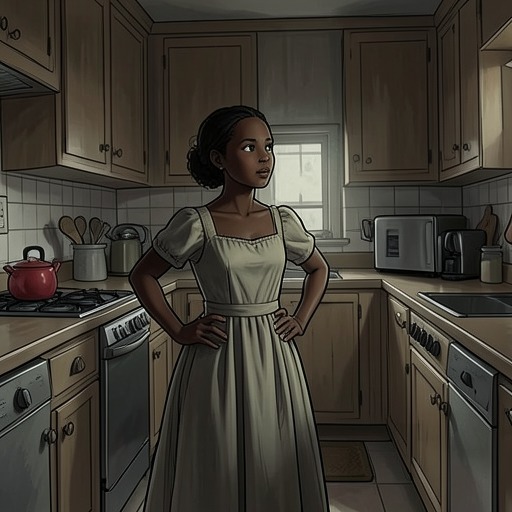
The care that surrounds Unnamed girl is not John’s alone. Edna bathes her, cleans the dirt from beneath her nails, washes her hair, and soaps her, while Unnamed girl senses in Edna’s hands a kind of care she cannot yet name. At the well, Edna holds the belt of her trousers as she reaches for the dipper and pulls her back to safety after she drinks. These acts belong specifically to Edna, but they help establish the household in which John’s relationship with Unnamed girl develops. The protection offered there is physical and ordinary, expressed through the body, the home, and attention to what a child needs.
John, too, is part of the house’s rhythm of work and welcome. During a day filled with cooking, cleaning, and household tasks, he comes in, makes tea for everyone, drinks it standing with Kimberley biscuits, and goes back outside. His brief entrance is not a grand declaration of affection; it is one detail in the steady life Unnamed girl joins. The contrast with a home where she has felt little secure attention gives such ordinary inclusion its weight.
A Different Kind of Closeness
The clearest contrast between John and Dan comes when John takes Unnamed girl’s hand on the night walk to the sea. As soon as he does, she realizes that Dan has never once held her hand. The recognition makes her want, briefly, for John to let go, because the touch forces her to feel the difference between the two lives. Yet she settles as they continue, and John adjusts his steps so they can walk in time. The moment holds both the discomfort of discovering what has been missing and the comfort of being accompanied without being hurried.
At the crossroads they turn down the sloping road toward the sea. John first says a few things that seem meaningless to her, then falls into his characteristic quiet. The walk gives their relationship room to exist without requiring constant conversation. Edna has warned John to be careful with the girl and not to go without the lamp; he takes the lamp when she hands it to him, even while questioning the need for it on such a bright night. His care is not presented as flawless or solemn, but as part of an attentive family life that makes space for both caution and companionship.
When John speaks about Edna’s tendency to trust people, he explains that she hopes to find goodness in others and sometimes risks disappointment. Unnamed girl does not know what to say. John answers the difficulty by telling her, “You don’t ever have to say anything,” and by presenting silence as something a person may choose rather than a failure to respond. His advice becomes a defining part of their relationship: he does not demand that she explain herself, even when the evening is strange and his words about the sea, horses, and Edna exceed her understanding.
Protection, Silence, and Affection
The walk reaches the rocks and cliffs where they can go no farther, and the pair turn back along the beach. Unnamed girl gathers smooth, brittle shells from the sand. When the moon disappears behind a cloud and the way becomes difficult to see, John stops and lights the lamp. The practical act echoes the earlier warning without interrupting the quiet of their shared walk. On the return, he asks whether she can see a light; when she says she can, he puts his arms around her and gathers her in as though she were his. The embrace makes explicit what the walk has been expressing through smaller gestures: John’s care is not merely the management of a guest in his house but a powerful feeling of attachment.
Later, after Unnamed girl has been soaked at the well, Edna takes her inside and makes up her bed again. Edna keeps her upstairs the next morning with hot drinks, lemon, cloves, honey, and aspirin. John describes the illness as only a chill, while Edna voices her fear of what might have happened. The immediate nursing belongs to Edna, but the episode shows the protective concern of the household around the child and the danger that shadows the care she receives. The well’s water, once a source of refreshment and a place where she felt safe, has become a risk; the adults respond by bringing her back indoors and tending to her.
Before the final departure, John tells Mary that Unnamed girl is a credit to her, then asks the girl to keep her head in her books and says he wants to see gold stars in her copybooks the next time he comes. He kisses her, while Edna hugs her, and both say she is welcome again. The affectionate farewell carries a promise of continued regard, but it also makes the separation more tangible. John seems more eager to leave than he had been to arrive, a change the girl registers in the moment of departure.
Return and the Unfinished Goodbye
When Mary asks what happened after John and Edna have gone, Unnamed girl answers that nothing happened. She understands that the summer is not something she has to disclose; John’s earlier counsel about silence has become a resource she can use even with her mother. Her silence does not mean the relationship has diminished. As soon as she hears the car brake on the gravel, she runs down the lane, driven by the urgency of seeing John again. The memories flashing through her mind include the well, the summer’s small incidents, and the moment when the bucket pulled her under. Their recurrence gathers the experience of the summer into the present pursuit.
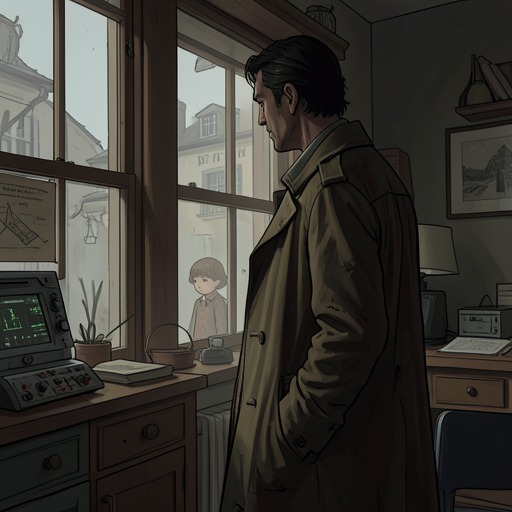
John is back at the gate, putting the clamp down. His eyes are lowered toward his hands as he closes it. Unnamed girl runs to him without hesitation, and he lifts her into his arms. She feels her heart and breathing settle while he holds her for a long stretch; rain shakes from the trees, and she feels his warmth through his good clothes. The physical detail returns the relationship to its central language: hands, touch, and the body held safe. Dan approaches with his walking stick, but Unnamed girl remains clinging to John, calling “Daddy” to warn him and holding on as though she would drown if she let go. Her response does not erase the difference between the two men or resolve the pull between her homes. It gives the summer’s attachment a final, bodily expression: before the gate closes and the visit is over, John turns back, and she runs to meet him.