The girl’s relationship with her father, Dan
FosterThe girl’s relationship with her father, Dan, is defined by a contrast between the practical arrangements he makes for her and the tenderness she discovers elsewhere. Dan brings her to stay with John Kinsella and Edna Kinsella, but his departure leaves her with no goodbye and no assurance that he will return. Later, the girl recognizes that Dan has never held her hand; at the end of the summer, she runs toward John and holds on to him even as Dan approaches. The relationship is not resolved by that choice, but its emotional distance becomes unmistakable in the difference between Dan’s presence and the care the girl has come to know.
Family Circumstances and the Arrangement
Before leaving home, the girl remembers Mary braiding her hair tightly, with her pregnant belly against the girl’s back. Mary has packed clean pants in the suitcase, along with a letter, and the girl recalls words exchanged about how long the Kinsellas might keep her. The arrangement is thus made among adults, while the girl is left to wonder what has been written and how long she will be away. Her father’s decision to bring her to another household changes the conditions of her daily life without giving her much say in how that change is explained.
Dan talks about the girl as an additional expense, joking that she will eat the Kinsellas out of house and home. He has also suggested that they could put her to work, but John rejects that idea and says the girl will only need to help Edna around the house. Edna affirms that the girl is welcome. This exchange sets Dan’s practical, faintly dismissive account of the placement against the Kinsellas’ explicit welcome: the girl is treated by her father as someone to be accommodated, while John and Edna describe her as someone they are glad to have.
Departure and the Absence of a Goodbye
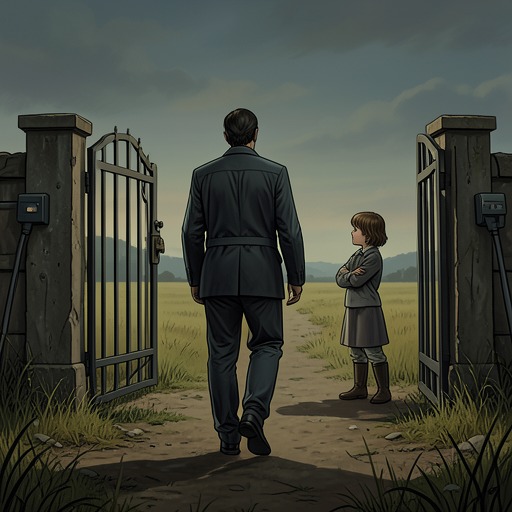
The departure is marked by awkwardness rather than a direct quarrel. Dan takes the rhubarb from Edna, but when stalks fall to the ground, both Edna and Dan wait for the other to pick them up. John eventually stoops to gather them. Outside, Dan throws the rhubarb onto the back seat, starts the car, wishes them good luck, and tells the girl to try not to fall into the fire. His farewell is a warning and a practical wish, not an expression of affection or a promise to come back.
The girl watches Dan reverse into the lane and drive away. She hears the wheels cross the cattle grid, then the engine’s gears as the car continues down the road. What troubles her is not simply that he has left, but that he has done so without saying goodbye or mentioning his return. The scene makes his emotional absence concrete: the girl listens to the departing car and finds no reassurance in what he has said. When Edna asks what is wrong, the girl looks down at her dirty sandals rather than explaining her hurt.
The Hand She Has Never Held
At the well, the girl drinks six measures of cool water and associates its taste with Dan leaving and with having nothing after he is gone. The memory of his departure therefore remains present even in a place where she feels clean and safe. Yet walking back through the fields, she holds Edna’s hand and imagines that she is keeping Edna balanced. The girl wonders how Edna manages when she is not there, and cannot remember another time when she felt this needed. Her growing attachment to the Kinsellas takes shape through ordinary companionship and reciprocal care, not through a declaration that they have replaced her family.
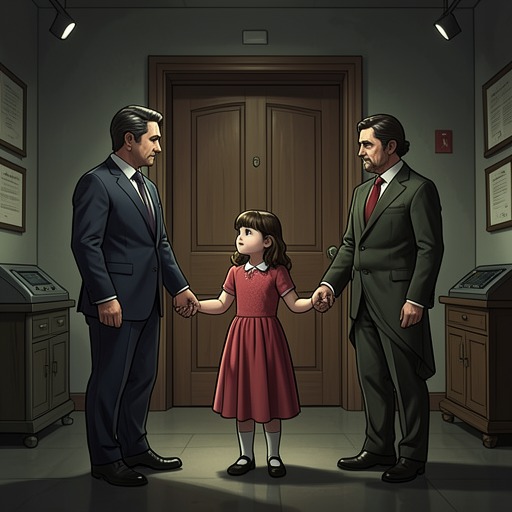
That contrast sharpens during the nighttime walk with John. Under the moon, he takes the girl’s hand, and she realizes that Dan has never once held it. The recognition is painful enough that part of her wants John to let go, so she will not have to feel the difference. She nevertheless settles as they walk in step, John taking small steps to match hers. The scene gives the absence in her relationship with Dan a precise, bodily measure: what her father has never done becomes newly visible through the simple gesture of another person holding her hand.
Return and the Final Embrace
When the girl returns home, Dan arrives after the Kinsellas. He greets the household and calls her the prodigal child; she confirms that she has come back. He asks whether she caused trouble, while John and Edna say she is welcome again. John tells Mary that the girl is a credit to her, encourages the girl to keep up with her schoolbooks, and kisses her; Edna hugs her. Dan’s return to the conversation does not erase the earlier separation, and the warm farewell from the Kinsellas makes the difference between the two households newly apparent.
After the car has gone, Mary asks what happened during the summer. The girl says that nothing happened, and understands that she does not have to tell her mother what she has experienced. As she speaks, Dan is present in the household, but the girl’s thoughts and actions turn toward John. Hearing the car brake on the gravel and a door open, she runs down the lane. Images from the summer flash through her mind, including the boy in the wallpaper, the gooseberries, the bucket that pulled her under, the lost heifer, the weeping mattress, and the third light. Her movement is urgent and physical: her heart seems to beat in her hands as she races toward the bend.
There, John is closing the gate. The girl runs straight to him, and he lifts her into his arms and holds her tightly. Only after she is in his embrace does she see Dan coming along the lane with his walking stick. She clings to John as though letting go would mean drowning, and calls out to Dan, warning him, while he cannot see what she sees. The ending preserves the tension in her bond with her father: she notices his approach and addresses him, but she does not leave John’s arms to meet him.
The Relationship’s Significance
The girl’s attachment to Dan is presented through absences and small acts rather than a definitive break. He provides for the journey and brings her to the Kinsellas, but the girl remembers his failure to say goodbye and recognizes that he has never held her hand. His return does not prompt her to explain the summer or to run toward him. Instead, the bodily force of her reunion with John reveals how profoundly the experience of being cared for has altered her sense of where she belongs.
At the same time, the girl’s final call to Dan complicates any simple account of rejection. She remains aware of him and tries to warn him, even while holding on to John and keeping her promise of silence about what happened. The scene places her biological family and her summer bond side by side: Dan walks toward them, John holds her, and the girl’s words reach her father while her body stays with the man who has minded her.