The girl’s relationship with her mother, Mary
FosterThe girl’s relationship with her mother, Mary, is defined by a contrast between blood kinship and the care the girl experiences during her summer away. Mary prepares her for separation with intimate, bodily attention, but the girl’s return does not restore their earlier closeness: she arrives in a cold, marked-up home and chooses not to tell Mary what has happened. The relationship ends this part of the story not with a confession, but with the girl’s discovery that silence can be her own decision.
Identity and the First Separation
Before the girl leaves home, Mary combs and plaits her hair. The girl recalls the comb’s steel teeth against her scalp and the strength of Mary’s hands, while also remembering Mary’s belly, hard with the next baby, pressed behind her. The scene holds care and the practical facts of family life together: Mary packs clean pants and a letter in the girl’s suitcase. The child carries the bodily memory of her mother’s touch into the unfamiliar household where she will spend the summer.
The letter and the departure also bring the girl’s uncertainty about how long she will be away. She thinks of what Mary may have written and of an exchange between her parents: one asks how long the Kinsellas should keep the girl, and the other answers that they may keep her as long as they like. The girl then wonders whether that is what she herself will say. The passage leaves the arrangement’s duration unsettled, and places the child’s future in words spoken around her rather than in a direct conversation with Mary.
That uncertainty is sharpened by the contrast between the adults’ accounts of what the girl will do away from home. Dan suggests that she can work, but John Kinsella says there will be no need for that and that she will only help Edna Kinsella around the house. Edna says the girl is welcome. The girl’s separation from Mary is therefore also a movement into another household, where welcome and everyday care begin to shape a different sense of belonging.
Maternal Care and Competing Homes
During the summer, the girl’s experience of being cared for alters how she understands the people at home. After drinking from the well for the first time, she walks back holding Edna Kinsella’s hand and feels that she has Edna balanced; without the girl, she thinks, Edna would tip over. She cannot remember another time when she felt this way, and is both sad and glad about that absence of memory. This thought does not erase Mary’s place as her mother, but it makes the girl newly conscious of how care can be felt through ordinary physical closeness.
The girl also considers Mary from the other household. When Edna asks whether her mother is all right, the girl thinks about being Mary and decides that Mary would not mind a particular matter, though Dan would. The answer shows the girl trying to imagine her mother’s perspective rather than simply reporting a fact about her. At bedtime, after Edna kisses her good-night, the girl thinks of whether Mary will have a girl or a boy and of the sisters still at home. Her thoughts move between the household she has left and the one where she now sleeps; the summer has made these homes emotionally distinct without making either disappear.
The Letter and the Return
A letter from Mary makes the separation’s end concrete. Edna reads the small sheet, written on both sides, and tells the girl she has a new brother, weighing nine pounds, two ounces. She also explains that school starts on Monday and that Mary wants the girl to stay through the weekend so she can be prepared for school. The girl asks whether she has to go back, and Edna answers that she does. The news of a new sibling and the return date arrive together: Mary’s household has changed while the girl has been away, and the practical demands of school set the timing of her homecoming.
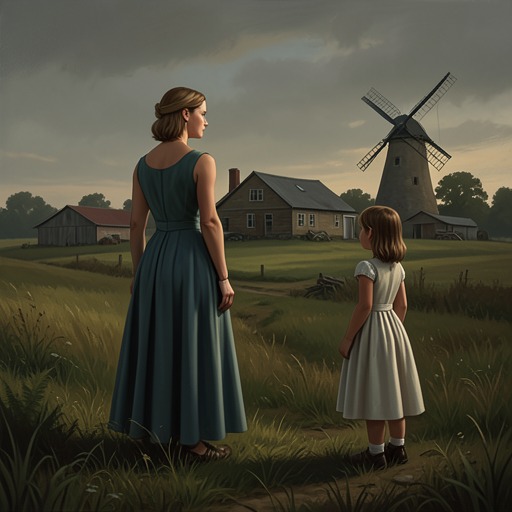
On the drive back, the girl passes through Parkbridge with John and Edna Kinsella. At home, the contrast is immediately physical: the house feels damp and cold, and dirty footprints track across the lino. Mary stands with the girl’s little brother in her arms. Her greeting is brief: “You’ve grown.” The remark recognizes the change the summer has made visible, but the reunion offers no extended account of what the girl has experienced or how Mary has experienced her absence.
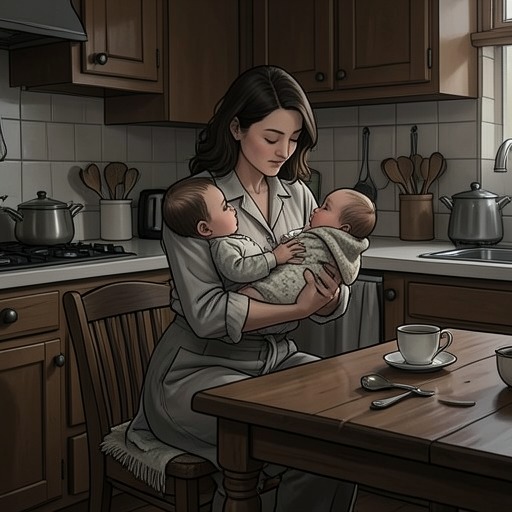
Mary’s care for the baby is also shown in an ordinary, exposed domestic moment. She pours tea for the visitors with one hand, sits down, and takes out her breast to feed the baby. The girl blushes at seeing this in front of John Kinsella; Mary notices and gives her a long, deep look. The girl’s response registers the strangeness of returning to familiar family intimacy after living elsewhere, while Mary’s look makes the blush part of their shared awareness without supplying an explanation or a spoken resolution.
Silence and the Relationship’s New Boundary
After John and Edna Kinsella leave, Mary asks what happened. The girl answers that nothing happened; when Mary insists, she repeats that nothing happened. She understands that this is her mother she is speaking to, but also that what happened is not something she ever needs to mention. She calls the moment her perfect opportunity to say nothing. This is not evidence that Mary knows the concealed events; it is evidence that the girl has learned to keep them from her.
The scene makes silence a change in the relationship rather than a simple lack of conversation. At the beginning, Mary’s hands, the packed clothes, and the letter connect mother and daughter through care and family obligation. At the end, Mary asks for an account, but the girl sets a boundary by withholding it. Her silence does not cancel her bond with Mary; it shows that returning home has not returned her to her earlier position as a child who must disclose everything. The summer’s other attachments and experiences remain with her, privately held, as she begins again within Mary’s household.