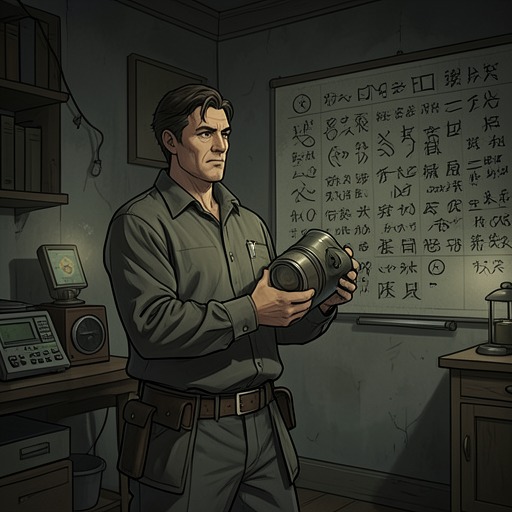
Gun Path Holstering Principle
GunsoulThe Gun Path Holstering Principle is the ethical standard that mastery of a gun means being able to put it away when its work is done. It distinguishes wielding the Gun from being ruled by it: firearms may continue to kill, and the Gun may therefore never disappear, but its power need not dictate the wielder’s purpose. Yuan Guang embodies the principle when he defeats the Gun without claiming to have destroyed it, making it a tool within his Path instead of the force that defines him.
Meaning and Foundation
The principle is stated most clearly after Yuan’s victory. When Revolver marvels that Yuan has killed the Gun, Yuan corrects him: he has mastered it. The Gun will persist as long as firearms keep killing, but it has become part of Yuan’s Path, a tool for the Gunman to wield. The distinction is fundamental: victory lies not in erasing the weapon from the world, but in ending its command over the person who carries it.
Kaguya gives the principle its moral measure. A killer takes life because there is nothing to lose; a warrior fights because there is something to protect. She connects restraint to responsibility, not weakness. Putting the gun back in its holster means recognizing that force has a purpose and a limit, rather than treating the capacity to kill as a purpose in itself.
Yuan’s Mastery of the Gun
Yuan’s mastery is more than a change in how he describes his victory. Before the final confrontation, he learns to create bullets through two overlapping Barriers: one draws in the qi needed to forge them, while the other excludes everything else. Having survived Moonburns makes the exclusion easier, and his soul’s enclosure in a bullet-core lets him understand that core’s composition instinctively. This technical command illustrates the distinction at the heart of the principle: power can be shaped and directed rather than simply unleashed.
Revolver assumes that defeating the Gun could require Yuan to sacrifice his bullet-core, surrendering the strength that former Scraps had fought to preserve. Yuan’s correction rejects that framing. His victory does not make the Gun cease to exist; instead, he changes the relationship, bringing its power within his own Path. The image of holstering thus completes, rather than negates, mastery: the wielder retains the capacity to act while gaining the authority to stop.
Restraint in Practice
The book places restraint alongside concrete decisions about what violence is for. After the Gun’s bombardment, Yuan buries Gayak and Elder Polio with the other dead. He does not claim that his enemies deserve respectful graves; he acts because the hungry ghosts of cultivators remain dangerous and he will not let them torment the living. Holster recites the Last Rites Sutra over the dead, while the survivors salvage what they can from the wreckage. The scene makes protection, responsibility, and the aftermath of violence inseparable: ending a fight is not the end of the obligations it creates.
Yuan’s response to the dead also anticipates the choice he announces after mastering the Gun. He can now raise the dead as Gunsouls and choose who returns. Rather than treating resurrection as a way to perpetuate killing, he says he can raise warriors instead of killers. The principle therefore governs not only when to use a weapon, but what kind of purpose should guide the power to wield it.
Significance and Reach
The Gun Path Holstering Principle offers a counter to the cycle in which the power of firearms enthralls people and produces further violence. Yuan looks beyond his victory and recognizes that many remain captivated by what guns allow them to do. His achievement is consequently not a promise that weapons will vanish; it is the harder claim that their continued existence does not have to decide every wielder’s conduct.
Other uses of Gun Path abilities show why purpose matters. Holster calls six of her Cheruguns, each carrying a different weapon, to help transport a frightened child to a doctor who treats Human Pillars. She treats the constructs as extensions of her qi and soul, making requests rather than issuing orders. This is not presented as a formal restatement of Yuan’s principle, but it offers a related contrast: formidable weaponry can serve care and rescue rather than domination. Together, these moments frame mastery as a responsibility—the capacity to use force for protection, and to stop when that purpose has been fulfilled.