On the Thames at dusk
The Nellie at Anchor
The Nellie rests at anchor on the [Thames](entity:location-recall-location-thames-1c552fcd9cf5) while the tide turns. Aboard, the frame narrator and his companions watch the fading light and the busy river; [Charles Marlow](entity:character-recall-character-charles-marlow-3b475f8eab7c) sits apart, quiet and contemplative.
As [London](entity:location-recall-location-london-420923d4a60a) darkens, the familiar waterway begins to seem like a passage into history. The tranquil evening prepares the frame for [Marlow](entity:character-recall-character-marlow-518b69bb0a13)’s unsettling account of imperial journeys and hidden darkness.
During the evening aboard the Nellie
The River’s Dark History
[Marlow](entity:character-recall-character-marlow-518b69bb0a13) remarks that the [Thames](entity:location-recall-location-thames-1c552fcd9cf5), too, was once a dark place. He imagines Roman soldiers and officials confronting an unfamiliar Britain, where disease, wilderness, and isolation could make conquest feel like an encounter with the incomprehensible.
He distinguishes conquest by force from any claim to moral purpose, arguing that only an idea could redeem it. His reflection establishes the tension between imperial rhetoric and exploitation that will shadow his story of [Africa](entity:location-recall-location-africa-7f6149c69b08).
Before Marlow’s appointment
The Map and the Snake
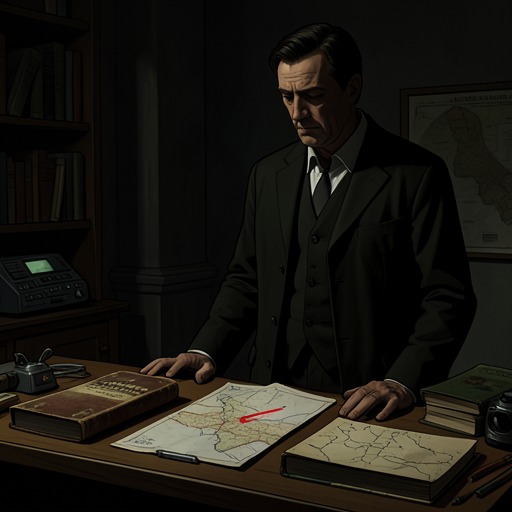
As a child, [Marlow](entity:character-recall-character-marlow-518b69bb0a13) studies maps and dreams of exploring blank spaces. By adulthood, [Africa](entity:location-recall-location-africa-7f6149c69b08) has been filled in on maps, but the great river still fascinates him: its winding shape seems like a snake drawing him inland.
He learns that [The Company](entity:organization-recall-organization-the-company-ad633debaf11) operates steamboats on the [Congo River](entity:location-recall-location-a0eeb3e7eb06) and decides to seek command of one. The decision begins a journey driven as much by fascination with the unknown as by any practical ambition.
Before Marlow travels to Africa
Fresleven’s Death
[Marlow](entity:character-recall-character-marlow-518b69bb0a13) recalls that his predecessor, Fresleven, was killed after beating a village chief over a dispute about two hens. Though remembered as a gentle man, Fresleven had come to believe that his dignity required him to assert himself through violence.
The chief’s son speared him, and the frightened villagers fled, leaving the settlement abandoned. [Fresleven’s death](entity:event-recall-event-fresleven-s-death-f207a0e8892a) gives Marlow the vacant appointment and exposes the violence beneath the Company’s claims of progress.
Shortly after Marlow decides to go
The Company Appointment
[Marlow](entity:character-recall-character-marlow-518b69bb0a13)’s relatives do little to help, so he turns to his aunt, whose connections secure him a captaincy with striking speed. [The Company](entity:organization-recall-organization-the-company-ad633debaf11) needs a replacement after [Fresleven’s death](entity:event-recall-event-fresleven-s-death-f207a0e8892a), and Marlow is soon on his way to its European headquarters.
The efficiency of the appointment contrasts with the disorder and violence awaiting him. Marlow accepts the post, though the swiftness and secrecy surrounding it already leave him uneasy.
At the Company headquarters
The Knitting Guardians
At the Company’s headquarters, two women knit black wool as applicants pass through the waiting room. [Marlow](entity:character-recall-character-marlow-518b69bb0a13) imagines them as guardians at the threshold of an unknown world, quietly ushering men toward danger.
Before leaving, he visits a doctor who measures his head and asks about madness in his family. The scene turns an ordinary recruitment process into a foreboding ritual and hints at the psychological changes that may await those who go inland.
Before Marlow’s departure
The Civilizing Mission
[Marlow](entity:character-recall-character-marlow-518b69bb0a13)’s aunt celebrates his appointment as a chance to bring enlightenment to people she imagines as ignorant. She presents him as an emissary of civilization, accepting the Company’s public language of humanitarian purpose.
Marlow knows that trade and profit drive the enterprise, and her idealism makes him uncomfortable. The farewell reveals how the rhetoric of benevolence can disguise the commercial motives of imperial expansion.
On the voyage to Africa
The Coastward Voyage
[Marlow](entity:character-recall-character-marlow-518b69bb0a13) travels aboard a French steamer that stops repeatedly to land soldiers and customs officials. The coast appears monotonous and oppressive, while the settlements seem tiny against an immense landscape.
The Europeans’ routine movements strike him as detached from reality, but the sight of African boatmen briefly offers a sense of vitality and directness. His impressions unsettle the simple opposition between European order and African life.
During the coastal voyage
The Man-of-War’s Bombardment
Off an apparently empty stretch of coast, [Marlow](entity:character-recall-character-marlow-518b69bb0a13) sees a French man-of-war firing its guns into the bush. The shots seem to accomplish nothing, and the claim that hidden people are enemies does not make the spectacle any less absurd.
The ship’s pointless bombardment becomes an early image of colonial force detached from meaningful purpose. Marlow recognizes that the violence of the enterprise can appear both monstrous and farcical.
After arriving in Africa
The Ruined Outer Station
At the [Outer Station](entity:location-recall-location-979687a8d5eb), [Marlow](entity:character-recall-character-marlow-518b69bb0a13) finds abandoned machinery, broken railway equipment, and blasting that appears to serve no clear purpose. A chain gang of African laborers passes him, each man collared and linked to the next.
Marlow turns away from the station’s activity and descends toward the trees, disturbed by the gap between the grand language of law and progress and the suffering he sees. The scene makes the Company’s coercive labor system unmistakable.
At the Outer Station
The Grove of Death
In the shade, [Marlow](entity:character-recall-character-marlow-518b69bb0a13) finds sick and starving laborers who have been left to die after becoming too weak to work. One young man accepts a ship’s biscuit without lifting his eyes; a strip of white thread around his neck stands out against the surrounding misery.
Marlow recognizes that these men are neither enemies nor criminals, whatever labels the colonial system assigns them. Their abandonment exposes the human cost concealed by the Company’s legal contracts and commercial routine.
During Marlow’s stay at the Outer Station
The Accountant’s Order
[Marlow](entity:character-recall-character-marlow-518b69bb0a13) meets the Company’s chief accountant, whose immaculate clothes and carefully maintained books appear almost miraculous amid the station’s disorder. The accountant’s composure gives Marlow his first account of [Kurtz](entity:character-recall-character-kurtz-a290b440ffd4), a celebrated agent who sends more ivory than all the others combined.
The accountant speaks of Kurtz as a remarkable figure destined to rise in the administration. His praise introduces the powerful reputation that will shape Marlow’s expectations long before he meets the man.
After ten days at the Outer Station
The Inland March
[Marlow](entity:character-recall-character-marlow-518b69bb0a13) joins a caravan of about sixty carriers and marches roughly two hundred miles toward the [Central Station](entity:location-recall-location-3bf425b931e6). The route passes abandoned villages, difficult hills, and long stretches without people or shelter; the carriers move under heavy loads.
He also encounters a white officer who claims to supervise the road, though Marlow finds no evidence of useful work. The journey presents the interior as a landscape crossed by extraction and neglect, not by the orderly development promised by the Company.
Upon Marlow’s arrival at the Central Station
The Sunken Steamer
At the [Central Station](entity:location-recall-location-3bf425b931e6), [Marlow](entity:character-recall-character-marlow-518b69bb0a13) is told that his river steamer has sunk. The manager and a volunteer captain had taken it upriver in haste, only for it to strike stones and go down within hours.
The wreck delays Marlow for months while he salvages and repairs the vessel. What first looks like a frustrating accident becomes the practical obstacle that keeps him waiting in the station and entangled in its rivalries.
Soon after Marlow reaches the Central Station
The Manager’s Unease
[Marlow](entity:character-recall-character-marlow-518b69bb0a13) meets the [General Manager](entity:character-recall-character-79e4e1fbd197), an ordinary-looking man whose cold gaze and sealed, faint smile inspire unease. He appears to possess neither initiative nor great ability, yet survives repeated postings in a place where illness kills many officials.
The General Manager is preoccupied with [Kurtz](entity:character-recall-character-kurtz-a290b440ffd4), an important agent reported to be ill at the [Inner Station](entity:location-recall-location-83f9689e09de). His concern seems to combine anxiety for a valuable Company asset with the quiet calculations of a man protecting his position.
During the months of repairs
The Station’s Ivory Fever
While working on the steamer, [Marlow](entity:character-recall-character-marlow-518b69bb0a13) watches agents drift around the [Central Station](entity:location-recall-location-3bf425b931e6), talking incessantly about ivory and competing for profitable postings. Their talk of work and civilization seems hollow beside their idleness and appetite for commission.
To Marlow, the wilderness surrounding the station feels more substantial than the Europeans’ claims and intrigues. The contrast deepens his sense that the Company’s enterprise is an unreal invasion organized around greed.
During the Central Station delays
The Burning Storehouse
A shed full of trade goods suddenly catches fire, and the station’s officials make a confused show of trying to put it out. Nearby, a black worker is beaten for supposedly causing the blaze.
As the ruins cool, [Marlow](entity:character-recall-character-marlow-518b69bb0a13) overhears the [General Manager](entity:character-recall-character-79e4e1fbd197) and a brickmaker discussing how they might take advantage of the accident. The episode exposes the station’s petty plotting and the violence inflicted on workers who have little power to defend themselves.
After the storehouse fire
The Blindfolded Torchbearer
The brickmaker invites [Marlow](entity:character-recall-character-marlow-518b69bb0a13) into his room and questions him about his European connections. There Marlow sees a painting of a blindfolded woman carrying a torch, made by [Kurtz](entity:character-recall-character-kurtz-a290b440ffd4) during his wait to travel to the [Inner Station](entity:location-recall-location-83f9689e09de).
The brickmaker describes Kurtz as an emissary of pity, science, and progress, while also revealing the political competition his arrival has stirred. The painting and the speeches surrounding it add to Kurtz’s image as both idealist and instrument of ambition.
During the prolonged wait at the Central Station
The Rivetless Repairs
[Marlow](entity:character-recall-character-marlow-518b69bb0a13) needs rivets to repair the steamer, but none arrive, despite supplies of useless trade goods passing through the station. The absence of a small, essential item turns the repair into a prolonged test of patience and practical effort.
When Marlow tells the boiler-maker that rivets are finally coming, the two celebrate like children. Their brief excitement marks a rare moment of shared purpose amid the station’s empty posturing and competing ambitions.
During Marlow’s repairs
The Eldorado Expedition
Instead of rivets, the [Central Station](entity:location-recall-location-3bf425b931e6) receives successive groups from the [Eldorado Exploring Expedition](entity:organization-recall-organization-eldorado-explori-da597c19a051), burdened with equipment and provisions. Its members speak and act like treasure-seekers, with little evidence of planning or serious concern for the people whose land they intend to exploit.
The expedition is led by the [General Manager](entity:character-recall-character-79e4e1fbd197)’s uncle, and its presence adds another layer of greed to the station. [Marlow](entity:character-recall-character-marlow-518b69bb0a13) watches it disappear into the wilderness, where the expedition’s ambitions are unlikely to survive intact.
As the steamer repairs near completion
Kurtz Turns Back
[Marlow](entity:character-recall-character-marlow-518b69bb0a13) overhears the [General Manager](entity:character-recall-character-79e4e1fbd197) and his uncle discussing [Kurtz](entity:character-recall-character-kurtz-a290b440ffd4)’s latest ivory shipment. Kurtz has sent the ivory downstream with a clerk, then turned back toward the [Inner Station](entity:location-recall-location-83f9689e09de) alone, even though he was seriously ill and his post had run out of supplies.
The two men speak of Kurtz as a source of trouble as well as profit. Marlow imagines the solitary return upriver and becomes more curious about a man whose conduct seems to exceed the Company’s ordinary calculations.
Two months after leaving the Central Station
The Upstream Passage
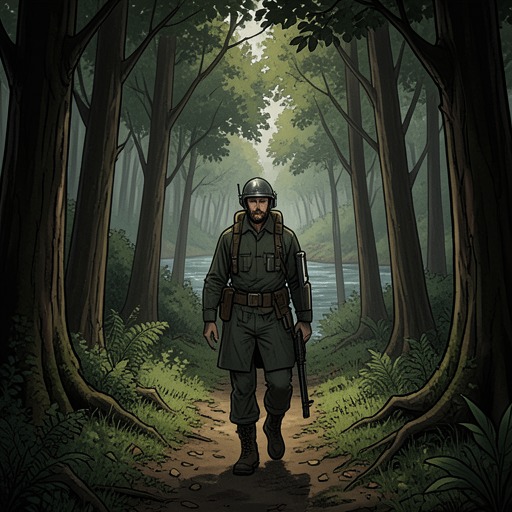
[Marlow](entity:character-recall-character-marlow-518b69bb0a13) finally leads the repaired steamer upriver with the [General Manager](entity:character-recall-character-79e4e1fbd197), several agents, and a crew that includes African cannibals. The journey moves through dense forest, shoals, and long silences that make the river seem like a route into an earlier world.
The crew endures hunger, while the Europeans remain absorbed in navigation and the pursuit of [Kurtz](entity:character-recall-character-kurtz-a290b440ffd4). Marlow sees the Africans’ restraint under extreme deprivation as a striking challenge to easy assumptions about civilization and savagery.
During the upriver journey
The Riverbank Gathering
The steamer passes settlements where people shout, dance, and gesture from the bank. [Marlow](entity:character-recall-character-marlow-518b69bb0a13) cannot understand their meaning, yet he begins to sense a human kinship in the noise rather than treating the people as wholly alien.
The encounter unsettles him because it suggests that impulses he associates with the wilderness are not foreign to Europeans. His practical work at the steamer keeps him occupied, but the question of what separates civilization from savagery grows harder to ignore.
About fifty miles below the Inner Station
The Woodpile Warning
The party finds a small riverside hut, a neatly stacked pile of wood, and a warning telling them to hurry and approach cautiously. Inside, [Marlow](entity:character-recall-character-marlow-518b69bb0a13) discovers a battered copy of [An Inquiry into Some Points of Seamanship](entity:object-recall-object-bb04088187cf), its margins marked in Russian.
The book’s practical subject and careful annotations offer Marlow a rare sense of contact with a real, disciplined mind. The warning, however, suggests that danger lies ahead, and the steamer continues upriver without knowing what it will encounter.
The morning after finding the woodpile
The Cry in the Fog
As the steamer waits in a dense, warm fog, a great cry rises from the unseen riverbanks. The sound builds into a tumult of voices, then gives way to silence, leaving the Europeans unable to see or understand what surrounds them.
The [General Manager](entity:character-recall-character-79e4e1fbd197) fears for [Kurtz](entity:character-recall-character-kurtz-a290b440ffd4), while [Marlow](entity:character-recall-character-marlow-518b69bb0a13) refuses to move blindly through the fog. He hears sorrow rather than an unmistakable call to attack, and the scene exposes how little the travelers know about the people whose country they are traversing.
While the steamer is held in the fog
Hunger and Restraint
[Marlow](entity:character-recall-character-marlow-518b69bb0a13) reflects that his African crew has been kept hungry for weeks, paid in brass wire that cannot reliably buy food. Though the crew vastly outnumbers the Europeans, its members do not attack them for provisions.
Their restraint becomes, for Marlow, a more profound mystery than the cries from the bank. The episode turns hunger into a test of conduct and complicates the colonial assumption that moral discipline belongs to Europeans alone.
A short distance below the Inner Station
The Attack on the Steamer
Once the fog lifts, the steamer enters a narrow channel and comes under attack from people hidden in the bank-side vegetation. Arrows strike the boat as the [Pilgrims](entity:character-recall-character-0fb740a6ffb5) fire wildly into the bush, obscuring the water and making safe navigation difficult.
[Marlow](entity:character-recall-character-marlow-518b69bb0a13) steers toward the bank to avoid a hidden obstacle. In the confusion, a spear strikes his helmsman, who dies at Marlow’s feet while the steamer struggles clear of the danger.
During the attack
The Helmsman’s Death
As the helmsman dies, [Marlow](entity:character-recall-character-marlow-518b69bb0a13) sees an inquiring look in his eyes and feels the loss of a working partnership that had become a subtle bond. He pulls the body away from the wheel and commits it to the river rather than allowing the hungry crew to eat it.
The death intensifies Marlow’s fear that [Kurtz](entity:character-recall-character-kurtz-a290b440ffd4) may also be dead, and he realizes that he has wanted to hear Kurtz speak. The helmsman’s absence leaves Marlow with a personal grief amid the expedition’s indifference.
Soon after the attack
The Harlequin’s Welcome
The steamer reaches the clearing near the [Inner Station](entity:location-recall-location-83f9689e09de), where a brightly patched young [Russian Trader](entity:character-recall-character-7df2d299203e) signals them to land. His cheerfulness seems at odds with the danger around him, but he warns that people remain in the forest and that the steamer’s whistle may be more useful than its rifles.
The Russian Trader boards and greets [Marlow](entity:character-recall-character-marlow-518b69bb0a13) with unrestrained excitement. His arrival offers the first living account of [Kurtz](entity:character-recall-character-kurtz-a290b440ffd4) from someone who has spent time with him in the interior.
At the Inner Station
The Russian Trader’s Devotion
The [Russian Trader](entity:character-recall-character-7df2d299203e) explains that he has wandered through the region for nearly two years, sometimes waiting days for [Kurtz](entity:character-recall-character-kurtz-a290b440ffd4) to return from the forest. He has nursed Kurtz through illness and admires him as a man who has enlarged his mind.
His devotion is not blind to danger: Kurtz once threatened to shoot him to seize ivory, yet the Russian Trader stayed. The account reveals that Kurtz’s authority over people nearby is both charismatic and coercive.
At the clearing near the Inner Station
The Heads on Stakes
Looking through his binoculars, [Marlow](entity:character-recall-character-marlow-518b69bb0a13) realizes that the carved-looking ornaments atop posts around the station are human heads. The [Russian Trader](entity:character-recall-character-7df2d299203e) says they belonged to rebels, but Marlow sees no justification in the label that could make the display less horrifying.
The heads reveal the extent of [Kurtz](entity:character-recall-character-kurtz-a290b440ffd4)’s violence and his abandonment of restraint. Marlow concludes that the wilderness has exposed something already hollow at Kurtz’s core rather than simply transforming an otherwise sound man.
As Kurtz is brought from the station
The Woman at the Riverbank
A richly adorned [African Woman with Kurtz](entity:character-recall-character-645884586bff) walks along the riverbank, carrying herself with pride and grief. She stops to face the steamer, raises her arms, and then disappears into the dusk as the shadows gather around the clearing.
The [Russian Trader](entity:character-recall-character-7df2d299203e) later says she had confronted him over clothing taken from the station and had been close to [Kurtz](entity:character-recall-character-kurtz-a290b440ffd4). Her silent appearance gives the departure a sense of loss and attachment that the Company’s agents cannot interpret.
At the Inner Station
Kurtz on the Stretcher
[Kurtz](entity:character-recall-character-kurtz-a290b440ffd4) is carried from the ruined station, physically wasted but still capable of commanding attention with his voice. When people stream into the clearing, he raises an arm and speaks; the crowd withdraws, and the bearers continue toward the steamer.
[Marlow](entity:character-recall-character-marlow-518b69bb0a13) sees a frail figure whose authority remains potent even as his body fails. The encounter fulfills the long anticipation of Kurtz while making clear that the celebrated agent has become a disturbing power in the interior.
After Kurtz boards the steamer
The Manager’s Judgment
The [General Manager](entity:character-recall-character-79e4e1fbd197) tells [Marlow](entity:character-recall-character-marlow-518b69bb0a13) that [Kurtz](entity:character-recall-character-kurtz-a290b440ffd4) has harmed the Company and that his methods were unsound. He focuses on the ivory and the damage to trade, treating the crisis as a failure of management rather than a moral catastrophe.
Marlow rejects the implication that Kurtz’s methods were simply excessive versions of the same enterprise. In the General Manager’s language of caution, he hears the same commercial order that made Kurtz’s violence possible.
Before the steamer leaves the Inner Station
The Russian Trader’s Departure
The [Russian Trader](entity:character-recall-character-7df2d299203e) confides that [Kurtz](entity:character-recall-character-kurtz-a290b440ffd4) ordered the attack on the steamer, hoping to prevent the party from taking him away. He also fears that the [General Manager](entity:character-recall-character-79e4e1fbd197) may have him killed, so [Marlow](entity:character-recall-character-marlow-518b69bb0a13) gives him cartridges, tobacco, and a pair of shoes.
The Russian Trader leaves quietly, still loyal to Kurtz’s reputation and eager to remember his poetry and speeches. His departure removes the last close witness to Kurtz’s life in the interior and leaves Marlow to face the man’s influence alone.
That night at the Inner Station
Kurtz’s Flight into the Forest
During the night, [Marlow](entity:character-recall-character-marlow-518b69bb0a13) discovers that [Kurtz](entity:character-recall-character-kurtz-a290b440ffd4) has left his cabin and is crawling through the grass toward the forest and the fires beyond. Marlow follows him alone, knowing that the people gathered there may respond to Kurtz’s return.
Marlow catches up and confronts him, threatening to stop him if he calls out. Kurtz admits that he had immense plans, and Marlow appeals to the future recognition he still hopes to win in [Europe](entity:location-recall-location-europe-90be8cc79c46). The encounter becomes a struggle to keep Kurtz from surrendering once more to the power he has embraced.
Later that night
The Return to the Steamer
[Marlow](entity:character-recall-character-marlow-518b69bb0a13) persuades [Kurtz](entity:character-recall-character-kurtz-a290b440ffd4) to return, supporting his weakened body as they make their way back toward the station. He believes Kurtz’s intelligence remains clear even as his soul has lost its restraints, and the confrontation leaves Marlow shaken by the intimate closeness of their struggle.
The next day, the crowd emerges from the forest as the steamer prepares to leave. The [African Woman with Kurtz](entity:character-recall-character-645884586bff) rushes to the river’s edge, while Kurtz looks back with longing and recognizes the cries of the people he is leaving behind.
As the steamer departs the Inner Station
The Whistle at Departure
The people gather along the bank as the steamer pulls away, and the [African Woman with Kurtz](entity:character-recall-character-645884586bff) reaches toward the departing vessel. [Marlow](entity:character-recall-character-marlow-518b69bb0a13) sounds the whistle repeatedly, scattering the crowd and preventing the [Pilgrims](entity:character-recall-character-0fb740a6ffb5) from turning the scene into a rifle attack.
[Kurtz](entity:character-recall-character-kurtz-a290b440ffd4) protests that the whistle is frightening them away. The departure breaks his connection with the people and the landscape, but his longing shows that he has not fully severed his attachment to the world he sought to escape.
During the downstream journey
Kurtz’s Last Papers
As the steamer travels back downstream, [Kurtz](entity:character-recall-character-kurtz-a290b440ffd4) continues to speak of his ambitions, his career, and the future recognition he expects. During a repair stop, he entrusts [Marlow](entity:character-recall-character-marlow-518b69bb0a13) with papers and a photograph, fearing that the [General Manager](entity:character-recall-character-79e4e1fbd197) will search his belongings.
The documents include Kurtz’s report for the [International Society for the Suppression of Savage Customs](entity:organization-recall-organization-international-so-d8cdfa097c8a). Its eloquent argument for benevolence is undermined by the savage command scrawled at the end: [“Exterminate all the brutes!”](entity:rule-recall-rule-exterminate-all-the-brut-5f7d792e6a78) The contradiction exposes the gulf between Kurtz’s ideals and his conduct.
During the final days of the return voyage
The Horror
[Kurtz](entity:character-recall-character-kurtz-a290b440ffd4) weakens rapidly aboard the steamer. In a moment when [Marlow](entity:character-recall-character-marlow-518b69bb0a13) finds him lying in the dark, Kurtz’s face seems to reveal pride, power, terror, and despair all at once.
Kurtz whispers “[The horror! The horror!](entity:expression-recall-expression-the-horror-the-hor-1cefe0c31716)” before dying. Marlow takes the words as a final judgment on the life Kurtz has lived, and the loss of Kurtz’s voice becomes a defining memory of the journey.
Immediately after Kurtz’s death
Marlow’s Collapse
After [Kurtz](entity:character-recall-character-kurtz-a290b440ffd4) dies, the manager’s boy announces the news while the agents leave to see the body. [Marlow](entity:character-recall-character-marlow-518b69bb0a13) remains at dinner, unable to find much appetite, and soon falls dangerously ill himself.
He later returns to [Europe](entity:location-recall-location-europe-90be8cc79c46) after a period he remembers dimly. The ordeal has altered his view of ordinary life, leaving him estranged from the complacency of people who have never faced the moral and physical extremes he witnessed.
After Marlow returns to Europe
The Company’s Demand
In [London](entity:location-recall-location-london-420923d4a60a), a representative of the Company asks [Marlow](entity:character-recall-character-marlow-518b69bb0a13) for [Kurtz](entity:character-recall-character-kurtz-a290b440ffd4)’s documents, claiming the Company has a right to information about its territories. Marlow refuses to hand over the papers, resisting the attempt to turn Kurtz’s experience into commercial or administrative property.
He offers only the report with its final postscript torn away. The act preserves the report’s respectable rhetoric while withholding its most revealing words from the Company’s representative.
After the Company representative visits
The Report and the Journalist
[Kurtz](entity:character-recall-character-kurtz-a290b440ffd4)’s cousin visits and describes him as a great musician, while a journalist insists that Kurtz’s true talent lay in politics and public speaking. Their conflicting accounts make Kurtz seem like a universal genius whose actual occupation and character remain difficult to pin down.
The journalist asks what led Kurtz to [Africa](entity:location-recall-location-africa-7f6149c69b08), and [Marlow](entity:character-recall-character-marlow-518b69bb0a13) gives him the report with its postscript removed. The document passes into public hands, while Marlow keeps the private letters and the portrait of the Intended.
Later, in London
The Portrait and the Intended
[Marlow](entity:character-recall-character-marlow-518b69bb0a13) visits [Kurtz’s fiancée](entity:character-recall-character-1b550a7844be) to return her portrait and letters. He sees her as a figure of deep fidelity and grief, still convinced that [Kurtz](entity:character-recall-character-kurtz-a290b440ffd4) embodied a greatness the world has lost.
She asks Marlow to speak about Kurtz and insists that she knew him best. Her grief and idealization place Marlow under pressure to preserve the noble image she has built from their engagement.
During Marlow’s visit to the Intended
The Last Words Concealed
[The Intended](entity:character-recall-character-the-intended-45dfa365f38d) asks [Marlow](entity:character-recall-character-marlow-518b69bb0a13) for [Kurtz](entity:character-recall-character-kurtz-a290b440ffd4)’s final words, wanting something to keep alive after his death. Marlow remembers the actual cry, “[The horror! The horror!](entity:expression-recall-expression-the-horror-the-hor-1cefe0c31716)”, and struggles to choose between telling the truth and sparing her a devastating revelation.
He tells her that Kurtz’s last word was her name. Her relief confirms the idealized memory she has cherished, while Marlow leaves knowing he has exchanged truth for consolation and repeated the lie that had haunted him.
After Marlow’s story ends
The River into Darkness
[Marlow](entity:character-recall-character-marlow-518b69bb0a13) finishes his account aboard the Nellie, and the listeners remain silent. The Director then observes that the tide has turned, while the [Thames](entity:location-recall-location-thames-1c552fcd9cf5) lies beneath a darkening sky.
The frame returns the story to the river from which it began, but the water no longer seems simply familiar or secure. Its apparent route toward the open sea becomes an image of the darkness that Marlow’s account has carried back from [Africa](entity:location-recall-location-africa-7f6149c69b08).