Mo Duvall-Wenstein’s childhood
A Childhood Without Walls
[Mo Duvall-Wenstein](entity:character-recall-character-mo-duvall-wenstein-a719a09c460f) grew up in the [Sunrises commune](entity:location-recall-location-sunrises-commune-bc51e6621bf8), where [Saffron Wenstein](entity:character-recall-character-saffron-wenstein-4c568b7560ed) and [Ash Wenstein](entity:character-recall-character-ash-wenstein-56bd07aa1918) raised her amid vegan ideals, anti-establishment politics, and a constantly changing circle of visitors. Their affection was abundant, but so was their control over the details of her life.
With no walls in their home and few conventional rules, [Mo](entity:character-recall-character-mo-ce137376e62f) learned early to treasure privacy and to long for a world beyond her parents’ convictions. That childhood would shape both her fierce independence and the complicated guilt she carried when she finally left.
Mo Duvall-Wenstein’s adolescence
The First Act of Rebellion
At thirteen, [Mo](entity:character-recall-character-mo-ce137376e62f) rode her bicycle to the county school office and asked to enroll in public school, fearing that her mother’s inconsistent home lessons would leave her without a path to college. Saffron objected, but [Ash](entity:character-recall-character-ash-4997dc421b44) supported Mo’s choice, and she began ninth grade.
At school, Mo discovered how unprepared she felt among other teenagers. With [Kara Reynolds](entity:character-recall-character-kara-reynolds-c539973d1e9e)’s help, she embraced ordinary clothes, school lunches, and a job at [Tast-E-Grill Drive-In](entity:location-recall-location-tast-e-grill-drive-i-f246b44cfe02), turning rebellion into a route toward independence.
Mo Duvall-Wenstein’s college years
A College Education
[Mo](entity:character-recall-character-mo-ce137376e62f)’s parents continued trying to manage her choices as she entered the [University of Mississippi](entity:location-recall-location-university-of-missis-6b5e41e04279), including discarding food and household products they considered harmful. Mo responded by hiding small indulgences and working toward a life that would belong to her.
She graduated with a marketing degree and found work selling advertising. Her education and career gave her practical independence, but she increasingly recognized that many of her decisions were still reactions against her parents rather than expressions of what she wanted.
About a month before Mo’s college graduation
The Engagement Ends
After [Ash Wenstein](entity:character-recall-character-ash-wenstein-56bd07aa1918) suffered a heart attack during a fierce argument between [Mo](entity:character-recall-character-mo-ce137376e62f) and [Saffron Wenstein](entity:character-recall-character-saffron-wenstein-4c568b7560ed), Mo returned to the commune to help care for him. Once he recovered, she took a job near Jackson and tried to build an adult life at a distance from her parents.
Mo later became engaged to [Tim Galloway](entity:character-recall-character-tim-galloway-28f49a9a1443), a kind and conventional man whose steadiness appealed to her. When [Tim](entity:character-recall-character-tim-911e77da50b5) ended the engagement, he forced Mo to face that she had chosen both him and her career partly to oppose her parents, not because either choice truly fulfilled her.
After Tim Galloway ends the engagement
A Fresh Start in Alaska
At twenty-nine, [Mo](entity:character-recall-character-mo-ce137376e62f) decided she needed to discover who she was when she was no longer making choices in defiance of her parents. She resigned from Gulfside Marketing, gave up her rental, and chose a year of uncertainty in remote [Grundy, Alaska](entity:location-recall-location-grundy-alaska-70925923ff32), supported by savings inherited from her maternal grandparents.
[Kara Reynolds](entity:character-recall-character-kara-reynolds-c539973d1e9e) was the only close friend who knew Mo’s new address. Mo left without facing her parents in person, knowing that distance was necessary even as the decision stirred her familiar guilt.
Late June at the beginning of the story
The Welcome to Grundy Sign
After a cross-country drive and a three-day ferry journey, [Mo](entity:character-recall-character-mo-ce137376e62f) reached the carved welcome sign for [Grundy, Alaska](entity:location-recall-location-grundy-alaska-70925923ff32), in her aging Ford truck, [Lucille](entity:object-recall-object-lucille-f0a651a6f032). She was struck by the town’s small population and the mountains cupping the valley around it.
Mo had rented the [Meyers place](entity:location-recall-location-meyers-place-57dddf418681) without seeing it in person, drawn by its forest view and the chance to begin again. [Nate Gogan](entity:character-recall-character-nate-gogan-7066ec0ee103) welcomed her warmly and made clear that the town was already curious about its new, unattached resident.
Mo’s first evening in Grundy
The Great Dead Fish Hunt
[Nate Gogan](entity:character-recall-character-nate-gogan-7066ec0ee103) warned [Mo](entity:character-recall-character-mo-ce137376e62f) that the [Meyers place](entity:location-recall-location-meyers-place-57dddf418681) might not be ready, but she refused another night in a motel. Inside, she found a chaotic cabin littered with dirty clothes and beer trash and reeking of dead fish, apparently left behind by a group of fishermen.
Rather than retreat, Mo cleaned the cabin herself, carefully bagging the fish to avoid attracting bears. [Nate](entity:character-recall-character-nate-2e920d181f48) also brought a home-cooked meal from [Gertie Gogan](entity:character-recall-character-gertie-gogan-39677f43e98a), whose hospitality helped turn an exhausting arrival into the first hint that Mo might be welcomed there.
Mo’s first night in the cabin
The Wolf and the Elk
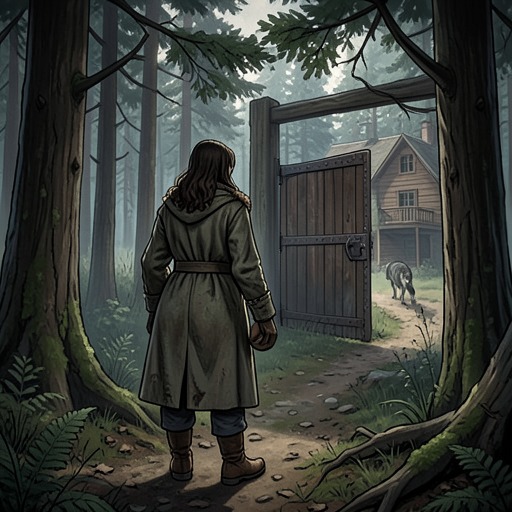
After settling into the tiny cabin, [Mo](entity:character-recall-character-mo-ce137376e62f) woke to frantic cries outside. A bleeding elk stood near the tree line, with an enormous black wolf poised over it, its eyes an uncanny blue-green.
Mo shouted and startled the wolf long enough for the elk to escape. The animal bounded after its prey, leaving Mo frightened by the predator’s intelligence and unsure whether her new home was safe.
Mo’s first days in town
A Newcomer at the Saloon
After finishing the cabin cleanup and returning her rental trailer, [Mo](entity:character-recall-character-mo-ce137376e62f) visited the [Blue Glacier Saloon](entity:location-recall-location-blue-glacier-saloon-c23f1724abbd), the town’s restaurant, bar, and general store. She met its proprietors, [Evie DuChamp](entity:character-recall-character-evie-duchamp-9f03ef1c43ea) and Buzz, and quickly found herself talking about the wolf she had seen outside her home.
The locals’ friendly attention made Mo feel less isolated, though it also felt as if the town were assessing her as a possible wife. When she collided with [Cooper Graham](entity:character-recall-character-cooper-graham-16ff091a8aea), his blue-green eyes recalled the wolf’s, but his surly manner gave her no reason to connect the two yet.
Mo’s first shift at the saloon
Buzz’s Bottle-Cutting Accident
During the busy lunch rush, Buzz badly cut his hand while trying to prove that a new knife could slice through a beer bottle. [Evie](entity:character-recall-character-evie-fa6b246e6974) needed to take him for medical care, but the saloon could not be left without someone to run the kitchen.
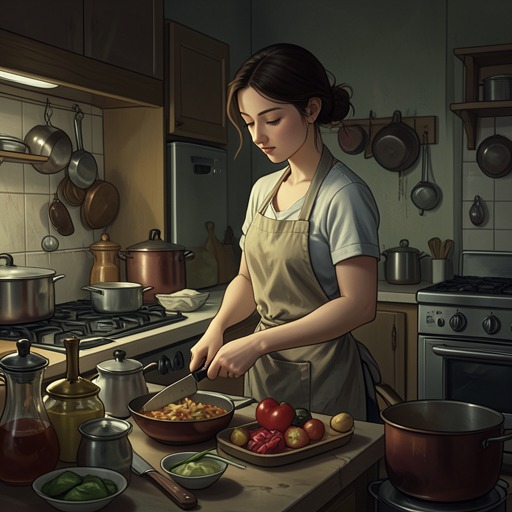
[Mo](entity:character-recall-character-mo-ce137376e62f) volunteered, drawing on her years cooking at [Tast-E-Grill Drive-In](entity:location-recall-location-tast-e-grill-drive-i-f246b44cfe02). She handled the orders successfully, and when Buzz’s injury required surgery far away, Evie offered her a full-time kitchen job.
During Mo’s first week in Grundy
Mo Finds Her Place
[Mo](entity:character-recall-character-mo-ce137376e62f) settled into the work at the [Blue Glacier Saloon](entity:location-recall-location-blue-glacier-saloon-c23f1724abbd), earning a reputation for reliable cooking and an easy rapport with the customers. [Evie](entity:character-recall-character-evie-fa6b246e6974) gave her room to experiment, and the kitchen offered Mo a welcome balance of community and personal space.
[Nate Gogan](entity:character-recall-character-nate-gogan-7066ec0ee103) and the town’s single men continued their matchmaking campaign, while [Lynette](entity:character-recall-character-lynette-71e9799b4a32) treated Mo as competition. The attention was awkward, but Mo began to feel like a contributing member of [Grundy](entity:location-recall-location-grundy-3df110abc841) rather than a visitor passing through.
Mo’s first Friday at the saloon
Alan’s Welcome
[Nate](entity:character-recall-character-nate-2e920d181f48) introduced [Mo](entity:character-recall-character-mo-ce137376e62f) to Alan Dahling, the local forestry ranger, who offered to serve as her official welcome wagon. Alan’s warmth, humor, and flirtation delighted her, and his regular visits soon became an easy source of pleasure.
Mo appreciated that Alan kept their conversations light rather than demanding confidences. Although she was not yet looking for a relationship, his open interest offered a gentler contrast to her unresolved attraction to the prickly [Cooper Graham](entity:character-recall-character-cooper-graham-16ff091a8aea).
Mo’s first Sunday in Grundy
The Grocery Store Clash
While shopping at Hannigan’s Grocery, [Mo](entity:character-recall-character-mo-ce137376e62f) ran her cart into [Cooper Graham](entity:character-recall-character-cooper-graham-16ff091a8aea)’s. [Cooper](entity:character-recall-character-cooper-abcb84e40b6c) criticized her supplies and offered to help move her exercise machine into the house, but his condescending tone turned the offer into another argument.
Mo declined and pointed out that Alan had already offered assistance. Cooper reacted sharply to Alan’s name, then left Mo wondering why she cared so much about the opinion of a man who seemed to dislike her.
During Mo’s first weeks in Grundy
Mo’s Call Home
After speaking with [Kara Reynolds](entity:character-recall-character-kara-reynolds-c539973d1e9e), [Mo](entity:character-recall-character-mo-ce137376e62f) learned that [Saffron Wenstein](entity:character-recall-character-saffron-wenstein-4c568b7560ed) had discovered her whereabouts through [Kara](entity:character-recall-character-kara-fb2f3d3c2326)’s mother. Mo finally called her own mother, who responded with accusations and pleas for an address and telephone number.
Mo described the intrusion that had driven her away and refused to provide her home contact details, insisting that she needed space. She ended the call shaken but determined to preserve a boundary she had never managed to hold before.
A few days after Mo begins work
The Menu Takes Shape
[Mo](entity:character-recall-character-mo-ce137376e62f)’s chocolate chess squares became an immediate hit at the saloon, winning over customers and even the usually demanding Buzz. The success emboldened her to propose expanding the menu with soups, stews, pot pies, and more desserts.
[Evie](entity:character-recall-character-evie-fa6b246e6974) welcomed the plan, and together they arranged to replace the old menus without alerting Buzz to the change. The work gave Mo a constructive focus after her difficult phone call home and strengthened her sense that she could build a lasting role in the town.
Immediately after the alley kiss
The Secret Behind Cooper’s Eyes
[Cooper](entity:character-recall-character-cooper-abcb84e40b6c) kissed [Mo](entity:character-recall-character-mo-ce137376e62f), then noticed the bruises left by [John Teague](entity:character-recall-character-john-teague-d44cb026ae54). His remorse and the familiar blue-green eyes made Mo recognize him as the wolf that had protected her in the alley.
Cooper disappeared before she could question him. Mo was left to reconcile the supernatural explanation with her earlier assumptions, and she began to suspect that the man who had tormented her might also have saved her life.
Mo’s thirtieth birthday
A Birthday Among Friends
[Mo](entity:character-recall-character-mo-ce137376e62f) arrived at the saloon expecting an ordinary shift and was startled by a surprise party organized by [Evie](entity:character-recall-character-evie-fa6b246e6974), Buzz, and the [Grundy](entity:location-recall-location-grundy-3df110abc841) regulars. Doughnuts, streamers, and affectionate teasing made the gathering the best birthday celebration she could remember.
Alan arrived late with bear mace as a protective gift. His kiss was tender, but [Cooper](entity:character-recall-character-cooper-abcb84e40b6c) briefly appeared, saw them together, and withdrew, leaving Mo with a painful awareness of the tension between her attraction to Cooper and her affection for Alan.
Later on Mo’s thirtieth birthday
Cooper’s Thunderegg
A small box left at the saloon contained a thunderegg, which [Evie](entity:character-recall-character-evie-fa6b246e6974) opened to reveal crystal surrounded by agate. Evie admitted that [Cooper Graham](entity:character-recall-character-cooper-graham-16ff091a8aea) had left it for [Mo](entity:character-recall-character-mo-ce137376e62f) as an apology.
Mo struggled to reconcile the thoughtful gift with [Cooper](entity:character-recall-character-cooper-abcb84e40b6c)’s continuing hostility. Evie urged her to consider that Cooper might care for her, but Mo went to Alan’s planned birthday dinner still uncertain about what she wanted.
The evening of Mo’s thirtieth birthday
Alan’s Birthday Dinner
[Mo](entity:character-recall-character-mo-ce137376e62f) went to Alan’s home carrying chocolate chess squares, only to find that his frozen brownies had burned. They ate store-bought lasagna and talked about family, independence, and the pressure of living according to other people’s expectations.
Alan kissed Mo, and she enjoyed his gentleness, but stopped him before the evening went further. She liked him and wanted to see him again, yet she felt their connection was moving too easily and was not ready to confuse affection with desire.
About a week after Mo’s birthday
The Naked Visitor
[Mo](entity:character-recall-character-mo-ce137376e62f) found a wounded naked man on her porch with a bear trap clamped around his ankle. The man was [Cooper Graham](entity:character-recall-character-cooper-graham-16ff091a8aea), who begged her for tools and insisted that she not call a doctor.
Mo released his leg, cleaned and dressed the wounds, and watched them heal with unnatural speed. [Cooper](entity:character-recall-character-cooper-abcb84e40b6c) warned her not to be afraid of what she might see, leaving Mo to spend the night beside the injured man and wonder what he was hiding.
Before sunrise after Cooper’s injury
The Wolf in the Living Room
[Mo](entity:character-recall-character-mo-ce137376e62f) woke to find a huge black wolf curled on her rug. She cautiously touched its fur, recognizing [Cooper](entity:character-recall-character-cooper-abcb84e40b6c) in the animal’s blue-green eyes, and the wolf responded with unexpected gentleness.
At sunrise, Cooper changed back into human form. He finally admitted that he was a werewolf and asked Mo to keep the secret, though he still tried to dismiss her role in saving him and evade her questions.
Immediately after Cooper reveals his secret
The Second Kiss
[Mo](entity:character-recall-character-mo-ce137376e62f) demanded that [Cooper](entity:character-recall-character-cooper-abcb84e40b6c) acknowledge her courage and apologize for treating her as a weak outsider. He gave her a grudging apology, but insisted that the two of them were not friends.
When Mo began asking about werewolves, Cooper kissed her to stop the questions. Mo responded to the kiss despite herself, then reminded him that his attraction did not excuse his behavior and sent him away into the cold in wolf form.
The day after Cooper’s injury
The Attack on Susie Q
[Mo](entity:character-recall-character-mo-ce137376e62f) learned that Susan Quinn had been found badly mauled outside her home. Her throat, jaw, ribs, and hand were severely injured, and doctors were uncertain whether she would ever speak again.
The timing made Mo fear that the wolf responsible might be [Cooper](entity:character-recall-character-cooper-abcb84e40b6c). The town’s shock quickly turned to anger, and talk of hunting wolves spread through the saloon, putting Cooper and the pack at risk.
Shortly after Susie Q is attacked
A Promise to Trust
[Mo](entity:character-recall-character-mo-ce137376e62f) went to Susan Quinn’s house to care for Oscar and found large wolf tracks near the place where Susan had been injured. [Cooper](entity:character-recall-character-cooper-abcb84e40b6c) appeared and admitted that he could not remember being there or determine whether the scent was his.
Although Mo could not prove Cooper innocent, she chose to trust that he had not attacked a defenseless woman. She promised to keep his secret but warned him that she would personally help Alan capture him if she learned he had harmed Susan.
After Susie Q is hospitalized
Oscar Comes Home
With Susan Quinn in intensive care, [Mo](entity:character-recall-character-mo-ce137376e62f) went back to care for Oscar. The dachshund refused to stay alone, climbed into Mo’s truck, and effectively chose her as his temporary home.
Mo agreed to keep him while Susan recovered. Oscar’s company gave Mo a comforting routine and helped ease the isolation of living in a remote cabin, even as the wolf attacks remained unresolved.
The weeks after Susie Q’s attack
Cooper’s Stories Return
[Cooper](entity:character-recall-character-cooper-abcb84e40b6c) began visiting the saloon again and gradually spoke to the regulars instead of avoiding them. His stories about misleading foolish hunting clients revealed humor and an unexpected talent for entertaining people.
[Mo](entity:character-recall-character-mo-ce137376e62f) found herself increasingly affected by his rare smiles. Their conversations became less openly hostile, but neither of them could yet make a clean break from the suspicion, attraction, and secrets between them.
As the weather grows colder
A Bear in the Woods
While walking Oscar near her cabin, [Mo](entity:character-recall-character-mo-ce137376e62f) chased the dog into the woods and found herself confronted by a huge grizzly bear. She froze rather than reaching for the bear mace Alan had given her.
[Cooper](entity:character-recall-character-cooper-abcb84e40b6c), in wolf form, placed himself between Mo and the bear. After the animal retreated, Cooper scolded her for taking risks and told her to stop leaving food outside, which was attracting prey and larger predators to her home.
As winter approaches
The Big Freeze Preparations
[Mo](entity:character-recall-character-mo-ce137376e62f) and [Evie](entity:character-recall-character-evie-fa6b246e6974) traveled to Conover for supplies, shopping, and a day away from the saloon. Mo’s anxiety about winter showed in a growing stockpile of food and household goods, until Evie staged an intervention and explained that [Grundy](entity:location-recall-location-grundy-3df110abc841) residents had endured many winters.
Evie also described the Big Freeze, the town’s last major gathering before winter isolation. Mo resisted the matchmaking implications, especially the suggestion that she should attend in her red dress and consider [Cooper](entity:character-recall-character-cooper-abcb84e40b6c).
The night of the Big Freeze party
The Dance with Alan
[Mo](entity:character-recall-character-mo-ce137376e62f) wore her red dress to the Big Freeze party and danced with Alan, hoping to move toward a relationship with him. His attention was sweet, but her body did not respond as she expected, while [Cooper](entity:character-recall-character-cooper-abcb84e40b6c)’s presence and jealousy sparked a much stronger reaction.
Cooper cut in and admitted that he wanted Mo, though Alan interrupted before the moment could develop. Mo left the party alone, newly aware that her desire for Cooper could not be managed by choosing the safer option with Alan.
After the Big Freeze party
The First Night Together
Outside her cabin, [Mo](entity:character-recall-character-mo-ce137376e62f) heard a wolf howl. [Cooper](entity:character-recall-character-cooper-abcb84e40b6c) arrived in wolf form, changed to human, and carried her inside, where their long-suppressed attraction finally became a sexual relationship.
Their night together left Mo delighted and overwhelmed by the intensity between them. Cooper’s physical tenderness and his wolfish instincts made clear that their connection was more complicated than casual desire, even as both avoided discussing what it meant.
The morning after their first night together
The Wolf’s Rules
[Cooper](entity:character-recall-character-cooper-abcb84e40b6c) stayed for breakfast, and [Mo](entity:character-recall-character-mo-ce137376e62f) realized how strongly she wanted him to remain part of her life. Their flirtation continued, and they agreed to keep their relationship private from [Evie](entity:character-recall-character-evie-fa6b246e6974), who would otherwise claim credit for bringing them together.
Before leaving for a hunting job, Cooper asked Mo not to wash away his scent, explaining that it was a werewolf custom. Mo followed the request because she liked the reminder of him, and their bond began to shape ordinary decisions as well as their sexual relationship.
During Cooper’s first several-day guiding trip
The Missing Hikers
Two young visitors, [Craig Ryan](entity:character-recall-character-craig-ryan-961ca67d52fb) and [Jacob Bennett](entity:character-recall-character-jacob-bennett-d669353b7b8c), disappeared in the preserve after setting out to camp. A search party found their campsite torn apart and stained with blood, with unusually large wolf tracks nearby.
Alan feared that something had organized the attack and worried that armed locals would respond recklessly. [Mo](entity:character-recall-character-mo-ce137376e62f) feared the evidence might point to [Cooper](entity:character-recall-character-cooper-abcb84e40b6c), while Cooper was away guiding and could not explain what had happened.
After the search for the missing hikers begins
Cooper Returns to the Valley
[Samson](entity:character-recall-character-samson-c87592e1fded) arrived at [Mo](entity:character-recall-character-mo-ce137376e62f)’s cabin with news that [Noah Graham](entity:character-recall-character-noah-graham-6e24b32ae41b) had suffered a frightening episode of disorientation. [Cooper](entity:character-recall-character-cooper-abcb84e40b6c) initially resisted returning to the pack, fearing that his presence would stir up old conflicts, but Mo insisted on accompanying him.
At the clinic in [Crescent Valley](entity:location-recall-location-crescent-valley-e4a2df661af9), Cooper persuaded Noah to accept hospital tests. The reunion showed how much the family still cared for Cooper, even though he had been absent for years and feared that his return would reopen painful wounds.
During Cooper’s first visit home
Maggie’s Attack
[Maggie Graham](entity:character-recall-character-maggie-graham-53bd654d7a22) arrived at the clinic and ordered [Cooper](entity:character-recall-character-cooper-abcb84e40b6c) to leave, accusing him of abandoning his family. She transformed and attacked him, and Cooper defended himself without striking back as the relatives watched the fight unfold.
[Mo](entity:character-recall-character-mo-ce137376e62f) refused to let the family treat the violence as harmless tradition. She used a fire extinguisher to separate the siblings and confronted [Maggie](entity:character-recall-character-maggie-39724c72a859), who struck Mo hard enough to knock her unconscious.
The past revealed during Mo and Cooper’s camping trip
The Attack in the Valley
After the missing hikers’ remains were found, [Cooper](entity:character-recall-character-cooper-abcb84e40b6c) took [Mo](entity:character-recall-character-mo-ce137376e62f) camping so he could finally explain why he had left his family. He told her that an invading pack led by Jonas had threatened [Maggie](entity:character-recall-character-maggie-39724c72a859) to seize the valley.
Cooper froze at the critical moment, then transformed and killed the attackers when they began fighting his family. Though the pack saw him as a protector, Cooper could not live with the killings and left, while Maggie interpreted his departure as a rejection of her and the pack.
The morning after Cooper’s confession
Abner’s Death
On the way back from camping, [Cooper](entity:character-recall-character-cooper-abcb84e40b6c) detected a strange smell and ran ahead. [Mo](entity:character-recall-character-mo-ce137376e62f) followed and found [Abner Golightly](entity:character-recall-character-abner-golightly-277f936c8d0d) gravely wounded in a clearing, with claw wounds and signs of a brutal attack.
[Abner](entity:character-recall-character-abner-b2203a8dc2d7) briefly regained consciousness but died in Mo’s arms after seeing Cooper in wolf form and panicking. Cooper believed the attacker might still be nearby and hurried Mo to safety, leaving the death to be reported to the authorities afterward.
The days after Abner’s death
Cooper’s Self-Imposed Exile
[Cooper](entity:character-recall-character-cooper-abcb84e40b6c) withdrew from [Mo](entity:character-recall-character-mo-ce137376e62f) after [Abner](entity:character-recall-character-abner-b2203a8dc2d7) died, stopped answering her calls, and avoided the saloon. When Mo confronted him, he admitted that he had secretly run home on the night [Craig Ryan](entity:character-recall-character-craig-ryan-961ca67d52fb) and [Jacob Bennett](entity:character-recall-character-jacob-bennett-d669353b7b8c) disappeared and feared that his lost wolf memories might conceal guilt.
Mo argued that he was retreating from fear rather than confronting the truth. Cooper could not accept her reassurance and ran into the woods, leaving Mo alone with grief, anger, and the possibility that the man she loved might be dangerous.
Several weeks into Cooper’s absence
Mo Discovers the Pregnancy
As [Mo](entity:character-recall-character-mo-ce137376e62f) struggled to sleep and eat, she received her werewolf-relationship books and read about the strong bond between wolves and their mates. Her missed period and persistent nausea suddenly took on a different meaning.
Mo realized she might be pregnant and, after confirming it with a test at the [Crescent Valley](entity:location-recall-location-crescent-valley-e4a2df661af9) clinic, learned that the baby would have a shortened gestation. She decided to continue the pregnancy despite having no certainty that [Cooper](entity:character-recall-character-cooper-abcb84e40b6c) would return.
Soon after Mo confirms her pregnancy
Gracie’s Reassurance
[Mo](entity:character-recall-character-mo-ce137376e62f) confided in [Gracie Graham](entity:character-recall-character-gracie-graham-31cdd3fc6d95), terrified that she might raise a child alone and unsure how to care for a werewolf baby. [Gracie](entity:character-recall-character-gracie-d608f43e4ecb) reassured her that the family and pack would support her, and arranged for Dr. Moder to examine her privately.
After the pregnancy test came back positive, Mo received prenatal vitamins and a special guide to werewolf pregnancy. Her future became concrete: the baby was due in about four months, whether or not [Cooper](entity:character-recall-character-cooper-abcb84e40b6c) returned in time.
During Mo’s visit to Crescent Valley
Maggie’s Anger
[Maggie](entity:character-recall-character-maggie-39724c72a859) confronted [Mo](entity:character-recall-character-mo-ce137376e62f) at [Gracie](entity:character-recall-character-gracie-d608f43e4ecb)’s home, insisting that she did not belong in the valley and accusing [Cooper](entity:character-recall-character-cooper-abcb84e40b6c) of disappointing everyone who loved him. Mo pushed back, calling out the damage Maggie’s resentment had done to her brother.
[Eli](entity:character-recall-character-eli-90681e812a09) ended the confrontation, then spoke privately with Mo. He advised her not to wait for Cooper and acknowledged that he had pressured her to bring Cooper home, a pressure that may have helped drive him away.
On the drive back from Crescent Valley
A New Conversation with Home
[Mo](entity:character-recall-character-mo-ce137376e62f) returned a message from [Saffron Wenstein](entity:character-recall-character-saffron-wenstein-4c568b7560ed) and was surprised to reach her parents at the [Spirit Wind Bed-and-Breakfast](entity:location-recall-location-spirit-wind-bed-and-9913069bf929). [Ash](entity:character-recall-character-ash-4997dc421b44) and Saffron had transformed the old commune into a small ecotourism retreat and had begun building a life together beyond their identity as Mo’s parents.
They admitted that Mo had been right to leave and that they had been too controlling. Their apology eased a burden Mo had carried for years, though she still withheld the truth about her pregnancy and the supernatural world she had entered.
During Cooper’s continued absence
Alan’s Offer
Alan brought [Mo](entity:character-recall-character-mo-ce137376e62f) pizza and wine after noticing how unhappy she had become. He kissed her, and for a moment she was tempted by the comfort of someone dependable, but she could not make herself betray [Cooper](entity:character-recall-character-cooper-abcb84e40b6c) or their unresolved relationship.
Mo told Alan that she was pregnant and intended to have the baby. Alan offered to help raise the child, but Mo refused to accept a life with him out of loneliness or obligation, preserving their friendship at the cost of hurting him.
Several weeks after Cooper leaves
Cooper Returns to Mo
[Cooper](entity:character-recall-character-cooper-abcb84e40b6c) returned to [Mo](entity:character-recall-character-mo-ce137376e62f)’s cabin under the full moon and embraced her, telling her that he had missed and loved her. He admitted that [Gracie](entity:character-recall-character-gracie-d608f43e4ecb) had found him and confronted him about abandoning the person who mattered most to him.
Cooper had learned that Mo was pregnant, but Mo feared he had come back only out of duty. She ordered him away until she could trust that he wanted her for herself and not merely as the mother of his child.
The week after Cooper returns
A Week on the Porch
[Cooper](entity:character-recall-character-cooper-abcb84e40b6c) stayed outside [Mo](entity:character-recall-character-mo-ce137376e62f)’s cabin in wolf form, guarding her and walking her to and from her truck while she refused to speak to him. He left uprooted wildflowers on her porch as an awkward apology, remaining close despite her rejection.
Eventually Mo asked him to change back so they could talk. Cooper explained that marking a mate was permanent for werewolves and that he had known he could never choose another partner, yet had still been willing to risk losing Mo rather than endanger her.
After Mo and Cooper resume speaking
The Mate Mark
[Cooper](entity:character-recall-character-cooper-abcb84e40b6c) and [Mo](entity:character-recall-character-mo-ce137376e62f) reconciled, and he admitted that he could not stay away from her, with or without the baby. He also explained that he had marked the territory around her home to keep predators away.
Cooper’s confession that he had urinated on her doorstep horrified Mo, but it showed how his protective instincts had operated even during their separation. She accepted him back while making clear that love would not erase the hurt he had caused.
After the hikers’ remains are found
The Wolf Hunt Begins
[Grundy](entity:location-recall-location-grundy-3df110abc841)’s residents became increasingly alarmed by the attacks, and some called for a wolf hunt. Alan continued to investigate while [Mo](entity:character-recall-character-mo-ce137376e62f) tried to support him without disclosing what she knew about [Cooper](entity:character-recall-character-cooper-abcb84e40b6c) and the pack.
The town’s fear turned the mystery into a danger for both ordinary wolves and werewolves. Mo’s divided loyalties became harder to bear as each new attack made silence feel less defensible.
After Cooper leaves on a guiding trip
Eli’s Confession
[Walt Gunther](entity:character-recall-character-walt-gunther-6762a9c9abab) called Alan to report that hunters had shot a wolf. [Mo](entity:character-recall-character-mo-ce137376e62f) panicked at the possibility that it was [Cooper](entity:character-recall-character-cooper-abcb84e40b6c) and asked [Eli](entity:character-recall-character-eli-90681e812a09) to help her reach Alan’s barn before anyone else could interfere.
Inside the barn, Eli revealed that the carcass was an ordinary wolf and that he had engineered the attacks himself. He had secretly assisted the invading pack, then manipulated events to remove Cooper and secure lasting control of the pack.
Immediately after Eli’s confession
The Attack in the Barn
[Eli](entity:character-recall-character-eli-90681e812a09) struck [Mo](entity:character-recall-character-mo-ce137376e62f) and explained that he had attacked Susan Quinn, the hikers, and [Abner Golightly](entity:character-recall-character-abner-golightly-277f936c8d0d) to provoke [Cooper](entity:character-recall-character-cooper-abcb84e40b6c) and make him seem dangerous. He intended to kill Mo and her unborn child so Cooper would be driven beyond recovery.
Mo fought back, but Eli overpowered her and began to transform. Cooper arrived with [Maggie](entity:character-recall-character-maggie-39724c72a859), who had finally reconciled with her brother. Cooper protected Mo, while Maggie joined the fight against Eli.
The confrontation in Alan’s barn
Eli’s Death
[Cooper](entity:character-recall-character-cooper-abcb84e40b6c) fought [Eli](entity:character-recall-character-eli-90681e812a09) while [Maggie](entity:character-recall-character-maggie-39724c72a859) helped keep him from reaching [Mo](entity:character-recall-character-mo-ce137376e62f). Mo attempted to use a tranquilizer gun, but it was empty, leaving Cooper and Maggie to stop Eli themselves.
Cooper killed Eli to save Mo and the baby. Afterward, he promised to explain the truth to the pack and arrange a proper burial, while Mo urged him not to fall back into self-blame for using force to protect his family.
After Eli’s death
Maggie’s Election
With [Eli](entity:character-recall-character-eli-90681e812a09) dead and [Cooper](entity:character-recall-character-cooper-abcb84e40b6c) unwilling to resume leadership, the pack chose a new alpha through a secret ballot. [Maggie](entity:character-recall-character-maggie-39724c72a859) won by a wide margin, taking on the role she had long believed she deserved.
Cooper continued visiting [Crescent Valley](entity:location-recall-location-crescent-valley-e4a2df661af9) without returning to the pack as its leader. Maggie’s new authority, and her reconciliation with Cooper, offered the family a chance to move beyond the conflict that had shaped their separation.
Several weeks before the airport visit
Mo and Cooper Marry
[Cooper](entity:character-recall-character-cooper-abcb84e40b6c) asked [Mo](entity:character-recall-character-mo-ce137376e62f) to marry him and raise their child together. Mo agreed on the condition that they choose a conventional name, rather than one drawn from her parents’ free-spirited naming traditions.
They held a small civil ceremony in Mo’s front yard, with [Nate Gogan](entity:character-recall-character-nate-gogan-7066ec0ee103) officiating and [Kara Reynolds](entity:character-recall-character-kara-reynolds-c539973d1e9e) serving as maid of honor. Alan and [Kara](entity:character-recall-character-kara-fb2f3d3c2326) began a romance of their own, while [Evie](entity:character-recall-character-evie-fa6b246e6974) and Buzz made Mo a part-owner of the saloon in recognition of her contribution.
After the wedding
A Home in Grundy
[Mo](entity:character-recall-character-mo-ce137376e62f) bought the [Meyers place](entity:location-recall-location-meyers-place-57dddf418681) and committed to staying in [Grundy](entity:location-recall-location-grundy-3df110abc841). [Cooper](entity:character-recall-character-cooper-abcb84e40b6c) gave up his own lease and moved into the cabin, where the couple made room for a nursery and began to imagine a shared future.
The pregnancy advanced unusually quickly, but Mo remained healthy. Cooper continued visiting his family, while [Maggie](entity:character-recall-character-maggie-39724c72a859) established herself as alpha and the saloon prepared a nursery so Mo could return to work after giving birth.
Near the end of the novel
The New Family Arrives
[Mo](entity:character-recall-character-mo-ce137376e62f) and [Cooper](entity:character-recall-character-cooper-abcb84e40b6c) met [Saffron Wenstein](entity:character-recall-character-saffron-wenstein-4c568b7560ed) and [Ash Wenstein](entity:character-recall-character-ash-wenstein-56bd07aa1918) at the [Dearly](entity:location-recall-location-dearly-aecd208885c9) airport. Mo’s parents greeted her warmly, and [Ash](entity:character-recall-character-ash-4997dc421b44) welcomed Cooper into the family, while Saffron admired Mo’s grown-out hair and immediately began offering pregnancy advice.
Mo tried to maintain the boundaries she had worked so hard to establish. Then Saffron revealed that she and Ash intended to stay until the baby was born, turning a long-awaited family reunion into a new test of Mo and Cooper’s patience.