Homelessness
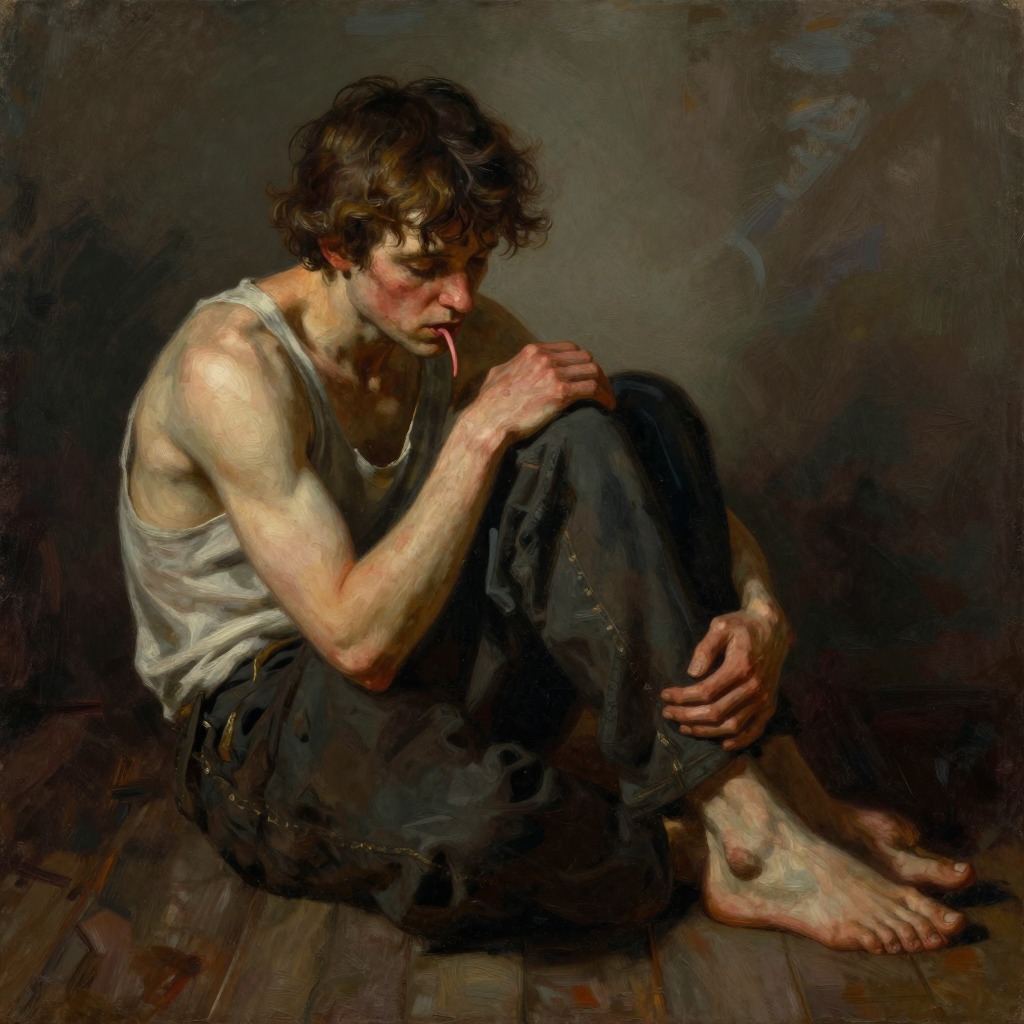
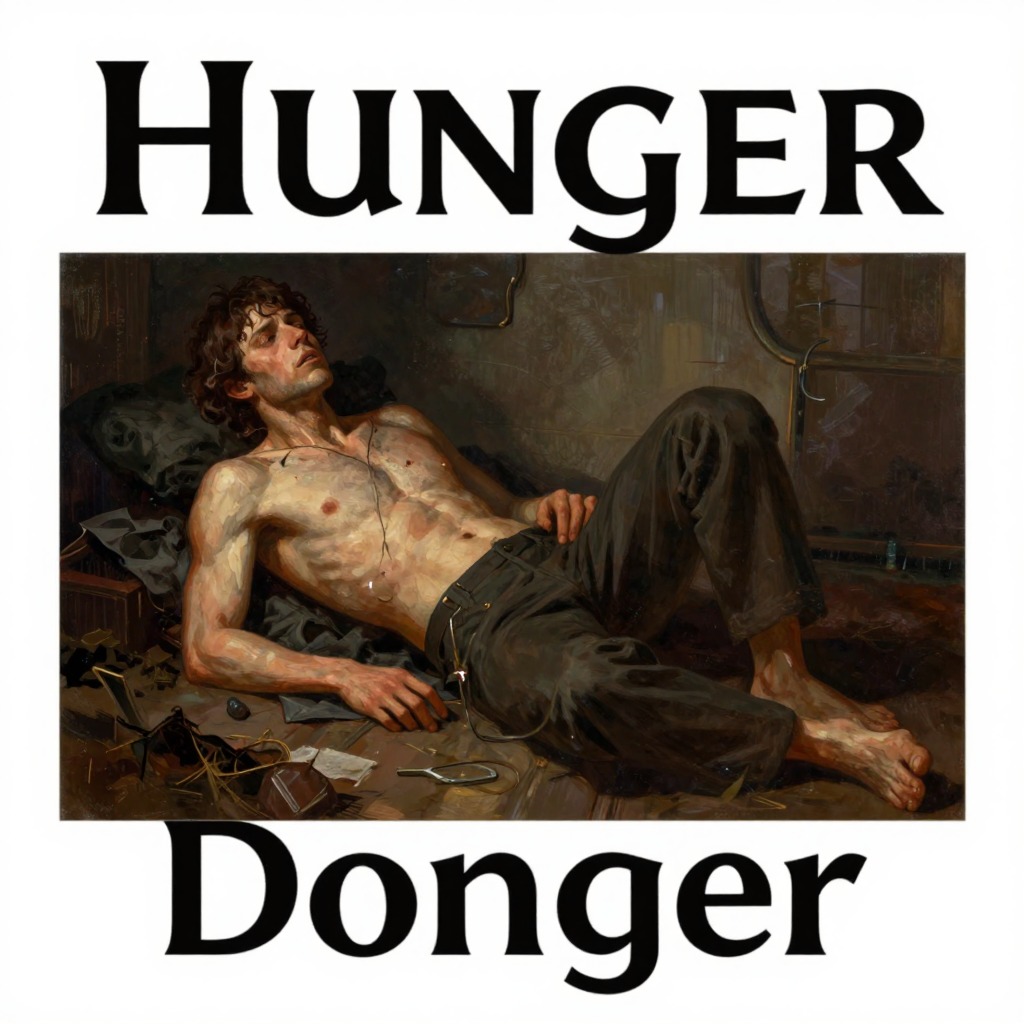
HungerHomelessness is the recurring condition of having no permanent shelter that defines the protagonist's life in Knut Hamsun's Hunger. It is not a single event but a persistent state that shapes his daily existence, his psychological deterioration, and his interactions with the city of Christiania. From the opening pages, where he lies awake in a rented attic, to the final departure on a ship, the lack of a stable home is both a symptom and a cause of his extreme poverty, driving him into the streets, parks, and institutional refuges of the city.
Origins and Escalation
The protagonist's homelessness begins with his inability to pay rent. Early in the novel, he lives in a bare attic room with no stove, a door without a proper fastening, and walls papered with old newspapers. The room is so dilapidated that the floor rocks with every step, and eerie sounds moan through the walls when it blows hard. He is already behind on rent, and his landlady, Mrs. Gundersen, eventually leaves a note demanding payment in advance or that he move out. He responds by leaving voluntarily, taking only a red handkerchief with a few collars and some crumpled newspapers, and a borrowed green blanket. This voluntary departure, buoyed by the hope that a just-written story will be accepted, marks the beginning of a prolonged period without a fixed address. He bows mockingly to the lighthouse director's announcement and Miss Andersen's winding-sheet advertisement on his wall before leaving, a gesture that underscores his detachment from the domestic space he is abandoning.
Sleeping in the City's Margins
Without a home, the protagonist resorts to sleeping in whatever marginal spaces the city offers. After his first night of homelessness, he walks to Bogstad's Wood, gathers heather and juniper leaves for a bed on a damp declivity, and lies down with his shoes under his head and the Semb's wrapping paper on top. He wakes at dawn, shivering and with water running from his eyes. On another occasion, he spends the night behind a deal hoarding between the church and the bazaar, only to be roused by a policeman who tells him it is too cold to lie there. He also sleeps on a bench near the railway bridge, where he dreams of Princess Ylajali, and is again awakened by a policeman. The police become a recurring presence in his homelessness: they wake him, question him, and eventually direct him to the guard-house as a place for the homeless. He spends one night in a police cell, registering under the false name Andreas Tangen and claiming to be a journalist for the Morgenbladet, a lie that earns him a place in the "reserved section." The cell, with its gaslight that burns for only ten minutes, becomes a temporary refuge, but the darkness that follows triggers a night of hallucination and terror, during which he invents the word "Kuboa" and wrestles with the fear of madness.
The Lodging House and Final Eviction
For a period, the protagonist finds shelter in a lodging house in Vaterland, a poor district of Christiania. He stays in the best guest-room on the second floor, working on an allegory about a fire in a bookshop. The landlady provides him with bread and butter, but he cannot pay, and after three weeks she demands that he leave. When a sailor arrives and pays a month in advance, the protagonist is forced to give up his room and sleep on the floor of the family's common room. The family's hostility grows: the landlady's servant mocks his shabby shoes and his falling hair, and the children torment a paralyzed old man. When the protagonist protests the children's cruelty, the landlady erupts, screaming that she will not keep "vermin" who cannot pay. She orders him out, and only the landlord's reminder that it is illegal to turn people out at night prevents immediate expulsion. The next morning, the protagonist leaves before dawn, wandering the streets until he finds a seat near the fortress, where he dozes. He returns to the lodging house one more time to retrieve his papers, but the landlady finds him and threatens to fetch the police. He leaves for good, throwing a half-sovereign—sent anonymously by Ylajali—in her face as a final, defiant gesture.
The City as a Hostile Environment
Throughout his homelessness, the city of Christiania itself becomes an antagonist. The protagonist is constantly moved along by police, park-keepers, and shopkeepers. He is told he cannot sleep in the park, cannot sit on steps for too long, and cannot disturb the peace. The cold, wet winter weather—a raw, foggy season almost without snow—exacerbates his suffering. He has no overcoat, no waistcoat, and his shoes are torn and crushed. His hunger, intensified by the lack of a place to cook or store food, drives him to desperate acts: he steals five shillings from a provision shop, begs a bone from a butcher, and chews wood shavings and a pebble to stave off the pangs. The only respite comes from the "Commandor," an editor who gives him half-a-sovereign when he encounters him near the railway station, and from Ylajali, who sends him money through a commissionaire. But these are temporary reprieves in a state that seems inescapable.
Resolution Through Departure
The state of homelessness is resolved not by finding a home but by leaving the city altogether. After his final eviction from the lodging house, the protagonist wanders to the wharf, where he sees the barque Copégoro flying the Russian flag. He asks the captain if he needs a man, and despite having no experience, he is taken on as a crew member. The ship is sailing in ballast for Leith to fetch coal for Cadiz. As the vessel moves out into the fjord, the protagonist drags himself up, wet with fever and exhaustion, and gazes back at Christiania, where the windows gleam brightly in all the homes. His homelessness ends not with the acquisition of shelter but with the abandonment of the city that could not provide it.