Honor
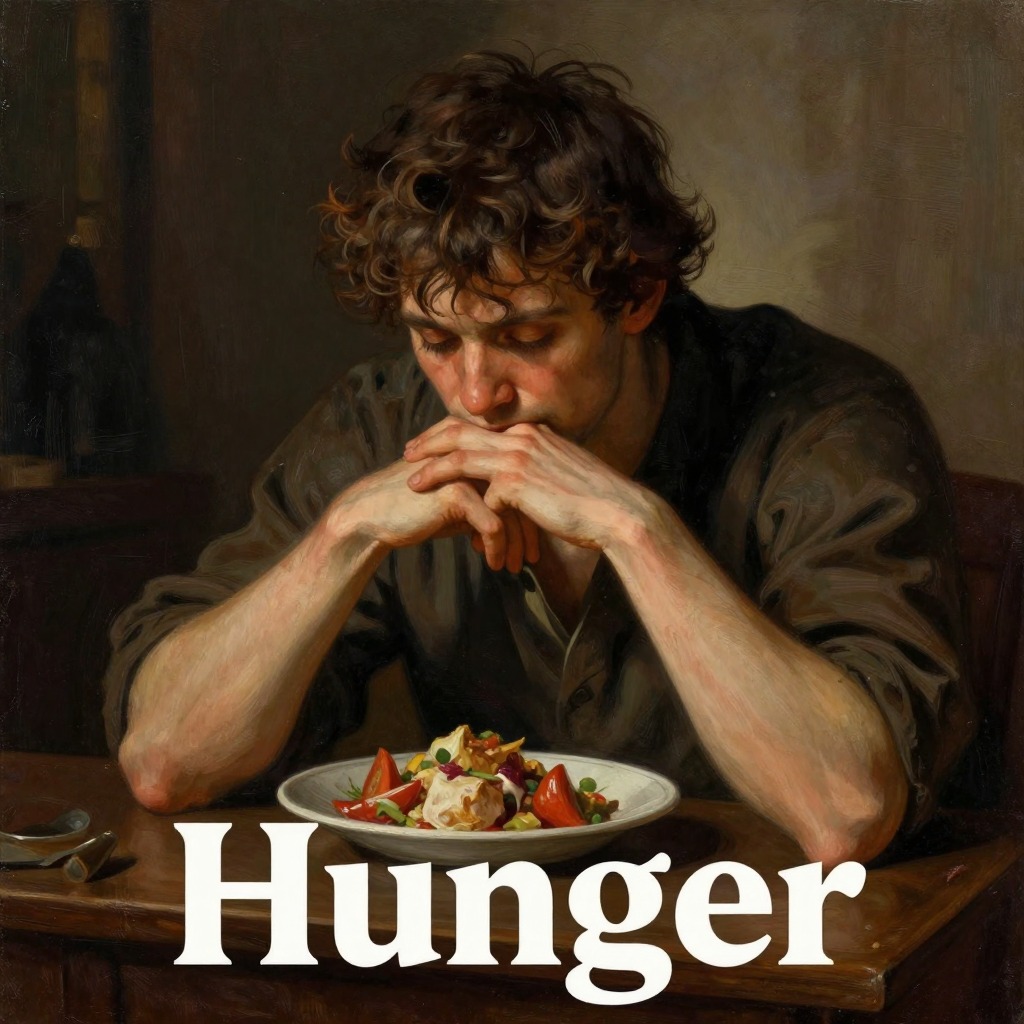
HungerHonor is the central moral axis of Knut Hamsun's Hunger, a fragile, internalized code that the starving narrator repeatedly tests, violates, and reasserts as his physical deprivation deepens. It functions as both his last claim to dignity and the source of his most acute suffering, driving the novel's psychological drama.
Identity and the Internal Code
For the narrator, honor is not a social reputation but a private, almost religious standard he holds himself to, even when no one is watching. He declares that his sense of honor is what keeps him afloat, and that it is strong enough to have sustained him so far. This internal code is what makes him recoil from the thought of pawning Hans Pauli's blanket, a borrowed item he has no right to sell. He tells himself that he is no virtuous idiot, but when he actually attempts the pawn and fails, he feels relief, smoothing the blanket back over the bed and trying to wipe away every trace of his late action, rejoicing that he had not had the opportunity to carry into effect this fault which would have sullied the last hours he had to live. The code is also what drives him to confess his theft of five shillings to the shopkeeper, even though the man has not yet discovered the crime. He explains the whole thing, shows him where the fact was accomplished, and insists that he gave the money away to a poor old woman, because it was opposed to his thoroughly honest nature.
The Erosion of Honor by Hunger
Hunger systematically erodes this code, forcing the narrator into actions he would otherwise consider shameful. He lies without blushing, cheats poor people out of their rent, and struggles with the meanest thoughts of making away with other men's blankets, all without remorse or prick of conscience. He notes that foul places have begun to gather in his inner being, black spores which spread more and more. The most dramatic collapse comes when he steals the five shillings from the provision shop, a moment he immediately identifies as his first downright dishonesty, his first great fall. Later, he accepts half-a-sovereign from Ylajali, sent via a commissionaire, and the realization that he has taken alms from her fills him with sick pain and shame. He whispers her name a few times with hoarse voice and flings back his head, seeing this as the climax of his degradation: to accept half-a-sovereign in alms without being able to fling it back to the secret donor, to scramble for half-pence whenever the chance offered and keep them, in spite of one's intense inner aversion.
Honor as a Weapon and a Performance
Despite its erosion, honor remains a tool the narrator uses to assert superiority over others. When Missy suggests he made a false entry at his bookkeeping job, the narrator throws back his head and declares that it is simply his sense of honor that keeps him afloat now, and that it is strong enough to have kept him up to date. He uses the same rhetoric to humiliate the shopkeeper after confessing the theft, insisting that he scorned to derive any benefit from the money because that was opposed to his thoroughly honest nature. He even performs honor publicly, giving the stolen five shillings to the cake woman, and then reflecting that there was a wonderful savour in feeling oneself an honest man once more. He tells himself that he has raised himself in his own estimation again, and that his empty pockets troubled him no longer.
The Theft of Honor and Its Restoration
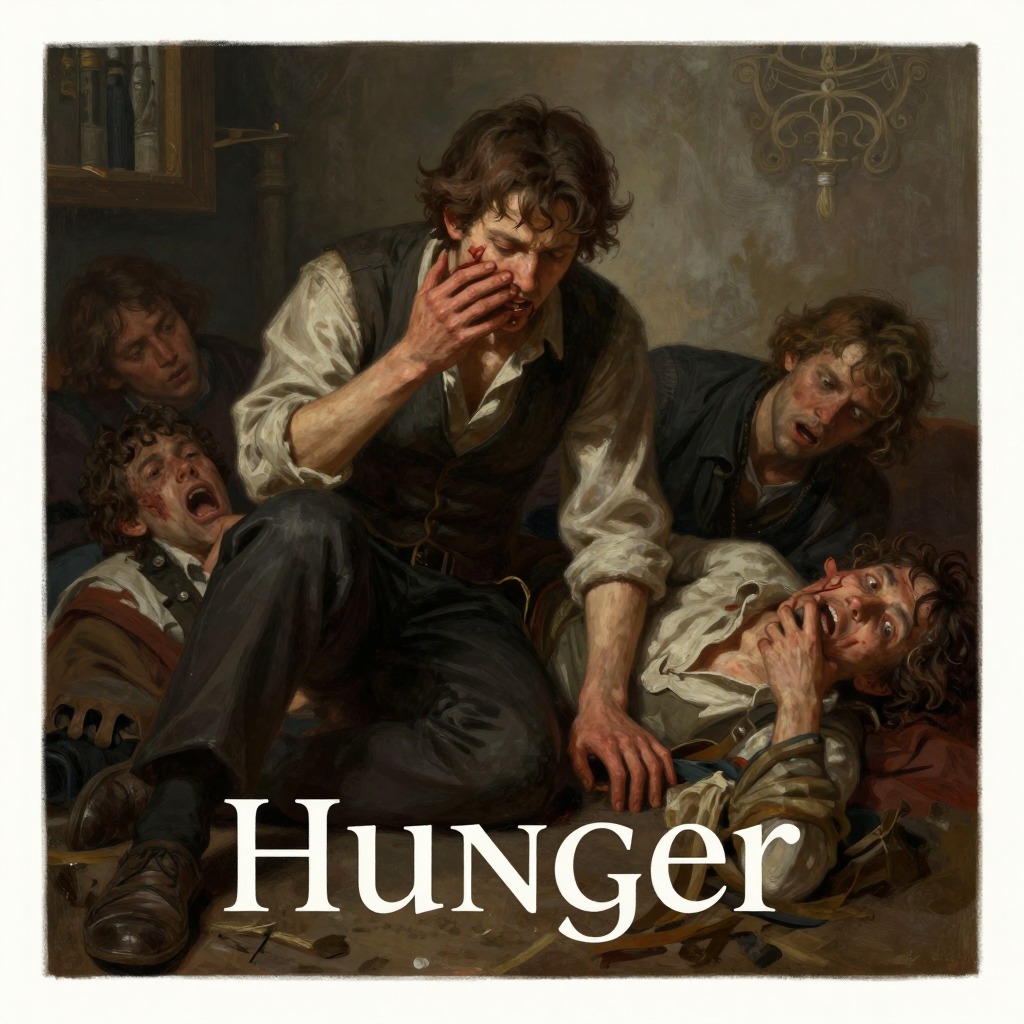
The theft of the five shillings is the novel's central crisis of honor, but the narrator's response is paradoxical. He immediately feels the money weighs in his pocket sinfully and gives him no peace, and he becomes clearly convinced that he had been happier before, during the period in which he had suffered in all honour. He purges the guilt by giving the money away, but this act of restoration is itself a performance. When he later confesses to the shopkeeper, he does so not out of remorse but out of a need to reassert his own moral identity, even as he bullies the man for not having discovered the crime. The final, most dramatic act of honor comes when he receives the half-sovereign from Ylajali. He crumples the coin and envelope together and flings it straight in the face of his landlady, who is persecuting him. He says nothing, utters no syllable, and reflects that this is what one might call comporting oneself with dignity, making one's exit with dignity. This violent, theatrical gesture is the last assertion of honor in the novel, a defiant refusal of charity that simultaneously confirms his utter destitution.
Thematic Significance
Honor in Hunger is not a stable virtue but a dynamic, agonizing process. It is the last thing the narrator clings to as he sinks, and the first thing he sacrifices for survival. The novel dramatizes the gap between the narrator's internal ideal of honor and the degrading actions hunger forces upon him, creating a psychological tension that is the book's true subject. His honor is a private religion, a code that only he enforces, and its repeated violation and reassertion is the rhythm of his descent. The final act of throwing the half-sovereign in the landlady's face is not a triumph but a desperate, hollow gesture, a performance of honor that changes nothing about his material condition. It is the last flare of a dying flame, a final, futile assertion of the self before he signs on to the Copégoro and leaves Christiania behind.