Conscience
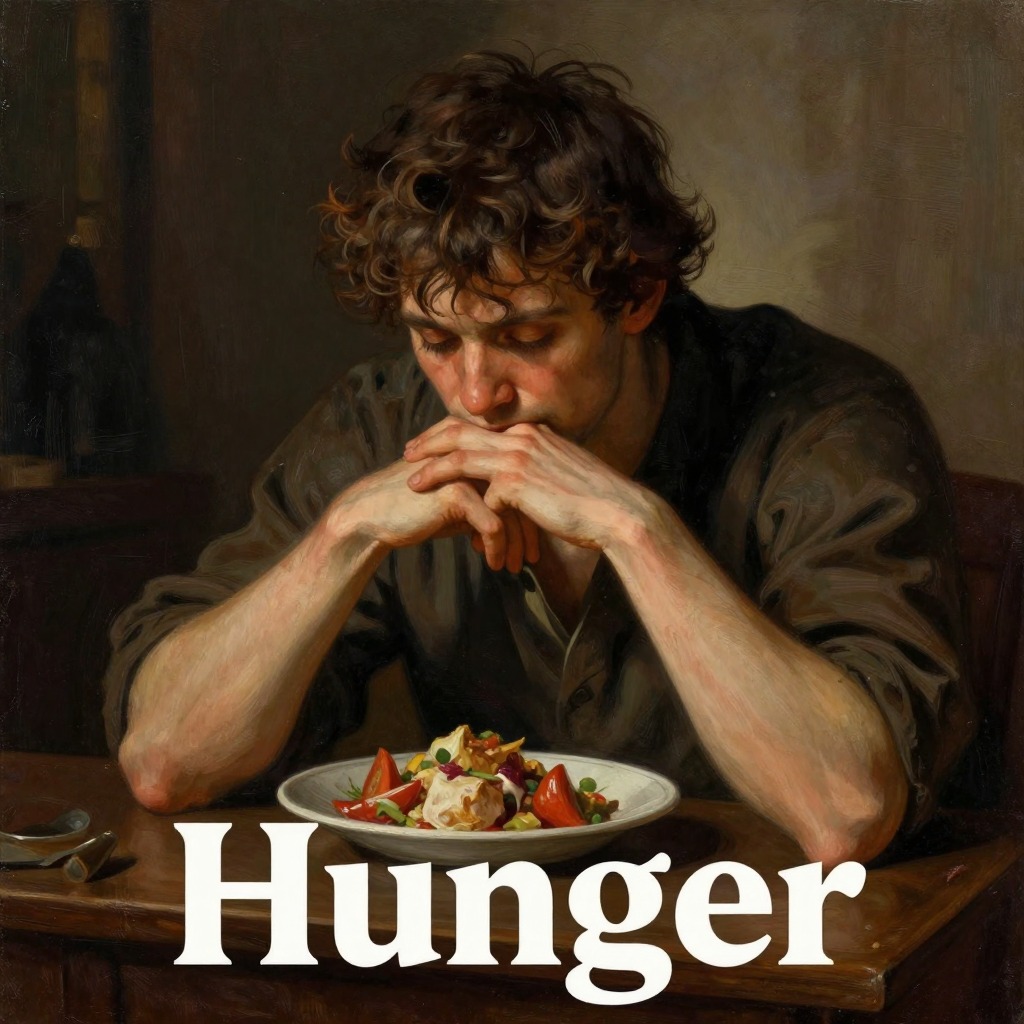
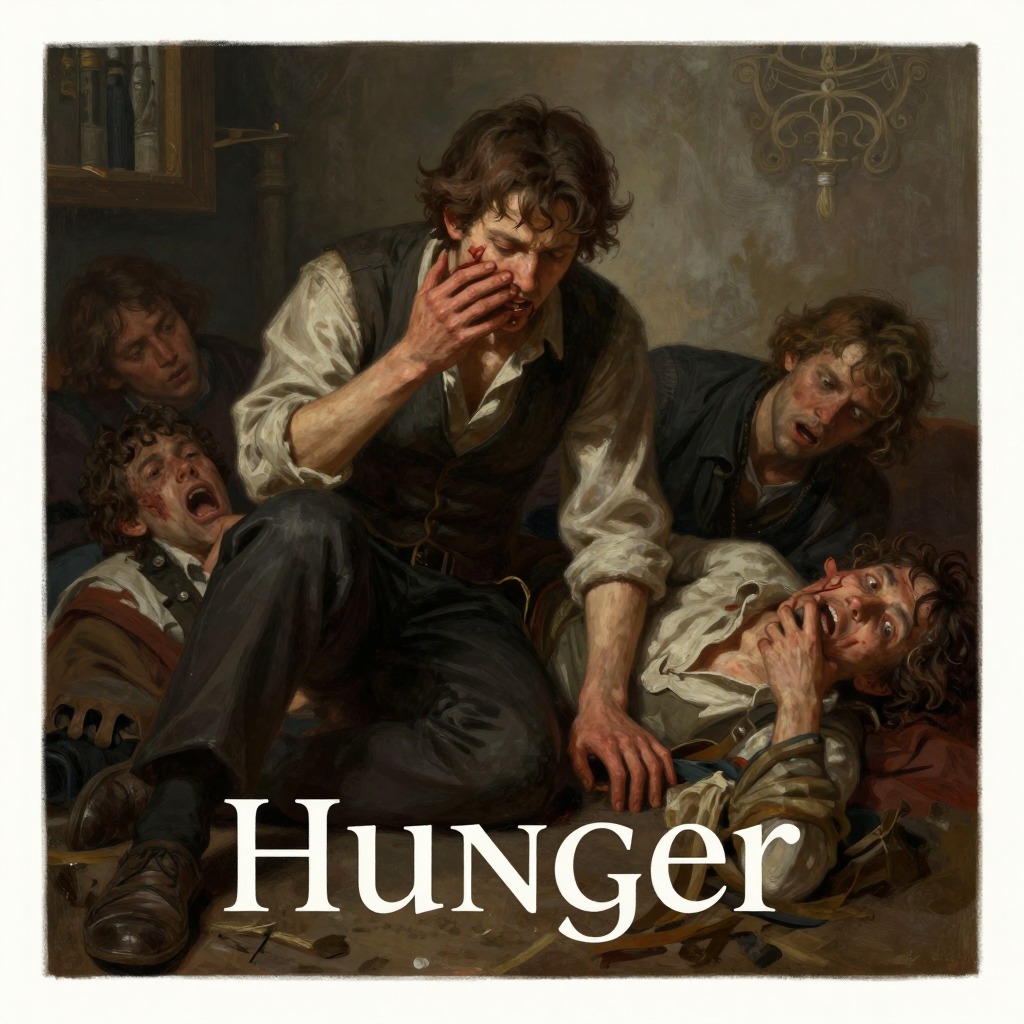
HungerIn Knut Hamsun's Hunger, conscience is not a quiet, abstract guide but a fierce, embodied presence that the protagonist wrestles with at every turn. It is the internal voice that judges his every compromise, the source of his most acute shame, and the fragile foundation upon which he builds his sense of honor. As he spirals through starvation, homelessness, and social humiliation, his conscience becomes both his tormentor and his last claim to a coherent self, a force that he alternately obeys, betrays, and fiercely defends.
Identity and Moral Foundation
The protagonist's conscience is established early as the bedrock of his identity, a quality he clings to even as his material world crumbles. He takes pride in being "pure and honourable," a feeling that rises to his head and fills him with a "splendid sense of having principle, character, of being a shining white beacon in a muddy, human sea amidst floating wreck" . This self-image is not merely vanity; it is the psychological counterweight to his physical destitution. When he resists the temptation to pawn Hans Pauli's blanket, he experiences a profound moral victory, telling himself that he is "yet pure and honourable" . His conscience is the measure of his humanity, the one possession he refuses to surrender. Yet this very attachment to moral purity makes him acutely vulnerable. The shame of being mistaken for a beggar—when a young lady opens her door and says, "No, we have not got anything today"—acts upon him "like an icy shower," forcing him to confront how far he has fallen .
The Agony of Transgression
Conscience in Hunger is not a passive monitor but an active, often cruel judge. The protagonist's internal battles are waged with visceral intensity. When he contemplates stealing Hans Pauli's blanket, he is assailed by "half inward cries about a certain stain on my honour" . The mere thought of the act triggers a physical and moral revulsion. Later, after he accidentally steals five shillings from a shopkeeper, the theft "weighed in my pocket sinfully, and gave me no peace" . He becomes "deadly afraid of myself," and the memory of the crime rushes in upon him "in all its details" . This torment is not a fleeting regret; it drives him to confess to the shopkeeper, even though the man has not yet discovered the loss. The confession is a desperate act to restore his internal equilibrium, a need to "lift myself above dishonour" . His conscience demands not just remorse but restitution, and he gives the money away to a cake vendor, feeling a "wonderful savour" in being "an honest man once more" .
Conscience as a Source of Shame and Self-Loathing
The protagonist's conscience is inextricably linked to shame, a corrosive emotion that deepens his suffering. After being humiliated by a beggar's stare at his worn trousers, he feels a "shameless effrontery" that bores into him . When he lies to an acquaintance about being a bookkeeper, he is immediately ashamed and avoids meeting the man's eyes . The most devastating shame, however, is self-directed. After his desperate, failed attempt to beg for money from Cisler, he feels he has "turned myself into a dog for the sake of a miserable bone" . He loathes himself, feeling "bespattered my soul with shamelessness" . This self-disgust is a direct product of his conscience, which holds him to a standard he can no longer meet. The shame is so profound that it leads him to contemplate suicide, to wish for an end to his misery .
The Paradox of Pride and Degradation
Conscience in Hunger operates in a paradoxical relationship with pride. The protagonist's most honorable acts are often fueled by a fierce, almost irrational pride, while his most degrading moments are followed by a desperate reassertion of moral worth. When he refuses to beg for a piece of bread, he whispers "Fie!" to himself and shakes his head . When he is tempted to steal, he rejects the thought with "great scorn" . Yet this same pride can be a trap. After being thrown out of his lodging, he throws a half-sovereign—a gift from Ylajali—in his landlady's face, an act he immediately recognizes as a "dignified" exit but which leaves him penniless and starving . His conscience, in this instance, is a luxury he cannot afford. The novel relentlessly explores this tension: the protagonist's conscience is both his salvation and his undoing, the source of his most noble impulses and his most self-destructive decisions.
The Erosion and Final Stand
As starvation and exhaustion take their toll, the protagonist's conscience begins to erode. He admits that he is "letting myself down each day to less and less honest actions, so that I lied on each day without blushing, cheated poor people out of their rent, struggled with the meanest thoughts of making away with other men's blankets—all without remorse or prick of conscience" . This is a terrifying admission: the very faculty that defines his humanity is being starved out of him. Yet even in this state, a remnant of conscience remains. He cannot bring himself to pawn Hans Pauli's blanket, and he confesses his theft to the shopkeeper. In the end, his conscience does not disappear; it is simply overwhelmed. His final act—signing onto a ship bound for Leith—is not a moral triumph but a surrender. He leaves Christiania not with a clear conscience, but with a broken one, having exhausted his capacity to fight for his honor. The novel suggests that conscience, however powerful, cannot survive the relentless assault of absolute need.