The Five Shillings Theft
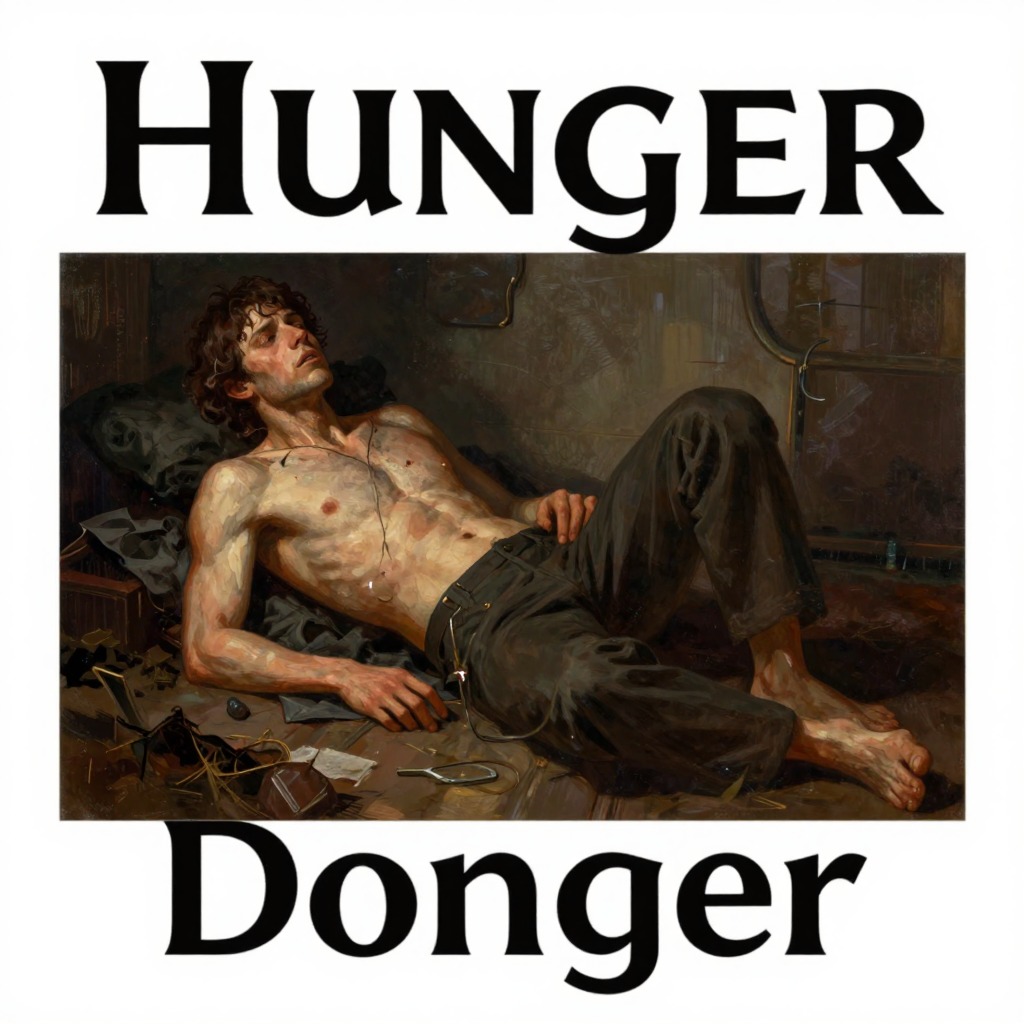
HungerThe Five Shillings Theft is a turning point in Knut Hamsun's Hunger, the moment when the starving narrator crosses a line he had previously held sacred. Desperate for a candle to finish an article he hopes will save him, he enters a provision shop and asks for one. The shop boy, who knows him as a regular customer for bread, tears open a package and takes out a candle. Then, suddenly, the boy asserts that the narrator has already paid—"You paid, though!"—and begins counting silver from the till: coin after coin, shining stout pieces, change for a crown. The narrator, stunned by the sight of this wealth glittering before his eyes, gathers up the money mechanically. He does not reflect, does not think; he is simply struck of a heap. He thrusts the hand with the money into his pocket and leaves the shop, forgetting even the candle until the boy calls after him. His first sensible thought, when he reaches a lamp-post, is to count the coins, weigh them in his hand, and smile. He is helped—extraordinarily, grandly, incredibly helped—for a long, long time.
The Immediate Consequences: A Meal and a Moral Fall
The narrator's first act with the stolen money is to enter an eating-house in Grand Street and order a helping of beef. He eats greedily, swallowing whole pieces without chewing, tearing at the meat like a cannibal. But the food, after his long starvation, cannot stay down. He vomits violently in a doorway, blinded by the water gushing from his eyes, and weeps as he walks along the street. He curses the cruel powers that persecute him so. Yet even in this physical misery, the moral weight of his act presses on him. He sits down in the eating-house and thinks: "My first downright dishonesty was accomplished—my first theft." He tries to rationalize it, telling himself it is open to him to settle with the shopkeeper later, that he has not taken upon himself to live more honorably than all other folk. But the thought of the theft rushes in upon him in all its details: the little shop, the counter, his lean hands as he seized the money. He pictures the police, the dock, the clerk taking down the evidence, the threatening look. He grows afraid—deadly afraid of himself.
The Attempted Purification: Giving the Money Away
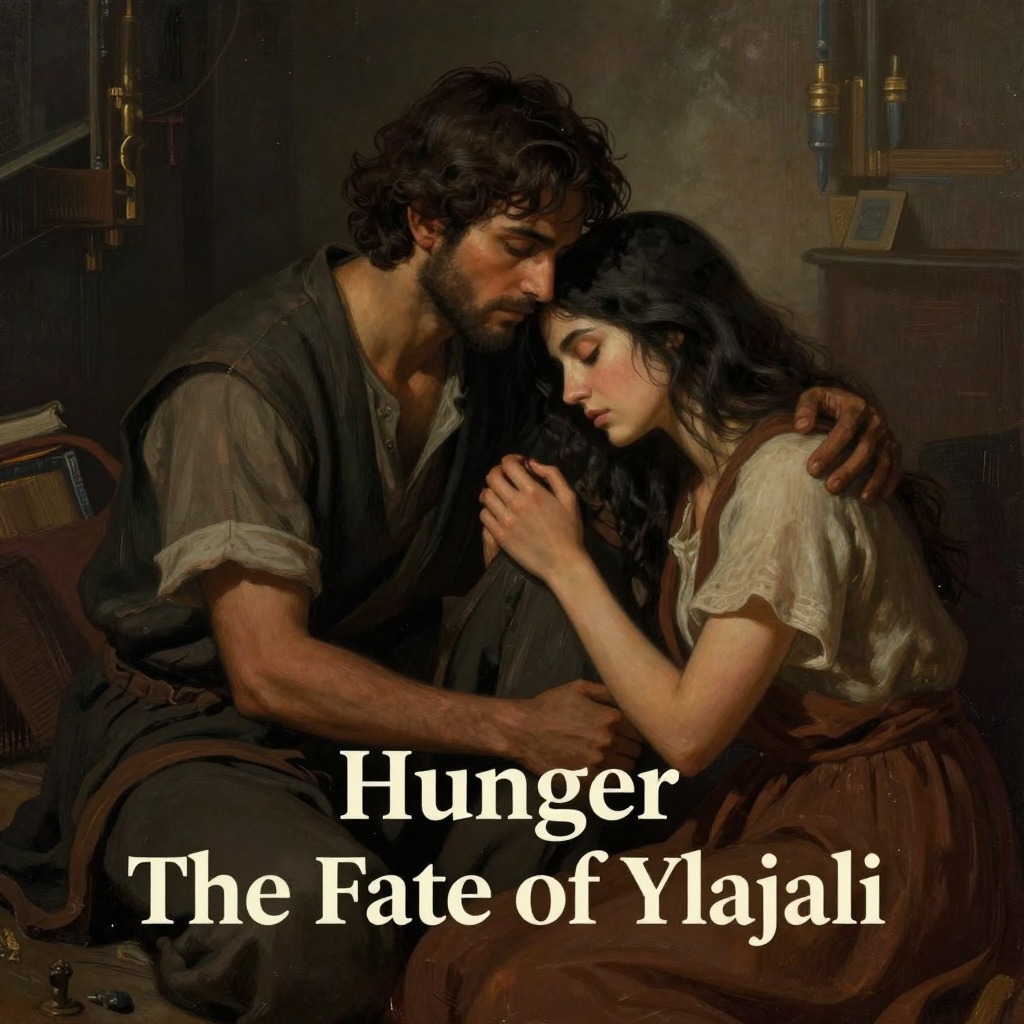
The stolen money weighs in his pocket sinfully and gives him no peace. He begins to question himself and becomes clearly convinced that he had been happier before, during the period in which he had suffered in all honor. The thought of Ylajali, the young woman he has begun to adore, torments him: has he polluted her with the touch of his sinful hands? In a sudden, impulsive act of purification, he goes straight to the cake vendor who sits near the chemist's under the sign of the elephant. He gets the money ready, holds every farthing of it in his hand, bends down over the old woman's table as if he wants something, and claps the money into her hands without a word. He turns on his heel and goes his way. The feeling of being an honest man once more is wonderful; his empty pockets trouble him no longer. He tells himself that he has gladdened a poor old cake vendor to such good purpose that she is perfectly dumbfounded, that tonight her children will not go hungry to bed. He buoys himself up with these reflections, considering that he has behaved in a most exemplary manner. The money is out of his hands now.
The Confession: Confronting the Shop Boy
Despite his attempt to cleanse himself, the theft continues to haunt the narrator. Days later, as he gets nearer and nearer to the provision shop, he has the half-conscious feeling of approaching a danger, but he determines to stick to his purpose: he will give himself up. He runs quickly up the steps, meets a little girl carrying a cup, slips past her, and opens the door. The shop boy and he stand face to face alone for the second time. The boy greets him about the weather, but the narrator, furious at this evasion, cries out: "Oh, I haven't come to prate about the weather." The violent preliminary takes the boy aback; his little huckster brain fails him. It has never even occurred to him that he has been cheated of five shillings. The narrator, impatient and trembling with excitement, blurts out: "Don't you know, then, that I have swindled you?" He explains every detail—how it had all happened, where the money had lain, how he had gathered it up in his hand and closed his fingers over it. The boy, shifting uneasily from one foot to the other, listening for footsteps in the next room, says at last: "It was a mean enough thing of you to do!" The narrator, in a perverse desire to contradict and aggravate him, insists it was not quite so mean as the boy imagines. He declares that he did not keep the money—he gave it away to a poor old woman, every farthing of it. The boy stands and thinks this over, becoming manifestly very dubious as to how far the narrator is an honest man or not. He asks: "Oughtn't you rather to have brought it back again?" The narrator, now offended, replies that he did not want to get the boy into trouble, and that this is the thanks one gets for being generous. He washes his hands of the boy, says "The devil take you!" and leaves, slamming the door behind him.
The Aftermath: Regret and Self-Loathing
Once home, in the melancholy hole of his room, wet through from the soft snow and trembling in his knees from the day's wanderings, the narrator dismounts instantly from his high horse and sinks together once more. He regrets his attack upon the poor shop boy, weeps, clutches himself by the throat to punish himself for his miserable trick, and behaves like a lunatic. He realizes that the boy had been in the most deadly terror for the sake of his situation, that he had not dared to make any fuss about the five shillings that were lost to the business, and that the narrator had taken advantage of his fear, had tortured him with his violent address, stabbed him with every loud word. He concludes that there is no longer any limit to the low things he might be tempted to do. The theft and its aftermath have stripped him of his last pretense of moral integrity, leaving him alone with his hunger and his shame.