The Happolati Invention
HungerThe Happolati Invention is a pivotal episode in Part I of Knut Hamsun's Hunger, in which the starving narrator, driven by curiosity and a volatile mood, fabricates an elaborate fictional identity for a man named Happolati and his family during a chance encounter with an old man in a park, escalating his lies into a manic performance that reveals his psychological unraveling.
Origins and the Mysterious Newspaper
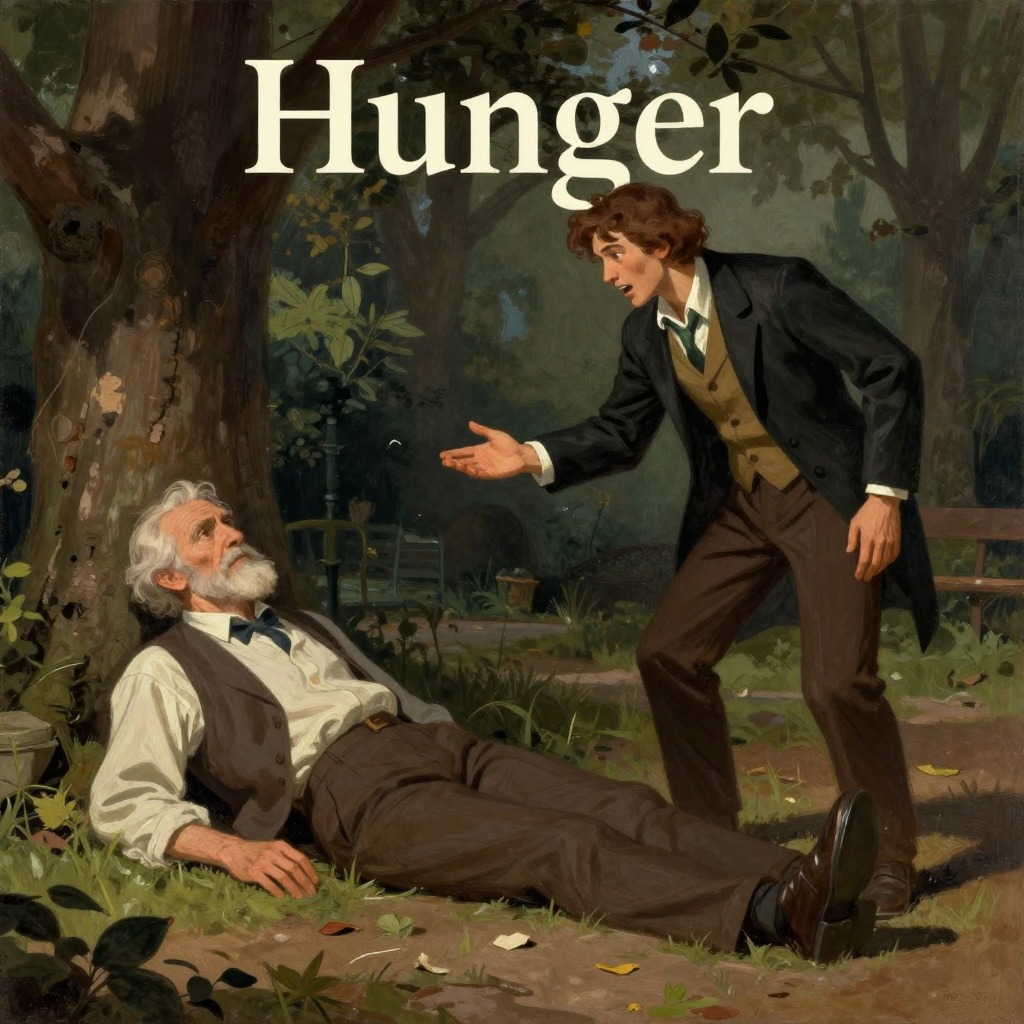
The episode begins when the narrator, after a morning of pawning his waistcoat and eating a meal that leaves him oversated, sits on a bench in the park and is joined by a little old man. The old man carries a newspaper parcel with grease spots on it, and the narrator becomes consumed by a paranoid curiosity about its contents. He imagines it might contain "dangerous documents stolen from some archive" or a "secret treaty—a conspiracy." This fixation drives him to desperate measures to engage the man in conversation. He offers a cigarette, which the man refuses because he is nearly blind and cannot smoke. The old man, in turn, asks the narrator where he lives, and on the spur of the moment, without any object or arrière pensée, the narrator lies and says he lives at St. Olav's Place, No. 2. When pressed for his landlord's name, he invents "Happolati" on the spot, a name that jumps into his head. The old man, to the narrator's amazement, accepts this name without suspicion, nodding gravely and repeating it without missing a syllable.
The Escalation of Lies
Emboldened by the old man's unsuspecting simplicity, the narrator begins to stuff him with increasingly outlandish fabrications. He claims that Happolati is an agent for "cranberries from China; feathers and down from Russia; hides, pulp, writing-ink." When the old man asks if Happolati is a seafaring man, the narrator corrects him, insisting he is "J. A. Happolati, the agent." The narrator then invents an "electric psalm-book" that Happolati has invented, with letters that give light in the dark, a venture requiring a million crowns and employing seven hundred men. He goes further, hinting that Happolati had been Minister of State for nine years in Persia, a position more powerful than a king or sultan. The narrator then introduces Happolati's daughter, Ylajali, describing her as a fairy princess with three hundred slaves who reclines on a couch of yellow roses. He calls her "the loveliest creature I had ever seen" and says her eyes are "like raw silk" and her arms "of amber." The old man, however, remains unperturbed, merely remarking, "So—o; was she so lovely?" with an absent air. This calm acceptance disappoints the narrator, who had expected to bewilder him.
The Narrator's Mania and the Old Man's Flight
The narrator's excitement grows as he speaks, and he becomes entirely absorbed in his own stories, which float in singular visions across his mental eye. The blood flies to his head, and he roars with laughter. When the old man, preparing to leave, asks if Happolati owns much property, the narrator becomes irritated that the old man treats the rare name as if it were common. He snaps back, insisting on the full name "Johann Arendt Happolati." The narrator then, beside himself, asks if the old man even believes that Happolati's wife is fat, and when the old man meekly concedes the possibility, the narrator erupts in fury. He roars, "Hell and fire, man! Do you imagine that I am sitting here stuffing you chock-full of lies?" He accuses the old man of thinking him a poverty-stricken fellow and declares he will not endure such treatment. The old man, terrified, snatches his parcel and runs down the path with short, tottering steps. The narrator, left alone, feels no regret, thinking he has never seen a more vile back.
Consequences and Thematic Significance
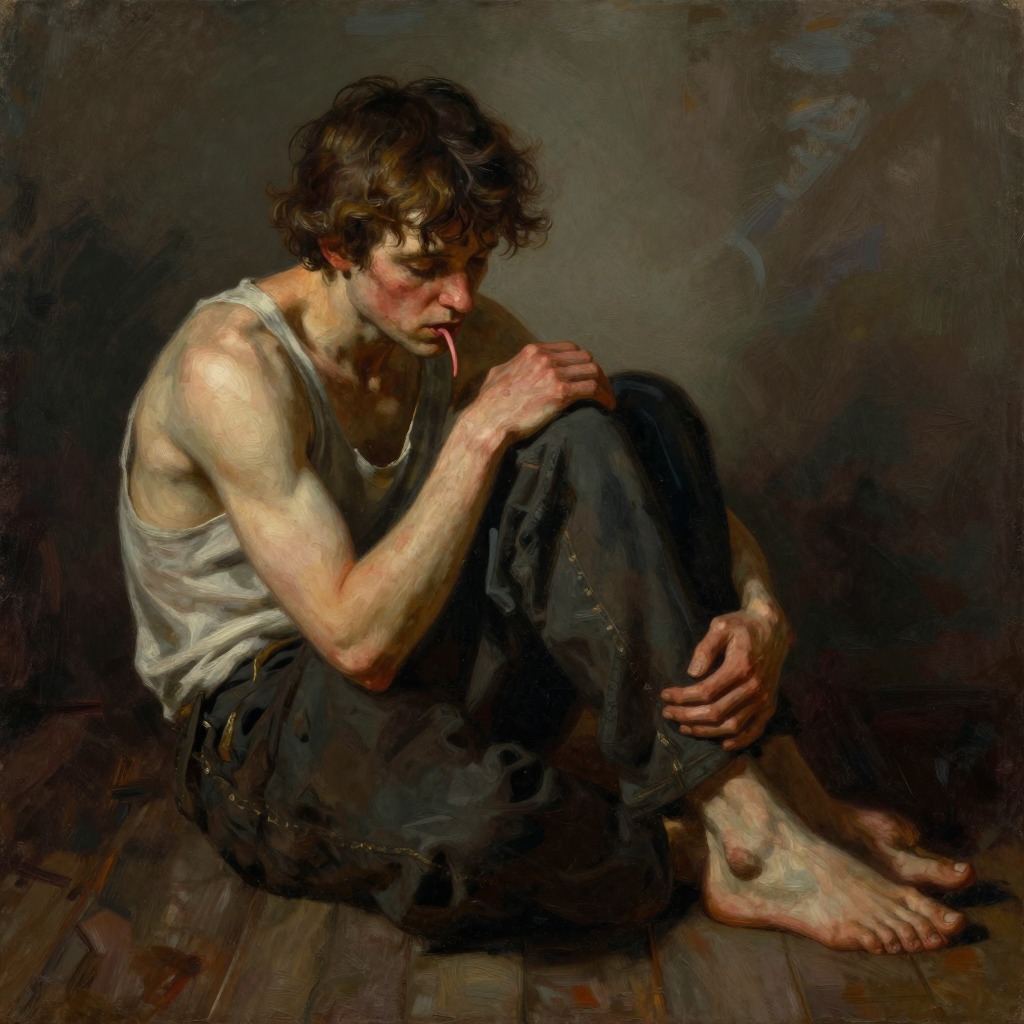
After the old man flees, the narrator's excitement subsides, and he grows weaker and drowsy. The episode is a direct manifestation of his hunger-induced madness, where his disordered condition runs away with him and he follows crazy notions blindly. It also reveals his deep-seated need for control and recognition, as he invents a world where he is connected to a powerful, exotic figure. The name "Ylajali" itself, which he later uses for the woman he follows, first appears here, linking this fantasy to his later romantic obsession. The incident underscores the narrator's isolation and his desperate attempts to assert his identity through fiction, even as his physical state deteriorates. The old man's complete credulity and the narrator's violent reaction to it highlight the fragile boundary between reality and delusion that defines the narrator's experience of starvation.