Event 1
Qin Shi Huang's book burning
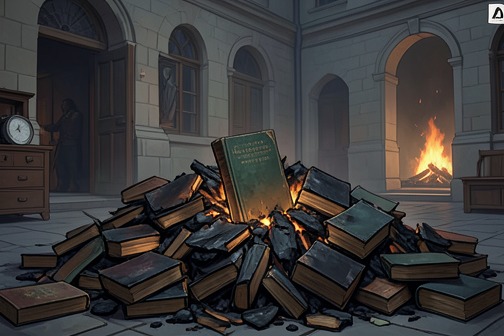
[Qin Shi Huang's book burning](entity:event-recall-event-ec7ceaa73039) was a campaign against much of [China](entity:location-recall-location-134e6ca3a450)'s ancient literature in [213 BC](entity:time-recall-time-213-bc-d61a8d8e752b), yet the [I Ching](entity:object-recall-object-i-ching-9a6812ae8274) survived under an exemption for works on medicine, divination, and agriculture. The episode reveals how a classification as a practical divination text could protect a classic from destruction, even as later readers and interpreters contested what its divination was meant to do.
## The Exemption and the Book's Survival
The account identifies [Li Si](entity:character-recall-character-li-si-a5badb374a8d), the premier who advised the emperor to consign old books to the flames, and notes that the order exempted works concerning medicine, divination, and husbandry. Because the I Ching was regarded as a book of divination, it was preserved. The exception did not save ancient literature generally: the burning proved disastrous for most of it. The I Ching's survival therefore depended not on an explicit preference for its philosophical or literary contents, but on the category under which authorities placed it.
That distinction matters to the history of the work. The book's later standing as an ancient classic coexists with this account of its preservation for its divinatory status. Its survival made possible the continuing study of a text whose practical use involved interpreting formed hexagrams, and whose accumulated commentaries would become a major part of its reception.
## What Divination Was For
The account distinguishes divination from absolute prediction. Its stated object was to determine whether schemes and contemplated conditions of events would prove lucky or unlucky, rather than to disclose future events as fixed knowledge. A passage about examining doubts likewise cautions against treating divination as a command to act: when both the tortoise shell and stalks oppose men's views, stillness is fortunate and active measures unlucky.
This scope clarifies why the category of divination could preserve the I Ching without settling the meaning of its authority. The text and its appendixes describe a procedure for producing figures, while the account distinguishes that procedure from the claim that every future occurrence can be known in advance. The practice concerns judgment about proposed action and circumstance, not unrestricted foreknowledge.
## Materials and Procedure
The account traces divination in China to an early period. It mentions tortoise-shell divination in a document of the Book of Documents that purports to date to the twenty-third century BC, and describes the later use of lineal figures formed with plant stalks. The plant is identified as Ptarmica Sibirica, cultivated around [Confucius](entity:character-recall-character-confucius-12bb6937a09e)'s grave, where the author says he saw it growing. In the earlier account of [King Wen](entity:character-recall-character-king-wen-f6ea0df05a97), divination by tortoise shell and stalks is also described as an established institution familiar to him.
The appendix's stalk procedure used forty-nine stalks, manipulated three times for each line; eighteen manipulations formed a hexagram. Numbers derived from the River Map determined the lines: odd numbers produced strong, undivided lines, and even numbers weak, divided ones. The numbers 9, 8, 7, and 6 were assigned to four emblematic symbols used in combining the lines. Once the figure was formed, interpretation turned to King Wen's judgments and the [Duke of Zhou](entity:character-recall-character-duke-of-zhou-7b5ff4788260)'s line statements. In this description, numbers serve as aids in generating the hexagram, not as independent entities that determine the nature of all things.
## Preservation, Belief, and Later Interpretation
The account separates the appendix writer's belief in the stalks' spirit-like virtue from the author's assessment of divination's actual reach. The appendix treats Heaven as having produced the tortoise and plant with qualities suited to divination; the author, by contrast, says that the method is no less absurd than other forms of divination. He also notes that Chinese people had abandoned the practice outside circles of professional fortune-tellers, even while scholars continued to praise the appended treatises for their depth and wisdom.
A story about a former marquis makes the skepticism concrete: a skilled diviner tells him that stalks are withered grass and the shell a withered bone, and advises him to listen to himself rather than seek guidance from things. The episode places the divinatory instruments beside a competing account of judgment grounded in human intelligence. Together, these contrasting views show that preservation under the category of divination did not amount to universal agreement about divination's efficacy.
The book's continued life also depended on interpretation. The account records that a catalogue of the imperial library, prepared by Liu Xin near the beginning of the Common Era, listed works on the I Ching and its appendixes from thirteen authors or schools, in 294 portions. The imperial Kangxi edition of 1715 quoted 218 scholars, spanning from the second century BC to the seventeenth century. These figures convey the long afterlife of a work whose escape from the fires secured its transmission, but did not resolve the many problems that generations of readers sought to interpret.
Event 2
King Wen’s imprisonment at Youli and interpretation of the Changes
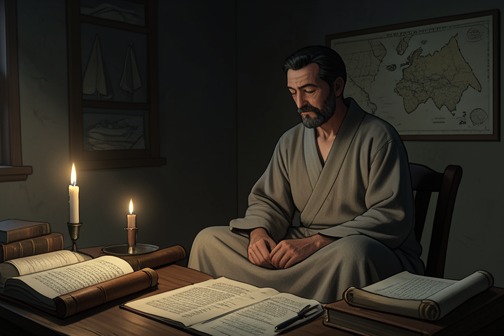
[King Wen’s imprisonment at Youli and interpretation of the Changes](entity:event-recall-event-b586ac512498) is the traditional account of how political confinement became a setting for the formation of the [I Ching](entity:object-recall-object-i-ching-9a6812ae8274)’s sixty-four hexagrams. Under threat from the last ruler of [Shang](entity:location-recall-location-shang-95dca0646e24), [King Wen](entity:character-recall-character-king-wen-f6ea0df05a97) is said to have extended the eight trigrams into sixty-four figures and supplied each with a brief judgment. In the translator’s reconstruction, this was not simply an exercise in divination: it was an effort to set divinatory figures within a reasoned language of counsel, warning, and political reflection.
## Political crisis and imprisonment
The account places the episode amid the decline of Shang rule. Its king, Shou, is depicted as tyrannical and contemptuous of virtue, estranged from both Heaven and the people. In the west, the principality of Zhou had long been associated with capable and virtuous leadership. Its lord, King Wen, had become a kind of viceroy over much of the kingdom, distinguished in peace and war and admired by princes and common people. Although they would have welcomed his leading an attack against the tyrant, he held back rather than risk appearing disloyal.
That restraint did not protect him from suspicion. Shou’s jealousy eventually led to King Wen’s imprisonment at Youli in 1143 BC, when, according to the account, an order for his death might arrive at any moment. The danger gives the episode its defining tension: the man regarded as a potential alternative ruler was confined by the sovereign whose authority he had declined to challenge openly. King Wen was released the following year after his friends appeased the king’s suspicion, but the traditional dating places the beginning, and perhaps the completion, of his contribution to the I Ching within this brief crisis.
## The figures and their interpretation
The figures King Wen worked with were not new inventions in the broad sense. Trigrams had already been used for divination, and the use of divining stalks belonged to a much older practice. The account points to early references to consulting both tortoise shell and stalks when examining doubts. King Wen, as a ruler familiar with the institutions of his country, would have known this practice. The translator speculates that the appearance of studying divinatory figures might even have reassured his suspicious keepers; that possibility is presented as conjecture, not as an established motive.
The defining change attributed to King Wen is the expansion of the eight trigrams into sixty-four hexagrams. The historical notice cited by the translator specifically says that, while confined at Youli, he increased the trigrams to sixty-four. In the translator’s imagined reconstruction, he arranged the figures before him, connected each with a particular idea, and gave it a name expressing that idea. He then set it out in a short statement that could counsel or warn. The figures might speak, in this reading, of qualities in nature, principles of human society, or the actual and possible condition of the kingdom.
This interpretation makes the work an attempt to discipline divination rather than merely to encourage prediction. Instead of treating the figures as license for unbounded speculation, King Wen’s judgments are understood as tying them to intelligible patterns and practical reflection. The narrative thus brings two functions together: the figures remain instruments associated with divination, while their short texts make them vehicles for warnings about conduct and the political order.
## Purpose and limits of divination
The book’s account of divination distinguishes consultation from foreknowledge. Its stated purpose was not to discover future events absolutely, as though they were already knowable, but to ask whether contemplated plans or circumstances were likely to turn out auspiciously or badly. The figures therefore addressed decisions under uncertainty; they did not, in this explanation, provide a complete advance account of what would happen.
The described procedure depended on divining stalks. Forty-nine stalks were used, and each line required three manipulations, making eighteen manipulations in all for a hexagram. The resulting numbers determined the lines: odd numbers produced strong, undivided lines, while even numbers produced weak, divided ones. The numbers associated with the four emblematic symbols included 9, 8, 7, and 6. Once the figure had been formed, its interpretation drew on King Wen’s judgments and the emblematic statements attributed to the [Duke of Zhou](entity:character-recall-character-duke-of-zhou-7b5ff4788260). Numbers served in producing the hexagram; the account does not make them an independent key to every event in nature.
The translator draws a sharp distinction between that procedure and claims that the I Ching could reveal all future occurrences. He warns that incautious language in an appendix could mislead a cursory reader, but maintains that careful interpretation limits divination to judging the likely outcome of contemplated schemes. The traditional episode is therefore bound to an enduring ambiguity: King Wen’s work is said to have grown out of a divinatory practice, yet its literary and political force lies in the counsel attached to the figures, not in an unrestricted promise of prophecy.
## Textual inheritance and authorship
King Wen’s portion was only a small part of the received I Ching. The translator attributes a larger share to his son Tan, the Duke of Zhou, who supplied material concerning individual lines and completed the work a few decades later. He suggests that the son may have taken up the figures as an act of filial duty, extending to each line what his father had done for the hexagram as a whole. The account does not establish the son’s motive, but it presents the two contributions as distinct stages in the making of the early text.
The translator dates King Wen’s contribution to 1143 or 1142 BC and argues that the received Text, including the Duke of Zhou’s work, was complete before the duke’s death in 1105 BC. He separates this early Text from the later Appendixes traditionally associated with [Confucius](entity:character-recall-character-confucius-12bb6937a09e), which he places many centuries afterward and treats as a distinct layer rather than part of a single homogeneous composition. This distinction matters to the imprisonment story: the core judgments belong to an early political and divinatory context, whereas later explanations represent subsequent efforts to interpret the figures and their relation to the text.
The work’s later transmission further complicated that separation. The I Ching escaped Qin Shi Huang’s book burning in [213 BC](entity:time-recall-time-213-bc-d61a8d8e752b) because it was classified as a work of divination, one of the categories exempted from destruction. A catalogue compiled near the beginning of the Common Era listed works on the I Ching and its Appendixes by thirteen authors or schools, comprising 294 portions. Much later, the imperial edition published in 1715 quoted 218 scholars. Yet common editions had interleaved five Appendixes with the older Text, a practice the translator believed blurred the difference in age and ideas between them. The imprisonment at Youli thus became not only an origin story for the hexagrams but the first layer in a long history of preservation, commentary, and contested authorship.
Event 3
Zhou conquest of Shang
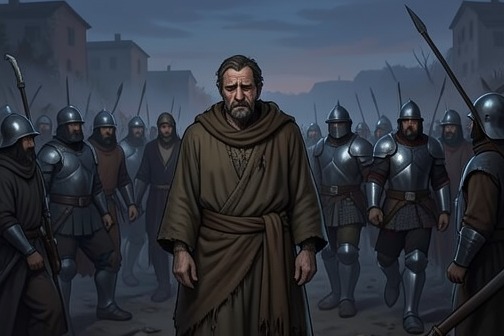
The [Zhou conquest of Shang](entity:event-recall-event-13f8ad074e50) marks the transition from a failing dynasty to a new political order, but the account treats victory not as a simple triumph of force. [Shang](entity:location-recall-location-shang-95dca0646e24)’s loss of authority is linked to the ruler’s conduct and the collapse of public order; Zhou’s campaign, in turn, is framed as a grave and hazardous undertaking whose legitimacy depends on virtue, timing, and the capacity to govern after victory. The Changes makes the crossing of the Yellow River an emblem of that risk and interprets the aftermath as a test of restraint as much as conquest.
## Causes and political background
The account describes Shang as a state whose authority had become untenable. A declaration attributed to King Wu accuses [King Shou of Shang](entity:character-recall-character-king-shou-of-shang-4f1e9c9ee4c6) of slighting virtue, abandoning himself to idleness and irreverence, alienating Heaven and the people, and placing confidence in corrupt officials. It also charges him with discarding laws and penal statutes, neglecting sacrifices to Heaven and Earth and offerings in the ancestral temple, and driving away his advisers. The indictment links the ruler’s personal conduct to a public crisis: government no longer secures order, and the dynasty’s claim to rule is represented as morally exhausted.
The country’s disorder is also described beyond the ruler’s own conduct. People of different ranks are said to engage in robbery, treachery, and violence; nobles and officers imitate one another in violating the laws, while criminals may escape apprehension. This political breakdown is compared to a person attempting to cross a great stream without finding either ford or bank. The image makes the state’s predicament one of peril and lost direction, not merely a dispute between rival houses.
Zhou’s leader, [King Wen](entity:character-recall-character-king-wen-f6ea0df05a97), is presented as a powerful regional lord who had earned distinction in peace and war and whose ability and virtue attracted support. Princes and people, the account says, would have welcomed an attack on the tyrant, but King Wen held back rather than invite the charge of disloyalty. Suspicion from King Shou eventually led to King Wen’s imprisonment at Youli in 1143 BC. His friends secured his release the following year, but the episode places the future campaign against Shang in the shadow of danger and political constraint.
## The campaign and the crossing
The decisive military action came under King Wu, King Wen’s son and successor. In [1122 BC](entity:time-recall-time-1122-bc-69d4d80effa5), King Wu crossed the Yellow River in the revolutionary movement against Shang. The crossing is singled out as one of the great deeds in Chinese history, but the Changes’ recurring instruction to cross a great stream also gives the campaign a broader meaning: it signifies undertaking a hazardous enterprise or confronting exceptional difficulty. Here, the river is understood concretely as the Yellow River and the danger as the challenge of overthrowing a dynasty.
The account stresses that the crossing did not follow an impulsive advance. It was preceded by prolonged waiting until the moment of assured success. In the interpretation of the Changes, strength confronted by danger may be expected to charge forward, yet the wiser course is to wait until success is secure. The military action therefore acquires a two-part structure: delay is not failure to act, but preparation for action at the right time. The campaign’s success is associated with that disciplined timing rather than with force alone.
The political symbolism of the hexagram [Breakthrough](entity:state-recall-state-breakthrough-9fb4ec76567c) further sets out the standards by which such a challenge should proceed. The corrupt and powerful figure is to be openly denounced, general sympathy awakened, and the danger of the enterprise kept in view. Even among his own adherents, the leader must make clear that he takes up arms reluctantly. The teaching cautions against setting out too early, when preparation is insufficient to make victory certain. These comments turn the conquest into a question of public justification and readiness as well as military outcome.
## Victory and the work of restoring order
The Changes’ treatment of [Deliverance](entity:state-recall-state-deliverance-0c8af6f04be2) addresses what follows the removal of obstruction. Its concern is not simply how to defeat an opponent, but how to handle the resulting better condition of the kingdom. If further military operations are unnecessary to complete the subjugation, the new rulers should let ordinary life return to its established channels rather than change every custom and practice. The commentary points to the [Duke of Zhou](entity:character-recall-character-duke-of-zhou-7b5ff4788260)’s treatment of the conquered people of Shang as an example of this restraint. If additional operations remain necessary, they should be completed without delay; the choice depends on whether the country has in fact been subdued.
This advice distinguishes political consolidation from indiscriminate transformation. Victory gives the new rulers power to remake institutions, but the account warns that not every inherited manner needs to be discarded. The object is to restore order, and that may require continuity as well as decisive action. The conquest’s outcome is therefore presented as incomplete until the victors decide whether to continue military measures or allow customary life to resume.
The contrast between the campaign’s force and its recommended aftermath is central. The regime must be capable of acting firmly against continuing resistance, yet must also avoid changing the conquered society merely to display its authority. The Duke of Zhou’s example supplies a practical model: preserve old ways when further coercion is not required, and act promptly only where the remaining task demands it.
## Historical memory and political meaning
The conquest also stands behind the Changes’ language of peril, patience, and political transition. The Yellow River crossing turns a repeated image of hazardous passage into a specific historical deed associated with King Wu. The hexagram Breakthrough, meanwhile, presents the removal of corrupt rule as a difficult undertaking that depends on character, public sympathy, open accusation, and careful preparation. Read together, these interpretations make legitimacy a condition of effective change: opposition to a failing government must be demonstrably reluctant, publicly intelligible, and timed to a credible chance of success.
The account locates the formation of the Changes within this wider dynastic crisis. King Wen’s contribution is associated with his imprisonment and the years 1143 or 1142 BC; a larger portion is attributed to his son, the Duke of Zhou, whose material includes references to King Wu and events in the early years of the new reign. The text as it survives is therefore connected not only to the overthrow of Shang but also to the political work that followed it. Its teachings preserve a tension between decisive rupture and the need to govern without needless disruption: a dynasty may have to cross the river, but the success of that crossing is measured in part by what its rulers do once they reach the other side.
Event 4
Confucius's late-life study of the I Ching
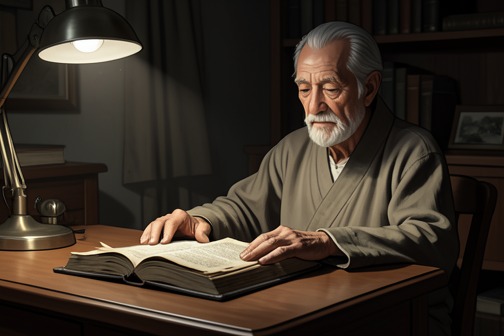
[Confucius's late-life study of the I Ching](entity:event-recall-event-a57d6391f533) marked a renewed engagement with an ancient book he had earlier neglected, and became a key piece of evidence for the classic's existence before his time. Accounts cited in the book place his intense attention to it in the closing years of his life, after his return to Lu; tradition also connects him with interpretive Appendixes that later readers treated as part of the work, though the translator insists that the older Text and those later writings must be distinguished.
## Return to the [I Ching](entity:object-recall-object-i-ching-9a6812ae8274)
The account begins with a reported saying that [Confucius](entity:character-recall-character-confucius-12bb6937a09e) would devote fifty years to studying the I Ching if his life were extended, in the hope of avoiding serious errors. The author regards the saying as evidence that the book was known in Confucius's lifetime, not as a reliable indication that he literally expected to live another half-century. By then, Confucius was nearly seventy and had returned to his native Lu after long and painful wanderings among the states. The text treats his renewed study as especially striking because, in the prime of his life, he had given more attention to History, Poetry, and Rites and Ceremonies, the ancient books he had discussed with his disciples.
A related biographical report gives the late-life interest a physical image: Confucius read his copy so frequently that the leather thongs binding its tablets wore out three times. In this account he says that several more years would make him master of the I Ching. The repeated binding failures convey sustained study, while the wish for additional years underscores that mastery remained an aspiration rather than a completed achievement.
## The Appendixes and the older Text
The historical account says that Confucius wrote various Appendixes to the I Ching, identifying nearly all of the treatises grouped under the traditional name of the Ten Appendixes. These writings were published with the older Text, which itself explains lineal figures based on still older forms. Most Chinese readers and foreign scholars received the Appendixes as an integral part of the classic, but the translator separates the two bodies of writing rather than treating them as a single work by one author.
That distinction rests partly on chronology. The book dates the Text's composition to [King Wen](entity:character-recall-character-king-wen-f6ea0df05a97) in 1143 BC and to his son, the [Duke of Zhou](entity:character-recall-character-duke-of-zhou-7b5ff4788260), roughly thirty to forty years later. Even if the Appendixes were Confucius's work, they could not have begun before 483 BC: at least six centuries separate them from the portion attributed to King Wen, and nearly 630 years separate them from the Duke of Zhou's contribution. The translator argues that ideas about the method and meaning of the I Ching could change over so long an interval, making it misleading to merge the later explanations with the older material.
## A disputed attribution and its afterlife
The association between Confucius and the Appendixes shaped how later readers understood the classic. The translator notes that the Appendixes were generally attributed to the sage, with only limited dissent, and that native critics often defended the unity of the two parts and the attribution of all the Appendixes to him. In his account, questioning their consistency or authorship could seem to challenge Confucius's infallibility and expose the critic to accusations of heterodoxy.
The book also describes how editorial arrangement reinforced the fusion. Under the first [Han dynasty](entity:time-recall-time-han-dynasty-31607bfe4736), Pi Ji began a practice of interleaving five Appendixes with the Text in common editions. The translator considers this mixture a major obstacle to understanding: passages from writings of different periods and intellectual character appeared side by side, encouraging readers to treat them as one homogeneous composition. The Kangxi imperial edition of 1715 printed the two portions separately, though the broader habit of attributing the Appendixes to Confucius remained powerful.
## Study, interpretation, and transmission
Confucius's reported late-life reading belongs to a longer history of interpretation, not simply to private study. The I Ching escaped the book-burning order of [213 BC](entity:time-recall-time-213-bc-d61a8d8e752b) because it was classed as a work of divination, among the kinds of books exempted from destruction. By the beginning of the Christian era, a catalogue of the imperial library listed works on the classic and its Appendixes from thirteen authors or schools, comprising 294 portions. The later Kangxi edition quoted 218 scholars, spanning from the second century BC to the seventeenth century, and the translator observes that these represented only a fraction of those who had tried to interpret the book.
The tradition of Confucius's study therefore carries two related kinds of significance in the account. It supports the claim that the older I Ching preceded him, while also explaining why a later body of commentary came to bear his authority. The book's transmission preserves both the evidence of a long interpretive history and the problem that history creates: reverence for the sage could make readers reluctant to distinguish his attributed writings from the much older Text.
Event 5
Winter solstice
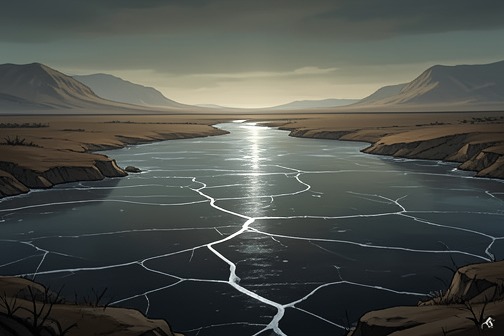
[Winter solstice](entity:event-recall-event-59d2ca5dc8c0) is the seasonal turning point associated with the hexagram [Return (Fû)](entity:concept-recall-concept-return-f-6ea2ef74818b): after cold and decline have reached their height, the sun turns back toward summer, and the first strong line reappears in the hexagram. The translator uses this annual reversal to explain both the image of return and its political analogue, while cautioning that cyclical recovery does not promise a permanently perfected society.
## Place in the Cycle of Return
The seasonal explanation begins with [Splitting Apart (Po)](entity:concept-recall-concept-splitting-apart-po-5dc2bda2e848), assigned to the ninth month, when the yearly triumph of cold and decay is nearly complete. The tenth month belongs to Khwăn, in which that triumph is complete; Return follows in the eleventh month, when the winter solstice occurs and the sun turns in its course, proceeding steadily toward the summer solstice. The solstice is thus not presented as an abrupt arrival of warmth, but as the threshold at which the direction of change reverses.
The structure of Return gives that reversal a visible form: one strong line lies beneath five weak lines. The translator identifies the strong bottom line as the first line of Kăn, the trigram of movement, while the upper trigram, Khwăn, signifies docility and capacity. The returning line meets no distressing obstacle; the weak lines are described as changing before it into strong lines and becoming its friends. The image is one of renewal beginning from a small foothold, with brightness developing day by day and month by month.
## The Seven-Day Saying
The phrase “In [seven days](entity:time-recall-time-9ac7592598b6) comes his return” raises a problem for the translator because the hexagram sequence describes change across the months. He explains that the six preceding figures—44, 33, 12, 20, 23, and 2—correspond to the fifth through tenth months, during which yin progressively prevails over yang until Khwăn has driven the yang lines out of the figure. Return is the seventh figure in this sequence, where yang begins to assert itself again and then gradually displaces yin in its turn.
On this reading, a day in the saying must be taken as a month when the cycle is interpreted through the year. The translator allows that an analogous pattern must occur in society and the state, but says its exact form cannot be specified. The line’s temporal image therefore carries a broader political implication without supplying a precise timetable for political change.
## Seasonal Change and Political Meaning
The seasonal turning point furnishes a model for change in human affairs: as decline reaches its climax, recovery begins. The translator connects the hexagram’s weak and strong lines to the changing balance of inferior and superior influences in nature and society, but rejects the hope of a perfect society or kingdom that can never be disturbed. Renewal is a genuine possibility within the cycle, not a final escape from change.
The solstice consequently gives Return its distinctive combination of reversal and gradualness. A single strong line signals the start of recovery, while its development into increasing brightness unfolds over time. The calendar image makes the hexagram’s claim concrete: even when decline seems complete, the direction can turn, though the resulting order remains subject to further change.
Event 6
Wu Ding’s expedition against the Demon Region

[Wu Ding’s expedition against the Demon Region](entity:event-recall-event-wu-ding-s-expedition-ag-6a993b6c3288) appears in the line texts and commentaries as a hard-won campaign whose three-year duration tests the difference between justified force and reckless action. The account makes the expedition a practical lesson in military judgment: even a successful enterprise can be tedious, and its conduct depends on capable leadership, persistence, and the character of those entrusted with it.
## The Campaign in the Hexagram Texts
The episode is attached to line three of the preceding hexagram, where the undivided line evokes Kâo Ȝung—[Wu Ding](entity:character-recall-character-wu-ding-17ef99832c92)’s sacrificial title—attacking the [Demon Region](entity:location-recall-location-demon-region-1e9334f12c5f) and taking three years to subdue it. The line immediately draws a political and military caution from that duration: small men should not be employed in such enterprises. The achievement is not presented as a quick triumph but as a demanding undertaking whose length makes the choice of personnel consequential.
## A Model of Sustained Effort
The commentary identifies Wu Ding as one of the ablest sovereigns of the [Shang dynasty](entity:time-recall-time-shang-dynasty-21c31a8871a8) and describes his expedition against peoples in the cold, bleak regions north of the [Middle States](entity:location-recall-location-middle-states-c91cf6498a78). It allows that the enterprise may have been good and successful, yet stresses that it was tedious. The line’s warning therefore qualifies its praise: an undertaking can be worthy of pursuit and still require patience, sound judgment, and reliable agents over time.
The campaign returns in the following hexagram, where line four urges its subject to stir himself as if invading the Demon Region. The comparison turns the remembered expedition into a standard for vigorous, prolonged effort. The commentary says that the subject, though placed in a position that might otherwise weaken his efforts, is firm and correct; his ruler above him is humble and ready to welcome his work. By exerting himself as Wu Ding did, he may make progress and succeed. The reference is not simply to conquest: it links sustained action to the presence of a receptive ruler and to the correctness of the agent’s conduct.
## Rewards, Caution, and Historical Frame
The later line-text promises that after three years rewards will come to the leader and his troops from the great kingdom. The commentary explains this in terms of the practical ties between army and court: expeditions beyond the frontiers were not so remote that communication ceased, and rewards, distinctions, and other encouragement could be sent to the forces. The campaign thus carries an institutional consequence as well as a military one: prolonged service could be recognized and supported by the center.
The surrounding discussion places divination in an ancient Chinese setting where both tortoise-shells and stalks were used to examine doubts. It distinguishes this practice from absolute foreknowledge: consultation concerned whether contemplated plans and circumstances would turn out luckily or unluckily. In the hexagram commentary, Wu Ding’s expedition serves a related but specifically moral and political purpose. Its remembered duration helps assess how a difficult enterprise should be undertaken, while the warning against employing small men and the emphasis on firmness, correctness, and royal support make the campaign an example for judgment rather than a simple prediction of victory.