Alexander Kintner
JawsAlexander Kintner, a six-year-old boy spending the summer in Amity with his mother, becomes the second person killed by the great white shark that has taken up residence off the town's beaches. His death, which occurs on Sunday, June 20, is the event that shatters the conspiracy of silence surrounding the earlier attack on Christine Watkins and forces the community into a crisis of conscience and survival.
Identity and Background
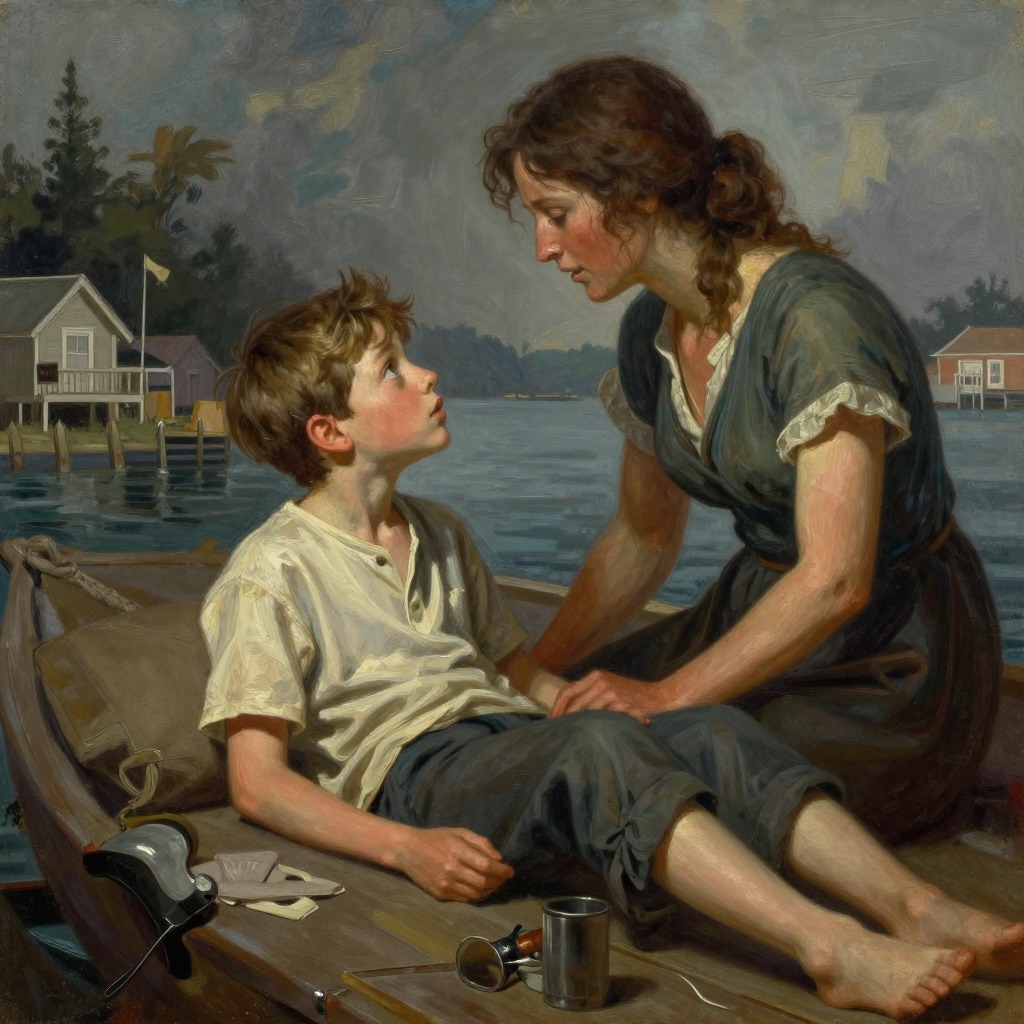
Alexander Kintner, called Alex by his mother, is a restless and bored child typical of the summer colony. On the morning of his death, he complains to his mother, who is lying on the beach, that he has "nothing to do" and that "nobody's here." He asks repeatedly to go swimming, but his mother refuses, citing the cold water. He then negotiates to go out on his rubber raft, promising not to swim. His mother, exhausted and wishing to avoid the responsibility of amusing him, reluctantly agrees, telling him, "Don't go too far out. And don't go swimming." Alex drags his raft to the water, paddles out, and lies on it, his feet and ankles dangling over the rear. A gentle current carries him slowly offshore, beyond what his mother would consider safe. He is not afraid, but he begins to paddle and kick toward shore to avoid being seen too far out.
The Attack
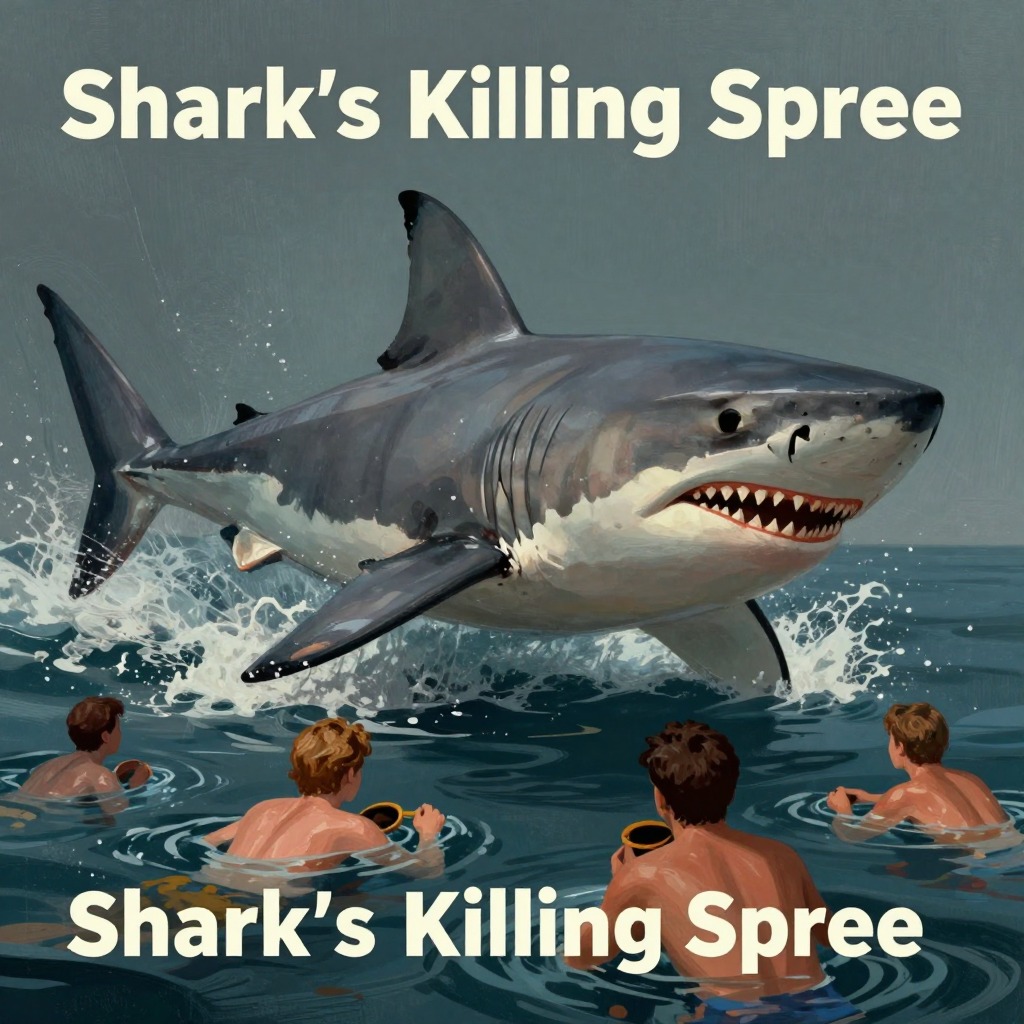
The great white shark, which has been patrolling the waters, registers the sharp, jerky impulses of the boy's kicking feet. The fish locks onto these signals and rises from the depths. The boy's last thought is that he has been punched in the stomach. The fish's head drives the raft out of the water, and its jaws smash together, engulfing the boy's head, arms, shoulders, trunk, pelvis, and most of the raft. The boy's legs are severed at the hips and sink, spinning slowly, to the bottom. A witness on the beach, a man with a child, sees a huge splash and cries out, but by then there is nothing to see but the spreading waves. The boy's mother, half asleep, does not see the attack. She only realizes something is wrong when she looks out to sea and remembers that her son was there.
Aftermath and Consequences
The boy's body is never found. The coroner, Carl Santos, confirms that traces of blood found on shreds of rubber from the raft leave no doubt that the boy died a violent death. The attack is witnessed by a reporter from the New York Times, Bill Whitman, who is on the beach for the weekend. The news of the attack, combined with the subsequent killing of Morris Cater, forces the story into the open. The Amity Leader, under editor Harry Meadows, runs the headline "TWO KILLED BY MONSTER SHARK OFF AMITY BEACH" with a subhead revealing that the number of victims has risen to three, including Christine Watkins. The suppression of the first attack is exposed, and the town's leadership is implicated.
Brody's Guilt and Mrs. Kintner's Accusation
The death of Alexander Kintner is the catalyst for Martin Brody's profound guilt. He had wanted to close the beaches after the first attack but was pressured by Mayor Larry Vaughan and the selectmen to keep them open. Brody blames himself, thinking, "The fish would have gone down the beach... and killed someone there. But that wasn't how it had worked. The beaches had stayed open, and a child had been killed because of it. It was as simple as that. Cause and effect." The morning after the attack, Mrs. Kintner, clutching a newspaper, storms into Brody's office. She slaps him across the face with the paper and screams, "You killed Alex!" She accuses him of knowing the danger and keeping it a secret. Brody is unable to defend himself, and the encounter leaves him feeling "wounded, incapacitated as surely as if he had been shot." The boy's death becomes the moral fulcrum of the novel, the event that Brody cannot escape and that drives him to join the hunt for the shark.
Thematic Significance
Alexander Kintner is the innocent victim whose death exposes the moral and economic rot at the heart of Amity. He is not a reckless adult or a drifter like Christine Watkins; he is a child, and his death is the result of a calculated decision by the town's leaders to prioritize profit over safety. His mother's grief and rage give voice to the accusation that haunts Brody throughout the rest of the novel. The boy's death transforms the shark from a natural phenomenon into a symbol of retribution and the inescapable consequences of human failure. Brody later reflects that the boy's death could have been prevented, and this knowledge is what compels him to risk his own life to kill the fish.