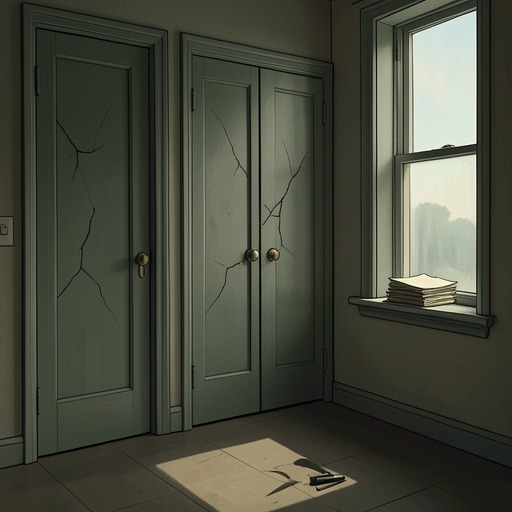
Shaltiel Abravanel's resignation letter
JudasShaltiel Abravanel's resignation letter is the missing record of his break with the Zionist Executive and the Jewish Agency leadership: Abravanel composed a reasoned resignation under threat of expulsion, but the letter was concealed, went unpublished, and was later denied by the archive. Recovered only through the recollections of Gershom Wald and fragments of public reporting, it embodies the struggle to preserve a dissenting account of the choices that led toward war.
Political Circumstances
Abravanel’s break arose from his opposition to the course advocated by David Ben-Gurion and other leaders. He believed that a historic compromise between the Jewish and Arab peoples in the land remained possible, while the chosen path risked a bloody war whose outcome was uncertain and whose stakes included the lives of the Jewish population in the country. He did not abandon Zionism, Wald later insisted; he believed its leaders had strayed and were being swept along by a dangerous political course.
In June 1947, Abravanel asked to appear before the United Nations Special Committee on Palestine to present an individual, minority position on the Jewish-Arab conflict and offer a solution for peace. The Jewish Agency rejected the request, arguing that it and the Zionist Executive had to speak with one voice. A contemporary report in Davar said Abravanel considered appearing independently but ultimately complied with the majority’s discipline, perhaps after being warned that doing otherwise would cost him his place in the community’s leading institutions. That episode establishes the conflict the later letter would register: an attempt to voice a separate position within institutions that insisted on public unity.
Composition and Suppression
According to Wald, Abravanel was given twenty-four hours to choose between placing a resignation letter on Ben-Gurion’s desk and being formally expelled from both the Zionist Executive and the Jewish Agency. Abravanel wrote a reasoned letter of resignation. Yet, Wald said, no newspaper agreed to publish it, and an absolute silence surrounded the resignation. The document’s intended explanation therefore never entered the public record through its author’s own words.
Davar’s report of Abravanel’s removal, dated December 21, 1947, offered only a brief account. It said he had been dismissed the day before because of disagreements with colleagues, and that he declined to tell the reporter the reasons. The paper nevertheless reported that, in Abravanel’s view, Ben-Gurion’s chosen course led inevitably toward a bloody war, while a historic compromise between the two peoples remained possible. The report supplies evidence of the position associated with his departure, but it is not the missing letter: its account is mediated by a journalist, and it cannot recover Abravanel’s full argument or wording.
The Search and the Archive
Years later, Atalia went to the Zionist archive seeking the letter or at least a photocopy. Wald recalled that she returned empty-handed. The officials did not say that the letter had vanished or been lost; they asserted that no such letter had ever existed. The denial turns the search into more than an unsuccessful attempt to locate a paper: it exposes a conflict between a remembered document and an institution’s authoritative claim about what was preserved.
Shmuel Ash’s newspaper research offers a parallel, partial route into the history. At the National Library in Givat Ram, he searched nine monthly volumes of Davar, from June 1947 through February 1948, and found the June report on Abravanel’s petition to address the UN committee. Later, in the December 1947 issue, he found the small notice recording Abravanel’s removal and the newspaper’s account of his opposition to the course toward war. Shmuel copied the report and kept it in his shirt pocket, but his search found no public debate or appeal by Abravanel to the Jewish or Arab communities. The surviving notices illuminate the political setting while leaving the central document absent.
The archive’s wider restrictions sharpen that absence. A clerk told Shmuel that the Zionist Executive’s records were available in the Zionist archive, but the Jewish Agency leadership’s secret meeting protocols remained classified and would stay so for another forty years under archive law and state-secrecy rules. Public reports, inaccessible deliberations, and the denied letter thus represent different limits on what can be known: a newspaper records what reached print, while confidential minutes and the contested resignation remain beyond direct inspection.
Afterlife and Significance
Wald’s account links the missing letter to Abravanel’s later isolation. Abravanel lived in voluntary confinement in the house and did not discuss the establishment of the state, the war’s victory, the expulsion of Arabs, or the bloodshed along the new borders. After his death, Atalia searched his room and found no papers apart from his will. Wald believed Abravanel had torn his writings into small pieces and flushed them away over many days; the letter’s disappearance therefore belongs to a larger destruction of the written archive he left behind.
The resignation letter survives in the narrative as a document both asserted and unverified: Wald recalls its composition and concealment, Atalia’s search meets an institutional denial, and Shmuel can find only newspaper traces of the dispute. That tension gives the object its significance. The letter would have been Abravanel’s own account of dissent, but its suppression leaves others to reconstruct his position from reports, recollection, and silence. Its absence is not proof of the precise fate of the paper; it is the point at which the novel makes the politics of historical evidence visible.