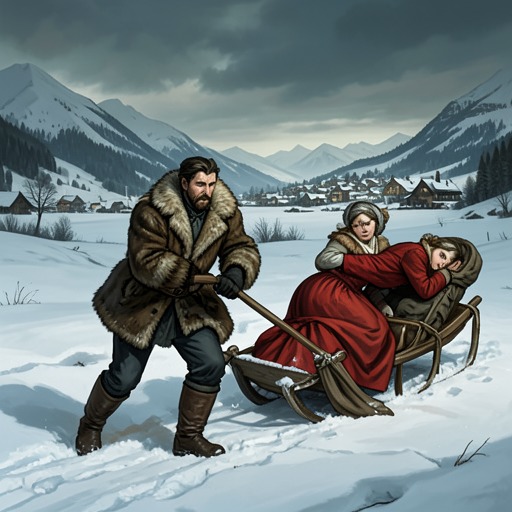
Lemminkäinen’s sixty-summer peace oath
KalevalaLemminkäinen’s sixty-summer peace oath is a promise made to his mother when he needs protection from warriors seeking his death. It binds him to abstain from war and deadly combat for sixty summers, even if he desires silver and other treasures. The vow turns refuge into an obligation: safety is offered on the condition that the endangered warrior restrain the violence that has placed him in danger.
Terms and Scope
The prohibition is expressed both broadly and in the language of combat. Lemminkäinen must not join in war or deadly fighting for sixty summers; in his own response, he promises not to draw his sword in battle or test another warrior there. The two formulations make the commitment more than a general wish for peace: they identify military participation and the use of his weapon as conduct he must forgo.
The term is unusually explicit. Sixty summers measures the promise across decades, not just through the immediate danger or until a particular enemy is appeased. The restriction also anticipates temptation: even if Lemminkäinen wants silver or treasures of silver and gold, those desires are not to take precedence over the oath. The evidence specifies the prohibition and its duration, but does not provide a separate penalty for breaking it.
Refuge and the Oath’s Occasion
The vow arises in a crisis. Warriors from Pohyola demand Lemminkäinen’s head, and his mother answers by naming a small refuge where archers do not go and where his head cannot be severed. Her offer makes the oath part of a practical bargain: a place of safety is paired with a promise not to return to deadly conflict.
The mother requires him to swear before her, describing the commitment as one that must be as strong as heaven. Lemminkäinen responds with an oath of honor and states its central term: for sixty summers, he will not enter battle. His reply accepts the condition rather than merely receiving protection, making his own speech the act that binds him to the promised restraint.
Authority and Form
The scene gives the vow force through both kinship and solemn declaration. The mother identifies the danger, supplies the refuge, and insists on a promise before her; Lemminkäinen’s answer names the duration and the conduct forbidden. No court or formal punishment is described. The stated means of enforcement are the promise itself, its gravity, and the relationship between the person seeking shelter and the mother who provides it.
The oath’s heavenly comparison heightens its seriousness without changing its concrete terms. Its reach remains specific: it bars participation in war and deadly combat, including the drawing of his sword against another warrior. In this way, the scene joins a grand measure of time and a solemn appeal to heaven to a plainly stated rule of conduct.
Later Tension and Narrative Significance
A later passage returns to the mother-son relationship in a different register. Lemminkäinen hastens to his aged mother and tells her not to grieve if he leaves for battle. The passage does not explain how this intention is reconciled with the earlier sixty-summer commitment, or state whether the oath has been formally released. It does, however, place the enduring image of Lemminkäinen as a warrior beside the earlier promise that he would keep away from battle.
That contrast gives the oath significance beyond its immediate role in securing refuge. It is a severe, clearly articulated restraint imposed at a moment when survival depends on accepting limits. The later reference to possible departure for battle leaves those limits under narrative pressure: the oath records a genuine commitment, while the warrior’s continued readiness for combat makes the future of that commitment uncertain. The evidence preserves the tension rather than resolving it.