Tuonela
KalevalaTuonela is the Finnish underworld, a land of the dead that mirrors the upper world yet is separated from it by dangerous journeys and guarded crossings. The Kalevala presents it not as an abstract afterlife alone but as a physical realm of forests, waters, rulers, and creatures, one that the living may enter at great risk. Its river receives the dying Lemminkainen, challenges Wainamoinen, and becomes a hunting ground for Ilmarinen; these different encounters make Tuonela both a destination of death and a threshold that the heroes can sometimes traverse.
The dead and the journey below
In the account of Finnish belief given alongside the poem, the dead do not pass immediately from burial into their final home. Their spirits remain in their graves until their bodies have completely disintegrated. Kalma, the god of the tombs, and his daughter preside over this interval; only after the spirits have been fully purified are they admitted to the underworld, also called Manala. This sequence gives burial, decay, and purification distinct places in the imagined passage from life to the realm of the departed.
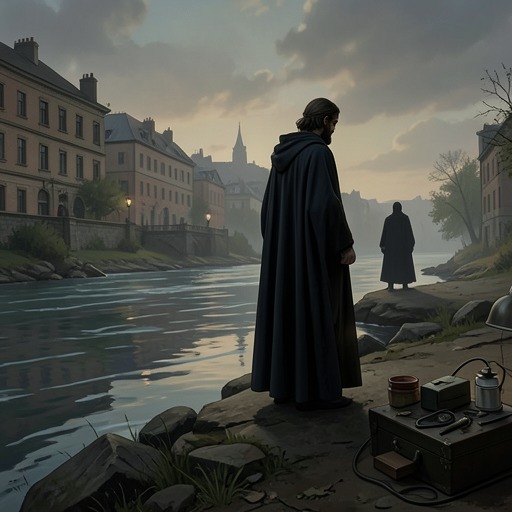
The journey to Tuonela is itself a trial. The dead are said to travel over nine seas and then cross a river likened to the Finnish Styx: black, deep, and violent, with hungry whirlpools and dangerous waterfalls. The route emphasizes that arrival is not effortless or immediate. Passage requires crossing a boundary figured as active and hazardous, rather than simply reaching a distant, peaceful resting place.
That crossing is not reserved to the dead in every episode. When Wainamoinen comes to the river, Mana’s daughter brings him a boat and rows him through the channel. The ferry passage recalls the classical ferryman Charon, but the encounter remains specific to the poem’s underworld: a daughter of its ruler controls passage, and Wainamoinen must seek her assistance. Elsewhere, he makes his way through the coal-black stream and a thousand nets interlaced with copper and iron threads, an image of the perilous obstacles that can lie between the living and safe return.
A counterpart to the upper world
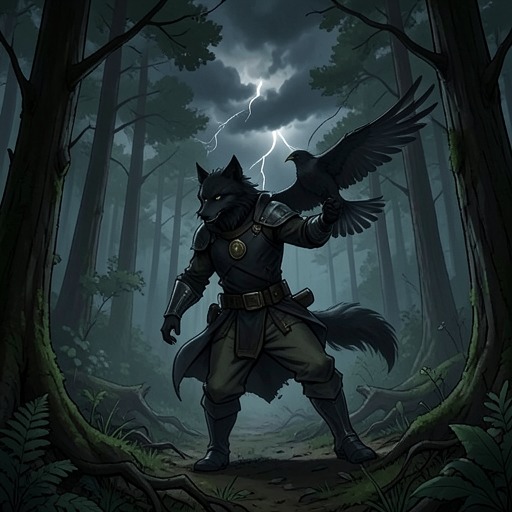
Tuonela resembles the upper world in its range of environments and living creatures. The Sun and Moon visit it; fen and forest shelter wolves, bears, elk, serpents, and songbirds. Its waters sustain salmon, whiting, perch, and pike. The realm is therefore not represented as an empty land of shades. It has its own natural abundance, even as its darkness and association with death distinguish it from the world above.
The imagery makes that abundance unsettling rather than comforting. The waters are coal-black, and the serpent’s teeth are said to have come from the seed-grains of the death-land’s fields and forests. Ordinary features of a living landscape—water, animals, seeds, woodland—recur below, but the poem recasts them as elements of a world governed by death. Tuonela is at once recognizable and altered: a counterpart whose familiar forms carry a different danger.
The old comparative account likens Manala or Tuonela to the Scandinavian Helheim and says it corresponds to the upper world, while also comparing Tuoni’s leadership of the dead with the ancient conception of Hades. These comparisons underline the realm’s structured character: it has geography, inhabitants, and authority, rather than functioning merely as a metaphor for death.
Rulers and inhabitants
Tuoni is described as a frightening, hard-hearted old ruler with three iron-pointed fingers on each hand and a hat drawn down to his shoulders. He leads the dead to their subterranean home and serves as their counsellor, guardian, and ruler. His authority is shared with his wife, a hideous old witch whose distorted features and copper fingers tipped with iron make her an equally forbidding presence. The account says she feasts her guests on lizards, worms, toads, and serpents, turning the expected hospitality of a host into a grim feature of the death-land.
Their son, called the God of the Red Cheeks, is associated with bloodthirstiness and cruelty and acts as his parents’ accomplice. Tuonela’s dangers therefore have both geographical and personal forms: its violent river and obstructed passages are matched by rulers and attendants who are not benign guides. The poem’s account of the household makes entry into the realm a matter of encountering power as well as crossing terrain.
Three daughters of Tuoni appear in the runes. The first, a small, black maiden, warns Wainamoinen not to cross the river, explaining that although many enter Manala, few return because they cannot withstand her father’s anger. After repeated entreaty, however, she ferries him across. Her warning and assistance make her role divided: she knows the danger of passage, yet becomes the means by which the living hero proceeds.
Lowyatar, another daughter, is described as black, blind, and more malignant and loathsome than the first. The account connects her to the birth of nine dreaded diseases after the East-wind impregnates her. This association extends Tuonela’s influence beyond the dead: the realm’s kinship and powers also connect it to affliction among the living.
Encounters and narrative consequences
Lemminkainen’s encounter with Tuonela is fatal. After he undertakes the challenge of shooting the swan there, he is thrown into the river of Tuonela, described as the death-land’s blackest stream and its most dangerous whirlpool. The poem then declares that the hero dies. In this episode, the river is not merely an obstacle to be crossed; it becomes the instrument of a death that confirms how real the boundary’s peril is.
The episode also gives the river a place in the response to that death. Lemminkainen’s faithful mother takes a rake of magic metals and rakes the bottom of the Tuoni river. Her action makes the riverbed the site of a search and turns a tool into an instrument for reaching into the death-land. The moment does not erase the danger of Tuonela; it shows a mother attempting to recover what the river has taken.
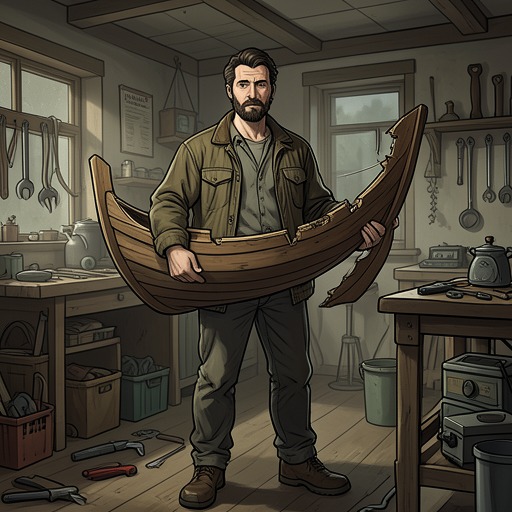
Ilmarinen approaches the same waters under different circumstances. During the courtship trials set by Louhi, he is told that he can receive the Maiden of Pohyola only if he catches the monster pike in the river of Tuoni, without fishing tackle. Ilmarinen hunts the monster of the Death-stream while an eagle hunts and fishes in the waters of Manala. Tuonela thus serves as the setting for an imposed heroic test: its dangerous creature must be confronted as part of a marriage quest.
A later account places the dead Maiden of the Rainbow beneath fragrant heather in the kingdom of Manala. When Ilmarinen addresses Louhi, he explains that her daughter sleeps there in death and asks for another daughter. The detail connects Tuonela not only to anonymous shades or monsters but to a personal loss carried back into the world of the living. In another episode, Wainamoinen hastens to war with Mana and to conflict with Tuoni to destroy evil children; he also seeks to banish pains and illnesses to Tuonela. Across these episodes the realm is at once a place heroes enter, a force they oppose, and a destination to which suffering may be sent.
Narrative significance
Tuonela’s appearances establish a recurring tension between boundary and passage. The dead face a long journey and a dangerous river; Lemminkainen dies in its whirlpool; Wainamoinen secures a ferry and negotiates perilous crossings; Ilmarinen enters its waters in pursuit of a monster. The outcomes differ, so the underworld is neither an impassable abstraction nor a setting whose dangers can be dismissed. Each crossing depends on the particular encounter and its cost.
Its mirrored landscape sharpens that tension. Tuonela possesses forests, animals, fish, celestial visitors, and rulers, yet its black river, death-land seeds, and hostile household mark those familiar forms as belonging to a different order. The realm’s connections to disease, bereavement, heroic trials, and recovery make it consequential beyond the moment of death. In the poem, Tuonela is a fully inhabited counterpart to the upper world—and a threshold whose crossing can mean a test, a loss, or a dangerous return.