Event 1
Molina and Valentin gradually bond through movie stories
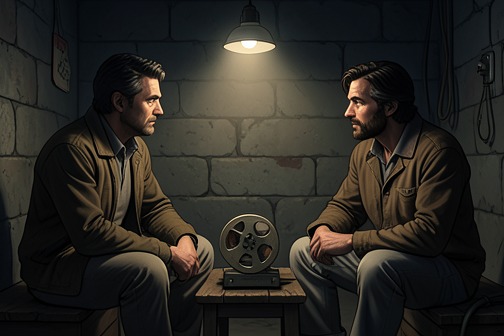
[Molina and Valentin gradually bond through movie stories](entity:event-recall-event-6414ac199186), which give their prison conversations a double purpose: they let both men imagine lives beyond the cell, and they become a way to approach feelings and convictions that are harder to discuss directly. The stories do not erase the prison or their differences. Instead, the shared act of telling and listening changes what each man can say in the other’s presence, until even the end of a film can feel like a personal loss.
## A Shared Refuge in the Cell
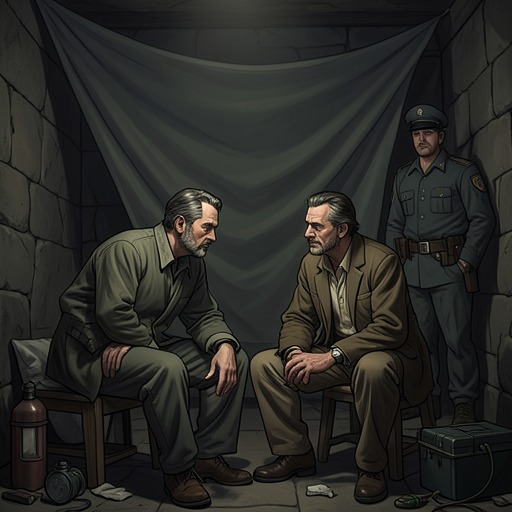
[Molina](entity:character-recall-character-molina-1af5d7eac5de)’s descriptions can briefly displace the conditions around the two men. When [Valentin](entity:character-recall-character-6b66287c2b75) objects to being drawn into talk about mothers, he explains that he had been feeling well because he had forgotten the cell and everything else while listening to a film. Molina answers that he, too, had forgotten the rest. Their exchange makes the effect mutual: the stories are not simply Molina’s escape or entertainment for a captive audience, but a temporary imaginative space they occupy together. Valentin’s question about why Molina would break that illusion acknowledges both its comfort and its fragility.
The bond becomes visible in Valentin’s response when one film ends. Asked whether he liked it, he first gives a restrained answer, then admits he is sorry because he has become attached to the characters and their ending feels as if they had died. His reaction unsettles the distance he otherwise tries to maintain from sentiment. He calls it a weakness, but the conversation has already made his attachment plain; Molina can recognize a heart in the response Valentin would rather minimize.
## Political Conviction and Personal Disclosure
The conversations do not make Valentin forget his political commitments. He tells Molina that he cannot live only for the moment because his life is dedicated to political action and social revolution. He distinguishes the purpose that sustains him through imprisonment from sensual gratification, which he considers secondary while the struggle continues. The disclosure establishes a real difference between the men: storytelling may offer respite, but it does not make Valentin’s political discipline disappear or reduce his understanding of suffering to the limits of what Molina can imagine.
At the same time, the stories give Valentin a route into speaking about people beyond the cell. When Molina describes a panther woman following an assistant, Valentin says that what frightened him was not danger to himself but danger to his girlfriend. He has previously been guarded about discussing her, and his admission reveals that the film has touched a personal fear. The imaginative plot prompts disclosure without requiring Valentin to begin with a direct account of his own relationship.
Valentin also articulates how political solidarity reaches him while he is physically confined. He insists that he is not alone: he feels connected to his comrades and to the woman who shares his commitments, even when he cannot see them. He describes this connection as a thread he sometimes loses hold of but has now grasped again. The image gives his political belief a personal, immediate dimension. Molina’s presence in the cell does not replace those comrades, but the conversation lets Valentin state his need for connection aloud.
## Films Reconstructed in Speech
The relationship develops through the texture of Molina’s telling as well as through what the films mean. In one account, he rebuilds a [Paris](entity:location-recall-location-paris-c02b439ce220) music hall from its dark velvet upholstery and chrome railings to a chorus line whose costumes transform under the imagined camera. He then describes a singer emerging through layers of tulle in a silver lamé gown, descending a staircase outlined by stage lights. These particulars make the story an act of shared visualization: Valentin can interrupt to ask what a material is or urge Molina to move on, shaping the pace of the narration rather than remaining merely its recipient.
Another story opens at the [Mardi Gras of Veracruz](entity:time-recall-time-mardi-gras-of-veracruz-de4a36207dba) just before dawn. Molina sets the masked couple’s dance against the fishermen leaving in their boats, the villa’s balconies and gardens, and the music of maracas and bongos. Later, a singer’s conflict with a wealthy magnate and a reporter is carried forward through a song: after refusing the reporter’s money, she leaves him the lyrics he has written; when the magnate strikes her and departs, she finds the paper and presses it to her heart. These turns make music and written words tangible links between separated characters. Molina’s attention to the lyrics, performance, and repeated song also gives the telling a form that can linger beyond the plot’s immediate action.
In a different story, the setting is a forested country house where a blind pianist introduces a sonata by recounting the love that inspired it. The narration moves from guests assembled around the piano into the remembered encounter, joining spoken explanation to an imagined musical performance. Across these accounts, Molina moves among scenery, costume, gesture, music, and shifts of scene. Valentin’s questions and requests to continue make the telling collaborative in effect: the film arrives not as a fixed screen image but as an experience assembled between speaker and listener.
## From Film Characters to Feeling
The stories repeatedly bring emotional recognition close to the surface. Valentin’s attachment to the characters of the panther-woman film is one instance; his concern for his girlfriend, prompted by the story, is another. The films provide an indirect vocabulary for attachment, fear, loss, and dependence. That indirection matters because Valentin can respond to fictional people before he openly admits what their predicaments recall in his own life.
The longer melodrama of the singer and reporter sharpens the pattern. The reporter destroys an article to protect the singer, refuses payment for doing so, and later leaves her a song expressing his love. She cannot initially leave the magnate, but eventually returns to work as a performer. When she sings at her nightclub debut, her trembling hands and the song’s recollection of separation turn the performance into a renewed address to the reporter. The magnate later finds her and gives her back her jewels; she uses the money to search hospitals and jails for the reporter, who is gravely ill after deprivation and exposure. He speaks as if they can begin a new life, while her recognition of his condition grows. The song carries their imagined reunion even as the story withholds the ordinary happy ending. Molina’s continued telling of such scenes gives Valentin sustained access to emotions—longing, regret, and grief—that neither man has to name as his own at once.
## The Stories’ Afterlife
The connection forged through narration becomes especially clear when Valentin is ill. Molina recalls that Valentin had become accustomed to hearing films from him every night, like lullabies, and that after Valentin’s death he can no longer imagine calling him to dinner. In a later dreamlike conversation, the dead cellmate’s fate enters the scene through a question from Molina’s mother. Molina acknowledges his sadness and wonders whether Valentin died happily, while leaving the answer unknowable to anyone but Valentin himself. The uncertainty preserves the difference between the political meaning Valentin might have given his death and the meaning others try to assign it.
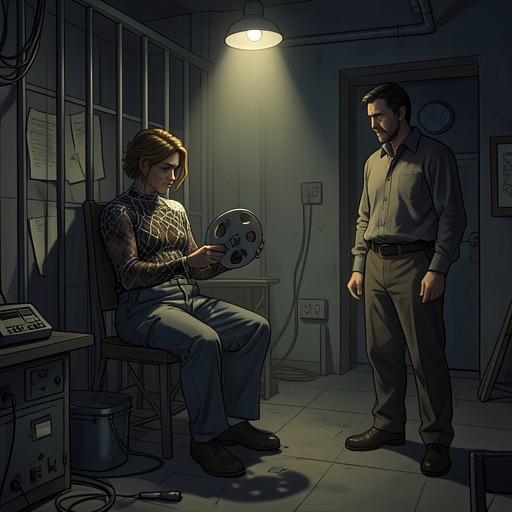
The film imagery continues inside that dreamlike passage. Molina imagines a strange woman trapped in a web growing from her own body, a silver-masked figure whose tear remains unexplained. The scene returns to the visual language of the movies while allowing it to carry grief that direct explanation cannot settle. Thus the stories’ function changes across the relationship: they first help the prisoners forget the cell, then make personal disclosure possible, and finally survive as a form of memory after the listener is gone. Their intimacy lies not in resolving the men’s differences, but in the attention they learn to give one another through the films.
Event 2
Irena meets, falls in love with, and marries the architect
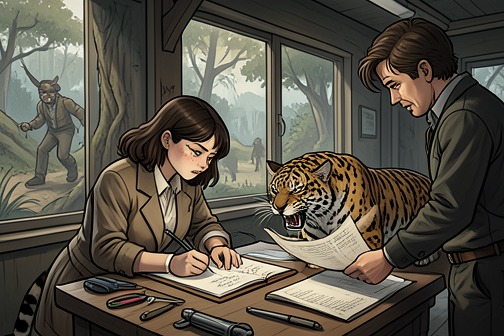
[Irena](entity:character-recall-character-9787f63ceeeb) meets, falls in love with, and marries the [Architect](entity:character-recall-character-8d615c1d4da6) in the film story [Molina](entity:character-recall-character-molina-1af5d7eac5de) recounts to [Valentin](entity:character-recall-character-6b66287c2b75). Their courtship is shaped from the start by Irena’s fear that she may descend from the legendary [Panther women](entity:creature-recall-creature-panther-women-cc0fc35f4e29): she welcomes affection, yet asks the Architect to give her time before they can live as an ordinary married couple. The marriage therefore marks both a commitment to remain together and the persistence of the fear that keeps them apart.
## The Encounter at the Zoo
Irena first appears as a young woman drawing a [Panther](entity:creature-recall-creature-panther-9c9e1c506de6) at the [Central Park Zoo](entity:location-recall-location-central-park-zoo-1f52e34b8443). Her face seems catlike to the narrator, and she concentrates on the drawing while the animal, initially quiet, begins pacing and growling after the noise of her easel and chair disturbs it. The scene places her artistic attention beside an unsettling connection to the animal world, a visual echo of the story she later tells about her origins.
When a gust of wind carries away a page, a man retrieves it and returns it to her. He recognizes from her accent that she is foreign. Irena explains that she is a refugee who studied fine arts in Budapest and left for [New York](entity:location-recall-location-75b9ea4bd176) when war broke out. Asked whether she misses her city, she rejects the assumption: she comes not from a city but from the [Carpathian Mountains](entity:location-recall-location-carpathian-mountains-af7281764e91). She describes a landscape of dark forests, winter hunger, and villagers who fear wild beasts and seek protection from them. Her answer gives the encounter a shadowed background before the relationship has even begun.
The man is an Architect, working with colleagues and a young woman who is also an Architect. His assistant is plainly in love with him, though she conceals her disappointment when he leaves without saying where he is going. He has returned to the zoo hoping to see Irena, but she is absent. Days pass, and he cannot forget her. Later, while walking along a fashionable avenue, he notices an art gallery exhibiting drawings devoted to Panthers. Irena is there, receiving congratulations. The story moves from an accidental meeting to the discovery of her work, making her artistic identity the means by which the Architect finds her again.
## Courtship and the Panther-Woman Legend
The Architect and Irena continue seeing one another and fall in love. Irena is openly affectionate: she looks at him, touches him, and puts her arms around him. But when he tries to hold or kiss her, she withdraws. She asks him not to kiss her, while allowing herself to kiss him with a tenderness that remains carefully bounded. The courtship thus contains a repeated approach and retreat: her affection is evident, but physical closeness is governed by a fear she cannot set aside.
That fear has a history. Irena says that stories told when she was a girl frightened her: in the mountains, people believed that Panther women still existed, hidden among ordinary women, and that a kiss could reveal their savage nature. The legend within the film tells of a woman who murders her soldier husband and escapes into the snow. Her pursuer follows her tracks, first human and then those of a Panther, into the forest. After he makes the sign of the cross, the animal becomes a woman again; he then hears other beasts approaching. The tale concludes that the Panther women never died out and may remain concealed somewhere in the world. Irena does not establish that she is one of them; she says only that she has always feared being descended from them. The legend therefore explains her anxiety without resolving whether its supernatural premise is true.
## Proposal, Home, and Marriage
At a restaurant the couple has visited before, the Architect raises a glass and makes clear that he intends to ask Irena to marry him. Her eyes fill with happiness, and they drink together, holding hands. Later, he asks again. Irena accepts wholeheartedly and says she does not want to leave the house where she feels at home. She looks around its dark velvet drapes and lace curtains and admires its turn-of-the-century furnishings. The Architect tells her that his mother helped choose the furnishings and would have loved Irena like a daughter. Irena kisses him on the forehead and pleads to remain together always, describing her wish to wake beside him each morning.
Her acceptance does not mean that her fear has disappeared. Irena asks for time before she can become a real wife to him, hoping that her fears will subside. The Architect agrees, and they marry. The contrast is central to the event: she is certain of her love and her wish to share his home, yet uncertain about the intimacy marriage is expected to bring. The house offers her a sense of belonging, while her request for time establishes a limit within their new life together.
## The Wedding Night and Its Aftermath
On their wedding night, Irena sleeps in the bed and the Architect sleeps on the living-room sofa. Their arrangement follows the agreement they made rather than resolving the fear that shaped her request. They have also agreed that Irena will consult a [Psychiatrist](entity:character-recall-character-66a7fba2cdca). At her first appointment, she finds him notably handsome and flirtatious. The account therefore moves from marriage to an effort to address the difficulty within it, but this episode supplies no outcome of the consultation.
The event is recounted by Molina to Valentin as a story within the prison conversation, not presented as an independent, impersonal account. Molina’s telling includes remembered visual details and occasional uncertainty about what happened next, while Valentin interrupts and challenges his interpretation. That frame keeps the romance’s central tension open: Irena’s attachment to the Architect is unmistakable, but neither the legend she fears nor the source of her difficulty is settled by the scenes of their meeting and marriage.
Event 3
Irena kills the psychiatrist and frees the zoo panther
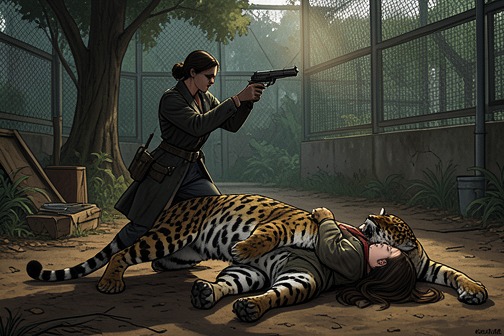
In [Molina](entity:character-recall-character-molina-1af5d7eac5de)’s embedded account, [Irena](entity:character-recall-character-9787f63ceeeb) kills the [Psychiatrist](entity:character-recall-character-66a7fba2cdca) and releases the zoo panther she has watched for days, turning her feared identity as a panther woman into an undeniable reality within the film’s world. The escape ends not in freedom but in the deaths of both Irena and the animal. Molina tells the episode to [Valentin](entity:character-recall-character-6b66287c2b75) as part of a film narrative, and its final sequence makes the story’s recurring uncertainty—whether Irena’s nature is delusion or fact—give way to an abrupt, fatal answer.
## Causes and Background
The chain of events begins after an incident at the pool. Irena’s husband summons the Psychiatrist to the [Architect](entity:character-recall-character-8d615c1d4da6)’s house, where they wait for her. The [Architect’s assistant](entity:character-recall-character-362ed97e694a) then contacts the Architect and sends him to the women’s hotel and police station in connection with the pool incident. This leaves the Psychiatrist alone at the house for a short time. The separation is brief, but it places him in Irena’s path when she returns.
The Psychiatrist interprets Irena’s distress and her approach to him as an opportunity to treat her conviction that she is a panther woman. His effort to understand or correct her belief is shaped by the assumption that it can be resolved through intimacy. Irena’s response soon breaks the frame of his explanation: after drawing away from him, she moves into a dim corner, where the film presents her transformation into a panther as real. Molina has described her attraction and repulsion toward the Psychiatrist as coexisting; in this encounter, that contradictory relation culminates in violence rather than cure.
## The Psychiatrist’s Death
The room’s lighting makes the transformation a sudden change in what can be seen and understood. The Psychiatrist has been reading under a table lamp; when Irena retreats beyond its reach, the setting’s shadowed corner becomes the threshold between her human appearance and the animal form the film has associated with her. The Psychiatrist tries to defend himself with a fireplace poker, but Irena attacks and kills him. The sequence closes the possibility that his intervention can explain her condition away: within the story, she is not merely claiming to be a panther woman.
Meanwhile, the Architect and the assistant, at the hotel, try to telephone the Psychiatrist to warn him that Irena is dangerous. Their calls go unanswered. The Architect, the assistant, and the police who have been summoned to the house go upstairs and find the door open and the Psychiatrist dead, but Irena has already disappeared. The failed warning and the empty room shift the story from an attempted intervention at home to a search beyond it.
## The Key and the Release
The Architect knows where Irena is likely to have gone: the zoo, the place she visits every afternoon to watch the panther that has hypnotized her. Molina adds that earlier that same day Irena had watched the keeper feed the animal. The keeper opened the cage, put meat inside, and secured the door again, but left the key in the lock. When he was not looking, Irena took it. That small, deliberate action supplies the practical means for the night’s escape.
When Irena returns after killing the Psychiatrist, she walks to the cage with the keys in her hand. The panther is asleep, but her arrival wakes him. She approaches, unlocks the door, and slides back the bolt. The sequence gives her agency in the release: she has not stumbled upon an open cage but has taken the key and come back to use it. At the same time, Molina describes her as moving like a sleepwalker, so intention and apparent trance remain side by side rather than resolving into a simple account of her state of mind.
The Architect, the assistant, and the police arrive as she opens the cage. Police cars approach with sirens, while the zoo and surrounding area are nearly deserted at that hour. The panther leaps out and knocks Irena down before running through the park and across the road. A police car strikes and kills him. The attempt to free the animal therefore produces no lasting escape from confinement into safety; the open cage leads directly into a fatal encounter with the outside world.
## Consequences and Narrative Significance
The Architect finds Irena lying on the cobblestones where they first met. She is dead, and the panther has also been killed. The location links the ending back to the beginning of their relationship, while the double death closes off any return to the life the characters had shared. The assistant comes to the Architect, and the two leave together arm in arm, trying to put the spectacle behind them. Their departure is the final human response Molina describes; the story ends without a further explanation of Irena’s condition or a recovery from what has happened.
The episode’s construction turns a disputed belief into a sequence of consequences. The Psychiatrist treats Irena’s panther identity as an idea he can cure, but the transformation and subsequent release establish it as an actual element of the film’s world. Yet the story does not make that revelation a triumph: Irena’s killing of the Psychiatrist and her attempt to free the panther end with both of them dead. Molina’s account also places the zoo key at the center of the reversal. First, Irena watches the keeper control access to the animal; later, she uses the key he has left behind to undo that enclosure, only for the panther’s passage into the city to end in another fatal barrier. As an embedded story told to Valentin, the episode is both a self-contained tragedy and one of Molina’s film narratives within their prison conversation.
Event 4
Leni's Involvement in Resistance Espionage and Eventual Death
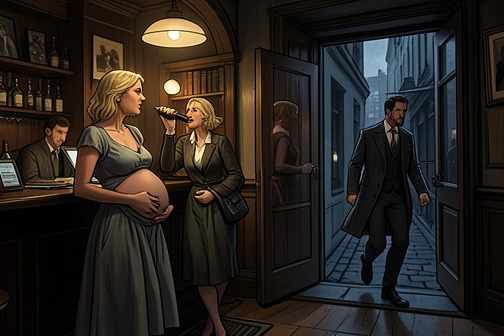
[Leni](entity:character-recall-character-2ecacfe95ef5)’s Involvement in Resistance Espionage and Eventual Death is a film-within-the-novel story narrated by [Molina](entity:character-recall-character-molina-1af5d7eac5de), in which romance and espionage become inseparable under German occupation. Leni, a singer from [Alsace](entity:location-recall-location-alsace-73ebce91daad) who insists on her loyalty to [France](entity:location-recall-location-france-f5cafc8a8ad4), is drawn into the [Maquis](entity:organization-recall-organization-maquis-724dfd513e07)’s effort to uncover a German ammunition dump. The operation turns her affection for a German counterintelligence officer into a source of danger, while the resistance’s threats and her own acts of defiance carry her toward a fatal ending.
## Occupied [Paris](entity:location-recall-location-paris-c02b439ce220) and a Murder
The story opens in Paris a few months after the German occupation begins. German troops march beneath swastika flags at the Arc de Triomphe and on the Eiffel Tower, while French women applaud them. In this occupied city, Leni performs as a singer. A fellow performer, a blond chorus girl, visits her dressing room to say that she is pregnant by a German lieutenant and expects to marry him. The disclosure troubles Leni, who knows the woman is unmarried; the girl, however, hints at an unnamed fear before leaving.
That night the chorus girl walks through dark streets toward the lieutenant, who leans from a window and drops her a key. A clubfooted man and an accomplice in a car are nearby. The car runs her down as she bends to retrieve the key, then disappears into the empty streets. The lieutenant reaches her as she lies dying. She tells him not to be afraid, saying their child will be born healthy and make its father proud, and then dies. Her murder makes the private romance between the chorus girl and the German lieutenant part of a larger, covert struggle.
The next morning, German police question Leni because she was the dead woman’s friend. Leni knows only that her friend loved a German lieutenant. The police detain her, but a telephone order secures her release in custody so she can perform that evening. After the show, a young [German officer](entity:character-recall-character-d7729941736b) introduces himself as the head of counterespionage in Paris and apologizes for the questioning. He has sent Leni flowers from the Upper Palatinate, where he was born, and invites her to supper. Their first exchange exposes the political divide between them: Leni says she comes from Alsace and has been taught to love France, while he defends the German occupation as a campaign against Europe’s supposed enemies. She barely touches her drink and lets him take her home, still unable to accept him simply as a lover.
## Coercion into the Maquis Mission
Leni’s cousin later arrives with the clubfoot, the man involved in the fatal attack on the chorus girl. They reveal that the dead performer had belonged to the Maquis and had begun a mission to discover the location of a large German ammunition dump. According to the clubfoot, she fell in love with the lieutenant and refused to continue; the resistance then had her killed before she could betray its members to the occupation authorities. He demands that Leni complete the mission by obtaining the location from the German officer’s documents.
Leni refuses at first, saying she lacks the courage and knowledge for such work. The clubfoot counters that the officer’s love for her makes the task possible, then threatens reprisals. Leni discovers that her cousin is being held as a hostage: the Maquis will kill him if she does not cooperate. She agrees to try, not from commitment to espionage but under pressure to save him.
At the officer’s house, Leni searches for the information while the German majordomo watches her suspiciously. During a garden lunch, she asks for a rare wine that only the majordomo can retrieve from the cellar. When he leaves, she uses the opportunity to enter the officer’s study. She has taken the key to his desk and uses a recording of her own singing, accompanied by piano, to make the others believe she is performing in the adjoining room. She finds a map showing the German arsenal’s location, but footsteps force her onto the study balcony, exposed to the people gathered below. As the single-song record ends, she slips back to the piano. The guests applaud, convinced they have heard her sing live, and her deception goes undetected.
Leni meets the clubfoot and her cousin in a vast museum overlooking the River Seine. She has the location but hesitates to hand it over after the clubfoot says this is only the beginning of the work expected of her. Seeing her cousin trembling, she gives the clubfoot the name of the French region and the exact village where the ammunition is hidden. He tells her that the German officer will hate her when he learns of her betrayal. The cousin then tries to push the clubfoot through a museum window; the clubfoot fights back, and the cousin sacrifices his life by hurling them both into space. Leni escapes recognition in the crowd by wearing a veiled hat.
## Love, Divided Loyalties, and Exposure
Leni’s feelings for the officer deepen, but a private moment changes how she sees him. In bed, she overhears him on the telephone recommending the execution of two black-market criminals. She later challenges his claim to fearlessness, asking whether killing a defenseless enemy might instead reflect fear of facing that enemy in the future. He does not understand her point. Having heard how readily he accepts a death sentence, Leni regards him as less admirable and decides to pass the arsenal information to the Maquis.
She arranges to contact a resistance member at the theater, using rehearsals as cover. Before she can deliver the information, an official arrives with a telegram inviting her to star in a major film at [Tobis-Berlin Studios](entity:organization-recall-organization-tobis-berlin-stu-5ab7e4d249cc). The invitation comes with a representative of the occupation government, and she must pack for [Berlin](entity:location-recall-location-berlin-54cb4a75d0f6) immediately. Rather than abandon the mission, Leni insists that she be allowed to meet the Maquis high command before handing over the secret. The officer and his soldiers follow the car taking her out of Paris, but the driver—a criminal accomplice associated with the clubfoot—changes course to lose them.
At the castle, Leni discovers that the German majordomo she had feared is the head of the Maquis. She gives him the ammunition-dump secret, expecting the officer to arrive and rescue her. When no one comes, she overhears the driver telling the leader that he suspects they were followed. Remembering the majordomo’s earlier surveillance of her, she tries to use his interest in her to create an opportunity. The officer and his patrol eventually find the trail through the rain and approach the castle.
## Death and the Memorial Ending
When the Maquis leader makes a sexual advance, Leni grabs a carving fork and kills him. The officer and his men arrive, and Leni tries to escape through a window. The driver, who is waiting below, fires at her as he is dying. Leni catches herself on a curtain and remains standing until the officer reaches her. She tells him she loves him and that they will soon be together again in Berlin, but he sees blood on his hands and realizes she has been shot. She dies in his arms.
The film’s final scene shifts to a Berlin memorial for heroes, presented like a Greek temple. Leni appears there as a statue in a tunic, her arms extended; the officer places flowers on them and walks away with tears in his eyes. An inscription says, in effect, that the fatherland will never forget its heroes, while the officer leaves alone along a sunlit road. The public monument turns Leni into a national emblem, but the image of the grieving man and the outstretched statue preserves the intimate loss that official commemoration cannot undo. Molina’s narration also keeps the story visibly in the act of being told: he pauses, corrects himself, and admits uncertainty about some details, so the elaborate film plot arrives not as impersonal history but as a remembered tale shared inside the prison.
Event 5
The Disfigured Pilot and the Maid Rekindle Their Love After the Illusion Fades
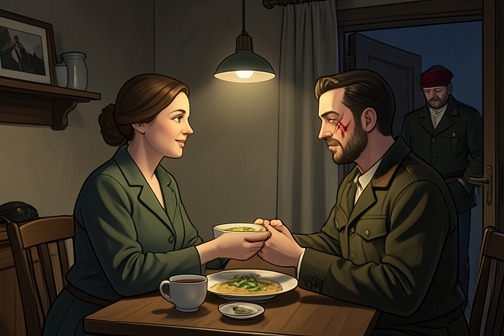
[The Disfigured Pilot and the Maid Rekindle Their Love After the Illusion Fades](entity:event-recall-event-c079f7c7fd13) is an embedded film story told by [Molina](entity:character-recall-character-molina-1af5d7eac5de) to [Valentin](entity:character-recall-character-6b66287c2b75). A pilot whose appearance has changed after war and a maid who has long believed herself unattractive find companionship, marry, and experience a brief transformation in how they see each other. When that enchantment collapses in front of the pilot’s parents, the couple retreat from one another; a blind composer and the housekeeper help them recognize that their renewed love rests not on altered faces but on a shared apprehension of each other’s inner selves.
## The Maid, the Pilot, and Their Unequal Losses
The story opens in winter, with the maid permitted to remain in the house because she has nowhere else to go. The housekeeper and maid share sadness, though the housekeeper recognizes that companionship can sometimes make sorrow harder to bear. Even so, their limited means allow them to share a can of soup. The scene establishes the maid’s precarious position and the emotional isolation against which the romance develops.
The pilot arrives after battle, his former face changed by a scar and his military career ended by both injury and a nervous collapse. The maid, who remembers him as handsome and spirited, rushes to welcome him, only to show her shock at his appearance. His own distress takes the form of sharpness toward her: he asks to be left alone and insists that she avoid making noise. The meeting therefore begins not with mutual consolation but with a collision between her old image of him and his present appearance, and between his dependence on the household and his wish to withdraw from other people.
The pilot’s parents and fiancée visit, but he refuses to see them. The fiancée pleads to be admitted and says that the accident does not matter to her, but the story presents her words as insincere; she leaves abruptly. Meanwhile, the pilot spends his time drawing. As spring arrives, the maid brings coffee and doughnuts to him in the forest, where he works outdoors. The narrated account marks a remark she makes about one of his drawings as the moment he recognizes her refined sensibility, though Molina cannot recall the words themselves. A remembered exchange, rather than a change in either person’s looks, begins to alter their relationship.
## A Marriage Made as Companionship
A blind composer also becomes important to the couple’s approach to one another. His account of gradually coming to terms with his blindness offers the pilot a model of living with loss, while his presence gives the story a perspective that is not governed by ordinary sight. The pilot proposes marriage to the maid as an arrangement between two lonely people: he can provide financial security, and she can care for him. He presents the offer as companionship without a promise of love, acknowledging their shared isolation rather than pretending that either is already happy.
The wedding is small and solemn. The blind composer and the housekeeper serve as witnesses in a wooden church, where candles burn and the benches and choir loft are empty. Afterward, the housekeeper has prepared a supper for two. The couple sit in silence, unable to look at each other. Their marriage has changed their practical circumstances, but it has not yet made intimacy easy; the meal holds them in the uncertain interval between a proposed contract and a relationship they have not learned how to inhabit.
## The Enchantment and Its Collapse
During the supper, the couple’s perception seems to shift. The house and the faces before them become indistinct, and the maid appears beautiful while the pilot seems handsome again. They look into one another’s eyes, join hands, and kiss. In the days that follow, they fear that the experience may have been a dream and hide from the housekeeper, meeting in the forest before dawn instead. When the blind composer encounters them there, he senses that something has changed and greets them without seeing them.
The couple’s happiness is tested when the pilot invites his parents to visit, believing himself nearly recovered. The parents arrive expecting to find their son well, but they see his scar and a bride whom they judge by her appearance and social position. Their disappointment unsettles the couple. The maid looks in a mirror and sees her familiar face; the pilot stands beside her, and each becomes conscious again of what the other looks like. They retreat into darkness, avoid one another, and the maid returns to her former room. The pilot destroys his self-portrait, turning the collapse of the shared illusion into a visible act of despair.
## Seeing Beyond Appearance
The housekeeper summons the blind composer, who visits at autumn twilight. With the lights off, he speaks to the couple about their recent concealment from each other. He explains that love had allowed them to see each other’s souls rather than their bodies, and asks them to look at one another again without doubt. His intervention reframes the earlier enchantment: it need not mean that their appearances literally changed. It can instead describe a way of seeing made possible by love, one that the couple had briefly experienced and then lost confidence in.
The housekeeper reinforces this understanding while helping the maid prepare for supper. She recalls that her own fiancé never returned from the trenches in [France](entity:location-recall-location-france-f5cafc8a8ad4), and says she believes he would still find her beautiful because he died loving her. Her recollection gives her encouragement a personal history: she too measures beauty through the persistence of love, not through another person’s present appearance. At the window, the pilot takes the maid’s hand, removes her ring, and writes their names in the glass. They kiss again, this time after the blind composer and housekeeper have helped them face the truth of what they see.
## Molina’s Retelling and Its Frame
The ending returns attention to the act of storytelling. Two additional guests arrive on tiptoe, seen from behind and dressed elegantly; the listeners are not told whether they are the pilot and the maid, and their faces remain unavailable to judgment. The story thus closes without certifying that the couple’s appearance has been transformed again. Instead, it leaves the question of recognition with the audience and makes the couple’s identity depend on their shared history rather than on visible proof.
Molina tells Valentin that his mother loved the story and that he did too. He then decides not to share more of the films he likes, because Valentin has mocked what he considers his softness. That response gives the embedded romance a second consequence outside the film’s plot: the story exposes Molina’s vulnerability, but also prompts him to keep part of his inner life private. Its account of people learning to see beyond appearances consequently resonates with the unequal closeness between the two prisoners, even as Molina chooses not to explain the connection aloud.
Event 6
Molina's Sudden and Worsening Abdominal Pain in Prison
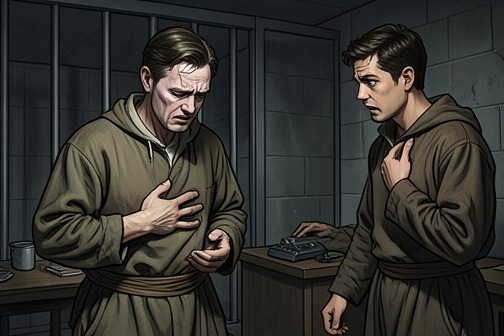
[Molina's Sudden and Worsening Abdominal Pain in Prison](entity:event-recall-event-1aa64b93e535) is an episode in which an apparently temporary stomach complaint interrupts the cellmates’ exchange and becomes a question of whether [Molina](entity:character-recall-character-molina-1af5d7eac5de) should go to the infirmary. The pain does not receive a diagnosis in the available scene. Its significance lies instead in its recurrence and escalation, and in the different risks that Molina and [Valentin](entity:character-recall-character-6b66287c2b75) associate with seeking medical care.
## Onset and Changing Symptoms
Molina first reacts with broken-off sounds of discomfort, then identifies his stomach as the source. He clarifies that the pain is higher up and sharply felt, rather than accepting Valentin’s initial suggestion that it might be appendicitis. The exchange establishes uncertainty from the outset: a specific cause is proposed, but Molina does not confirm it, and no examination or diagnosis follows in the scene.
Molina next attributes the pain to his nerves, recalling that he had been very nervous that day. For a moment, he thinks it is letting up. That apparent improvement proves unstable. Valentin observes that the pains are getting stronger, and Molina later describes their recurrence as increasingly severe. The progression from a localized complaint, through a brief easing, to stronger repeated pain gives the episode its movement without resolving what is wrong.
The symptoms also shift from pain to bodily urgency. Molina says he feels he has to go to the bathroom again. Valentin initially treats the problem as something that will not, by itself, send him to the infirmary; Molina replies that the episode is more than diarrhea and says Valentin should go if he were in Molina’s position. Their exchange shows that the disagreement is not simply over whether symptoms exist. It concerns how seriously to interpret them and what action they warrant.
## The Infirmary and Political Risk
Valentin explains why he is especially reluctant to see a political prisoner end up in the infirmary. He recalls a comrade who became dependent on something administered there; in Valentin’s account, the treatment softened the prisoner and broke his will. He fears that care could weaken political prisoners’ resistance until interrogation made them say anything. The warning gives the infirmary a particular meaning in the prison: it is not presented as a neutral refuge, but as a place Valentin associates with vulnerability and possible loss of resistance.
Valentin distinguishes Molina’s situation from that of political prisoners and initially tells him that going to the infirmary would not cause the same harm. Yet when Molina’s symptoms continue, Valentin advises him to go. Molina resists by arguing that the authorities will not send him there for a little diarrhea; Valentin counters that the problem is more than that. Their positions therefore shift with the exchange: Valentin’s political warning does not erase his concern for Molina, and Molina’s skepticism about being admitted does not settle whether the symptoms merit care.
## Interruption of the Cellmates’ Storytelling
The episode unfolds amid the cellmates’ narration of films. Molina says that he had sworn not to tell Valentin any more films and that breaking his promise will get him into trouble; Valentin replies that the pains are becoming stronger. The juxtaposition places a bodily crisis inside a conversation that has repeatedly turned to imagined scenes. Here the film story does not simply continue uninterrupted: the pain returns to the foreground, and the narration itself becomes something Molina may resume despite his earlier resolve.
That contrast is especially notable because the surrounding film descriptions rely on elaborate settings and performances. A [Paris](entity:location-recall-location-paris-c02b439ce220) music-hall sequence evokes velvet, chrome, chorus girls, and a singer descending a staircase marked by lights. Later, Molina begins another account with a secluded house, a grand piano, and a blind pianist. Against such carefully composed scenes, the brief reports of pain and the practical argument about the bathroom or infirmary are abrupt and unresolved. The cell’s immediate physical circumstances keep breaking into the imagined worlds, rather than being replaced by them.
## Consequences and Limits of the Episode
The episode establishes a worsening pattern and a disagreement about seeking care, but it does not state that Molina enters the infirmary, receives treatment, or learns the cause of the pain. Nor does the brief improvement at the beginning amount to recovery: Valentin’s later warning and Molina’s renewed urgency point in the opposite direction. The available scene ends with the question of how to respond still active.
The episode also makes the decision legible through the prisoners’ unequal circumstances. Valentin weighs medical care against the danger he associates with weakening political resistance; Molina focuses on whether his symptoms will be considered serious enough for admission. The two men do not share the same calculation, even as Valentin recognizes the worsening pain. In this way, the incident joins bodily uncertainty to prison life without converting that uncertainty into a confirmed diagnosis or outcome.
Event 7
The Arrest of Valentin Arregui
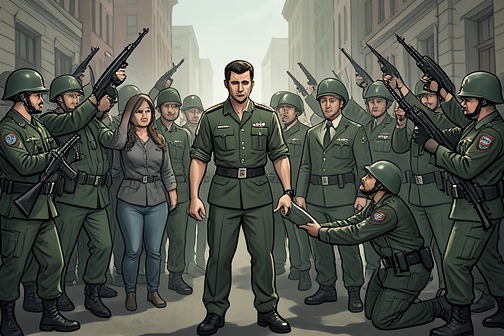
The arrest of [Valentin Arregui Paz](entity:character-recall-character-valentin-arregui-pa-24131057b978) began a prolonged period of political detention that the prison record traces from a roadside operation in 1972 to his transfer into the cell he shared with [Luis Alberto Molina](entity:character-recall-character-luis-alberto-molina-5267050fd754) in 1975. The record places the arrest amid labor unrest, then follows his custody through protest, punishment, and a series of prison assignments.
## Arrest and Circumstances
On [October 16, 1972](entity:time-recall-time-october-16-1972-8b3b74059d39), National Guard troops surrounded a group of activists along Route 5 outside Barrancas and arrested Arregui. The prison record describes the group as involved in promoting disturbances with strikers at two automotive assembly plants situated along the highway. It does not specify what Arregui personally did during those disturbances, so the account establishes the circumstances of the group’s arrest rather than detailing his individual actions.
## Detention and Prison Assignments
Arregui was held under the authority of the Federal Government’s Executive Power while awaiting judgment. As of November 4, 1974, he was lodged in Pavilion A, cell 10, with political prisoner Bernardo Giacinti. The record thus places him in prolonged detention without describing a completed judgment in the period it covers.
On March 25, 1975, Arregui was moved to solitary confinement for ten days. The record identifies the confinement and its duration but does not state the reason for this particular measure. It also characterizes his conduct as rebellious and calls him a reputed instigator of the hunger strike and of other incidents said to protest poor hygienic conditions in the pavilion and violations of personal correspondence. These are the prison authorities’ assessments, not independently established accounts of his role.
## Hunger Strike and Transfer
Arregui took part in a hunger strike protesting the death of political prisoner Juan Vicente Aparicio while Aparicio was undergoing police interrogation. The protest connected prison discipline to events beyond Arregui’s own case: his record marks the strike as a collective response to a fellow prisoner’s death. Authorities reportedly regarded him as one of its instigators, a judgment that frames his actions through the institution’s language of misconduct and control.
On [April 4, 1975](entity:time-recall-time-april-4-1975-a6e73d0516de), Arregui was transferred to Pavilion D, cell 7, with Luis Alberto Molina, a prisoner serving a sentence for corruption of minors. The transfer brought together two prisoners whose institutional classifications sharply differed: the record identifies Arregui as a political prisoner and [Molina](entity:character-recall-character-molina-1af5d7eac5de) as a sexual offender. It marks the next stage of Arregui’s confinement after the arrest, protest, and brief period in solitary.
## Significance in the Prison Record
The account presents Arregui’s arrest not as an isolated encounter but as the starting point of a documented progression through federal detention, prison protest, disciplinary confinement, and reassignment. Its administrative language also distinguishes recorded events—the arrest, cell placements, hunger strike, and transfer—from accusations about his conduct. That distinction matters because the same record that traces his actions also reflects the authorities’ effort to classify and contain them.
Event 8
Hunger Strike After Juan Vicente Aparicio's Death
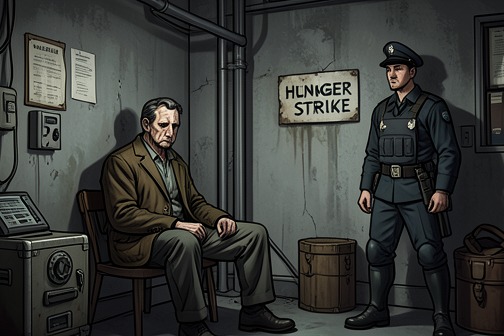
The [Hunger Strike After Juan Vicente Aparicio's Death](entity:event-recall-event-85bb82210940) is recorded as a protest in which political prisoner [Valentin](entity:character-recall-character-6b66287c2b75) Arregui took part. Its significance in the available account lies in the grievance it expressed and in the prison authorities’ later characterization of Valentin as a reputed instigator.
## Background
The record places the protest within Valentin’s imprisonment after his arrest on [October 16, 1972](entity:time-recall-time-october-16-1972-8b3b74059d39), along Route 5 outside Barrancas. National Guard troops had surrounded a group of activists involved in promoting disturbances with strikers at two automotive assembly plants on the highway. Valentin was held under the Federal Government’s Executive Power and was awaiting judgment.
## The Protest
Valentin took part in a hunger strike protesting the death of political prisoner Juan Vicente Aparicio while Aparicio was undergoing police interrogation. The record identifies the death as the protest’s cause, but supplies no further details about the strike’s duration, other participants, or its immediate outcome.
## Official Record and Aftermath
The prison record describes Valentin as a reputed instigator of the hunger strike, rather than establishing that characterization as fact. It also records that he was moved to solitary confinement for ten days as of March 25, 1975, without explicitly linking that transfer to the strike. The account thus preserves both the protest’s stated grievance and the authorities’ view of Valentin as a source of prison unrest.
Event 9
Molina's Transfer to Arregui's Cell
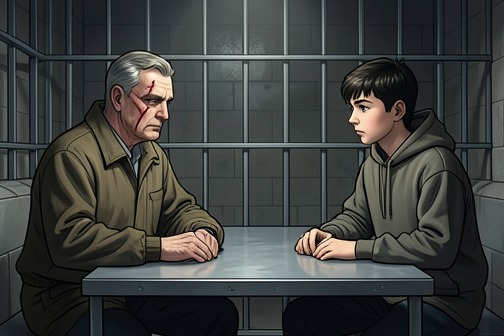
[Molina's Transfer to Arregui's Cell](entity:event-recall-event-252498a232f4) is the [April 4, 1975](entity:time-recall-time-april-4-1975-a6e73d0516de), reassignment that placed [Luis Alberto Molina](entity:character-recall-character-luis-alberto-molina-5267050fd754) in Pavilion D, cell 7, with [Valentin Arregui Paz](entity:character-recall-character-valentin-arregui-pa-24131057b978). Recorded in the prison's administrative chronology, the transfer moved [Molina](entity:character-recall-character-molina-1af5d7eac5de) from a cell with other sexual offenders into the same cell as a political prisoner, establishing the shared setting for the novel's central prison relationship.
## Background and Prison Records
Molina's record states that he was sentenced on [July 20, 1974](entity:time-recall-time-july-20-1974-fc628d7bba53), to eight years' imprisonment for corruption of minors. By July 28, he was in Pavilion B, cell 34, with Benito Jaramillo, Mario Carlos Bianchi, and David Margulies, identified in the record as sexual offenders. The entry describes his conduct as good.
Arregui's record gives a different history of confinement. Arrested on [October 16, 1972](entity:time-recall-time-october-16-1972-8b3b74059d39), along Route 5 outside Barrancas, he had been with activists accused of promoting disturbances alongside strikers at two automotive assembly plants on the highway. He was held under the Federal Government's Executive Power while awaiting judgment. By November 4, 1974, he was lodged in Pavilion A, cell 10, with political prisoner Bernardo Giacinti.
## The Reassignment
The records connect Arregui's political-prisoner status to protest inside the prison. He took part in a hunger strike after political prisoner Juan Vicente Aparicio died while undergoing police interrogation. On March 25, 1975, Arregui was moved to solitary confinement for ten days. The record then places him, on April 4, in Pavilion D, cell 7, with Molina.
The same date marks Molina's move from Pavilion B, cell 34, to Pavilion D, cell 7. The record preserves the change in location and company without giving a reason for the assignment. Its terse administrative form makes the contrast clear: a prisoner sentenced for corruption of minors was placed with a political prisoner whose record described protest and rebellious conduct.
## Significance of the Shared Cell
The transfer's decisive consequence is the new co-location of Molina and Arregui. Their distinct prison classifications and histories now converge in one cell, turning an institutional assignment into the physical premise for the novel's sustained exchanges between them. The record documents the placement, not the later emotional development of their relationship; its importance lies in the fact that it brings these two prisoners together.
Event 10
Molina's Agreement to Inform for the Prison Authorities
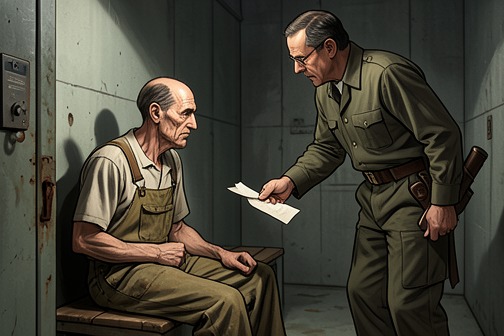
[Molina](entity:character-recall-character-molina-1af5d7eac5de)’s Agreement to Inform for the Prison Authorities turns a possible pardon into leverage: the [Warden](entity:character-recall-character-5b6f2039c7fd) offers hope for Molina and his mother while expecting him to report on [Valentin](entity:character-recall-character-6b66287c2b75) and keep the arrangement hidden. The meeting makes the bargain’s unequal terms visible. Molina is asked to cooperate inside the same cell where the authorities are trying to weaken Valentin, and even the news that might offer relief must be concealed from him.
## The staged visit and the pardon prospect
The Warden first establishes that the apparent visit was a fabrication. He tells Molina that the authorities made it look as though a visitor had come that day so Valentin could not suspect what was happening. The deception is not incidental: it protects the secret channel between the prison officials and Molina, and makes the ordinary appearance of a visit part of the informant arrangement. Molina confirms that Valentin suspects nothing.
The inducement arrives through Molina’s sponsor, Parisi. The Warden says he had dinner at home with Parisi the previous night and that Parisi brought good news. Parisi had spoken with Molina’s mother about the possibility of a pardon; according to the Warden, she was feeling much better and seemed almost like a new person. The pardon remains a possibility, not a decision or a promise of release. Its immediate effect, as presented in the meeting, is emotional: the prospect has improved Molina’s mother’s spirits and gives the authorities something powerful to place before her son.
The Warden explains that Parisi’s personal interest in Molina led them to devise the current option. He describes Parisi as being like a brother to him, linking the offer to a relationship of personal influence as well as to prison power. Yet the offer is not framed as an unconditional act of kindness. The Warden says the authorities expect Molina to know how to manage the situation and immediately asks whether he is making headway. Molina answers that he thinks he is getting somewhere, while emphasizing that he needs to proceed cautiously. His response indicates cooperation already underway, but also the guardedness required to sustain it without alerting Valentin.
## Reporting on Valentin’s condition
The Warden’s questions identify the practical purpose of Molina’s role: he is to report on Valentin’s morale and on the effects of efforts to weaken him physically. The Warden asks whether having Valentin weakened has been helpful. Later, he asks directly whether Valentin’s morale has been softened. These questions connect Molina’s private conversation with the authorities’ campaign inside the cell. The information sought is not abstract political intelligence; it concerns whether pressure on Valentin is working.
Molina reports that Valentin has been softened, but adds that it would probably be wise to let him begin recovering. That qualification matters. Molina provides an assessment useful to the authorities while also expressing concern about continuing the physical pressure. The Warden does not accept Molina’s recommendation as binding. He says the matter should be left to the authorities’ discretion and that they have appropriate techniques at their disposal. The exchange establishes the limit of Molina’s influence: he can inform and advise, but the prison retains control over what happens to Valentin.
The meeting also presents physical deterioration as part of its immediate atmosphere. The Warden observes that Molina looks thin and tells him to stop trembling, while Molina says he had been sick to his stomach. He later explains that he looks thin because he was sick for two days. The scene does not establish that his illness was caused by the same measures used against Valentin, and it should not be treated as proof of that. Instead, the details show Molina entering the conversation visibly unwell while the Warden questions him about another prisoner’s weakening.
## Secrecy as a condition of cooperation
The Warden’s instructions make clear that the pardon prospect must not reach Valentin. Molina is told to show no hint of it and to hide any sign of euphoria when he returns to the cell. The authorities therefore seek more than a report: they require Molina to manage his visible emotions and maintain the appearance of ordinary prison life. A concealed hope could itself expose the bargain.
When the Warden asks how Molina will explain the visit, Molina says he does not know and asks for a suggestion. The Warden advises him to say that his mother came. The proposed explanation ties the cover story to the genuine subject of the pardon discussion, making it plausible while concealing the contact with Parisi and the Warden. In this way, the mother’s improved condition and the imagined visit are folded into a single account that can be taken back to Valentin without revealing the authorities’ arrangement.
Molina presents himself as wanting only to cooperate, and the Warden responds with praise for his work and an apology for a mix-up. But the reassuring tone does not remove the coercive structure. The authorities control access to the pardon possibility, determine the treatment of Valentin, and instruct Molina on what he may safely reveal. Molina’s cautious progress is useful to them precisely because it leaves Valentin unaware of the secret that shapes the conditions of their shared cell.
## Significance of the bargain
The episode joins private hope to institutional pressure without showing a pardon being granted. Molina’s mother has heard only that one might be possible; Molina has received news that can comfort him, but the same news binds him more closely to the authorities’ expectations. The Warden’s appeal through Parisi and the instruction to conceal any joy make the offer both personal and strategic.
The arrangement also places Molina between the prison and Valentin. The Warden treats him as a source of information about Valentin’s morale, yet Molina’s suggestion that Valentin be allowed to recover distinguishes his judgment from the authorities’ willingness to continue using their techniques. His cooperation is real, but the scene does not reduce it to enthusiastic allegiance: he speaks cautiously, says he wants to cooperate, and gives a report that includes a plea for restraint. The bargain’s decisive consequence is thus a divided position. Molina is expected to preserve the authorities’ secret while returning to the cell as though nothing has changed, carrying knowledge of a possible pardon that Valentin must not suspect.
Event 11
The Prison's Attempt to Weaken Valentin and the Illness That Followed
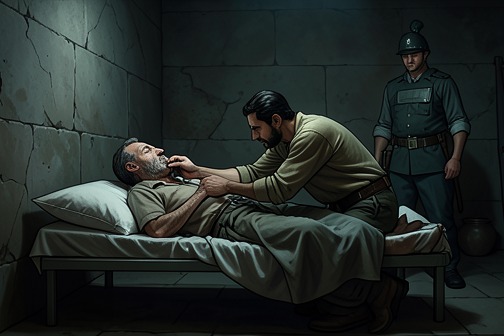
[The Prison's Attempt to Weaken Valentin and the Illness That Followed](entity:event-recall-event-68882b6c100e) joins a prison strategy of physical pressure to [Valentin](entity:character-recall-character-6b66287c2b75)’s growing illness and [Molina](entity:character-recall-character-molina-1af5d7eac5de)’s practical care. Valentin fears that hospitalization could undermine a political prisoner’s resistance; meanwhile, the [Warden](entity:character-recall-character-5b6f2039c7fd)’s questioning confirms that the authorities are trying to weaken him. The episode exposes the coercion behind the prison’s methods while showing how illness draws the two cellmates into increasingly intimate acts of mutual dependence.
## Political Stakes and the Infirmary
Valentin explains why a political prisoner cannot treat the infirmary as a simple refuge. A comrade, he says, had been made dependent on something administered there; the experience weakened the man’s will, and interrogation eventually left him vulnerable to saying whatever his captors wanted. Valentin’s fear is therefore not only of sickness. It is that treatment under prison control might become another means of breaking political resistance.
As his own pain intensifies, that fear becomes immediate. He first considers calling a guard, then changes his mind and asks Molina not to do so. The decision captures the trap the authorities have created: Valentin is in distress, yet seeking help may carry consequences beyond the illness itself. Molina offers to tell him a film story to distract him, and Valentin asks which one. Storytelling serves as a small alternative to the institutional care Valentin distrusts, even as it cannot stop the symptoms.
## The Food Scheme and the Warden’s Questions
A conversation between the Warden and Molina makes the authorities’ purpose explicit. The Warden asks whether Valentin’s physical weakening has helped and whether his morale has begun to give way. Molina reports that he ate the prepared food the first time it was served. Valentin disliked rice and insisted that Molina take the larger portion; because the prepared serving was conspicuously generous and arrived on a new tin plate, Molina says refusing it would have aroused suspicion. He became ill for two days and says that this is why he now looks thin.
The exchange complicates any simple account of the scheme’s operation. The Warden treats physical weakening as an instrument, but Molina’s account shows that the prepared portion did not affect only its intended target. He was drawn into the tactic through an ordinary decision about how to divide a meal, made under conditions in which refusal itself might have exposed him. The text links the food plan to Molina’s illness without establishing that it caused Valentin’s abdominal symptoms.
Molina tells the Warden that Valentin’s morale has weakened, but recommends letting him begin to recover. The Warden refuses to commit to easing the pressure and says that the decision belongs to the authorities, who have further methods available. Molina warns that if Valentin deteriorates too far, he may have to leave the cell for the infirmary. That outcome, Molina says, would leave him with no chance to continue what he is trying to accomplish. His appeal thus carries two stakes at once: Valentin’s condition and Molina’s precarious position in the prison’s plan.
## Worsening Symptoms and Care in the Cell
The illness is presented through recurring episodes of severe abdominal pain and digestive distress, rather than through a medical explanation. Valentin struggles to continue speaking and at one point asks Molina to call for the guard, only to reverse himself. Later, during another episode, he asks Molina to bundle the sheet beneath him. The immediate demands of sickness repeatedly interrupt conversation, making the body’s crisis impossible to keep at a distance.
Molina responds with practical care. He helps clean Valentin, checks that the bedding has not been soiled through to the mattress, and uses available water and a clean part of the sheet. He offers his blanket so Valentin can stay warm. When Valentin is too ill to risk a freezing shower, Molina proposes heating water in a pot and using towels to wash him in stages. These acts are described as necessary assistance, not as a cure: the discomfort continues, but Molina makes the cell more bearable without calling in the guard.
The care also changes the tenor of their exchange. Valentin apologizes for having laughed at Molina’s remarks about boleros, choosing a moment of acute vulnerability to repair a small hurt between them. Molina answers by carrying on with the washing rather than demanding an explanation. The scene gives their developing trust a concrete form: attention to warmth, water, clean bedding, and the other man’s embarrassment.
## Emotional Exposure and Narrative Significance
As the illness continues, Valentin says that his fear for a woman in danger is not the same as his longing for her. He recognizes that the person he most wants to hear from and hold is [Marta](entity:character-recall-character-marta-1ae34ecb25bb), whose presence he imagines might revive him. The disclosure connects physical depletion to emotional clarity, though it does not present the illness as resolving the dangers around him. His body is failing him, and his thoughts turn toward the person he associates with renewed life.
The episode’s structure sets private suffering against administrative calculation. Valentin’s pain and fear of the infirmary are followed by the Warden’s questions about weakening him; Molina’s care inside the cell is set beside the authorities’ decision to retain control over whether Valentin may recover. The prison’s effort to make illness serve its purposes therefore has a human consequence it cannot fully contain: the more vulnerable Valentin becomes, the more Molina’s loyalty is expressed through sustained, intimate care.
Event 12
Molina Learns of a Possible Pardon and Transfer
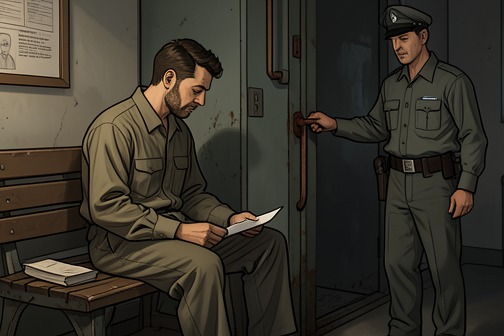
[Molina Learns of a Possible Pardon and Transfer](entity:event-recall-event-e8910825d34d) is a turning point in which the prospect of legal progress is inseparable from the threat of separation. [Molina](entity:character-recall-character-molina-1af5d7eac5de) has not received a pardon: his lawyer reports that matters are moving forward and that consideration for a pardon may lead to a transfer within the prison. The news offers hope, but it also makes the cell he shares with [Valentin](entity:character-recall-character-6b66287c2b75) seem newly precarious.
## The Possible Transfer
Before sharing the lawyer’s update, Molina considers how a transfer might affect Valentin. He imagines a guard announcing that he is being moved to another cell because he has entered a special category connected either with a pardon or with an appeal filed by his lawyer. Molina thinks Valentin might then soften toward him, since he seems to have grown attached, and might speak more freely. This is a speculation about Valentin’s reaction, not evidence that the transfer has been arranged or that Molina has carried out such a plan.
The distinction between being considered for a pardon and having received one is central to the news. Molina explains that a prisoner being put forward for consideration, rather than already pardoned, may be transferred to another section of the penitentiary. He expects the move to happen before the week is out. The immediate consequence he can identify is therefore a change of cell, not release from prison.
## News and Conflicting Reactions
Molina relays that his lawyer says things are progressing and that the situation seems likely to work out for him. Valentin responds with congratulations and encouragement, treating the report as good news. His reaction briefly gives the announcement the shape of a shared relief, even though the procedure Molina describes could take him away from the cell they occupy together.
Molina soon qualifies that hopeful moment. He says he does not know what has come over him and feels confused and unsettled. The change in tone makes clear that the possible pardon does not produce uncomplicated happiness: the same development that could improve his prospects also threatens the arrangement of daily life on which his closeness to Valentin depends.
## Fear of Separation
Molina later names the fear behind his hesitation. He is afraid of deceiving himself about getting out and of never being released, but he says the prospect that frightens him most is being separated from Valentin, placed in another cell, and left there indefinitely with an unknown cellmate. The imagined outcome is specific: not simply a transfer, but a lasting loss of their shared space and the familiar person beside him.
The event thus leaves both outcomes unresolved. The lawyer’s report indicates progress, but no pardon has been granted; the transfer is anticipated, but its exact timing and consequences remain uncertain. Molina’s response shifts the meaning of the news from legal possibility to emotional risk. Freedom remains desirable, yet the possibility of leaving also exposes how strongly he has come to fear being parted from Valentin.
Event 13
The Beginning of Valentin and Molina's Intimate Relationship
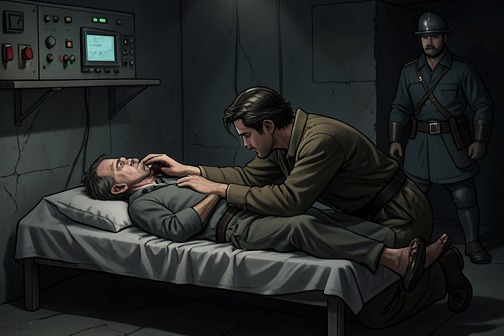
The beginning of [Valentin](entity:character-recall-character-6b66287c2b75) and [Molina](entity:character-recall-character-molina-1af5d7eac5de)'s intimate relationship is a shift from care offered under pressure to closeness that both men acknowledge and welcome. Valentin is ill and in pain; Molina tends to him in their cell, listens as he speaks about the people he fears losing, and offers help with washing when Valentin is too sick to manage safely alone. In the course of this care, a relationship previously shaped by political difference and guarded conversation becomes personal and physical.
## Illness and the work of care
Valentin's condition gives the scene its immediate circumstances. He describes severe abdominal pain and recalls a comrade whose will was broken after being given drugs in the infirmary. For a political prisoner, he explains, becoming dependent on such treatment could threaten the resistance of an entire group: under interrogation, a weakened prisoner might be made to disclose anything. His fear is therefore not simply a private concern about being ill. It is tied to the discipline and risks of political imprisonment. When the pain intensifies, Molina proposes telling him a film story to distract him, carrying forward the storytelling that has become one of their ways of sharing the cell.
As Valentin's illness continues, he asks Molina to call a guard, then changes his mind. Molina helps clean him instead, reassuring him that there is enough water and using a clean piece of sheet. Later, Molina points out that a freezing shower could be dangerous in Valentin's condition and offers a safer arrangement: they can heat water in a pot, use two towels, and wash in turns, with Molina helping with Valentin's back. The intimacy that follows is not detached from this practical dependence. It grows in a setting where one man has to trust the other with ordinary, vulnerable tasks.
## Confession and a change in attention
Their conversation becomes more candid as Valentin tries to explain what he is feeling. He says that he is frightened for his girlfriend because she is in danger, but distinguishes that concern from the person he longs to hear from and hold. The person he aches for is [Marta](entity:character-recall-character-marta-1ae34ecb25bb); he imagines that her presence could revive him. This admission exposes the difference between responsibility and desire in Valentin's account: his fear for one woman does not erase his longing for another.
Molina listens rather than turning the confession into an argument. When he says that he wants to die, Valentin asks what is wrong and urges him to speak honestly, adding that his death would grieve his mother, friends, and Valentin himself. The exchange briefly reverses their usual positions. Valentin is sick and reliant on Molina's assistance, but he also tries to draw Molina out of despair; Molina, in turn, makes his own need for care visible. Their concern for one another is no longer confined to politeness or the routines required by the cell.
## The turn toward mutual intimacy
The transition is gradual. Valentin asks whether a buddy can pat Molina's back, but Molina says the gesture makes him feel worse. When Valentin presses him to explain, the exchange becomes a more attentive negotiation: Valentin asks where to touch and whether he can massage him, and Molina confirms that the contact feels better. Molina says that Valentin does him a lot of good. Valentin suggests that helping Molina matters because he feels needed; Molina resists the impulse to explain everything, lightly calling him crazy. The scene gives care a reciprocal form: Molina has been tending to Valentin's illness, while Valentin's attention helps Molina feel less trapped in his own distress.
Molina then tells Valentin that he may do what he wants with him, making clear that this is something Molina wants, not merely an obligation of caregiving. The invitation marks the decisive change in their relationship. The passage does not dwell on sexual activity; it presents the shift through spoken willingness, pauses, and expressions of gratitude. Afterwards, they continue to attend to each other, and Valentin says that he is holding Molina in front of him even though the darkness prevents him from seeing him. The emphasis remains on proximity and trust rather than on describing the encounter.
## Shared identity and significance
Afterward, Molina tries to describe a brief experience in which he felt he was neither in the cell nor anywhere outside it. He then says that, for a moment, it seemed as if Valentin were there alone, and as if Molina were no longer himself but had somehow become Valentin. The account does not establish a permanent change in either man's identity. It records instead how intense closeness momentarily unsettles the distinction between self and other, expressed in Molina's own uncertain terms.
The relationship's beginning is therefore represented less as a separate romantic declaration than as a sequence of acts: distraction during pain, cleaning and washing, listening to a confession, asking before touching, and explicitly welcoming intimacy. The political danger surrounding Valentin's illness remains present, as does his longing for Marta; the encounter does not resolve those circumstances. It does, however, alter what the two prisoners can acknowledge between them. Molina's final description of feeling as if he were Valentin gives that change a concise form: closeness has become not only something they do for one another, but a moment in which the boundary between them feels different.
Event 14
Molina's Parole and Release from Prison
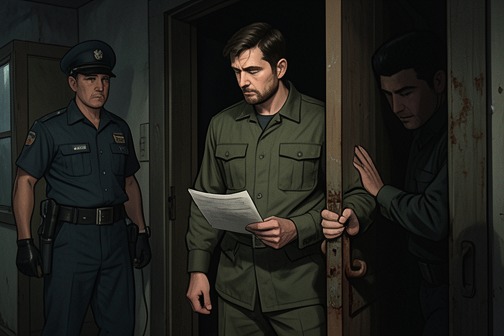
[Molina](entity:character-recall-character-molina-1af5d7eac5de)’s parole is both a release from prison and a reversal of the [Warden](entity:character-recall-character-5b6f2039c7fd)’s attempt to make freedom conditional on informing against Arregui. Molina leaves after insisting that he cannot provide information he does not have, but an official report makes clear that parole does not end the authorities’ scrutiny: his movements and calls are monitored from the first day outside.
## The Price Put on Freedom
When the Warden asks Molina whether he has made progress, Molina falters before admitting that he has none. The Warden then discloses that the papers granting parole have already been prepared, but that his signature is the one thing still missing. The promise is therefore not an abstract possibility: release is close enough to be waiting in paperwork, and the Warden presents information about Arregui as its remaining condition.
The Warden presses for even a hint or the slightest clue, saying that minimal information would be enough to justify signing. Molina acknowledges how much he wants to get out, yet draws a distinction between wanting freedom and being willing to manufacture a case. He says that Arregui is impossible to approach, suspicious of everything, and gives the Warden nothing that can serve as a lead. His refusal is not framed as indifference to his own release; it is precisely because parole matters so much that the choice has force. He will not make something up to obtain it.
The Warden answers by invoking Molina’s mother and the happiness his release could bring her, then offers protection once Molina is on the street, including round-the-clock safety. Molina says that merely being outside would be enough, even setting aside what might happen afterward. The exchange makes the bargain personal as well as institutional: the authorities appeal to his longing to leave, his concern for his mother, and his fear of reprisals. Molina recognizes the promised protection but returns to the same limit—he cannot report what is not true.
## The Announcement
At first, the Warden tells Molina that if he supplies no information, there is nothing he can do for him. Molina asks whether that means his parole is finished and whether there is no hope. The answer appears to close the possibility of release, making the next announcement a sharp reversal. After the sergeant has been told to take the prisoner back, the Warden stops the proceedings to address Molina once more. He orders him to have his things ready to leave his cell the following day.
Molina hears the order as the removal of his only remaining chance and begs the Warden not to take it away. The Warden interrupts that fear with the clarification: Molina is to prepare because he will be paroled. He confirms that it will happen first thing in the morning. The shift is decisive, but the exchange does not explain why the Warden changes course after saying he is powerless to help. The scene establishes the reversal without supplying a new piece of information from Molina or attributing a motive to the Warden.
Molina later tells his cellmate that he is leaving the next day. The cellmate first assumes that he is being moved to another cell; Molina corrects him, saying that he is being let out and is free. He then specifies that the release is on parole. The brief exchange carries the news from the Warden’s official announcement into the shared life of the cell: what might have sounded like another transfer is, in fact, departure from prison. The qualification matters, too. Molina calls himself free, but the word is immediately bounded by the legal condition of parole.
## Release Under Observation
The report in Chapter 15 records Molina as prisoner 3.018, paroled on the 9th and placed under surveillance by [CISL](entity:organization-recall-organization-cisl-dd836dafbad6) in conjunction with the [TISL](entity:organization-recall-organization-tisl-97dc0edc9c40) wiretap unit. It states that he was released at 8:30 in the morning and arrived home by taxi at approximately 9:05, alone. He spent the day at his apartment on Calle Juramento 5020, on the third floor. The account notes that there were no tall buildings opposite and that he repeatedly looked out of the window in several directions, concentrating for several minutes toward the northwest. These details turn the first day of release into an official record of movement and observation rather than a private interval beyond the prison’s reach.
At 10:16 that morning, Molina telephoned a friend identified as Lalo. They spoke for several minutes, addressing one another in the feminine gender and changing names repeatedly—among them Teresa, China, Perla, Caracola, Pepita, Carla, and Tina. The report records laughter after each new name. Lalo presses him to recount any sexual conquests in prison; Molina replies, in substance, that the usual stories about prison sexual behavior are hardly true and that there had been no diversions. They promise to meet over the weekend to see a movie. The exchange supplies a small, specific picture of a familiar relationship resuming outside, even as the call itself enters the surveillance record.
## A Qualified Freedom
The event’s course holds two forms of power in view. In the interview, the Warden makes a signature—and therefore parole—appear dependent on Molina’s usefulness as an informant. Molina’s unwillingness to invent evidence leaves that pressure unanswered on its own terms; nevertheless, the Warden ultimately tells him that he will be released. The narrative does not state what accounts for the change, so the outcome is not presented as a clearly earned reward or as proof that the earlier condition has disappeared.
The report supplies the qualification the announcement alone leaves open. Molina is out of the cell and home, but CISL and TISL are monitoring him, including his telephone activity. At the same time, its details preserve more than the authorities’ watch: the changing names, laughter, and plan to see a movie register an ordinary social connection alongside the official account. [Parole](entity:state-recall-state-parole-79522699e8d8) thus marks a real change of place and status without establishing unobserved independence. The prison door opens; surveillance follows him into the first day outside.
Event 15
Molina Agrees to Deliver a Message for Valentin
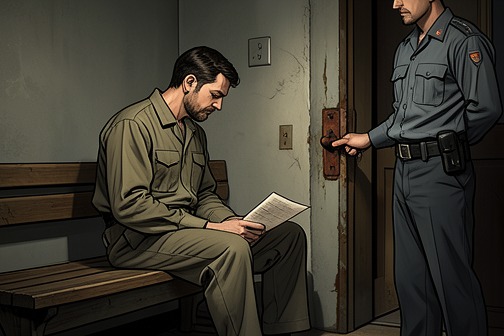
[Molina Agrees to Deliver a Message for Valentin](entity:event-recall-event-c47829b4471f) is the point at which their exchange becomes a practical commitment: [Molina](entity:character-recall-character-molina-1af5d7eac5de) offers to act on [Valentin](entity:character-recall-character-6b66287c2b75)’s instructions and carry information for his friends. The agreement is not yet a completed delivery. Its terms remain to be explained, and Molina’s concern about being interrogated before he leaves makes clear that carrying the message may involve risk beyond the cell.
## The Request and Its Stakes
The scene opens with Molina checking whether Valentin is asleep. He then says Valentin has to give him all the information for his friends. The wording places the friends outside the immediate conversation and makes Molina a possible link between Valentin and people he cannot reach directly. The evidence does not disclose what the message contains, who the friends are, or how Molina is to contact them. What it does establish is the practical need: Valentin must provide enough information for Molina to act on his behalf.
The request changes the character of the conversation. Rather than simply speaking to one another, the cellmates are considering communication that will extend beyond their shared confinement. The proposed message gives their words an intended recipient and a possible consequence outside the cell. Yet the plan remains at an early stage. Valentin has not, in the surviving exchange, supplied the instructions, and no delivery is shown.
## Terms of the Agreement
Molina asks Valentin to tell him everything he has to do. This is not an agreement to carry out a fully described plan; it is a promise to follow one once Valentin has explained it. Molina’s next concern is whether he will be interrogated before he leaves. The question makes his anticipated departure relevant to the plan, but the exchange does not specify when he will leave or under what status. Nor does it identify who would question him. Those uncertainties matter: the scene shows Molina weighing a concrete apprehension without furnishing the details needed to resolve it.
He then says that he will do whatever Valentin tells him. That statement makes the commitment explicit while leaving its scope dependent on Valentin’s instructions. Molina is not shown negotiating the message’s contents or setting conditions for its delivery. His question about interrogation is the clearest sign of hesitation, but it does not cancel his offer. Instead, the dialogue holds caution and readiness together: he recognizes a possible difficulty and still agrees to proceed.
## A Change in Their Exchange
Valentin responds that he does not know how happy Molina’s willingness makes him. The response confirms that the offer matters to him; it also gives the arrangement an emotional dimension beyond its practical purpose. Molina’s role would be to carry information, but Valentin’s reply registers the significance of having someone prepared to do so. The scene does not explain the full reason for Valentin’s happiness, so it cannot establish everything the message means to him. It does show that Molina’s agreement is welcome and that Valentin’s instructions are expected to follow.
The exchange is built from short, direct questions and answers: whether Valentin is awake, what Molina needs to know, what he must do, and whether he may be questioned. That plain language contrasts with the elaborate movie stories that recur elsewhere in their conversations. Those stories conjure settings far from the cell, including a [Paris](entity:location-recall-location-paris-c02b439ce220) music hall, a mountain house with a blind pianist, and a masked ball in [Veracruz](entity:location-recall-location-8b34d68367c6). Here, however, speech turns away from imagining another world and toward a task that could carry Valentin’s words into the one beyond the prison. The contrast is formal rather than a claim that the films cause the agreement: the scene makes the possibility of action, not escape through narration, its focus.
## What the Event Establishes
The agreement reveals Molina’s readiness to help Valentin communicate with his friends, and Valentin’s happiness shows that the offer has emotional as well as practical weight. It also introduces a risk Molina himself names: the possibility of interrogation before he leaves. The scene does not show an interrogation, the message’s contents, the route by which it would be conveyed, or whether it reaches its recipients. Its decisive action is therefore a promise rather than a successful delivery. By making that promise, Molina shifts from listening and talking with Valentin to accepting a prospective responsibility that reaches beyond their shared cell.
Event 16
Molina Is Shot Dead Under Police Surveillance
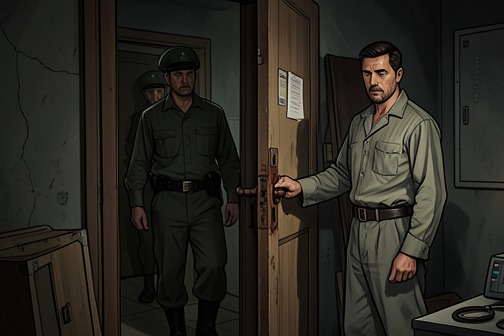
[Molina Is Shot Dead Under Police Surveillance](entity:event-recall-event-e6bfeeaaa12f) is the fatal culmination of the surveillance that follows [Molina](entity:character-recall-character-molina-1af5d7eac5de)’s parole. Presented through an official report, the episode converts ordinary movements and ambiguous phone calls into grounds for intervention, then records an attempted arrest interrupted by gunfire. Molina dies before help arrives; the report preserves the event while leaving the identity and motive of the attackers uncertain.
## Surveillance After [Parole](entity:state-recall-state-parole-79522699e8d8)
The report identifies Molina as prisoner 3.018 and notes that he was paroled on the 9th. From then on, [CISL](entity:organization-recall-organization-cisl-dd836dafbad6) watches him in conjunction with [TISL](entity:organization-recall-organization-tisl-97dc0edc9c40)’s wiretap unit. The account’s bureaucratic form matters: where a personal perspective might explain his choices, the document instead assembles times, locations, calls, and institutional judgments. Molina appears as a subject to be monitored, and even routine conduct becomes material for interpretation.
The investigators consider whether the feminine names Molina uses when addressing Lalo conceal a code. Their own account weakens that suspicion: they describe the conversations as continually bantering and extremely disordered, while saying only that the possibility will continue to be watched. The report therefore makes uncertainty visible. It records a theory without confirming it, yet the theory remains part of the apparatus shaping how Molina is observed.
## Recorded Movements and Suspicions
On Tuesday the 22nd, Molina leaves home at 8:05 in the morning, reaches the boutique shortly before 9, and runs the last two blocks. At lunchtime he goes to a coffee shop on Calle Juncal, between Ayacucho and Rio Bamba, and uses a public phone. He dials three times, hangs up immediately each time, and then speaks for about three minutes. Because a phone is also available at his workplace, the investigators treat his choice to wait in line for the public phone as peculiar. They check phones at his home, the Restaurant Mallorquin, and the Banco de Galicia, but do not identify any of those places as the contact he made.
After work, Molina travels to a location the surveillance team regards as difficult to observe from its four vantage points. He waits and speaks to no one; cars pass, but none stop. He then returns home. The report says he appeared unaware of the continuous surveillance and interprets the location as one selected by people skilled at evading police observation. It further concludes that he must have arranged a meeting, although no one arrived—or, in the report’s reasoning, the expected parties may have noticed the surveillance. The scene establishes no contact as fact; it shows how absence and concealment alike can be folded into the authorities’ suspicions.
On Friday the 25th, Molina again makes a public-phone call after dialing and hanging up three times. He eats alone at a pizzeria on Las Heras, leaving almost all his food untouched, then returns to work. After leaving at 6:40, he takes a bus to Congreso, continues by subway to José Maria Moreno station, and walks to Riglos and Formosa. The report says he waits there for approximately thirty minutes, the period allowed by the Central Bureau before agents are to pick him up for interrogation if no one meets him first.
## The Arrest Attempt and Death
Two CISL agents, already in close contact with the patrol unit, move to arrest Molina at the appointed location. He demands to see their credentials. At that moment, shots are fired from a passing automobile. Molina and agent Joaquin Perrone are both hit and fall. The patrol unit arrives minutes later, too late to pursue the car. Perrone survives with thigh wounds and serious contusions from his fall; Molina dies before the unit can administer first aid.
The sequence is starkly different from the report’s earlier accumulation of clues. The calls and journeys had been open to several interpretations; the shooting abruptly turns the surveillance operation into a fatal encounter. The account documents the agents’ intended arrest and the attack’s immediate outcome, but it does not identify who fired from the car. Nor does Molina’s demand to see credentials, recorded at the moment of intervention, resolve what he understood about the agents or the surveillance around him.
## Official Inference and Narrative Significance
After Molina’s death, members of the patrol unit offer the impression that extremists chose to eliminate him to prevent a possible confession. The report adds that his recent activities and a bank-account matter suggest he himself feared that something might happen. It then speculates that, if Molina knew he was being watched, he may have expected either to escape with the extremists or to be killed by them if surprised in an incriminating position. These are explicitly presented as opinions and possibilities, not confirmed explanations. The shooters’ identity, Molina’s knowledge, and his intentions remain unresolved.
That distinction between observation and inference defines the episode’s documentary perspective. The report can give exact times, routes, and the outcome of the shooting, yet it cannot settle the motives it attributes to Molina or to his assailants. Its surveillance logic repeatedly turns uncertain signs into a case for suspicion; its final account likewise offers competing conjectures where certainty is unavailable. The result is both a recorded death and an exposure of the limits of the record: Molina’s last movements are carefully catalogued, but the meaning of those movements—and the reason he was killed—remains contested.