“The center of the world”
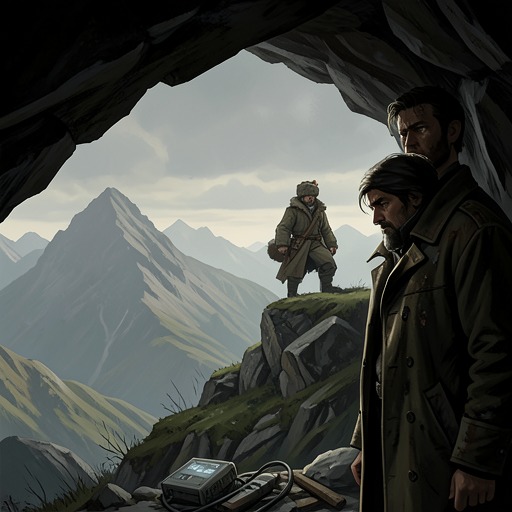
LimonovThe “center of the world” is a place in the Altai that, according to a trapper’s account of Buddhist tradition, connects the world of the living with the world of the dead. For Eduard Limonov, it becomes more than a geographical description: during a sleepless night there, an apparent encounter with the afterlife forces him to face death as a certainty rather than as a heroic fantasy. The next morning’s denial that any ceremony occurred leaves the experience unresolved, poised between spiritual revelation and an event without an external explanation.
The place and its inherited meaning
Limonov recalls something the trapper told him the previous autumn: the Altai site is the world’s center, where the dead communicate with the living. The place also belongs to a larger, imagined history. Baron von Ungern-Sternberg had sought it, and Limonov thinks of himself as having reached what the baron could not. The inherited claim gives the remote setting a charged significance before anything unusual happens there.
That significance is not presented as an established fact about the landscape. It reaches Limonov through the trapper’s words and the Buddhist tradition he invokes. The book makes the distinction matter: the place supplies a framework through which Limonov can interpret what follows, but does not settle whether that interpretation is true.
A night at the threshold
Lying on his cot, Limonov thinks about the dead people he has known. He suspects they would outnumber the living if he counted them, but cannot bring himself to do so. He also recognizes that he is going to die, a thought that seems newly real that night. His familiar imagined deaths—in combat, before a firing squad, or under a tyrant’s execution order—had offered defiance and heroic shape. They now seem unlike the plain certainty taking hold of him.
The scene joins that recognition to the body rather than to a dramatic act. Limonov stays stretched out and does not move. Looking through the window, he sees the full moon over dark hills; then he hears music, at first distant and then nearer: gongs, horns, and chants that suggest a funerary soundtrack. He wonders whether he is falling asleep or dying, and imagines that an initiation rite may be taking place nearby. The blood beating in his temples and flowing through his veins blends with the music he associates with the hereafter. He neither sleeps nor gets up; the stillness feels to him like being dead and gaining access to another form of life.
Denial and competing explanations
The next morning, Limonov asks the National Bolsheviks whether they attended the ceremony. They say there was no party, concert, or shamanic rite: everyone went to bed after dinner. He does not press them. Their answer rules out the public event he had imagined, but it does not explain away what he experienced. The narrative offers no confirmation that the music came from beyond the living world, and no definitive account of what produced it.
For the rest of the trip, Limonov remains reflective, though less distraught than the day before. He takes the celestial music as a gift from the trapper and as an announcement, but cannot settle on what it announces. One possibility is a future accession to a Eurasian throne, conquered with a handful of National Bolsheviks from their mountain retreat where Baron von Ungern-Sternberg failed. The other is his imminent entry into Valhalla through death. The alternatives preserve the tension between political fantasy and mortality rather than resolving it; what changes decisively is that Limonov believes he will no longer fear dying.
A possible religious ending
Much later, when the narrator considers what kind of ending might suit Limonov, the Altai returns as a possible alternative to political power. Limonov has not started a religion, the narrator observes; doing so would require him to leave politics and return to the mountains. He might become a guru to a community of fanatics like Baron von Ungern-Sternberg, or, more ambitiously, a wise man or saint. This remains a proposed ending, not an event that the book says has occurred.
The suggestion gives the “center of the world” a continuing narrative force. The night’s experience can be read not only as an encounter with death but as a seed for imagining a different vocation, one founded on spiritual authority rather than political conquest. Yet the book retains the same uncertainty that shaped the night itself: Limonov’s possible transformation is an aspiration, not a confirmed destiny.