Diary of a Loser
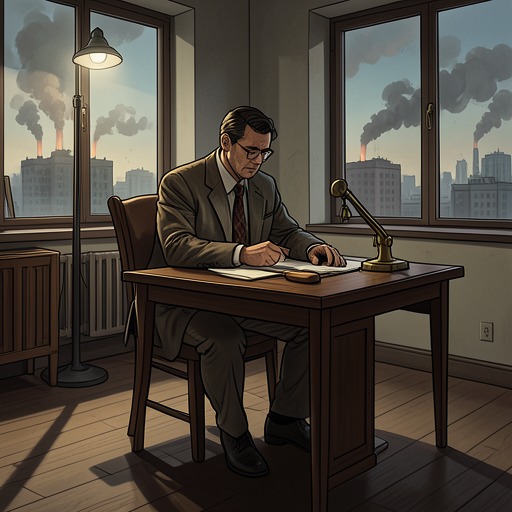
LimonovDiary of a Loser is the book Eduard Limonov begins assembling when he has fallen from the promising young writer he once was into a man living on the margins of New York. Its force comes from that conversion: notebooks filled without concern for style become a voice for the excluded, and private humiliation expands into a fantasy of collective revolt. Writing is not a settled vocation here but, as Limonov understands it, his only chance.
Making the Book in Central Park
Every morning, Limonov walks to Central Park and lies on the grass for hours, using a plastic bag containing his notebook as a cushion. He looks up at the sky and at the terraces of the Fifth Avenue buildings where the very rich live. The Libermans, whose world he once entered as a promising writer and the husband of a beautiful woman on her way to becoming a famous model, now seem to belong to a distant former life. He measures the prospects of the people around him against his own uncertain future: office workers, aspiring intellectuals, Puerto Rican families camped on the lawn, and people already trapped in poverty.
The park is both his place of observation and the place where he starts turning observation into a book. He writes down the welfare office, the Winslow Hotel, the lost souls of the Russian émigré scene, Tanya, and the circumstances that brought him there. The material goes onto the page as it comes to him, without stylistic polishing; one notebook fills, then a second, then a third. As the writing gathers, he recognizes that it is becoming a book—and that the book may be his sole way out.
Form and the Loser’s Voice
The project takes shape as short prose pieces, rarely longer than a page, rather than as a poem or a conventional story. Limonov records what is in his head without disguising its ugliness: resentment, envy, hatred of class privilege, and sadistic fantasies. The narrative emphasizes not that these feelings are admirable, but that he presents them without hypocrisy, embarrassment, or excuses. The book’s bluntness makes the act of writing itself part of its subject: the excluded man refuses to polish his bitterness into respectable language.
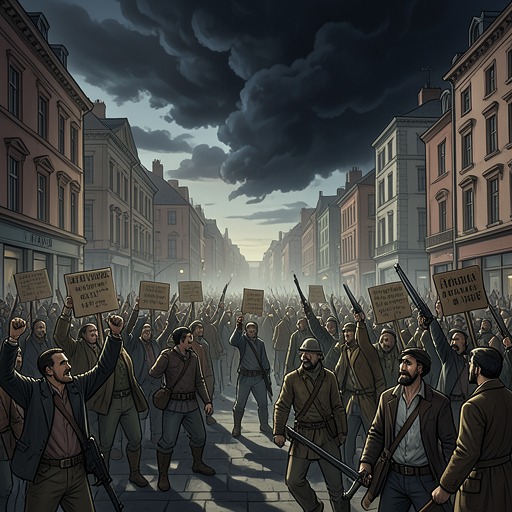
A passage from the work gathers together people who have lost in love, money, and work, as well as those born poor, solitary museum-goers, failed artists, and others left outside the promise of success. This inventory does not remain a portrait of isolated misfortune. It culminates in the image of a grand, heroic band of losers who will take up arms, occupy cities, and destroy banks, factories, offices, and publishing houses. Limonov imagines himself leading them, with the people who have been cast aside finally knowing and loving him. The book thus converts social observation into a political fantasy, and personal obscurity into a claim to command.
From Personal Precarity to Collective Revolt
The work’s imagined community is assembled from sharply differentiated examples rather than from a single abstract category. It includes the timid as well as the tough, people who haunt museums or public libraries, men who sit alone over coffee, retirees waiting in a supermarket’s short line, and artists and writers whose work does not sell. The list also gives its fantasy a violent edge: it includes a black punk who dreams of a high-class white woman and a gray-haired doorman who longs to trap and torture an arrogant rich girl. These fantasies are part of the material Limonov records without apology; they should not be mistaken for a description of events that take place.
The imagined march binds these disparate figures together through their shared losses, then gives that bond a leader and a direction. Its promised destruction reaches beyond banks and factories to offices and publishing houses—the institutions of work, money, and literary recognition against which the book’s speaker measures his own failure. The result is deliberately unstable: the losers are at once victims of exclusion and figures imagined as capable of reproducing violence. The book’s insurgent vision grows directly from the same bitterness it displays.
Place in Limonov’s New York Years
The book belongs to a period in which Limonov’s circumstances repeatedly unsettle his prospects. In Central Park, he wonders whether being a New York bum is one chapter in a romantic life or the final chapter. Diary of a Loser gives that uncertainty a form: the notebooks make an account of apparent defeat into a work that can travel beyond the moment in which it was written. The narrator retrospectively calls it one of Limonov’s best books, while stressing the honesty with which he emptied his mind onto the page.
After a year, a French publisher accepts one of Limonov’s books, and he leaves for Paris with his former employer Steven Gray’s sincere good wishes. The account also notes that Limonov’s books would soon be translated in the United States by publishers who had refused them at first. This establishes the wider reversal surrounding his writing, though it does not identify the French publisher’s accepted book by title. Diary of a Loser remains distinctive in the account because its origin is so concrete: a man on the grass, a notebook inside a plastic bag, and the conviction that writing may be the one chance left.