
Madness and Sanity in Humbert's Mind
LolitaExplores Humbert's psychological state and his manipulation of psychiatric discourse.
increasing Bearing strength in each event
 decreasing
Bearing strength in each eventdecreasingThe Feigned Insanity
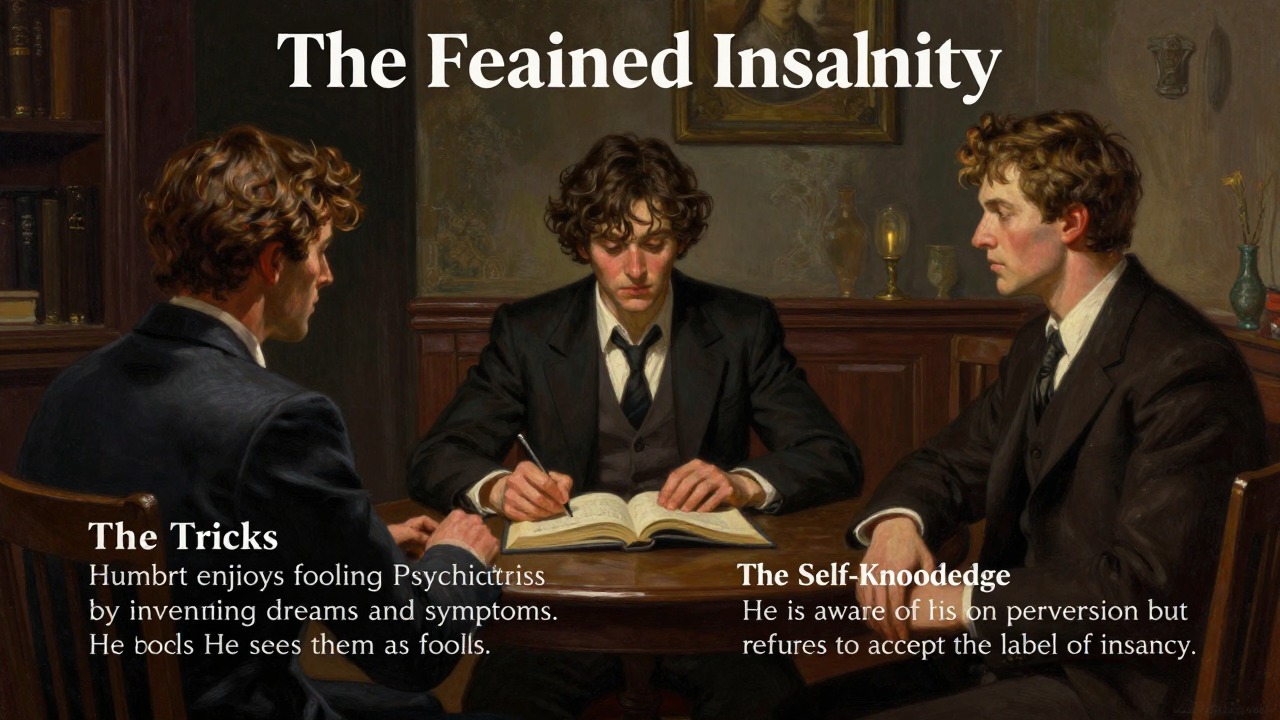
The Game with Psychiatrists
The Tricks
Humbert enjoys fooling psychiatrists by inventing dreams and symptoms. He sees them as fools.
The Self-Knowledge
He is aware of his own perversion but refuses to accept the label of insanity.
The Control
He maintains control over his narrative, even in therapy.
The Borderline of Sanity
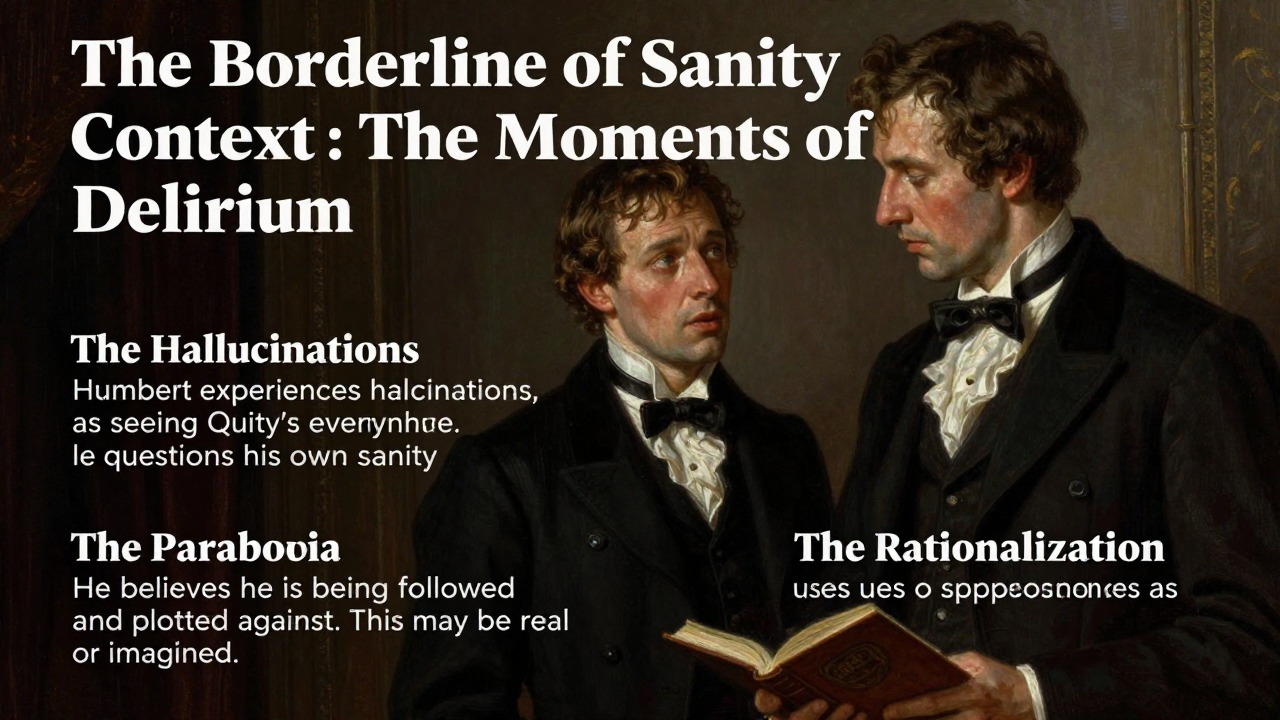
The Moments of Delirium
The Hallucinations
Humbert experiences hallucinations, such as seeing Quilty's face everywhere. He questions his own sanity.
The Paranoia
He believes he is being followed and plotted against. This may be real or imagined.
The Rationalization
He uses his supposed madness as an excuse for his actions, but also claims to be perfectly rational.
The Final Clarity
The Acceptance
The Writing
In his memoir, Humbert achieves a kind of clarity. He acknowledges his crimes without fully condemning himself.
The Artistic Sanity
He argues that his art redeems him. He is a poet, not a madman.
The Ambiguity
The reader must decide whether Humbert is insane or just evil.
1940s, in sanatoriums
1947-1952, throughout the story
1952, in prison
