Humbert Humbert
LolitaHumbert Humbert, the narrator and central figure of Vladimir Nabokov's Lolita, is a European-born intellectual, a scholar of English and French literature, and a self-confessed murderer whose confession constitutes the novel. His account, written from a prison cell while awaiting trial for the murder of Clare Quilty, is a masterpiece of unreliable narration, blending exquisite prose with desperate self-justification. He presents himself as a tragic figure, a man consumed by an all-encompassing passion for a type of girl he terms the "nymphet," but his narrative systematically reveals the cruelty, manipulation, and moral blindness that define his actions. His story is one of obsession, possession, and ultimately, a profound and hopeless love that he himself has irrevocably corrupted.
Identity and Background
Humbert Humbert was born in 1910 in Paris to a Swiss father, a hotelier on the Riviera, and an English mother who died in a lightning-strike accident when he was three. He was raised by his father and a maiden aunt, Sybil, in the luxurious world of the Hotel Mirana. He describes a happy, privileged childhood, but his life was permanently marked by a summer romance at the age of thirteen with Annabel Leigh, a girl his own age. Their intense, unconsummated love affair ended with Annabel's death from typhus, an event Humbert identifies as the origin of his lifelong obsession with "nymphets"—girls between the ages of nine and fourteen who possess a demonic, otherworldly charm. He later studied literature in London and Paris, published scholarly essays, and worked as a teacher, all the while leading a "monstrously twofold" existence: outwardly normal relationships with adult women, and inwardly a "hell furnace of localized lust" for the nymphets he dared not approach. He briefly married Valeria, a woman who imitated a little girl, but the marriage was a failure and ended when she left him for a taxi driver.
Life and Plot Trajectory
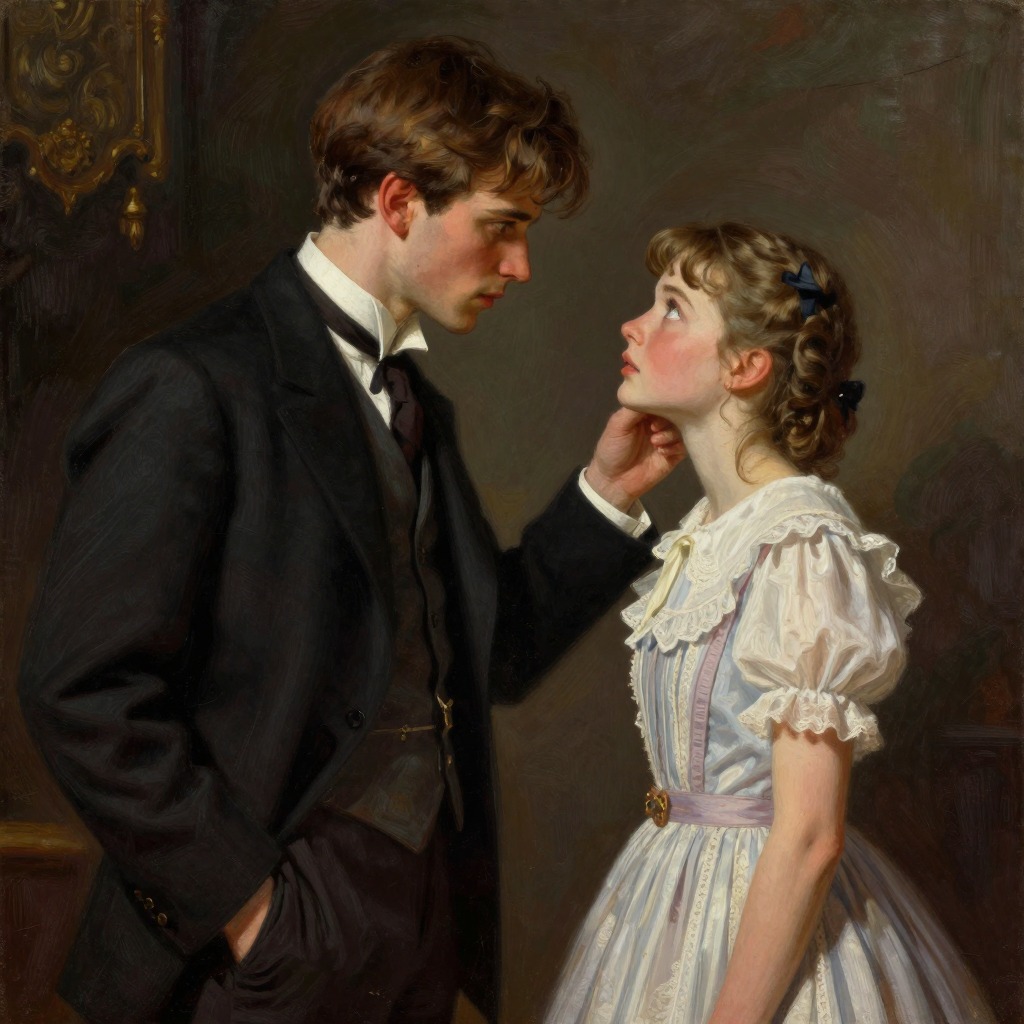
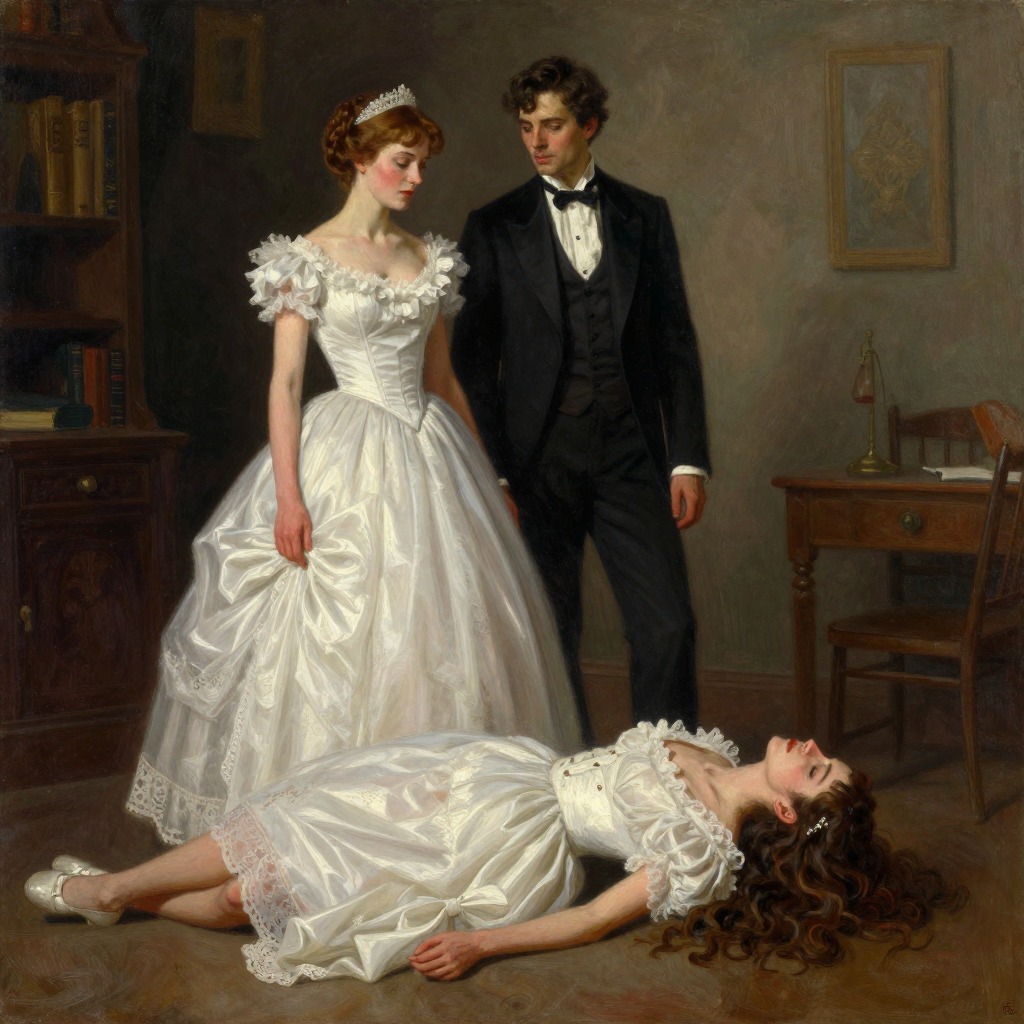
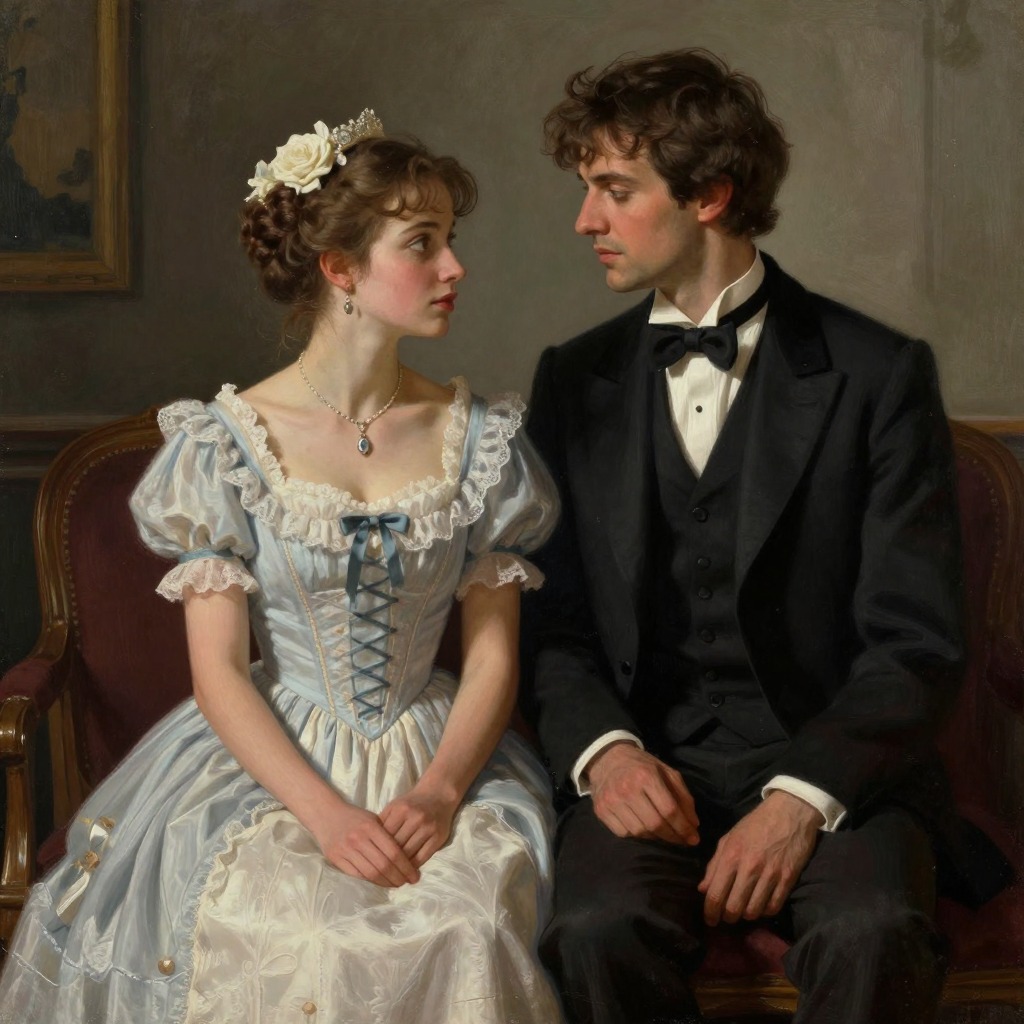
Humbert's life is defined by his pursuit of Dolores Haze. After a period of mental instability and a stint on an Arctic expedition, he moves to the small town of Ramsdale, New England, intending to spend a quiet summer working. There, he becomes a lodger in the home of Charlotte Haze and is immediately and irrevocably captivated by her twelve-year-old daughter, Lolita. He marries Charlotte to gain access to the child, and after Charlotte's accidental death, he becomes Lolita's sole guardian. He retrieves her from summer camp and begins a year-long cross-country road trip across the United States, during which he sexually exploits her, keeping her compliant through a combination of bribes, threats, and emotional manipulation. They settle in Beardsley, where Lolita attends school and becomes involved in a play, The Enchanted Hunters. She eventually escapes from a hospital with Clare Quilty, the play's author, who has been following them. Humbert spends three years searching for them, living for a time with a woman named Rita. He finally receives a letter from Lolita, now married and pregnant, and visits her in the squalid town of Coalmont. After learning that Quilty was her lover, he goes to Quilty's mansion, Grimm Road, and murders him. The narrative ends with Humbert in prison, having written his confession.
Key Actions and Objectives
Humbert's primary objective is the possession of Lolita, which he pursues with a cunning and single-mindedness that borders on the pathological. His key actions are all directed toward this end: he marries Charlotte Haze, a woman he finds physically and intellectually repulsive, solely to be near her daughter. After Charlotte's death, he orchestrates Lolita's removal from camp, lying about her mother's condition. He then initiates a sexual relationship with her, a fact he tries to reframe by claiming, "It was she who seduced me." Throughout their travels, he maintains control through a system of psychological coercion, threatening her with reform school and using monetary bribes to secure her compliance. His later objective shifts to revenge against Clare Quilty, whom he hunts down and kills in a protracted, chaotic, and almost farcical scene. His final, desperate act is to offer Lolita a life with him, an offer she refuses, leading to his final breakdown.
Relationships and Conflict
Humbert's relationships are defined by his predatory nature. With Charlotte Haze, he is a cold, calculating manipulator, feigning affection to gain access to her daughter. His relationship with Lolita is the central conflict of the novel: it is a relationship of absolute power imbalance, where Humbert's "love" is a form of imprisonment. He is intensely jealous of any male who approaches her, from the camp counselor's son Charlie Holmes to the mysterious figure in the Aztec Red Convertible, who turns out to be Clare Quilty. His relationship with Quilty is one of rivalry and hatred; Quilty is a dark mirror, a fellow artist and predator who has succeeded where Humbert has failed, winning Lolita's affection. His later relationship with Rita is a pale, comforting shadow of his obsession, a period of respite before his final, violent act.
Change and Ending
Humbert undergoes a profound, though not redemptive, change. The arrogant, self-justifying predator of the first half of the novel is gradually eroded by jealousy, paranoia, and the dawning realization of the harm he has caused. His visit to the pregnant, worn-out Lolita in Coalmont is the turning point. He sees her not as a nymphet but as a person, and he experiences a love that is no longer about possession. He tells her, "I loved you more than anything I had ever seen or imagined on earth," and offers her everything he has. Her refusal breaks him. His murder of Quilty is not a triumphant act of revenge but a sordid, messy, and almost pathetic struggle. The novel ends with Humbert in prison, having written his story. He is not repentant in a conventional sense, but he has achieved a kind of tragic clarity, recognizing the "hopelessly poignant" absence of Lolita's voice from the "melody of children at play." He dies of coronary thrombosis on November 16, 1952, a few days before his trial.
Narrative Role and Evaluation
Humbert Humbert is one of the most complex and controversial narrators in literature. His voice is the novel's central achievement: a seductive, witty, and deeply unreliable instrument that forces the reader to confront the horror of his actions while being captivated by his prose. He is a master of self-deception, constantly reframing his crimes as a tragic romance and himself as a victim of fate. Nabokov uses Humbert's narration to explore themes of obsession, art, and morality, creating a work that is both a profound meditation on the nature of evil and a dazzling display of linguistic virtuosity. The reader is left to navigate the treacherous gap between Humbert's beautiful words and the ugly reality they describe, a task that makes Lolita an enduringly powerful and unsettling novel.