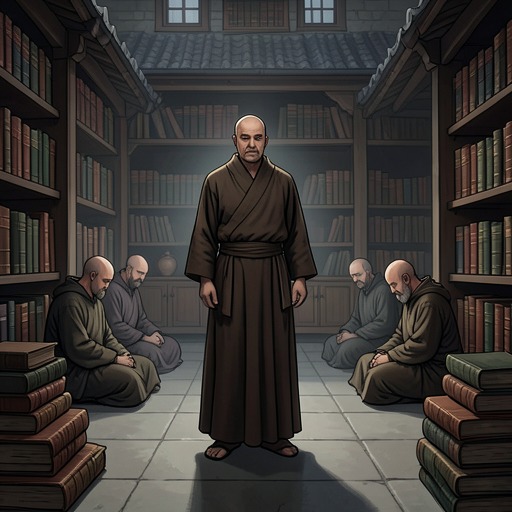
Dalai Lama
LongingThe Dalai Lama is presented through Thomas Merton’s account of their 1968 meetings as a perceptive and generous interlocutor who helped turn an encounter between Christian and Tibetan Buddhist monastic worlds into a sustained conversation about meditation, spiritual discipline, and the meaning of religious life. Their dialogue ranges from books and metaphysics to vows and ascetic practice, while growing into a friendship Merton hoped would carry Asian insight back to his own monastery.
Arrival and First Conversation
The first meeting took place on the afternoon of November 4, 1968. Reaching the Dalai Lama’s palace required a long Jeep journey up a mountain; an Indian official checked Merton’s passport there. Merton’s first impression emphasized the Lama’s presence and vitality: he called him “most impressive as a person” and described him as “very solid, energetic, generous, and warm.” These observations frame the encounter not as an abstract comparison of religions but as a conversation between two people whose manner mattered to Merton as much as their ideas.
Their first discussion covered religion, philosophy, and meditation. Merton spoke about personal concerns and his interest in Tibetan mysticism. The Dalai Lama responded with recommendations for Eastern philosophies to study and books to read, and advised Merton to establish a strong grounding in metaphysics. He also proposed meeting again two days later, giving the exchange a continuing shape rather than leaving it as a single formal audience.
Meditation, Detachment, and Engagement
At their second audience, on November 6, the conversation returned to meditation. The Dalai Lama demonstrated the sitting posture he considered essential, and the two discussed “concentrating on the mind.” Merton called the exchange lively and recorded that both men enjoyed it. The practical instruction and philosophical conversation belonged together: meditation was treated as a discipline requiring attention, not merely as a topic for comparative discussion.
Merton was particularly struck by the Lama’s account of detachment and an “unworldly life.” As Merton understood it, withdrawal was not indifference to worldly difficulty; it could enable a fuller understanding of, and participation in, the problems of life and the world. That formulation gave contemplative discipline an outward consequence. The Lama invited Merton to return for a conversation about Western monasticism, extending the inquiry from meditation into the structures and purposes of religious life.
Monastic Vows and a Developing Friendship
Merton later judged his third interview with the Dalai Lama the best. The Lama asked whether Western monastic vows had a connection to spiritual transmission and whether monks, after making vows, advanced toward “eventual illumination.” He also asked what forms of ascetic self-denial helped purify the mind of passions. The questions focused less on external observances than on what Merton called the “mystical life”: what a monastic commitment was meant to effect inwardly, and how discipline might shape spiritual development.
The inquiry ranged into everyday practices as well. The Lama asked why monks did not eat meat and raised questions about alcoholic beverages and movies. Merton described the exchange as warm and cordial, and wrote that he felt the two had become very good friends and were somehow close. In a letter to the Abbey of Gethsemani, he expressed the hope that he could bring his monastery something of the Asian wisdom with which he had been fortunate to come into contact.
Narrative Significance
The Dalai Lama’s role in Merton’s journey is defined by dialogue rather than by a single revelation or formal teaching. Across the meetings, the discussion develops from broad religious and philosophical interests into concrete questions of posture, attention, vows, ascetic practice, and the relation between solitude and engagement with the world. His questions also direct attention to the spiritual aims beneath monastic customs, allowing Western and Asian traditions to meet at the level of practice and purpose.
The account presents mutual respect as an outcome of this sustained exchange. Merton arrives with questions about Tibetan mysticism and leaves hoping to bring back Asian wisdom, while the Lama turns his attention toward Western monasticism and the inner meaning of its vows. Their developing friendship gives this cross-traditional encounter a personal dimension: differences remain subjects for inquiry, but the conversations are remembered as a source of warmth, learning, and spiritual companionship.