Claire Rothman
MasqueradeClaire Rothman is Robert Rothman’s wife, a woman whose account overturns the assumption that she had been wholly unaware of his capacity for violence. After the invasion of their secluded farm home left three robbers dead and Robert wanted, Claire tells Jessica White that she recognized the danger in him from their first meeting. Her testimony makes her both a bereaved spouse and the person who can disclose how early Robert’s violence entered their relationship.
Identity and Married Life
At sixty, Claire has shoulder-length brown hair and blue eyes. When she sits in the interrogation room at the police station, her face shows both stress and grief. She looks down at her hands as she listens and responds, a restrained posture that contrasts with the gravity of what she will eventually disclose. The account presents her first through the immediate aftermath of the farm invasion, when the future of her marriage has been transformed by Robert’s status as a wanted man.
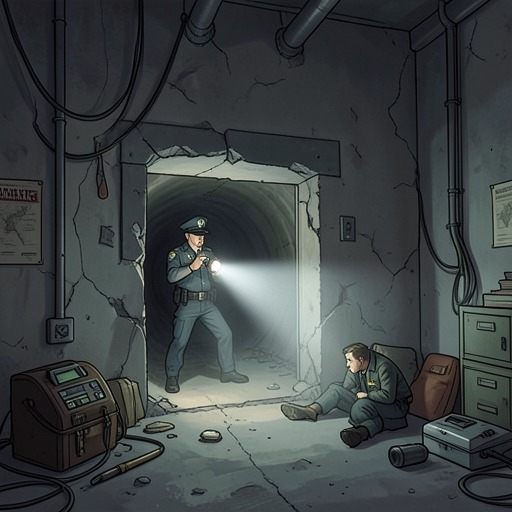
Before that night, Claire and Robert had lived a quiet life on a secluded farm. That peace ended when three robbers invaded their home on a rainy night. By the time the chaos was over, the robbers were dead, and Robert had become a wanted man. The contrast between the farm’s quiet isolation and the violence that broke into it frames Claire’s changed circumstances; it does not, by itself, explain how much she knew about Robert’s past or what he had concealed from her.
Robert had kept secrets from Claire for decades, but her later account makes an important distinction: she says she knew what he was from the start. She is not presented as someone who discovered his violent nature only through the home invasion. Rather, her testimony points to a first encounter in which she was already its intended victim. The evidence does not specify which of Robert’s secrets she knew during their marriage, so her awareness of his capacity for violence should not be treated as knowledge of every hidden act or detail of his life.
The First Encounter and Her Testimony
During questioning, Claire is asked whether she had any hint of the behavior Robert is accused of. She breaks down and takes nearly three minutes to regain her composure. She then tells Jessica White that she has a story she should have told long ago, explaining that falling in love was her only excuse for keeping silent. Her words make love central to the delay, without turning that explanation into proof that she approved of or understood everything Robert later did.
Claire identifies the day she and Robert met as the beginning of her knowledge: he nearly sexually assaulted and killed her. The revelation changes the meaning of her marriage. The violence did not emerge unexpectedly after decades of ordinary life; at least one grave threat came at the outset, before she became his wife. Her confession also establishes the painful coexistence of recognition and attachment. She says she knew what Robert was, yet she fell in love with him and did not tell this story earlier.
Claire recalls that Robert eventually untied her from a tree. She saw shame in his expression and understood it as regret for what he had done. When she asked why he had attacked her, he explained that she was the kind of girl he had always dreamed of. This recollection gives the encounter a sequence of violence, release, and attempted explanation, but it does not erase the danger she describes. The discrepancy between his apparent remorse and his explanation remains part of the account: Claire perceived shame, while his answer framed his attack through his own desire.
Relationship with Jessica White
Claire’s story affects Jessica White as she listens. Jessica’s pulse quickens, and she recognizes a likeness between Claire’s experience and her own. That response connects the women without making their histories identical: the parallel belongs to Jessica’s reaction, while Claire’s testimony remains specifically about Robert and the day they met. The scene gives Claire’s recollection a second significance, as a disclosure that resonates beyond the interrogation room.
Later, after Jessica returns inside the house, Claire asks to speak with her privately in Claire’s bedroom. Claire expresses sorrow after being told what happened to Jessica’s husband, and Jessica thanks her. The exchange is brief, but its privacy and direct expression of sympathy differ from the formal questioning through which Claire first reveals her own past. Here she responds not as a witness being pressed for information, but as a woman acknowledging another woman’s loss. The evidence does not specify what Jessica tells Claire or what follows their conversation.
Narrative Role and Significance
Claire’s role turns on the difference between being Robert’s wife and being a witness to his earlier violence. At first, the marriage and the farm’s quiet life might suggest that his dangerous nature was hidden from her. Her account revises that impression: she says she knew from their first encounter, even though she also describes falling in love and withholding the story. The text leaves the tension intact rather than resolving it into a simple claim that she was either entirely deceived or entirely informed.
The timing of the disclosure matters. Claire tells her story only after the invasion has exposed Robert as a wanted man and during a police-station conversation about whether she had any inkling of his actions. Her confession therefore answers the question while opening an earlier history, shifting attention from the farm’s immediate crisis to the beginning of her relationship with Robert. The later private conversation with Jessica echoes that movement from public account to personal exchange. Together, these scenes establish Claire as a source of crucial knowledge about Robert’s first attack and as a figure whose experience helps Jessica recognize a painful resemblance in another woman’s story.