Robert Michael Rothman
MasqueradeRobert Michael Rothman is a seemingly mild-mannered, timid man whose quiet farm life with Claire Rothman hides decades of secrets. When three robbers invade their home, the confrontation leaves the intruders dead and Robert Michael Rothman wanted. His later conduct reveals a deliberate predator: he studies potential victims, uses concealment to approach them, and treats their vulnerability as an opportunity. The contrast between his outward manner and his calculated choices is central to his characterization.
Identity and the Farm Invasion
Robert Michael Rothman and Claire Rothman had lived quietly on a secluded farm before a rainy night brought three robbers into their home. In the aftermath, the three men were dead, and Robert Michael Rothman was a wanted man. The apparent domestic calm that had defined his life was therefore already bound to a hidden history: his wife had not known the full extent of his secrets, which he had kept from her for decades.
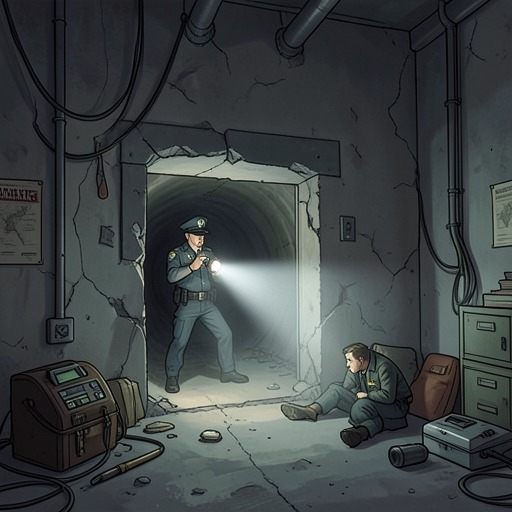
The invasion at the barn reveals how readily he reads a threat and how misleading his mild appearance can be. Hidden silent alarms had warned him that someone was approaching, but the barn’s side door was forced open before he could close and cover the trap door. With Claire Rothman and her mother-in-law brought alongside the intruders, he assessed the three men: two were young and muscular, one carried a double-barreled shotgun, another a .45, and the more mature man kept his weapon holstered. Robert Michael Rothman judged that none of them considered him dangerous. He was wrong about their assessment of him, but the scene also shows him taking stock rather than simply reacting. He then looked at Claire Rothman, who was wet and shivering, and registered that her condition might reflect either the cold rain or fear.
Choosing and Approaching a New Target
After the farm events, Robert Michael Rothman’s search for another target is shown as a sequence of deliberate choices in public spaces. At a shopping center, he bought two disposable cell phones at a convenience store, placed a call, and left a message when it went unanswered. He set the phone to vibrate and continued walking. His movements are practical and unremarkable on the surface, but the attention he gives to the surrounding businesses and parking arrangements serves a more focused purpose.
He headed to the parking area used by Lady Lite Fitness Center’s customers, where the marked spaces helped him identify the relevant cars. After finding an unlocked luxury vehicle, he examined the dance-music collection and photographs clipped to its sun visor. The pictures showed three women and three men, all apparently in their twenties and fit. From these details, he inferred that the car’s owner was likely young and financially comfortable; he connected money with greater privacy and better-insulated living spaces. He also hoped the owner was the red-haired woman in the photographs, noting that it had been a long time since he had targeted someone with red hair. His thinking reduces a person to clues about access, wealth, privacy, and his own preference.
The woman he identifies is Kaye Swan, a twenty-three-year-old law student and a redhead. Robert Michael Rothman waited in the trunk of her car and used a knife to cut into the back of the fold-down rear seats, making a narrow opening through which he could look. When he heard someone approach, he pressed his face to the back of the trunk and saw Swan get into the car. She placed a sweaty towel on the back seat, started the vehicle, played music, and drank from a plastic bottle as she drove home. The contrast between her ordinary return from the fitness center and his concealed surveillance makes plain how he turns routine activity into an opening for attack.
Claire Rothman’s Account
At the police station, Claire Rothman continued recounting an earlier encounter with her husband. She described being tied to a tree and said that, when Robert Michael Rothman untied her, she saw shame in his eyes and believed he regretted what he had done. When she asked why he had attacked her, he told her it was because she was the kind of girl he had always dreamed of. Her account establishes that his violence toward her preceded the farm invasion and that, despite his apparent regret afterward, the earlier attack had been real. Jessica White listened with a quickening pulse, recognizing a resemblance between Claire Rothman’s story and her own.
This disclosure complicates the image of a husband whose secrets are merely concealed aspects of an otherwise peaceful life. Claire Rothman’s recollection places the attack within their relationship and shows that she had to interpret his expression and explanation after he released her. The scene gives his private history a witness: what he had kept from his wife is not only a hidden identity but an earlier act she can describe directly.
Flight, Capture, and Narrative Significance
While at the foot of Kaye Swan’s bed, Robert Michael Rothman watched a television report showing motel footage and earlier images of Claire Rothman walking into a motel alone as reporters called questions to her. He recognized that the woman in the staged footage was not his wife, despite the resemblance. He understood that the FBI had Claire Rothman somewhere more concealed and secure than a roadside motel. The report thus supplies him with a false public image of her whereabouts, while his knowledge of the FBI’s real custody distinguishes appearance from fact—a recurring element in a story organized around secrecy and disguise.
Near the end of the supplied account, Robert Michael Rothman regains his senses and sees black smoke beginning to rise. As Mr. White approaches with a can of lighter fluid, Robert Michael Rothman says, "I never should have taken you. I should have known you’d be too dangerous." Mr. White does not answer; he raises the can and squirts the fluid. The exchange reverses their positions: Robert Michael Rothman’s own admission identifies the danger he failed to recognize, while Mr. White’s silence and action leave the immediate outcome unresolved. Across the story, Robert Michael Rothman repeatedly mistakes access for control—first in his choice of victims, then in taking someone he believed he could manage. His subdued exterior cannot conceal the pattern of calculation, and his final recognition arrives only after that pattern has turned against him.