Marcus
MatildaMarcus is Juffrouw Engel’s deceased father and Agatha Bulstronk’s brother, a figure whose absence shapes the story’s final reversal. The family’s familiar names, recalled by Juffrouw Engel, allow Matilda to invoke him on the classroom blackboard; the later recovery of his will restores the home and money he left to his daughter.
Identity and Family
Juffrouw Engel confirms that her father’s first name was Marcus and that Agatha called him by that name when they were at home together. She says that her father, in turn, called Agatha by her first name. These details establish Marcus and Agatha as brother and sister, while showing the ordinary familiarity behind the household relationships that the story’s later conflict has obscured.
The name used for Juffrouw Engel at home was Marijke. Matilda asks about all three names, listens closely, and repeats them back: her father was called Marais in her recap, Agatha was called Agatha, and Juffrouw Engel was called Marijke. Juffrouw Engel confirms Matilda’s recollection. The exchange gives Matilda a precise set of personal names connected to Marcus and his family; it does not provide further details about his life or death.
Marcus’s Name on the Blackboard
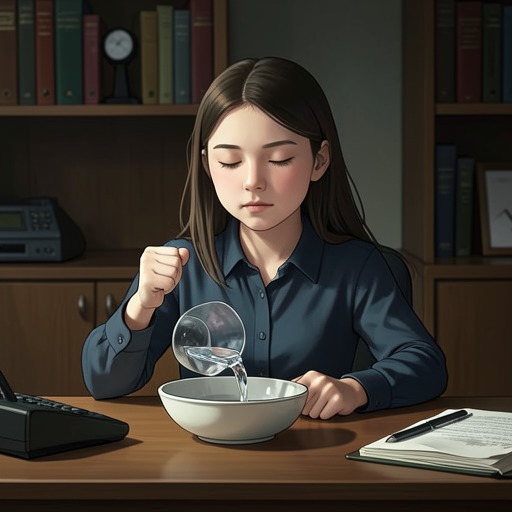
After Matilda has learned these names, the chalk writes a message addressed to Agatha and signed in Marcus’s name. Agatha Bulstronk is deeply shocked to see her first name appear in writing from an unseen hand. When the chalk continues and identifies its message as being from Marcus, she insists that this cannot be him. The scene brings Marcus’s name into the present as an apparent message from someone who has died, but the evidence does not establish that he has returned: it is the writing on the board, and Agatha’s reaction to it, that give the name its force.
The message’s effect depends on Matilda’s earlier questions. She has gathered the private names spoken in the family home, then uses them in a form Agatha recognizes as intimate and impossible to dismiss. Marcus himself remains absent; what reaches Agatha is the name associated with her brother, in a message that unsettles her before the story reveals the material consequences of his will.
Will, Property, and Legacy
Two days after Agatha Bulstronk’s disappearance, Juffrouw Engel receives a registered letter from a local notary. It reports that the will of her deceased father has mysteriously come to light. The document establishes that, from the time of her father’s death, Juffrouw Engel had legally owned Het Rode Huis, at the edge of the village, although Agatha had occupied it until recently. It also establishes that Marcus’s savings, still safely in the bank, had been left to his daughter.
Juffrouw Engel goes to the notary’s office, and within three weeks she moves into Het Rode Huis, the house where she grew up. Its old furniture and paintings have been left behind. Marcus’s legacy therefore changes his daughter’s circumstances in concrete ways: she regains her childhood home and the money he bequeathed her. The will’s sudden appearance resolves the story’s uncertainty over ownership and makes Marcus—notwithstanding his absence—the source of Juffrouw Engel’s restored security and home.