January 1, 3000 AD
MayaJanuary 1, 3000 is the promised opening date for time capsules sealed into a Millennium Monument on the 180th meridian. The date gives the novel’s preoccupation with mortality and the immense scale of time a concrete destination: a message written at the millennium’s turn may outlast its maker, but no one in the present can know what it will mean to those who open it.
The monument and its deadline
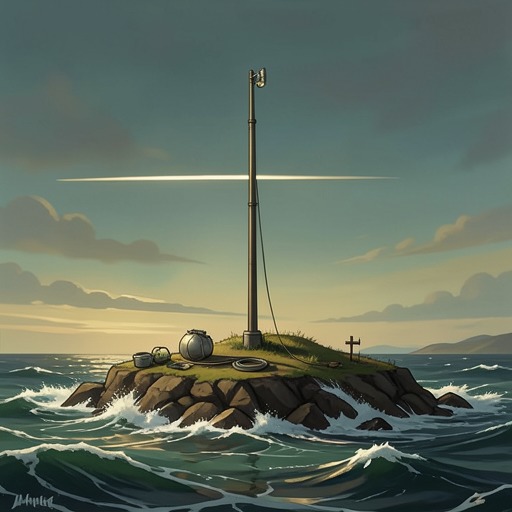
The monument is proposed for the 180th meridian, near the International Date Line, where the competing claims of Pacific islands to enter the year 2000 first have made calendar time a public controversy. Fiji has introduced daylight saving time to move its clocks forward, in a contest involving Tonga and Little Pitt. Against this immediate dispute over who reaches the new year first, the monument projects time a thousand years ahead.
Participants would write greetings to the fourth millennium and place them in glass capsules. Each capsule would be sealed in a hollow brick, incorporated into the monument, and covered with cement. A foundation is meant to preserve and maintain the structure for the intervening millennium and guarantee that the capsules will be opened in a solemn ceremony on January 1, 3000. The proposal attaches an exact date to an otherwise almost unimaginable interval, while making preservation depend on institutions and material objects that must endure.
Frank’s proposed message
When José remarks that the opening lies far in the future and asks whether Frank has anything to say, Frank proposes putting a twentieth-century manifesto into a capsule. The gesture would carry a text beyond the lifespan of its writer and its original audience, turning the manifesto into a communication addressed to people who cannot answer in the present.
The proposal resonates with the novel’s earlier treatment of Frank’s childhood discovery of a dead roe deer in Vestfold. As a child, Frank kept the encounter secret, and the animal’s death became a lasting physical sense of his own vulnerability. He later tries to place his brief life within the larger history of life and the universe, though this effort does not bring him peace. The millennium capsule offers a material counterpart to that struggle: not personal immortality, but the possibility that a thought might remain after its author is gone.
Images, records, and survival
The novel repeatedly makes preservation depend on media that cross temporal boundaries. A legend describes a remarkably lifelike miniature portrait whose smooth, unfamiliar surface seemed to reproduce what people could see, although the story predates photography. In the tale José recounts, Goya encounters Comodín in Sanlúcar de Barrameda in 1797; when Comodín shows him a mysterious portrait of Ana María Maya, Goya releases him and uses Ana’s face for the nude figure in La maja desnuda. The image’s place in the novel joins painted representation to the possibility of an image arriving from another time.
A present-day echo occurs when Comodín gives Frank a photograph of Frank himself, taken in the Alcázar gardens. Frank studies the photograph after a funeral and recognizes in it a grieving figure, but the image does not reconcile him to loss. On its reverse is a statement about humanity’s possible responsibility to preserve habitats on a cosmic scale, followed by the prospect that darkness may one day cover everything again. Set beside this fragile photograph, the monument’s carefully sealed capsules make preservation both an act of hope and an answer to the possibility of extinction.
A future that gives the present meaning
The capsule’s destination is not simply a distant date; it raises the question of how a later audience might understand what the present chooses to preserve. The novel’s treatment of memory makes that question intimate as well as historical. After Frank and Vera revisit the life and death of their daughter Sonia, Frank considers whether something done in the present might give a new meaning to a past loss. Their memories do not undo her death, but they can keep her life present between them.
January 1, 3000 extends this retrospective logic into the public future. A manifesto written now would be placed in the hands of unknown readers a millennium later, with no guarantee that its intended meaning will survive intact. The date thus holds together two unequal kinds of endurance: the monument’s planned physical survival and the uncertain survival of human meanings. It marks a hope that the future may receive the present, while leaving open whether any preserved message can finally overcome time.