Edwina and Rowena’s estrangement
MovingEdwina and Rowena’s estrangement is a family rupture sustained by grief and blame, then loosened by apology, recognition, and the possibility of a journey to Australia. After Charlie’s death, Edwina punished her daughter for years, ignoring her letters and refusing to speak to her; by the end, she is preparing to travel to Rowena, carrying a battered jewellery box and the keepsakes bound up with her family’s past. Their reconciliation remains anticipated rather than completed, but Edwina’s changed understanding makes the distance between them newly traversable.
Origins and the long silence
The estrangement is rooted in Edwina’s response to Charlie’s death. She hoped that Rowena might save him in Thailand, and when events went wrong she could not accept that Charlie had made the decision to inject himself. Instead, she blamed Rowena for the death of her twin and deprived herself of her daughter. The refusal to see Charlie’s own agency helped turn grief into a sustained accusation: Edwina ignored Rowena’s letters and would not speak to her for years.
That silence was not a momentary disagreement. It shaped the terms on which mother and daughter could approach one another, leaving Rowena’s attempts at contact unanswered and Edwina’s hope for her son bound to resentment toward her daughter. The later recognition that Charlie’s death was his decision does not undo the years of estrangement. It does, however, expose the injustice at its centre: Rowena had been made to bear responsibility for an act Edwina can now acknowledge as Charlie’s own.
Contact after loss
Rowena reached out to Lucas after the September 11 attacks, sending a long, rambling email filled with kindness. She explained that she had wanted to attend Dickie’s funeral but could not leave her partner, who was being treated for breast cancer. She also acknowledged plainly that she and Edwina remained estranged, while expressing hope that they might one day be reunited. Her apology and explanation did not erase the distance, but they made clear that absence from the funeral was not indifference.
Rowena’s message also placed the separation against a wider awareness of loss. She described having no other blood relatives and urged the importance of saying one is sorry while there is still time. The email is therefore both an account of a specific absence and an attempt to reopen a family connection. Its warmth matters alongside its admission of estrangement: Rowena reaches toward reunion without claiming that it has already happened.
Edwina’s recognition and responsibility
By the time Edwina considers the journey, her understanding has widened beyond the original blame. She can see that Lucas’s actions in court had causes, and that people react badly when they lose someone they love. This recognition does not mean she forgives Lucas; she still says she will never forgive him for what he did in court. But she can now place his conduct within a chain of consequences and acknowledge a comparable failure in herself.
Edwina sees that her own behaviour after Charlie died was extreme: she blamed Rowena for her twin’s death, punished her daughter for years, ignored her letters, and refused even to speak to her. The movement is significant because it shifts the story from a one-sided grievance toward an admission of responsibility. Edwina does not suggest that Rowena must forgive her, and her awareness of the damage does not guarantee an easy reunion. It does make renewed contact imaginable without pretending the past can be withdrawn.
The invitation and the journey ahead
Rowena’s latest letter gives the possibility of reunion a concrete destination. She writes that she and her family live near St Kilda beach, invites Edwina to paint, and promises that they will fire up the barbecue. She says she wears her mother’s charm bracelet every day and that they are there, waiting. The invitation offers ordinary shared life rather than a dramatic resolution: painting, food, a place by the beach, and a daughter keeping a connection to her mother close at hand.
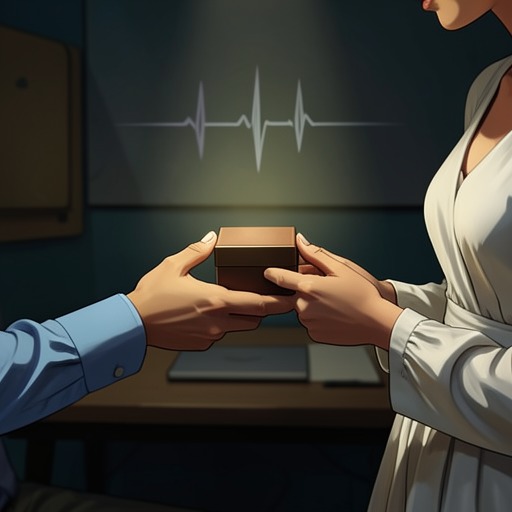
Edwina has tickets and checks them each night, alongside her passport. She plans to add a photo, teeth, rings, and a matchbox of hair to her checklist, and to take the old, battered jewellery box as well. Its importance reaches back beyond the estrangement: when she sees it, she remembers that it is the only thing she has left that belonged to her own mother. The box thus carries both a family inheritance and the practical weight of what Edwina is choosing to bring with her.
The final movement is toward Rowena, not a report that the two women have already reconciled. Edwina’s preparations make her hope actionable, while the letter’s promise that Rowena is waiting keeps the outcome open. Her conclusion that blood is strong and pulls like the tide gives their bond the force of something difficult to sever, but the years of silence remain part of its history. The estrangement ends, in the available account, at the threshold of reunion: Edwina has tickets, keepsakes, and an invitation, and is preparing to go.