Event 1
Edwina decides to sell Number 137
[Edwina decides to sell Number 137](entity:event-recall-event-edwina-decides-to-sell-8a1f946781e8) after the house’s deterioration becomes impossible to overlook and its rooms no longer feel like a home she wants to inhabit. The decision shifts from a thought she has dismissed before into action: she contacts an estate agent to arrange a valuation, beginning a practical process of leaving a place bound up with her former selves and memories.
## The House’s Newly Visible Decay
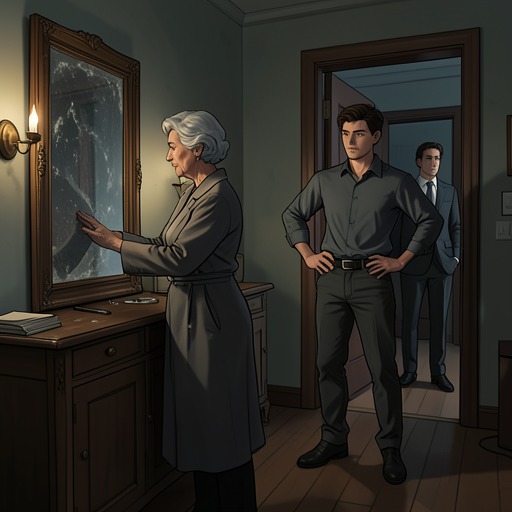
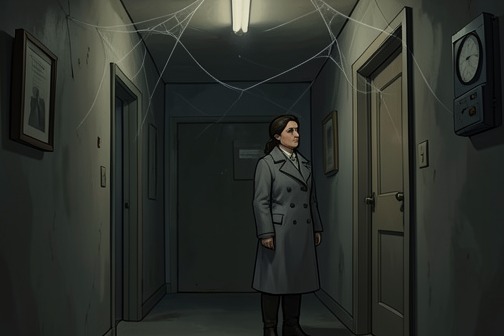
Before her cataract operation, [Edwina](entity:character-recall-character-edwina-5de2c8238c71) had been blissfully unaware of the house’s condition. Returning from Moorfields Eye Hospital with new plastic lenses, she suddenly saw cobwebs hanging from the ceilings, mouse droppings in the kitchen drawers and woodworm spreading through the wood. The change is not simply that the house has begun to decay; she can now see the decay that had escaped her notice.
The signs gather throughout the building: cracks along the skirting boards, musty smells, and a fraying downstairs lavatory pull cord she has already had to knot twice. Ivy thickens over the basement windows until the kitchen is dark even in June. The house seems to turn against her, while its neglected rooms make its scale and upkeep increasingly difficult to live with.
## From a Repeated Thought to a Decision
More and more of the house has fallen out of use; Edwina has not entered some rooms for months. She considers looking at the home as a visitor might, but selling is no longer merely a possibility raised and immediately dismissed. This time, the idea makes sense to her: she does not want to remain a prisoner in her own past.
That resolve has an intimate counterpart in her sense of self. Edwina thinks of her former selves as nested one inside another, from the lonely boarding-school girl to the young wife, mother and widow. The house, like that imagined stack of earlier Edwinas, holds the accumulated shape of a life; deciding to sell it means confronting that history without agreeing to stay enclosed by it.
## Putting the Sale in Motion
After making up her mind, Edwina is surprised by how calm she feels. She phones the estate agent down the road and arranges for someone to come and value the house. The step gives the decision a date and a practical next action rather than leaving it as an abstraction.
She writes the appointment in both her desk diary and the wall calendar, aware that the estate agent is due on Friday. That leaves two days to make the house presentable, including vacuuming and bleaching the lavatory. The preparations register the immediate consequence of the decision: the home she has long occupied must now be seen and assessed by someone who may help bring her departure about.
## Significance
The decision marks a change in Edwina’s relationship to the past. Number 137 is not just a deteriorating building: its rooms have become part of the life she remembers and the life she still carries within her. Selling it cannot undo that history, but it offers a way to stop treating the house as the place where all of it must remain physically preserved.
The scene also makes the change legible through ordinary tasks. A phone call, a valuation appointment, a diary entry and a list of cleaning jobs turn an inward recognition into a sequence of outward acts. Edwina’s calm accompanies that movement: for once, the thought of selling does not retreat into dismissal but sets the house, and her future in it, in motion.
Event 2
The birth of Rowena and Charlie
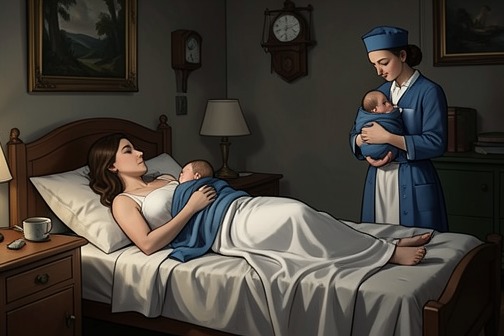
The birth of [Rowena](entity:character-recall-character-rowena-e35929bc1a76) Treadaway and [Charlie Treadaway](entity:character-recall-character-charlie-treadaway-a17f9b312340) is a turning point in the family history: a home birth that [Edwina Treadaway](entity:character-recall-character-edwina-treadaway-6e3df383ae73) expected to produce one child instead brought twins into the house, minutes apart across midnight. The scene moves from confidence in an ordinary delivery to pain, alarm, and surprise; afterwards, the twins’ names and alternating birthday celebrations make that unusual beginning part of family life.
## A home birth becomes unexpected
No one had mentioned twins at Edwina Treadaway’s antenatal check-ups, so when labour began on a moonless March night, the family expected one baby. Edwina Treadaway had requested a home birth. She was young and healthy, and she disliked hospitals; the house was prepared with newspaper and old sheets. [Ollie Treadaway](entity:character-recall-character-ollie-treadaway-a72bb7654e0f), who joked about his farming upbringing, was nevertheless frightened by the prospect.
The midwife arrived by bicycle shortly before lunch, carrying her own food. The labour continued into the night. At five minutes to midnight, after severe pain and a moment in which Edwina Treadaway feared that childbirth could kill her, she delivered a daughter. The baby was healthy, though the midwife had to smack her before she cried. Edwina Treadaway expected the pain to subside after the birth, but it did not. The midwife, who had initially expected to be home by then, became concerned and raised the possibility of complications.
The first delivery did not end the labour. Amid bloodied sheets and continuing agony, Edwina Treadaway rolled onto all fours and gave birth to a second baby, a boy described as smaller, thinner, and bluer than his sister. The midwife remarked that he had received less nutrition, contrasting his condition with the girl’s greater size. The discovery transformed what had seemed a difficult but familiar birth into the arrival of an entirely unexpected second child.
## Two names and a shared birthday ritual
The afterbirth followed, and at two in the morning the midwife cycled away, leaving two dazed new parents holding a baby each. The naming was immediate and decisive: Ollie Treadaway chose Rowena Treadaway, and Edwina Treadaway answered with Charlie Treadaway. The boy was never called Charles in the family account; he was always [Charlie](entity:character-recall-character-charlie-24c3a7bd9408).
Their names carried a small trace of disagreement. Edwina Treadaway had privately wanted to name a girl Elizabeth, while Ollie Treadaway had once said he would have preferred Sebastian for Charlie Treadaway. Edwina Treadaway rejected that suggestion during a terrible argument. These alternatives did not change the names the parents settled on, but they show that the choice belonged to a marriage with its own disagreements as well as its shared decisions.
Because Charlie Treadaway was officially recorded as born a day later than his sister, Edwina Treadaway decided that the twins would alternate which date they celebrated. Their parties would fall on either 14 or 15 March, taking turns from year to year. The arrangement made a practical distinction out of the few minutes that separated the births, turning the calendar into a small family ritual. At the time, Edwina Treadaway imagined a future of parties and cake, without knowing what lay ahead for the children.
## The house and the work of early care
The birth took place in the house that would remain central to the twins’ childhood. In Edwina Treadaway’s later recollection, her babies were all born there; as they grew, they slept and played upstairs, among wooden building bricks, a doll’s house, and Lego. The room’s toys preserve the transition from two infants kept close beside their mother to children who could play together in the home.
The work of caring for them soon extended beyond the immediate family. [Alicia](entity:character-recall-character-alicia-1f68a746a0ea), a part-time cleaner with two sons living in Kingston under their grandmother’s care, became part of the twins’ daily life. She came to the house every day until the children were too old to need a nanny, and stayed on to do the ironing and cleaning. Her practical help was especially important in a household where Edwina Treadaway had little confidence in cooking. She relied on tinned food, soups, jars of baby food, and a Baby Belling to heat the children’s meals, while the Aga Ollie Treadaway had insisted on remained a source of warmth rather than a cooking solution. Rowena Treadaway had a gummy eye, and Charlie Treadaway coughed repeatedly.
Alicia’s care was concrete and physical: she dried and changed the infants, found dry clothes, and fed them hot toast and honey. Edwina Treadaway’s later account recognizes that the twins were not eating well before Alicia helped; afterwards, warm and fed, they could sit contentedly in their playpen. The birth therefore begins a family story not only of parenthood, but also of care that depended on another woman’s labour.
## A beginning that shaped family life
As Edwina Treadaway’s children grew, Alicia’s presence also helped make her work possible. Edwina Treadaway illustrated the Betsy and Tom books, and credits Alicia with giving her the freedom to work from home. While Alicia cared for the twins in the nursery or kitchen, Edwina Treadaway drew and painted; she and the children often met for lunch before she returned to her studio. The illustrations brought in money, making Edwina Treadaway financially independent after Ollie Treadaway’s death and helping her pay the bills, send the twins to a preparatory school in [Chelsea](entity:location-recall-location-chelsea-a4c781a37b29), run a car, and look after Alicia.
The birth itself is remembered through contrasts: one expected baby and two actual arrivals, the healthy daughter and the smaller boy, the frightened father’s joke and the mother’s ordeal, the separate dates and the shared celebration. Its consequences reach beyond the delivery room into the house’s routines and the labour that allowed the family to function. The twins’ arrival is thus both a sharply defined surprise and the beginning of a long domestic history, kept in memory through the rooms where they were born and the ordinary objects with which they later played.
Event 3
Ollie’s death at Sennen Cove

[Ollie’s death at Sennen Cove](entity:event-recall-event-ollie-s-death-at-sennen-74066b149c2b), [Cornwall](entity:location-recall-location-cornwall-5562c2fa740e), abruptly transforms a family holiday into the beginning of [Edwina’s widowhood](entity:state-recall-state-edwina-s-widowhood-ee67fe32d955). The scene turns on the suddenness of the change: a cricket ball crosses the sky, play and seaside sounds continue, and then Ollie is found unresponsive. His death is followed not by a clear account of returning home but by a gap in [Edwina](entity:character-recall-character-edwina-5de2c8238c71)’s memory, and then by the practical and emotional burdens that make his absence impossible to ignore.
## Setting and Suddenness
The event takes place at [Sennen Cove](entity:location-recall-location-sennen-cove-bb1d20694963), Cornwall. Its opening is framed by a red cricket ball flying through a blue sky and the sound of bat striking ball. Around that familiar rhythm, the beach remains active: a bee drones, a dog barks, a boy flies a yellow kite, and the wind changes. The ordinary details establish a scene of leisure without suggesting that anything is about to happen. Then the account breaks sharply: Ollie is lying face down and not moving.
The contrast between the continuing beach and the emergency gives the death its force. The boy with the kite carries on flying it as an ambulance crosses the sand and responders try to revive Ollie. The ambulance eventually takes him away. The scene does not offer a gradual preparation for loss; it places the interruption inside the ordinary sounds and movements of a holiday, making the change seem both immediate and difficult to comprehend.
## The Journey Home
Edwina cannot recall how she got home from the holiday. Her uncertainty is concrete as well as emotional: she had two babies with her, and the family’s rusty green Humber Hawk was there, but she had not yet passed her driving test. The account does not fill in the missing journey or identify who helped her. Instead, that absence remains part of the event’s aftermath, marking how little of the transition from holiday to bereavement she can remember.
After Ollie’s death, Edwina has to learn to drive. The necessity is expressed as one of the things a widow must learn to do, linking her loss to the new responsibilities left in its wake. Driving is not presented as an isolated milestone. It stands beside caring for two small children and managing a household, practical tasks that were once part of a shared life and now fall to her.
## Immediate Aftermath
For weeks, Edwina is semi-catatonic. Life seems unable to continue after Ollie’s death, and the account distinguishes this stunned period from the moment when its consequences become fully present. Her mother’s departure to rejoin her father in Malta is the point at which reality hits. The bereavement is therefore accompanied by a change in Edwina’s immediate support: once her mother leaves, Edwina is alone with the responsibilities before her.
Those responsibilities are sharply defined. She has two small children, no income, and a large old house that needs both money and time. The circumstances turn grief into a question of survival and daily capacity; the loss is not confined to what Edwina feels about Ollie, but alters the conditions under which she must raise the babies and maintain a home. The text records that there are days when she feels like dropping herself and the babies over Waterloo Bridge, presenting her despair as a grave consequence of isolation and material pressure.
## Significance in Edwina’s Story
The death is the dividing point between Edwina’s life with Ollie and an uncertain future in which she must act without him. The scene’s progression—from cricket and kite-flying to the emergency, then to the unremembered journey and the demands at home—makes that division legible through concrete changes rather than explanation alone. What begins as a sudden loss becomes an extended crisis, shaped by childcare, income, the condition of the house, and the departure of her mother.
The episode also establishes a pattern of practical adaptation that follows bereavement. Edwina had not passed her test before Ollie died; afterward, she learns to drive because her life requires it. That fact does not lessen the shock or resolve her despair. It shows instead how widowhood makes ordinary capacities newly necessary, even while the person expected to acquire them is still living through a loss she cannot fully recall returning home from.
Event 4
Edwina meets Alicia
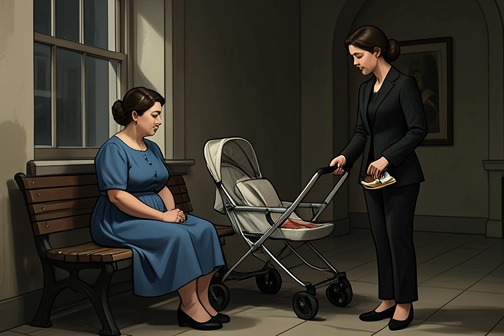
[Edwina meets Alicia](entity:event-recall-event-edwina-meets-alicia-f36d5a69bbaf) in the grounds of the [Imperial War Museum](entity:location-recall-location-imperial-war-museum-f8dfe83cd11b) at a point when she is struggling to care for the twins alone. What begins with a crying pram and a stranger’s practical kindness becomes a lasting alliance: [Alicia](entity:character-recall-character-alicia-1f68a746a0ea) helps keep the children safe and loved, and gives [Edwina](entity:character-recall-character-edwina-5de2c8238c71) support she believes she could not have survived without.
## The meeting at the museum
Edwina is sitting on a bench with the pram some way off, worn down by its crying contents and by the demands of looking after two small children without income. She resents the burden, even thinking that she should no longer have to bother with the babies, but knows she cannot trust them to make the walk home unaided. She describes [Charlie](entity:character-recall-character-charlie-24c3a7bd9408) as lazy and prone to hysterics, and [Rowena](entity:character-recall-character-rowena-e35929bc1a76) as a sulker. Her exhaustion is more than irritation: elsewhere in this recollection, she remembers days when she considered throwing herself and the babies from Waterloo Bridge.
Alicia enters the scene while stopping to tie her shoelace. She wears black slacks and cream wing-tipped glasses, with a precarious beehive that makes her watch the threatening weather. When Charlie throws a shoe from the pram, Alicia retrieves it. Discovering that there are twins inside, she immediately begins pulling faces and making animal noises. The babies respond with happy gurgles, and for a few precious moments Edwina can sit and breathe. The relief gives way to sobbing: as Edwina breaks down, the sky turns a toxic yellow and heavy rain begins.
## From stranger to caregiver
Alicia does not leave Edwina to manage the journey home alone. She helps wheel the pram back to [Kennington Road](entity:location-recall-location-kennington-road-fa5c7dfeae1c); while Edwina opens the front door, Alicia carries one baby under each arm up the stairs, puts them inside, and returns for the pram, which she maneuvers into the house herself. By the time they are indoors, both women are soaked and Alicia’s carefully arranged beehive has collapsed into a matted heap.
In the kitchen, Alicia strips and dries the babies, changes them, and finds dry clothes hanging from the pulley. She warms the children with hot toast and honey; placed in their playpen, they settle and play contentedly with their toys. Edwina recognizes that Alicia can manage the children in a way she cannot. She is eager to hand them over, and feels some jealousy at the steady, unconditional love Alicia gives them. Alicia worries about their physical wellbeing and is almost obsessive about keeping them regular, with prunes among her preferred remedies, but she does not judge their characters.
The encounter becomes a long working relationship. Alicia comes to Edwina’s house every day until the twins are too old to need a nanny, and then remains to do the ironing and cleaning. She also takes on most of the cooking and laundry. Edwina’s memory of their first meeting thus marks a change from isolation to dependable assistance: the stranger who carried the children into the house becomes part of its daily life.
## Unequal intimacy in the household
Alicia’s care is intimate, but the arrangement is also employment. When [Dickie](entity:character-recall-character-dickie-2708dc57cf14) insists that his work shirts be professionally laundered, Edwina tells Alicia, who responds by huffing, banging pans, and showing her temper while Edwina hides in her studio. Alicia is not an endlessly patient domestic presence: she dislikes vacuuming and does not like doing things for [Lucas](entity:character-recall-character-lucas-32d2e2000d96). The feeling is mutual; Lucas’s clothes needing repair are set aside for the school matron, as if he does not want Alicia touching his belongings.
Race makes the unequal terms of the household explicit. Edwina recalls that her mother used a racist label for Alicia and mocked her body. Dickie once remarked that Lucas had not previously come into such close contact with a Black person. Edwina angrily rebuked him for speaking about Alicia in a demeaning, stereotyped way, insisting that such language was unacceptable in the [1970s](entity:time-recall-time-1970s-2f89f32df2c9). She attributes some of Dickie’s attitudes to [Wyebourne College](entity:location-recall-location-wyebourne-college-bb079484b370), where, in her account, the only Black people he or Lucas encountered were pupils of royal descent or staff cleaning toilets. Alicia is loved and relied upon, yet the household’s assumptions about race and status remain visible in the language and labor directed at her.
## Lasting significance
Edwina later describes Alicia as a woman with whom she seemed to have nothing in common, yet who became her closest ally. Alicia’s importance lies not only in the practical work that she undertakes but in the form of care she offers: she can calm the babies, take charge without shaming Edwina, and love the twins without making their mother’s exhaustion a judgment on them. Edwina’s account holds gratitude and discomfort together. She admits how much she depends on Alicia, and even envies the ease of Alicia’s affection, while recalling the racialized and class-bound conditions in which that care is given. Their first meeting turns a moment of near-collapse into the beginning of a sustaining relationship, without making the inequalities around it disappear.
Event 5
Edwina’s marriage to Dickie
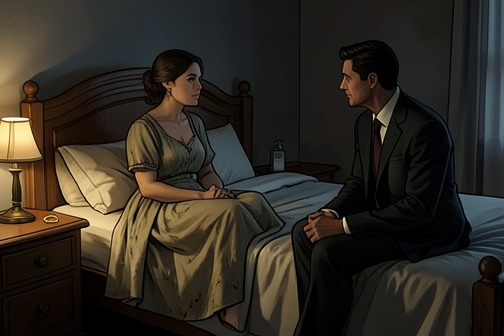
[Edwina’s marriage to Dickie](entity:event-recall-event-edwina-s-marriage-to-di-5670d03047c9) is remembered less as a wedding than as a set of domestic and emotional adjustments whose consequences linger in the house. She had drawn [Dickie](entity:character-recall-character-dickie-2708dc57cf14) away from [Barbara Spinner](entity:character-recall-character-barbara-spinner-44ed182cc31a), his first wife, and later understood parts of their marriage as an effort to repay that choice: through sex she did not always want, through attempts to welcome his son [Lucas Spinner](entity:character-recall-character-lucas-spinner-d7813d9bd380), and through a continuing suspicion that Dickie might have been better off staying where he was. The marriage joined two families, but it did not erase the tensions between them.
## The marriage in retrospect
[Edwina](entity:character-recall-character-edwina-5de2c8238c71)’s recollection settles on small, durable signs of the second marriage. She remembers the unfamiliar surname and the new gold ring, though she already had a perfectly serviceable wedding band. More striking was Dickie’s expectation that he sleep on the left side of the bed—the side Edwina had occupied with [Ollie Treadaway](entity:character-recall-character-ollie-treadaway-a72bb7654e0f). That ordinary disagreement makes the past feel physically present: marriage altered the arrangement of the bed without making the earlier marriage disappear.
Edwina distinguishes the two husbands through their styles of lovemaking. Ollie had been energetic and enthusiastic; Dickie, by contrast, was deliberate, almost ritualistic, and technically accomplished. She had never enjoyed kissing Dickie as she had kissed Ollie. Her private assessment is stark: she loved Ollie and was grateful to Dickie. The contrast does not cancel the second marriage, but it reveals that Edwina entered it with an emotional history that the new ring and surname could not replace.
## Desire, duty, and the cost of leaving [Barbara](entity:character-recall-character-barbara-d5f53d2adcbd)
Edwina recalls that she often had sex with Dickie out of guilt. She had used her body, brown eyes, slow smile, and small white teeth to seduce him away from Barbara; after he left his first wife, Edwina felt it would be unfair to withdraw the sexual attention that had helped win him. In her account, sex becomes both intimacy and an unpaid debt, a way of sustaining the bargain she believed had brought them together.
Dickie had described Barbara as sexually cold, contrasting her night cream and expensive nightgowns with Edwina’s sensuality and willingness. Edwina remembers trying to maintain that role after they married, even as the effort became harder. Her comparison of sex to exercise captures the compromise: she might not feel inclined at first, but could enjoy it once she began. In old age, she no longer wants to have sex and feels distressed by the sight of her body. The woman who once felt at ease in her own skin has become more prudish, a change she connects to age and bodily discomfort rather than to any renewed obligation to Dickie.
## A stepmother inside the family home
Dickie’s marriage to Edwina also made her a stepmother to [Lucas](entity:character-recall-character-lucas-32d2e2000d96). She knew that Lucas reported back to Barbara about what Edwina wore and how the household ate. This scrutiny affected even the privacy of her own bedroom: Edwina did not want her stepson to see her naked and give Barbara further cause to criticize her. She feared that domestic complaints—such as serving fish fingers for Sunday lunch—might be joined by accusations about sexual impropriety. Barbara’s handwritten notes, including one about a missing sock, made the hostility tangible without requiring direct confrontation.
Edwina’s effort to make Lucas welcome is particularly revealing. After an earlier incident had been brushed under the carpet, Dickie suggested that Lucas might want to return, even if only for a night. Edwina could not bring herself to refuse outright, though she was relieved when Lucas later stayed with Barbara after returning to Britain. At the time Lucas became a regular, part-time member of the family, Edwina researched his interest in the Apollo space mission and painted a mural for him. A hand-painted tile declared the room his. Lucas arrived with a small leather suitcase, barely acknowledged the work, and shut the door on Edwina and the twins as they excitedly praised their mother. The welcome was sincere, but it did not produce the closeness Edwina hoped for.
## The household and its unequal arrangements
The marriage was lived within a household whose practical work depended heavily on [Alicia](entity:character-recall-character-alicia-1f68a746a0ea). She had first come as a part-time cleaner with two sons living in Kingston, cared for by their grandmother, and then continued in the Treadaway home after the twins no longer needed a nanny. She did the cooking and laundry; Dickie preferred to have his work shirts professionally cleaned. When Edwina told Alicia that this arrangement would end, Alicia banged the pans in anger while Edwina hid in her studio. That domestic dispute shows how the household’s routines—and the labor sustaining them—were negotiated within the marriage rather than simply provided by [Edwina and Dickie](entity:relation-recall-relation-edwina-and-dickie-705776b91ace).
The unequal racial attitudes in the family sharpened those tensions. Dickie admitted that Lucas had not been in close contact with a Black person before Alicia. Edwina objected angrily to his wording and rejected the assumptions behind it, while reflecting that Dickie’s education at [Wyebourne College](entity:location-recall-location-wyebourne-college-bb079484b370) had left him accustomed to a world in which Black people appeared chiefly as pupils of royal descent or as cleaning staff. Her response exposes a divide between husband and wife, but also the limits of her own household: Alicia’s indispensable work did not prevent her from being subjected to racialized language and class inequality.
## Regret and the marriage’s unresolved balance
Edwina’s retrospective judgment is not that Dickie’s decision to leave Barbara brought simple happiness. She remembers wondering whether he had sacrificed too much. She had little interest in his political career and considered herself a poor cook; she suspected that, apart from the enthusiastic sex she says was mostly performed, she made a poor second wife. Dickie’s political life had survived a difficult episode and continued, but Edwina found talk of his work boring, unlike Barbara, who had cared about political influence and the prospect of being an MP’s wife.
Afterward, Edwina repeatedly wondered whether Dickie wished he had not left Barbara. She imagines that much might have been avoided had he stayed, then links that thought to Ollie in a sentence that trails off. The marriage remains caught between competing forms of attachment: Edwina’s love for her first husband, her gratitude to her second, and her guilt about the woman Dickie left. Its significance lies in that unresolved accounting. The marriage changed who belonged in Edwina’s home, but neither the new ring nor her efforts as wife and stepmother could make the past—or the costs of the choice—settle into a single, finished story.
Event 6
Edwina’s miscarriage
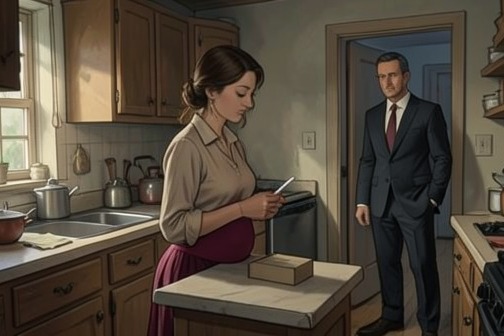
[Edwina’s miscarriage](entity:event-recall-event-edwina-s-miscarriage-6d5a124c9801) is the sudden loss of a planned pregnancy with [Dickie](entity:character-recall-character-dickie-2708dc57cf14), occurring just before the couple intended to tell [Lucas](entity:character-recall-character-lucas-32d2e2000d96) that she was expecting another child. The episode turns on the sharp collision between an imagined family announcement and an intimate, hurried loss; its aftermath leaves [Edwina](entity:character-recall-character-edwina-5de2c8238c71) facing both Dickie’s devastation and the practical demands of Lucas’s arrival.
## A planned pregnancy within a working household
The pregnancy came a couple of years after Edwina married Dickie. They had planned it: Edwina stopped taking the pill, and Dickie shared her effort to conceive. She was thirty-six when she became pregnant for the second time, with her third child. The wording places this pregnancy in a household already shaped by the twins and by Lucas’s place as Dickie’s son. It was not an abstract hope of becoming a parent for the first time, but an anticipated addition to an existing family.
Edwina instinctively imagined the baby as a boy, while Dickie expected a girl with blonde curls like his own childhood appearance. Their different expectations give the pregnancy a small, particular future before the loss: each had begun to picture the child, but neither had yet learned its sex. Dickie was openly proud and excited. Out of loyalty to Lucas, he suggested waiting until Lucas came home from school before telling him. The intended announcement was therefore bound up with family relations as well as with the couple’s private anticipation; Lucas was to be included before the news was made known.
The wider household helps explain the practical setting of Edwina’s family life, though it does not explain or cause the miscarriage. When Edwina met [Alicia](entity:character-recall-character-alicia-1f68a746a0ea), she was a part-time cleaner with two sons in Kingston, cared for by her own mother. Alicia came to Edwina’s house every day, first looking after the twins and later staying on to do ironing and cleaning. That sustained work gave Edwina time to draw and paint from home. Edwina later acknowledged the money she made from Betsy and Tom, crediting Alicia with helping make her life as a working mother possible. Her household combined paid work, childcare and domestic labor; the pregnancy and its loss took place within that established, busy arrangement.
## The loss before the announcement
The miscarriage occurred on the Friday night before Lucas was due home for the [Easter](entity:time-recall-time-easter-4ee721615d13) holidays. The news was to be broken the next day. Edwina had felt unwell throughout Friday, feverish and with an aching back, and was waiting for the children to go to bed. At the same time, she dreaded Lucas’s arrival. The juxtaposition is consequential: the family was poised to share hopeful news with him, but Edwina was already physically unwell and apprehensive about the next day.
The loss itself happened quickly. Within ten minutes, the pregnancy was over. Edwina flushed what she had lost down the lavatory without thinking. She later understood that she should have preserved what she could for medical inspection, because an examination might have helped establish what had gone wrong. The account makes the moment’s speed and lack of preparation central: there was no pause in which she could follow that procedure, and no answer about the cause is supplied. The event is described through what Edwina did and what she subsequently learned she might have done differently, rather than through any confirmed medical explanation.
That detail also distinguishes the private experience from the couple’s plan to tell Lucas. The news they had intended to give him never became an announcement of a new sibling. Instead, the pregnancy ended before he returned, and the possible opportunity to investigate the loss passed in the same brief interval. The episode does not state that the loss resulted from any particular action or condition; it leaves that question unresolved.
## Dickie, Lucas and the immediate aftermath
Dickie was devastated. After he picked Lucas up, he spent the remainder of the weekend in bed with a migraine brought on by brandy. Edwina sympathized with him, but his grief did not remove her responsibility for the immediate business of the household. She also had to deal with Lucas, whom the narration presents as difficult to manage at that moment. Shortly after lunchtime on Saturday, she gave up trying and asked Lucas for his mother’s telephone number. The sequence records two responses to the same loss without treating them as interchangeable: Dickie withdrew, while Edwina continued to handle the family’s immediate demands.
The timing makes the aftermath especially stark. Dickie had wanted Lucas to hear the news in person, and Lucas’s homecoming was meant to precede the announcement. Instead, Lucas arrived into a weekend in which the expected child was no longer coming. The account does not say what Lucas was told, whether he learned about the miscarriage then, or why Edwina needed his mother’s number. It does show that the family’s anticipated moment of sharing became a weekend marked by grief and practical strain.
## Significance in Edwina’s family story
The miscarriage changes the direction of a clearly planned family future, but the episode does not supply a later medical account or describe a lasting physical consequence. Its emphasis is on the contrast between expectation and event: Dickie’s excitement, the couple’s opposing pictures of the baby, and their plan to include Lucas are all brought to an abrupt end before the announcement can take place.
The scene also sets Edwina’s sympathy beside her continuing labor. She recognizes Dickie’s devastation while still attending to the household and confronting Lucas’s arrival. Read alongside the account of Alicia’s daily childcare and domestic work, this is a family life in which care is organized through practical tasks as well as affection. The miscarriage does not erase those arrangements; it exposes how grief enters a household that must keep functioning. Its unresolved medical question, the lost chance to have the pregnancy examined, and the unspoken announcement leave the event defined as much by what the family cannot know or share as by the pregnancy’s planned beginning.
Event 7
The abuse scandal at Wyebourne College
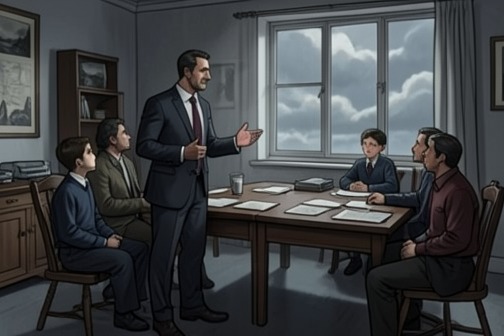
[The abuse scandal at Wyebourne College](entity:event-recall-event-the-abuse-scandal-at-wy-21f912cb86f7) begins as a family crisis over [Charlie](entity:character-recall-character-charlie-24c3a7bd9408)’s safety and expands into an institutional scandal. Its central reversal is that [Dickie](entity:character-recall-character-dickie-2708dc57cf14)’s use of political influence to secure Charlie a place at the school, which had seemed like a favour, becomes in [Edwina](entity:character-recall-character-edwina-5de2c8238c71)’s later understanding part of a bargain designed to keep the school quiet. Charlie ultimately reports [Mr Robbins](entity:character-recall-character-mr-robbins-3682b062ef6a); two other boys come forward, and the school’s attempt to contain the matter is overtaken by the prospect of a court case. The episode exposes both the abuse and the assumptions that allowed it to persist.
## Background and the Admission
Dickie promises to speak to [Wyebourne](entity:location-recall-location-5fa94c701852) on Charlie’s behalf, invoking the advantages of being an old boy. As a politician, he can be persuasive, and Edwina is astonished when Charlie is accepted. At first, she does not know how Dickie arranged the place. The scandal later changes the meaning of that unexplained success: looking back, she guesses that the school admitted Charlie because Dickie knew what Mr Robbins was capable of and could threaten to expose the institution if it refused.
This account of the admission is presented through Edwina’s retrospective realization, not as a transparent institutional record. She reads Dickie’s expression as guilt and concludes that Wyebourne took Charlie to keep Dickie silent. The implication is disturbing: a child’s access to the school may have been secured not through ordinary advocacy but through an arrangement that left him in the care of a known danger. Edwina remembers the expense of the uniform, trunk, and equipment Charlie barely used as the material residue of that decision. The school’s acceptance had looked like opportunity; in retrospect, the unused school things embody the cost of a compromised bargain.
## Conflict Between [Edwina and Dickie](entity:relation-recall-relation-edwina-and-dickie-705776b91ace)
When the scandal breaks, Edwina confronts Dickie over both his knowledge and his decision to send Charlie to Wyebourne. She regards what happened as abuse by an adult entrusted with a boy’s care. Dickie initially resists that description. In his experience, boys at boarding school were interfered with by older boys or teachers, and he treats this as an ordinary hardship that they would recover from, even something that made them more masculine. His response reveals how a culture of normalization can turn abuse into an accepted feature of school life rather than a breach demanding protection and accountability.
Edwina insists that the issue is not a harmless school experience but an adult’s abuse of boys under his care. She also accuses Dickie of securing Charlie’s place despite knowing that such conduct was happening. The scene’s turning point comes when she sees what she interprets as guilt cross his face. That moment confirms her suspicion for her, though it does not erase the contradiction in Dickie’s position: he minimizes the abuse as familiar, while Edwina believes he also knew enough about Mr Robbins to use that knowledge against the school. Their disagreement is therefore about more than the meaning of the abuse. It is about what Dickie knew, what he accepted as normal, and whether his intervention protected Charlie or exposed him to harm.
## Charlie Reports the Abuse
The scandal breaks open when Charlie reports Mr Robbins. Two other boys then come forward, and the story can no longer be contained as an isolated allegation. The sequence shifts the focus from the school’s prior knowledge and Dickie’s presumed leverage to the boys’ testimony: Charlie, whom the adults were supposed to protect, is the one who exposes what is happening. The other boys’ decision to speak adds weight to the disclosure and widens its consequences beyond Charlie’s own experience.
Wyebourne attempts to manage the crisis. Mr Robbins is placed on gardening leave, and the school employs a new sports master described as emphatically heterosexual. That appointment suggests a public effort to signal a change in the school’s image, but it does not itself resolve what has been alleged or establish accountability. A court case is looming because a parent of one of the other boys is determined to pursue Mr Robbins. The scandal thus develops from concealed abuse into a threat of legal scrutiny, while the school’s immediate actions remain focused on removing Robbins and presenting a reassuring replacement.
## Departure and Aftermath
Charlie can no longer attend Wyebourne while the matter is pending, and he leaves immediately for [Glennings](entity:location-recall-location-glennings-6f91788f05f9) with his new trunk still full of barely used clothes. The move is both a practical consequence of the scandal and a sharp reversal of the promise attached to his admission. Edwina had been shocked that he had obtained a place; she later sees the uniform and equipment as part of a costly passage into a school that could not keep him safe. Although she wonders angrily about the effect on her son’s mind, the narrative says that Charlie appears to recover rather well. That observation does not undo the abuse or Edwina’s anger; it distinguishes his apparent recovery from the institution’s failure.
Three weeks after Charlie leaves, Mr Robbins is found hanged in a wood near his mother’s house. An inquest concludes that the balance of his mind had been disturbed. The official conclusion concerns Robbins’s mental state, while Edwina’s indignant response turns attention back to the damage and vulnerability of her son. The close therefore refuses to let the account of Robbins’s death displace the question of what happened to Charlie or the school’s responsibility. The scandal’s consequences remain divided: Charlie has left Wyebourne, other boys have disclosed abuse, a court case has threatened, and Robbins is dead, but the evidence presented does not describe a resolution of the institution’s wider culpability.
## Public Framing and Significance
Later, as the inquest into [Elise](entity:character-recall-character-elise-910ceff1d907)’s death approaches, press coverage revisits Charlie’s school history. Wyebourne refuses to comment on its former pupil, while Glennings publicly describes Charlie as a much-loved member of its school community and presents drugs as a modern scourge from which not everyone emerges unscathed. The contrast shows how schools and newspapers frame a young person through competing public identities: the former pupil of a prestigious school, the chorister once pictured as angelic, and the boy whose later life is associated with scandal. The earlier abuse at Wyebourne becomes part of the history scrutinized by the press, although the available account does not say that the inquest into Elise’s death adjudicates the school’s conduct.
The scandal’s significance lies in the distance between institutional respectability and the treatment of children within the institution. Dickie’s old-boy connections, Wyebourne’s apparent willingness to admit Charlie under pressure, its handling of Mr Robbins, and its refusal to comment all place reputation and control beside the boys’ accounts. Yet the decisive disclosure comes from Charlie himself, followed by two other boys. The school’s effort to contain the story fails because those directly affected speak, turning a private family suspicion into a public and potentially legal reckoning.
Event 8
Charlie leaves Wyebourne for Glennings
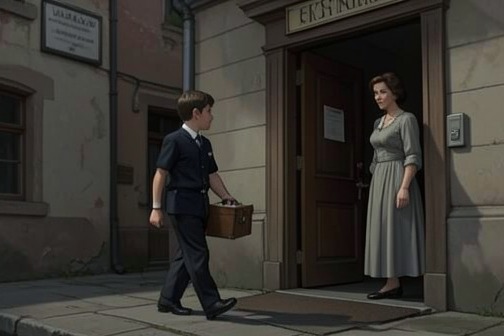
[Charlie Treadaway](entity:character-recall-character-charlie-treadaway-a17f9b312340)’s departure from [Wyebourne College](entity:location-recall-location-wyebourne-college-bb079484b370) is both an escape from a school scandal and the beginning of a more self-fashioned life. After [Charlie](entity:character-recall-character-charlie-24c3a7bd9408) exposed [Mr Robbins](entity:character-recall-character-mr-robbins-3682b062ef6a)’s sexual abuse, the school tried to contain the consequences, but other boys came forward and a court case loomed. Charlie left with a nearly unused trunk; [Edwina](entity:character-recall-character-edwina-5de2c8238c71) then enrolled him at [Glennings](entity:location-recall-location-glennings-6f91788f05f9) co-educational boarding school, where the absence of uniform and the freedom to pursue chosen subjects suited his appetite for independence.
## The scandal and the decision
The transfer follows a belated recognition of why Wyebourne College had taken Charlie in the first place. Edwina understands that [Dickie](entity:character-recall-character-dickie-2708dc57cf14) knew what Mr Robbins was capable of and believed the school knew too. In her recollection, [Wyebourne](entity:location-recall-location-5fa94c701852) accepted Charlie partly to keep Dickie quiet: if the school refused him, Dickie would expose the danger. The expensive uniform, trunk and equipment that Charlie would barely use acquire a bitter meaning in this light. The institution had not offered him protection so much as made him part of an arrangement intended to avert disclosure.
That arrangement breaks when Charlie himself exposes Mr Robbins. Two other boys then come forward, and the story opens into a wider scandal. Wyebourne tries to hush matters up: Mr Robbins is put on gardening leave, and the school employs a new sports master described as heterosexual to the core. But a court case is approaching, with one of the other boys’ parents determined to pursue Mr Robbins. The school can no longer keep the matter within its walls or let Charlie remain there while the case is pending.
## Leaving with the trunk
Charlie’s departure is immediate. Wyebourne decides it would be better for him to leave at once, and he goes carrying the brand-new trunk full of barely used clothes. Three weeks later, Mr Robbins is found hanged in a wood near his mother’s house. The inquest concludes that the balance of his mind had been disturbed. Edwina’s anger turns the official account back toward the person whose life has also been affected: she fumes about the balance of her son’s mind, though the narration adds that Charlie seems to recover rather well.
The trunk carries the practical cost of the move and the absurdity Edwina remembers: an expensive object and its unused contents, prepared for a school life that the scandal has abruptly ended. Its later relabeling makes the transition unusually concrete. After Charlie leaves Wyebourne, the luggage label on the pristine trunk is simply removed and replaced with a new school address. The same possession accompanies him into a different educational world, while the change of label marks a break in the institutional path first laid out for him.
## Choosing Glennings
The new address is in West Sussex, where Edwina enrolls Charlie at Glennings against Dickie’s better judgement. The school is only ten years old when Edwina drives down to inspect it; Dickie refuses to make the trip and regards the idea of a mixed boarding school as absurd. His objections rest on conventional expectations about gender and schooling: he predicts that girls will become sexually disreputable and boys too distracted to catch a ball. Edwina answers with Charlie’s particular dislike of sport and the fact that, at Glennings, sport does not matter.
The school’s stated ethos offers a direct alternative to that expectation. Its pupils are encouraged to expand their creative horizons and to study the subjects that interest them. During the tour, the deputy head describes a system in which children are encouraged to find their own path and can keep small pets, including rabbits and guinea pigs. The possibility of pets does not attract Charlie: he understands that they require feeding, clean bedding and ongoing care, and he has no wish to take on that commitment. The contrast is telling without making him a conventional rebel for its own sake; he is drawn less to every freedom on offer than to the freedom to choose for himself.
## A different kind of school life
Glennings proves well suited to Charlie. He likes the prospect of making his own rules, and the permission for sixth-formers to smoke on school premises appeals to him. Just as important is the absence of uniform. Before Glennings, his schooling had included cassocks and starched white ruffs, followed by a term of slicked-down hair and earwax inspections. The new school releases him from these visible forms of regulation and gives him space to decide how he will appear.
His clothing becomes theatrical: he buys pinstriped waistcoats and paisley cravats from charity shops, wears a battered top hat for a time, and, at fifteen, has a girl in his year bleach the ends of his black curls blonde. He later swans about in an original thirties mess jacket covered in medals. These details make the change more than a change of address. At Glennings, Charlie turns freedom into a style of his own, assembling a conspicuous identity from second-hand clothes and playful self-display. The narration leaves uncertain whether he is sleeping with the girl who bleaches his hair, so the gesture marks experimentation without settling what it means.
## Two educational paths
The transfer also throws Charlie’s new latitude into relief against the schooling of [Rowena](entity:character-recall-character-rowena-e35929bc1a76) and [Lucas](entity:character-recall-character-lucas-32d2e2000d96). Rowena’s uniform is a comparatively simple combination of blue skirt, white shirt and blue jumper. Lucas, by contrast, must manage separate outfits for everyday wear, church and formal dining, tennis, rugby and fencing, along with colour-coded house kit, regulation collars, cufflinks, and hats for summer and winter. At thirteen, he is being prepared to tie a proper bow tie and conduct himself as a gentleman.
Charlie’s clothes make him look, in the narration’s comparison, like a vagabond and like his father; he is being prepared for no similarly legible role. The contrast clarifies what the move changes: not only the school Charlie attends, but the kind of conduct and future his education presumes. Wyebourne’s crisis forces an abrupt exit from a system that had failed to protect him. Glennings offers a less prescriptive setting, and Charlie uses its freedoms to fashion a conspicuously individual appearance. The trunk that began as an expensive emblem of his old school life follows him onward, its changed label recording the turn.
Event 9
The burglary at Number 137
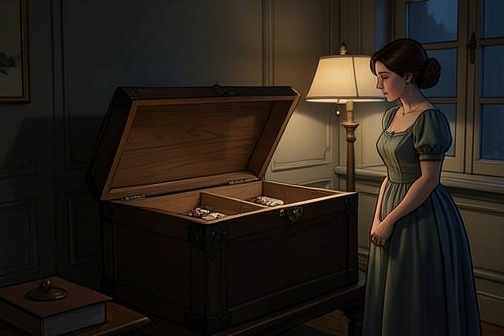
The burglary at [137 Kennington Road](entity:location-recall-location-137-kennington-road-b12673983513) was a theft of family memory as much as property. A bright red extendable jewellery box disappeared during an afternoon when several members of the household were elsewhere; because there was no sign of forced entry, the family and police turned suspicion toward [Alicia](entity:character-recall-character-alicia-1f68a746a0ea), the housekeeper. In retrospect, [Edwina](entity:character-recall-character-edwina-5de2c8238c71) remembers the accusation as both foolish and painful, and recognizes that the truth had been close at hand even then.
## The Box and Its Contents
Over the years, Edwina’s collection had grown from inexpensive pendants chosen by the children to precious gems and pearls given to her by [Dickie](entity:character-recall-character-dickie-2708dc57cf14). The box also held objects whose value could not be measured by their price: the only photograph of the family of four on the beach at [Sennen Cove](entity:location-recall-location-sennen-cove-bb1d20694963), a lock of Ollie’s hair kept in a matchbox, the children’s baby teeth, and dice Edwina hoped might bring luck. She kept these things carefully together, turning the jewellery box into a small repository of family history.
The theft took the box itself along with everything stored inside it. Edwina distinguishes the losses she truly mourned from the broader collection of baubles: the tiny rings from her first marriage, the baby teeth, Ollie’s hair, and the unique family photograph. She still misses them. [Rowena](entity:character-recall-character-rowena-e35929bc1a76) had secretly borrowed the charm bracelet and forgotten to return it, so that item escaped the burglary; the reprieve was accidental, and only partial.
## The Afternoon and Its Alibis
The burglary happened roughly forty years before Edwina’s later recollection, on a summer afternoon when Alicia had gone home and Edwina was at the dentist having a crown fixed. Dickie was at his Westminster office, Rowena was sitting a history O-level examination, and both boys were at boarding school. Edwina remembers the examination in particular: she can still recall details about Archduke Franz Ferdinand. The precise distribution of the household members matters because the absence of forced entry made the question of who could have taken the box unavoidable.
After the break-in, [Charlie](entity:character-recall-character-charlie-24c3a7bd9408) telephoned Edwina and pointed out that the theft could have been worse because she had been away at the dentist. She was surprised that he knew about the appointment and could not remember telling him, though she concluded that she must have. His attention felt touching to her at the time. In the circumstances of the burglary, however, the detail also sits beside the family’s emphasis on whereabouts and alibis: even a considerate remark carried a reminder of who knew when the house would be empty.
## Suspicion Falls on Alicia
With no sign of forced entry, the police, [Lucas](entity:character-recall-character-lucas-32d2e2000d96), and Dickie collectively suspected Alicia. Edwina recalls feeling a bubble of hysteria at the accusation, an anger that had not faded with time. She insisted that Alicia was more honest than the others believed and rejected the suggestion that the housekeeper could not be trusted. Her defense rested not on a vague impression but on her understanding of Alicia’s religious conviction: Alicia believed that God watched her constantly and would punish even the smallest unauthorized taking.
Edwina also had reason to resist Dickie’s judgement of Alicia. Some months earlier, he had proposed presenting the housekeeper as his personal secretary so that he could claim her wages against tax. Against that background, the suspicion directed at Alicia appears especially misplaced to Edwina. She sees an irony in the household questioning the honesty of the woman who believed herself answerable to God, while failing to recognize the significance of its own circumstances. The burglary’s lack of forced entry did not establish Alicia’s guilt, but it became the basis for an accusation that Edwina continued to regard as absurd.
## Loss and Belated Recognition
The theft’s immediate consequence was the loss of objects that could not be replaced: a single photograph of the family together, small traces of the children’s infancy, and a lock of Ollie’s hair. The jewelry box had gathered these disparate keepsakes into one place; its disappearance made their absence permanent. The stolen belongings therefore register not simply as a list of missing possessions but as fragments of family life removed from Edwina’s keeping.
Years later, Edwina looks back and understands that the truth had already been staring the family in the face. Her recollection does not make the keepsakes reappear or undo the mistaken suspicion of Alicia. Instead, the passage recasts the burglary as a failure of recognition: the family carefully stored its memories, yet at the moment of loss misread the people and clues around it. Edwina’s enduring grief for the photograph and other small objects is joined by the bitter awareness that the household’s collective certainty had been misplaced.
Event 10
The twins’ twenty-first birthday gathering
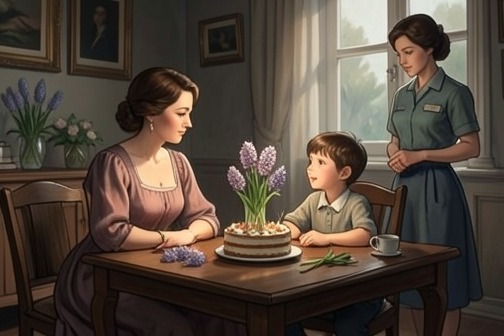
[The twins’ twenty-first birthday gathering](entity:event-recall-event-the-twins-twenty-first-2e2e2accb825) is a remembered family celebration that holds apparent ease and unease in the same frame. In [March 1981](entity:time-recall-time-march-1981-cb34c36f7469), [Edwina](entity:character-recall-character-edwina-5de2c8238c71) brings [Rowena and Charlie](entity:relation-recall-relation-rowena-and-charlie-c9fc6b0f9a5c) home for a Sunday-lunch feast, with [Lucas](entity:character-recall-character-lucas-32d2e2000d96) joining them. The cake, flowers, and carefully matched gifts make the occasion look like a generous family reunion; the details Edwina cannot stop replaying also reveal how fragile that appearance is. She returns to this scene during sleeplessness and anxiety, remembering it as the smooth stretch before turbulence arrived less than a year later.
## The celebration Edwina remembers
The twins are turning twenty-one and coming home for the weekend. [Rowena](entity:character-recall-character-rowena-e35929bc1a76)’s birthday is actually on Saturday, and she travels by coach from [Oxford](entity:location-recall-location-oxford-6b47fed333f9), arriving in time for lunch. The family plans to celebrate both twins together the next day. Edwina gets out the best china, while [Alicia](entity:character-recall-character-alicia-1f68a746a0ea) makes a chocolate cake; the room carries the scent of blue-and-white hyacinths, which Edwina remembers as her favourite. These domestic preparations give the reunion a composed, hopeful surface, as though familiar rituals can make the family secure.
The memory is not presented as an uncomplicated record of a happy weekend. Edwina revisits it later, when insomnia and anxiety have taken hold, and the narrative calls the approach to disaster deceptively smooth. The gathering matters partly because it is a scene of ordinary anticipation that retrospectively acquires a warning edge. Its food, flowers, gifts, and arrivals remain vivid, but they sit just before a rupture the family could not foresee.
## The twins arrive carrying different troubles
Rowena has found her place at university and is much better than she was, but her eating remains governed by rules. At lunch she slowly shreds a butterless ham sandwich into tiny crumbs and swallows them between repeated sips of water. Edwina knows not to watch her eat, so she busies herself with surfaces, candlesticks, and the garden. Their time together is easier while [Dickie](entity:character-recall-character-dickie-2708dc57cf14) is away at rugby in Twickenham; Rowena talks about Oxford, friends on her staircase, plays, and an art class. Edwina feels pride and relief at her daughter’s greater happiness, even as she still wishes Rowena would attend more to her appearance.
[Charlie](entity:character-recall-character-charlie-24c3a7bd9408) arrives around five, smelling strongly of drink, laughing and hugging his mother and sister. Skinny like Rowena, he reaches for biscuits, holds a roll-up, teases his twin, and lets Edwina take his shirt to wash. Fading bruises mark his ribs. Later he slips out with little explanation, leaving Edwina only enough time to ask where he is going before the front door shuts. On the following birthday morning he drinks a carton of orange juice straight from the carton. At lunch he eats heartily and praises the meal, while keeping his ashtray off the table until cake time. His appetite and easy joking coexist with signs of disorder that the family celebration does not resolve.
## The work and objects that make a family table
Alicia’s work underpins the feast even though she is absent, attending a nephew’s christening. She has made the chocolate cake and left handwritten cooking instructions; Rowena helps with the vegetables, taking care that no butter touches them. Alicia had long done much of the household cooking and laundry, first caring for the twins and later staying on to clean and iron. Her absence leaves Edwina to manage the kitchen herself, but the meal still depends on Alicia’s preparation and guidance. That dependence sits within a household hierarchy Edwina had challenged before: when Dickie described Alicia in a racist way, Edwina sharply rebuked him.
The Sunday table makes the effort visible. Edwina serves spring lamb, Charlie’s favourite, with mint sauce, gravy, new potatoes, peas, cauliflower, and carrots; butter sits separately. Daffodils stand in a blue glass vase, and freshly starched napkins are rolled inside the twins’ freshly polished silver christening rings. When Edwina sees the rings, her heart silently calls for the twins’ father. The feast is therefore more than a display of hospitality: its painstaking care brings absence into the middle of the celebration.
The presents also bind the twins together while marking their distinct birthdays. Dickie gives them new cameras. Edwina commissions silver cufflinks for Charlie and matching earrings for herself, with the birth date of each twin inscribed on one piece: 14.03.60 and 15.03.60. Each wearer’s set contains both mismatched dates, turning their consecutive birthdays into a small, deliberate emblem of their twin bond. The family’s photographs from the day later lose their frames and are moved into a cupboard; they prompt questions Edwina does not want to face. The keepsakes preserve the celebration, but the changing place of the photographs shows how difficult it becomes to look at the past directly.
## Lucas’s presence and the gathering’s afterlife
Lucas arrives at half past twelve with no card or gift, but with a chilled bottle of vintage champagne from his mother [Barbara](entity:character-recall-character-barbara-d5f53d2adcbd)’s refrigerator. Edwina is surprised the bottle has survived Barbara’s handling and keeps her reaction to herself, reminding herself that they are adults. At the table Lucas is only moderately unpleasant, sporting a beard Edwina dislikes and talking as if he has plans to take over the Bank of England. His attendance makes this a broader family gathering, but it does not erase the long distance between him and his stepmother.
Edwina had once performed the duties of a stepmother to Lucas—remembering birthdays, wrapping [Christmas](entity:time-recall-time-christmas-a573265d0167) presents, making breakfast, and washing his clothes—while feeling that her care was a role she played. She considered him Barbara’s son, not her own, and their relationship was defined by mutual toleration and hostility. The birthday lunch briefly places Lucas among the family at home, yet his presence does not amount to reconciliation. Much later, when Edwina challenges him to say how everything was her fault, Lucas refuses to continue the cycle of blame, revenge, and guilt. He admits that he arranged the theft of Edwina’s jewelry box because he owed money at school and handed over the house keys to the people who carried it out. That later confession does not explain the birthday gathering, but it casts the family’s fragile civility in a longer light: the day’s attendance and feast could not settle what remained unspoken between them.
As a flashback, the gathering is shaped by Edwina’s return to one specific weekend rather than by a detached account of the family’s history. Its remembered pleasures are concrete—the hyacinths, the cake, the lamb, the dates engraved on silver—while the troubling details remain alongside them. The birthday celebration becomes a temporary picture of family life held together by domestic work and ritual, even as grief, illness, and estrangement press at its edges.
Event 11
Fern Woolbright与Charlie Treadaway开始秘密交往
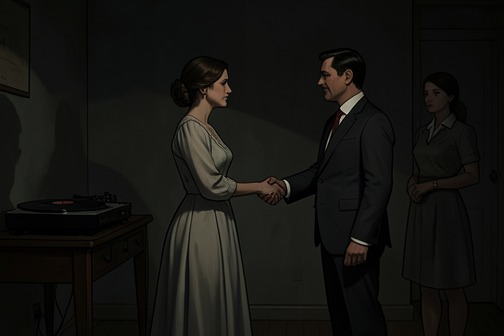
Fern Woolbright and [Charlie Treadaway](entity:character-recall-character-charlie-treadaway-a17f9b312340)’s secret affair begins during a blackout at [Charlie](entity:character-recall-character-charlie-24c3a7bd9408)’s house, when he takes Fern’s hand and leads her away from the kitchen. The sudden intimacy becomes an ongoing arrangement, but not a conventional romance: Charlie keeps his girlfriend, [Fabiana](entity:character-recall-character-fabiana-f7f26e029b38), and casts Fern as a private pleasure rather than a partner. The affair is therefore defined from its first moments by both its charged secrecy and the unequal terms on which Charlie wants it to continue.
## The Blackout and the First Encounter
Before the lights fail, Fern is already captivated by Charlie. She envies the evident affection with which he speaks of his clever twin sister and wants to keep his drawings, even imagining sleeping with the pencil he used beneath her pillow. His stories also disclose a family unlike the one Fern might have expected: he mentions his Jamaican former nanny, [Alicia](entity:character-recall-character-alicia-1f68a746a0ea), and surprises Fern and [Jill](entity:character-recall-character-jill-c58a30f04db5) with details of his life.
The transition into the affair is abrupt. The record player slows as the lights go out; while Jill calls for change, Fern feels someone take her hand. Charlie leads her from the kitchen into his room. When the lights return, Fern is naked. The scene’s sudden darkness turns a lively gathering into a private encounter, and Fern experiences the shift as a kind of magic trick—an image that captures how completely Charlie’s attention has bewitched her.
## Secrecy and the Terms of the Affair
The relationship continues when Fabiana is out of the way and the coast is clear. Sometimes Fern and Charlie meet in his cave-like, untidy room, with jeans on the floor and the smell of wine, cigarettes, and cannabis; at other times they sleep in Fern’s bed, which she prefers for its cleaner sheets and fresher duvet cover. The affair is an open secret inside the house, but it remains concealed from people outside it.
That arrangement is not merely a matter of discretion. Charlie tells Fern he does not want her as a girlfriend, describing her instead as a delicious treat and a courtesan, while Fabiana occupies the role of the girlfriend who nags and wheedles. He presents his habits—poor timekeeping, smoking dope, and staying up until five in the morning without washing, listening to music and scribbling—as reasons a proper couple would not suit them. The distinction leaves Fern with intimacy but not the acknowledged place of a partner.
## Friends’ Objections and the Unequal Attachment
[Felicity](entity:character-recall-character-felicity-dd3dc643b05c) and [Dee](entity:character-recall-character-dee-c87049079a49) object that Fern is seeing someone who already has a girlfriend and call the arrangement unsisterly. Fern answers that, as an only child, she cannot understand that charge. Their disagreement exposes the gap between Fern’s absorption in Charlie and her friends’ view of the affair as a breach of loyalty. Dee responds with disapproval, while Felicity is openly cross.
Jill is more sympathetic but still believes the relationship is doomed, judging Charlie slippery. Her confidence rests partly on the contrast with [Rob](entity:character-recall-character-rob-2c4f1be85baf), whose steadiness makes him seem dependable by comparison. Fern’s attachment is more intense than the relationship Charlie offers: she is spellbound by him, while he describes a limited role for her and maintains his existing relationship with Fabiana. The affair begins in a moment of apparent enchantment, but its continuing terms make the imbalance plain.
Event 12
Fern Woolbright and Dave Tate’s sexually abusive encounter
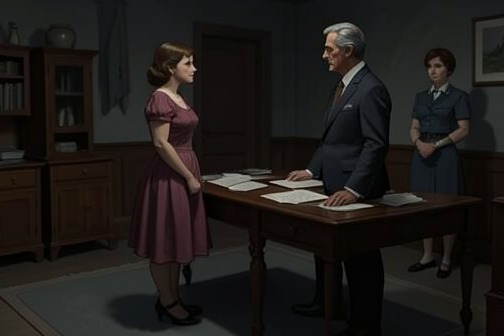
[Fern Woolbright and Dave Tate’s sexually abusive encounter](entity:event-recall-event-fern-woolbright-dave-ta-182463c56a8c) is a turning point in Fern’s understanding of how sexual power operates: the director presents coercion as personal instruction, then uses his control of the production to make the encounter appear to carry professional benefits. Her later suspicion that [Jill](entity:character-recall-character-jill-c58a30f04db5) Miller is at risk transforms her shame into anger and a resolve not to repeat what happened.
## Rehearsal and the abuse of authority
During rehearsals for Three Sisters, Fern is criticized for her performance while [Dave Tate](entity:character-recall-character-dave-tate-05935516eeea), the choreographer and director, also makes unwelcome physical contact. When he asks her to stay behind after rehearsal, she blushes before the others have left. Alone with him, Fern cries as he alternates criticism with cajoling and physical comfort. He then isolates her further by locking the rehearsal-room door and dimming the lights. Shocked and strangely passive, she is coerced into a sexual act. Fern tries to make sense of the experience by treating it as something she might as well learn from, a rationalization that reveals how little control she has in the room.
## Secrecy, favoritism, and Fern’s mistaken sense of leverage
After the encounter, Dave Tate praises Fern and insists that what happened remain secret, presenting silence as protection against the other students’ jealousy and against any suspicion that he favors her. His appeal to fairness is itself part of the coercion: he invokes his professional responsibility while controlling the roles and instruction on which the students depend. Fern’s experience is therefore framed not as a freely chosen exchange between equals, but as an abuse of authority disguised as private tuition.
The apparent professional reward is ambiguous. Dave Tate remains cold toward Fern, and when she misses a cue he throws down her script. At a later rehearsal, however, he abandons the Yorkshire accents and returns the production to Received Pronunciation. Fern blushes with pleasure and concludes that he made the change in exchange for what she had done. That interpretation leaves her imagining sex as a source of leverage, even as his subsequent conduct shows how little control she has over the arrangement. She wonders whether [James Frobisher](entity:character-recall-character-james-frobisher-29757649ee53) might want her to perform the same act, carrying the encounter’s distorted lesson into her expectations of another relationship.
## Jill Miller and the recognition of a pattern
Fern’s suspicion becomes concrete three days later, when Jill Miller is also asked to stay behind after rehearsal. Fern has forgotten her script and returns to collect it; the rehearsal-room door is locked, though lights remain on inside. She leaves rather than intervening, and it is only while paying for half a pound of mince at the Co-op that the possibility fully registers: Jill may be receiving the same kind of “personal tuition” Fern endured. The ordinary errand of buying ingredients for the lasagne she has offered to make for the other girls sharpens the contrast between domestic routine and the danger she now recognizes in the rehearsal room. Fern’s response is not a report or confrontation but a sudden change in how she understands her own experience. She decides that men can seem to allow women control only to reveal that they retain the power, and her blush gives way to fury. Walking home, she makes a private pact never to do anything so foolish again. The resolve marks a turn from interpreting the encounter as a possible exchange for professional advantage toward recognizing the coercive imbalance behind it; the locked door and Jill’s uncertain situation make that recognition immediate, but leave Fern’s action confined to her own vow.
## Narrative significance
The scene’s remembered birthday game, in which blindfolded children are made to touch objects imagined as parts of a ghost story, gives Fern an innocent frame for trying to understand an experience she cannot yet name. The resemblance collapses as she recognizes what is happening: childhood playfulness has been turned into a means of disorientation, while her tutor controls the room and dictates what follows. Her thought that she might as well learn, and her reliance on what she has been taught about manners, show how she reaches for familiar rules when her ability to choose has been overridden. The scene’s disturbing contrast is not simply between childhood and adulthood, but between the language Fern uses to make the encounter manageable and the unequal power that governs it.
That gap persists afterward. Dave Tate’s appeal to fairness and secrecy recasts his conduct as professional discretion, while Fern initially reads the production’s change in accent as evidence that she has gained influence. The narrative then places this interpretation beside his coldness and her suspicion about Jill Miller, making the claimed exchange look less like control Fern possesses than a lesson imposed on her. By the time Fern recognizes the imbalance, her response is a private vow rather than a challenge to the director or intervention on Jill’s behalf. The episode thus marks a change in her understanding without suggesting that understanding alone can undo the authority that enabled the abuse.
Event 13
埃莉斯·兰德雷斯在牛津派对上死亡
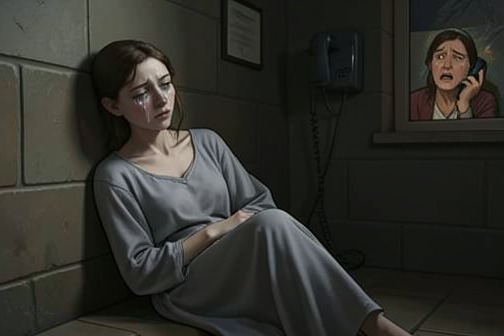
[Elise Landreth’s death](entity:event-recall-event-elise-landreth-8176393aa4bf) after a party at an [Oxford](entity:location-recall-location-oxford-6b47fed333f9) college turns a night of celebration into a public tragedy and a source of dread for Fern Woolbright. The preliminary inquest links [Elise](entity:character-recall-character-elise-910ceff1d907)’s choking and heart failure to alcohol and drug abuse; the circumstances emerge amid sensational headlines, incomplete testimony, and Fern’s fear that the death may connect to [Charlie Treadaway](entity:character-recall-character-charlie-treadaway-a17f9b312340).
## The News Reaches Fern
Fern learns of Elise’s death through a distraught call from her mother, [Rosemarie Woolbright](entity:character-recall-character-rosemarie-woolbrigh-16a566c06811), whose sister is Elise’s mother. Rosemarie can offer few reliable details at first: Elise may have choked, she says, and had been at a party in Oxford. Fern slides down the wall in her nightdress and listens while her mother’s grief pours through the telephone. Only after Rosemarie has exhausted herself can Fern put down the receiver and tell [Rob](entity:character-recall-character-rob-2c4f1be85baf) and [Jill](entity:character-recall-character-jill-c58a30f04db5) Miller what has happened.
Jill immediately notices a possible connection. Elise had been at an Oxford party, she points out, and [Charlie](entity:character-recall-character-charlie-24c3a7bd9408)’s sister had also been holding a party there. Fern refuses to follow the thought. She does not want to discuss it, wants ordinary life to continue, and asks Jill not to tell anyone. Her refusal is not an answer to the suspicion; it shows how frightening the possible link has become.
The news soon escapes the family’s private grief. Television, radio, and the evening papers announce that a government minister’s daughter has been found dead. Fern locks herself in the wooden cubicle where she used to hide when she first arrived at drama school and howls. The familiar hiding place gives the shock a physical setting: a death she has barely begun to understand is already being turned into public news.
## The Party and the Emerging Account
The party took place at an Oxford college and marked both a recent run of twenty-first birthdays and the approaching end of the guests’ freedom before final-examination revision. Elise was not a student there. Her father had attended Hertford College decades earlier, but Elise’s invitation came through a close personal friend. She had previously studied fashion at St Martin’s School of Art and travelled from [London](entity:location-recall-location-london-420923d4a60a) by car.
The festivities began early and lasted well into the night. Elise had permission to sleep in the bedroom of a German count who was away from college because his grandfather had died in Hanover. On the Sunday morning after the party, her lift returned to London without her. The account does not establish where she went after that; those present were uncertain, in part because Elise was popular and sociable.
Early reports and eyewitness testimony supply a more specific, though still preliminary, picture of the death. Witnesses describe Elise as being in high spirits and list a combination of champagne, heroin, amphetamines, marijuana, and lager. The initial inquest account says she choked on her own vomit before suffering heart failure, which it attributes directly to alcohol and drug abuse. Attempts to revive her failed. The evidence establishes the reported sequence and the substances involved, but does not resolve every uncertainty about the party’s final hours.
## Public Image and Private Grief
For the rest of the week, Elise’s photographs dominate newspaper covers. In them she pouts, preens, sticks out her tongue, makes V-signs, and laughs at the camera. The images make her look exuberantly alive, sharpening the disbelief of her death even as the papers package it as a scandal. One headline calls the gathering a drinks-and-drugs orgy and identifies Elise as a twenty-year-old beauty, turning a complicated death into a sensational story.
The public language also exposes the judgment surrounding her. Fern’s father reacts to the reports by calling Elise a slut and lamenting the mess. His response converts the circumstances of Elise’s death into a sexual verdict on her, while the coverage makes her appearance and social life part of the spectacle. The contrast between Elise’s lively photographs and the lurid headlines leaves the reader with competing images: an individual whose presence fills the camera frame, and a young woman reduced by the press to a cautionary headline.
## Consequences and Narrative Significance
The death changes the meaning of the Oxford party for Fern before she knows whether her suspicion about Charlie is true. Jill’s observation links the two parties, but the evidence at this point offers a possibility, not confirmation that Charlie was involved in Elise’s death. Fern’s wish for normality and silence collides with the growing public account and the unanswered questions about what happened after Elise’s lift left without her.
The episode therefore unfolds in two stages: first as an intimate bereavement delivered over the telephone, then as a story assembled from headlines, eyewitness statements, and preliminary inquest findings. That shift preserves the difference between what Fern’s family initially knows and what the public learns. Elise’s death is at once a concrete medical tragedy and the beginning of a wider uncertainty whose implications reach beyond the party itself.
Event 14
Charlie Treadaway Is Investigated and Charged by Police
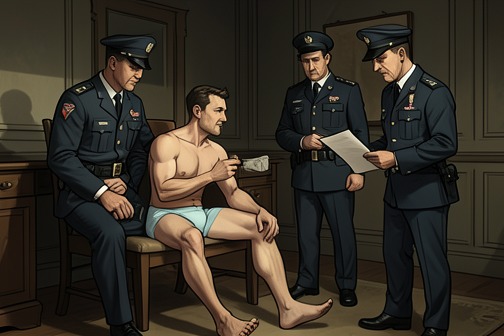
[Charlie Treadaway](entity:character-recall-character-charlie-treadaway-a17f9b312340)’s investigation turns a private morning into a public case: police remove him from Fern Woolbright’s room, the press identifies him after he is charged, and testimony at [Elise Landreth](entity:character-recall-character-elise-landreth-eecd38cf0214)’s inquest makes [Lucas](entity:character-recall-character-lucas-32d2e2000d96)’s family connection to [Charlie](entity:character-recall-character-charlie-24c3a7bd9408) part of the evidence. The episode joins official procedure to intimate loyalties, while leaving the court’s limited account of events beside the private truths it cannot settle.
## The police arrive
At seven in the morning, the landing phone jolts Fern awake. A moment later, someone hammers on the front door; [Jill](entity:character-recall-character-jill-c58a30f04db5) screams, and two uniformed officers enter with a third man holding an official-looking letter. They have come for Charlie. He is wanted for questioning, not yet under arrest, but must go with them. The distinction is precise in law and almost meaningless in the room: Charlie sits up blinking, confused about what is happening, and is ordered to dress.
The scene is stripped of any heroic or composed image of an accused man. Charlie’s pale-blue underpants have a hole in them, his legs shake, and Fern is moved out of the room. From the stairs she watches the officers bundle him out of the house and into a waiting police car. Jill’s stunned reaction follows, but Fern feels numb; she understands that this is the point after which her life cannot return to what it was. The police visit makes the investigation physically present in the house and abruptly separates her from Charlie.
## From unnamed suspect to public name
At first, the press refers to Charlie only as an unnamed twenty-one-year-old man helping police with their enquiries. Once he is charged, his name is released: Charlie Treadaway, an art student at [Manchester](entity:location-recall-location-manchester-4236006a4a66) and the twin brother of [Rowena](entity:character-recall-character-rowena-e35929bc1a76) Treadaway, a third-year English student at Hertford College. The news also identifies Lucas as the man who drove [Elise](entity:character-recall-character-elise-910ceff1d907) from [London](entity:location-recall-location-london-420923d4a60a) to [Oxford](entity:location-recall-location-oxford-6b47fed333f9) and returned without her the next day. The report’s public version of the journey is starkly incomplete: it describes Lucas as oblivious to Elise’s fate, while the inquest will give his actions and knowledge a more consequential place in the story.
Charlie is released on bail pending trial. According to [Rob](entity:character-recall-character-rob-2c4f1be85baf), relaying what [Edwina](entity:character-recall-character-edwina-5de2c8238c71) has told him, the conditions require Charlie to live with his mother and stepfather until the case is heard, then expected in September. His art school no longer wants him, and his landlord threatens to burn the belongings he has left behind if he does not clear them out. These consequences spread beyond the charge itself: Charlie loses his room and place at art school, while his friends discuss how to fill the space he has vacated. Their arrangements do not mean that they are glad he is gone; they are a practical response to an absence imposed by the case.
## The inquest and Lucas’s evidence
The inquest lays out the immediate circumstances of Elise’s death. She choked in her sleep before suffering cardiac arrest; Kasia Bogonavitch, who found her in the bed of her absent boyfriend, raised the alarm. Rowena describes trying to give Elise the kiss of life and clear her airway with her fingers, but her efforts failed. The account establishes the fatal stakes against which the question of who supplied the drugs is being examined.
Lucas tells the court that he had given Elise a lift from London to Oxford after meeting her earlier that day and inviting her to the party. She travelled with only a leather shoulder bag and had been vague about whether or when she would want a lift back. Lucas’s recollection is sharpened by what he says he saw at the party: from beside an alcove, he watched Elise retrieve her bag and join Charlie in another corner. He recalls them laughing, and says that this is why he is sure Charlie was the person who gave her the drugs.
The evidence has a personal complication. When asked how he can identify the man in the crowded party, Lucas says Charlie is his stepbrother and that he has known him since he was eleven. The admission produces an audible gasp among those in court who did not know of the relationship. Lucas’s testimony is therefore both an identification and a disclosure: the witness accusing Charlie is not an outsider who glimpsed a stranger, but someone bound to him through their family history. Fern recoils at Lucas as he takes the stand, and his account carries the force of evidence alongside the strain of that concealed connection.
## Silence, charge, and what remains unsettled
Charlie does not answer the inquest’s allegations. His solicitor tells the court that, because Charlie is of previous good character, he is exercising his right to remain silent pending cross-examination at trial. Charlie sits bolt upright in a white shirt and navy suit, his dark curls cropped close; he is crying and looks beaten. Fern watches from the gallery, unable to reach him, and turns away after their eyes meet. Her response makes visible the emotional allegiance that the formal hearing cannot accommodate, just as Lucas’s testimony reveals a family bond without explaining what it has cost either man.
At the end of the inquest, Charlie is officially charged with possessing amphetamine sulphate and supplying heroin to Elise. He is to be tried by jury on 19 December [1981](entity:time-recall-time-1981-4636cc9b7e75). The charge gives the investigation a defined legal direction, but it does not resolve every question raised by the relationships around it. Lucas later remembers learning that Fern was pregnant and married to [James Frobisher](entity:character-recall-character-james-frobisher-29757649ee53), and wonders whether Charlie knew the child was another man’s. That uncertainty belongs to the private history surrounding the case, not to what the inquest establishes. The later trial and sentence make the consequences more final: Charlie goes to prison, and Lucas remembers him being swallowed up as he disappears from the courtroom gallery. The investigation thus changes the lives around Charlie before the formal proceedings can contain the full meaning of what has happened.
Event 15
查尔斯王子与戴安娜·斯宾塞宣布订婚
The announcement of Prince Charles and Lady Diana Spencer’s engagement reaches Fern Woolbright and [Jill](entity:character-recall-character-jill-c58a30f04db5) Miller through a fuzzy pub television, but its significance lies in what it exposes about the two young women watching. Jill sees a nineteen-year-old being prepared for a constraining royal marriage; Fern is not yet ready to abandon the romance of a prince choosing his bride. Their conversation turns a piece of public news into a private argument over marriage, women’s autonomy, and the futures each can imagine.
## The announcement in the pub
Fern and Jill are having a quick lunchtime drink, a half of lager and lime, in the pub across from their college when the television announces that Prince Charles is to marry Lady Diana Spencer. The broadcast identifies Diana as a nineteen-year-old nursery nurse from Kensington, recognizable to Fern as the young woman with the fringe. The fuzzy screen makes the news an ordinary interruption to their day, yet the announcement immediately gives them a subject on which their assumptions diverge.
Fern responds first by noticing Diana’s age: she is Fern’s age, and Fern wonders how someone so young can know whether she is making the right decision. Her question is not simply about the facts of the engagement. It registers the distance between a public announcement, which presents a match as settled, and the uncertainty of choosing a life. The news has made marriage suddenly imaginable as a decision faced by a contemporary young woman, not merely as a distant royal spectacle.
## Jill’s rejection of marriage
Jill’s response is more openly political. She condemns the royal family and imagines the revolution turning against it, then describes Diana as someone the institution wants to use to produce an heir. Jill predicts that the marriage will end in tears. Her sympathy for Diana is inseparable from anger at the position she believes the young woman is being placed in: visible, selected, and valued for a role that reduces her to motherhood.
The engagement also draws Jill into a broader attack on marriage itself. She likens being paraded down the aisle and given away by one’s father to the treatment of a possession, insisting that such customs are barbaric in the twentieth century. For Jill, the pageantry of a wedding does not soften the underlying transfer of control. The royal engagement makes that structure especially conspicuous: Diana’s public transformation into a bride is being watched and discussed before the marriage has even taken place.
Fern asks whether Jill wants to settle down and have children. Jill separates motherhood from marriage, saying that she does want children but not at the cost of being treated as a possession. That qualification makes her position more particular than a simple rejection of family life. She does not deny her own desire for children; she objects to the ring as a claim of ownership and to marriage as the necessary form through which a woman must pursue that desire.
## Fern’s romantic inheritance
Fern does not tell Jill that she finds something lovely in the prospect of a prince giving Diana a large sapphire-and-diamond engagement ring and choosing her as his bride. The image retains its power for Fern even as Jill reads the same match as a warning. Fern’s response is shaped by an inherited romantic script: her mother had entertained hopes of Fern meeting Prince Andrew and imagined a red-haired princess walking down the aisle at Westminster Abbey.
The contrast is not between an entirely uncritical Fern and a woman indifferent to marriage’s consequences. Fern has just wondered how Diana can know she is doing the right thing. But when Jill turns the question into a condemnation of marriage, Fern finds herself drawn back to the ring, the prince, and the ceremonial choice of a bride. Her silence about her mother’s fantasy also shows the limits of what she is willing to share with Jill: she knows her friend would be horrified by that vision.
Fern’s memory of drawing wedding dresses with her cousin when they were children further roots her uncertainty in a long-standing imaginative habit. The engagement announcement does not resolve that tension. Instead, it brings into view the difference between a childhood image of bridal romance and Jill’s adult insistence that women should not have to submit to marriage in order to have children or build a life.
## A public event as private argument
The scene makes the engagement significant not through a description of the royal couple’s private relationship, but through the interpretations Fern and Jill attach to the news. For Jill, the announcement confirms the enduring power of a system that turns women into brides and prospective mothers. For Fern, it still carries the allure of being chosen and the visual promise of a royal wedding. Their differing readings establish a conflict between inherited romantic ideals and a feminist critique of the institution those ideals celebrate.
The conversation also leaves both positions intact. Fern does not adopt Jill’s view, and Jill does not retreat from hers; Fern admits meekly that she had not thought of marriage in those terms. The announcement thus functions as a moment of reconsideration rather than a conversion. Its importance within the scene is the pressure it places on Fern’s assumptions: alongside the princess and the glittering ring, she has now heard a friend name the possibility that the ceremony conceals a loss of autonomy.
Event 16
Fern Woolbright discovers she is pregnant
Fern Woolbright’s discovery that she is pregnant transforms a string of bodily symptoms into an urgent personal and family crisis. At nineteen, she had not understood her exhaustion, nausea, aversion to certain foods, and unusually sensitive sense of smell as signs of pregnancy; the diagnosis forces her to confront both the future those symptoms imply and a question of paternity she cannot safely answer aloud.
## The consultation and the diagnosis
Fern comes to Dr Leonard’s surgery because her mother has told her to discuss how she has been feeling. Dr Leonard has known her since she had chicken pox as a toddler, a familiarity that makes his attempt to raise the possibility especially uncomfortable. He looks mortified as he suggests that she may “possibly, conceivably… aha, apt choice of word… be with child”. Fern initially takes the phrase literally: there is no child with her, and she has arrived alone. The gap between the doctor’s euphemism and what he means gives the realization a brief, almost comic delay before it becomes serious.
When the meaning lands, Fern laughs involuntarily and asks whether he means she is pregnant, immediately insisting that she cannot be. Asked about contraception, she says that she is not on the pill but has a Dutch cap “should the occasion arise.” Dr Leonard then asks whether she is conscientious. Fern pauses a moment too long; he explains, in careful and embarrassed terms, that a barrier method only works if the device is in place. Her blush travels from her throat to the roots of her hair, and he offers to take blood to make sure. The exchange does not establish precisely what happened on any particular occasion, but it makes Fern’s uncertainty and discomfort visible before the test confirms what she fears.
## What the news means to Fern
The diagnosis settles the question of her symptoms but opens a much larger one in Fern’s mind. She is nineteen, and her immediate conclusion is that she has ruined her life. That response marks the distance between the doctor’s cautious medical language and the scale of the consequence as she experiences it: pregnancy is not an abstract possibility but a sudden foreclosure of the future she thought she had.
Her mother had guessed before the GP raised the possibility. She is white-faced but efficient, telling Fern that this is not the end of the world and contrasting it with what has happened to Minty Landreth and Paul Landreth. For a moment, Fern thinks her mother may suggest an abortion. She imagines the appeal of simply falling asleep and waking to find the problem gone, as when her tonsils were removed at nine. The comparison conveys her wish for a clean, externally managed solution; it does not mean that her mother actually recommends one. In this first response, practical reassurance and Fern’s private wish for the crisis to disappear coexist without resolving what she will do.
## The unspoken question of paternity
The pregnancy is not the only secret the diagnosis brings into focus. Fern’s father is given time to absorb the news while she is away; her mother warns that the worst of his temper will be over by the time Fern returns. The comparison of his anger to a hurricane that eventually blows over frames the family’s response as frightening but temporary. When Fern comes back, he is in his study with his head in his hands. He tells her he is disappointed, but adds that he is grateful [James Frobisher](entity:character-recall-character-james-frobisher-29757649ee53) is the father.
Fern cannot correct him. She knows that the father might instead be [Charlie Treadaway](entity:character-recall-character-charlie-treadaway-a17f9b312340), and the thought is bound up with the fact that [Charlie](entity:character-recall-character-charlie-24c3a7bd9408) may have supplied the drugs that killed her cousin, [Elise Landreth](entity:character-recall-character-elise-landreth-eecd38cf0214). Her father’s assumption gives the situation an outwardly simple explanation, while Fern’s knowledge makes it dangerously more complicated. The gap between what the family believes and what Fern can say is therefore central to the discovery’s consequences: pregnancy makes her concealed relationship with Charlie newly consequential, but does not make disclosure possible.
## James’s proposal
Telling James is painful for Fern, and he is initially so shocked that he says he thought he was only coming for Sunday lunch. Then, in a reversal of the ordinary rhythm of the visit, he gets down on one knee and asks her to marry him. The proposal supplies an immediate response to the pregnancy, but it does not settle the concealed question of who the father is. Instead, the scene places James’s commitment beside Fern’s unspoken knowledge: he reacts to the news by offering marriage, while she cannot tell him what she does not know for certain.
The discovery thus links a medical consultation to a chain of decisions and silences. Dr Leonard’s blood test confirms Fern’s condition; her mother’s prior suspicion and her father’s disappointment make it a family matter; and James’s proposal turns it toward marriage. Yet the most consequential fact remains withheld from those around her. The pregnancy is confirmed, while the identity of its father remains uncertain to Fern and unknown to her family.
Event 17
Elise Landreth’s death

[Elise Landreth’s death](entity:event-recall-event-elise-landreth-8176393aa4bf) is presented through public knowledge and [Lucas Spinner](entity:character-recall-character-lucas-spinner-d7813d9bd380)’s later account of the day she died. The event turns on a stark gap between the ordinary arrangements of a lift to a party and the subsequent discovery of her death, while [Lucas](entity:character-recall-character-lucas-32d2e2000d96)’s belated recollection raises the possibility of a drug connection without resolving it.
## The journey to [Oxford](entity:location-recall-location-oxford-6b47fed333f9)
Lucas tells the court that he had given [Elise](entity:character-recall-character-elise-910ceff1d907) a lift from [London](entity:location-recall-location-london-420923d4a60a) to Oxford. Earlier that day, he had run into her and invited her to the party; they then planned to travel there together. Elise carried little beyond a leather shoulder bag and was uncertain about whether, or when, she would want a lift back. Her casual indication that she might meet someone at the party left their return arrangements open.
## Discovery and reported cause
The account identifies Kasia Bogonavitch as the person who raised the alarm after discovering Elise dead in the bed of Kasia’s absent boyfriend. What became public knowledge was that Elise had choked in her sleep before suffering cardiac arrest. The stated sequence establishes how she died, but does not by itself establish that drugs caused her death.
## Lucas’s recollection and the drug question
Lucas’s understanding changed when his mother, [Barbara Spinner](entity:character-recall-character-barbara-spinner-44ed182cc31a), told him that Elise was dead and that the police considered drugs a possible connection. He initially felt guilty without knowing what he might have done wrong. In response, he remembered seeing Elise give a man money and receiving something in a plastic bag in return. Lucas believed the man might have supplied her with drugs, but his account presented this as a suspicion based on what he had seen, not as certain identification or proof of what Elise had taken.
## Narrative significance
The death is reconstructed through distinct kinds of knowledge: the public account of Elise’s final circumstances, Lucas’s testimony about the journey and party, and his delayed recognition of an exchange he had not understood at the time. That belated recollection makes his role in the day newly troubling, while preserving the uncertainty between witnessing a suspected transaction and knowing what led to Elise’s death.
Event 18
Fern Woolbright and James Frobisher’s wedding
[Fern Woolbright and James Frobisher’s wedding](entity:event-recall-event-fern-woolbright-james-f-04b5a6fa0bf7) is a rushed marriage prompted by Fern’s pregnancy, but its orderly preparations cannot disguise her distress. From the Sunday-lunch proposal to the short registry-office ceremony, the event places a private crisis inside a family-managed ritual—and ends with Fern leaving her childhood bedroom wondering what she has done.
## The Proposal and Decision
James arrives at the Woolbrights’ house expecting Sunday lunch. When Fern tells him she is pregnant, he first looks shocked; then, unexpectedly, he kneels and asks her to marry him. Fern watches her mother cutting tulips for the table and thinks of the lives her decision might disrupt. She whispers that she is only nineteen. James reassures her by pointing out that Lady Diana is the same age, and Fern agrees to marry him amid the tulips and the yellow trifle prepared for lunch.
The decision quickly becomes a matter of dates and arrangements. Over tea in the conservatory, [Rosemarie Woolbright](entity:character-recall-character-rosemarie-woolbrigh-16a566c06811) settles on a June wedding, explaining that there is little time and that the circumstances leave them with a registry-office ceremony rather than a larger celebration. Fern asks what will happen to college, a practical question that exposes what the hurried decision places at stake: not only her immediate future as a mother and wife, but the education she had expected to pursue.
## Family Preparations
Before the honeymoon can be discussed as a real holiday, the parents must meet. The Woolbrights host the prospective in-laws at [Three Paddocks](entity:location-recall-location-three-paddocks-a34707439189), where good manners barely cover the tension and sherry is served copiously. James cannot attend, leaving Fern alone among the adults and their disappointment. The gathering performs the appearance of a conventional family alliance, while Fern experiences it as an ordeal she must endure on her own.
On the night before the wedding, Fern’s friend [Jill](entity:character-recall-character-jill-c58a30f04db5) stays with her. Rosemarie, dressed in a caramel silk dressing gown with cold cream on her face and neck, makes clear that she is in charge of the household; Jill follows her to the guest room. At four in the morning, Fern goes downstairs with the pewter hip flask she had once intended to give [Charlie](entity:character-recall-character-charlie-24c3a7bd9408) and fills it with vodka, promising herself it is only in case she cannot cope. She returns to bed and dreams of her dead dog, Smudge; when she wakes again, her pillow is soaked with tears.
## The Registry-Office Ceremony
The wedding is booked for half-past eleven and is described as oddly solemn. The registrar mumbles and seems disinterested. James looks handsome, but Fern cannot understand why he and his best man are dressed as soldiers. Their costumes seem incongruously toy-like to her, and she feels close to hysteria, having secretly been drinking vodka since breakfast.
The ceremony is over almost as soon as it begins. No legal impediment emerges, and no ring is lost. Fern grips her bouquet of cream roses so tightly that their heads droop, then says the required words. The small details make the scene less a romantic culmination than a swift passage through formalities: the ceremony proceeds correctly, even as Fern’s physical gestures register strain.
## Aftermath and Significance
After the wedding, Jill leaves Fern at Rosemarie’s direction, crying as she goes. Fern changes into her going-away outfit but sits on her bed wishing she could crawl in and sleep. She takes the flask from her handbag and drains the last of the vodka before walking out of the room. Her whispered question about what she has done accompanies her departure from the bedroom where, as a child, she read books about ponies and ballerinas.
The wedding therefore changes Fern’s status without resolving the fear behind her consent. The June plan, the parents’ meeting, the registry office, and the going-away clothes give the marriage the shape of an organized family occasion; Fern’s tears, drinking, drooping roses, and final look back toward childhood reveal its emotional cost. Rather than closing the crisis with a promise of happiness, the event leaves her crossing a threshold she has agreed to enter while still unable to imagine what lies beyond it.
Event 19
Fern’s miscarriage and vanishing twin syndrome
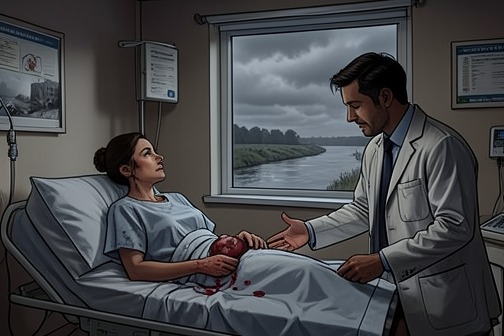
Fern Woolbright’s miscarriage becomes a revelation as well as a loss: after severe bleeding sends her to hospital, she learns that she had been carrying twins and that one fetus has been absorbed while the other continues to develop. The diagnosis gives a name to an event that her body has already made frighteningly visible, but does not make its meaning any easier to absorb.
## Bleeding on the journey home
The crisis begins on the flight home. Fern Woolbright first notices spotting; by the time the plane reaches Heathrow, the bleeding has become heavy enough to flood her underwear and stain the back of her skirt. Her relief that she is wearing navy offers only a small practical reprieve. While waiting at passport control, she tells [James Frobisher](entity:character-recall-character-james-frobisher-29757649ee53) that she feels faint and that something is wrong. She later regains consciousness in a small private room at [St Thomas’ Hospital](entity:organization-recall-organization-st-thomas-hospit-7e5aa4815f51), with a grey sky and the brown [River Thames](entity:location-recall-location-143f23c5f9dc) beyond the window.
## The diagnosis
The consultant qualifies the explanation: the circumstances cannot be known with absolute certainty, but the detected heartbeat indicates that Fern Woolbright has lost one baby while remaining pregnant with another. The proposed explanation is that she had conceived fraternal twins from two separate eggs. In some such pregnancies, a miscarriage affects only one fetus; after bleeding, the surviving embryo may absorb the non-viable one. The loss can therefore be difficult to distinguish from bleeding alone.
As the consultant describes the process, Fern Woolbright remembers a drawing of two eggs and two non-identical babies in [Charlie Treadaway](entity:character-recall-character-charlie-treadaway-a17f9b312340) and [Rob](entity:character-recall-character-rob-2c4f1be85baf)’s kitchen. Her mind supplies imagined faces for the pair: one resembling James Frobisher, the other resembling Charlie Treadaway. James Frobisher urges her to listen to the doctor. She resists being treated like a child, even as she recognizes that the explanation matters. His queasiness registers the physical and emotional force of the news; Fern Woolbright, by contrast, quietly supplies its name: vanishing twin syndrome.
## Aftermath and significance
The consultant confirms the term, then lightens the moment with a finger-clicking joke about the body making things appear and disappear as if by magic. The levity sits uneasily beside the loss and the medical uncertainty that precedes it. A vanished twin is not merely an abstract diagnosis for Fern Woolbright: it describes the disappearance of one pregnancy while the other remains.
For the rest of the summer, her mother wraps her in metaphorical cotton wool. Fern Woolbright has a peculiar bulge at the front, but otherwise compares her recuperation to the summer she spent recovering from glandular fever at sixteen. The comparison places this pregnancy in the familiar shape of a period of enforced recovery, even as the twin diagnosis makes the experience singular. The event leaves her carrying on with a pregnancy whose beginning includes both an unseen loss and a surviving heartbeat.
Event 20
The inquest into Elise Landreth’s death
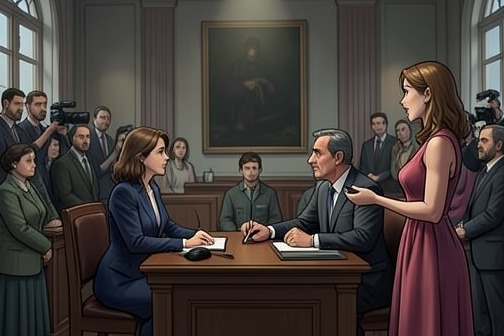
[The inquest into Elise Landreth’s death](entity:event-recall-event-elise-landreth-e7e08a05a26b) is the moment when a death already surrounded by gossip becomes a public legal record—and when [Lucas Spinner](entity:character-recall-character-lucas-spinner-d7813d9bd380) identifies the accused, [Charlie Treadaway](entity:character-recall-character-charlie-treadaway-a17f9b312340), as his stepbrother. Held in October after Minty Landreth tells her sister [Rosemarie Woolbright](entity:character-recall-character-rosemarie-woolbrigh-16a566c06811) that the hearing is approaching, it gathers family members, witnesses, journalists, and [Charlie](entity:character-recall-character-charlie-24c3a7bd9408)’s supporters around the question of how [Elise](entity:character-recall-character-elise-910ceff1d907) died and who supplied the drugs that killed her. Its evidence clarifies the immediate circumstances while leaving the emotional and moral dimensions of the case unresolved.
## Publicity and attendance
In September, as [Fern Woolbright’s pregnancy](entity:state-recall-state-fern-woolbright-s-pregn-3958a2fcbd19) becomes increasingly visible, Rosemarie receives a call from Minty Landreth about the October inquest. She promises to attend in support of her younger sister. The hearing also renews the media’s attention to Charlie Treadaway. Reporters bring forward his earlier life, including photographs of him in chorister’s robes, and publicize the identity of his mother, the children’s illustrator [Edwina Treadaway](entity:character-recall-character-edwina-treadaway-6e3df383ae73), also known as [Edwina Spinner](entity:character-recall-character-edwina-spinner-9297e86aa200). The coverage notes that [Edwina](entity:character-recall-character-edwina-5de2c8238c71) was widowed young before marrying political speechwriter [Dickie](entity:character-recall-character-dickie-2708dc57cf14) Spinner.
The press turns Edwina’s illustrations for Betsy and Tom into a vehicle for insinuation, setting their cosy make-believe against the sordid reality of the case. Charlie’s school history is revisited as well. [Wyebourne College](entity:location-recall-location-wyebourne-college-bb079484b370) declines to comment, while [Glennings](entity:location-recall-location-glennings-6f91788f05f9) co-educational boarding school issues a public statement presenting him as a much-loved member of its community and describing drugs as a modern scourge. The contrast between the schools’ responses becomes part of the spectacle surrounding the hearing: the inquest concerns Elise’s death, but the publicity also puts Charlie’s past and his family’s reputation on display.
Fern would rather avoid the proceedings. Her parents believe she should show support, however, and she attends with them, seated between them and feeling like a prisoner. Her presence is complicated by her concealed connection to Charlie and by her pregnancy. The courtroom is therefore not simply a place where she hears evidence; it brings private feeling into dangerous proximity with public scrutiny.
## What the witnesses establish
The account of Elise’s death is already widely known by the time the inquest hears it. Elise choked in her sleep before suffering a cardiac arrest. Kasia Bogonavitch raised the alarm after discovering her in the bed of her absent boyfriend. The testimony makes the bodily consequences of the death brutally immediate. [Rowena](entity:character-recall-character-rowena-e35929bc1a76) Treadaway recounts trying to give Elise the kiss of life and clear her airway by putting her fingers into Elise’s throat. Her efforts failed; she remembers Elise’s lips turning blue.
[Lucas](entity:character-recall-character-lucas-32d2e2000d96) is called as the next witness, and Fern recoils at seeing him take the stand. He tells the court that he gave Elise a lift from [London](entity:location-recall-location-london-420923d4a60a) to [Oxford](entity:location-recall-location-oxford-6b47fed333f9) on the day of the party. They had encountered one another earlier and arranged to travel together. Elise carried little beyond a leather shoulder bag and had not committed to a return journey, saying she might meet someone. Asked what that meant, Lucas explains that she thought she might meet a man.
The questioning turns from Elise’s plans to the drugs at the party. Lucas acknowledges that young people were drinking and smoking, including some cannabis, but says that drinking was more common. Asked how he can be sure Charlie supplied the drugs that killed Elise amid the confusion, he describes seeing her retrieve her bag and join Charlie in the opposite corner of the room. He heard them laugh. His account gives the court a specific sequence: the bag, the meeting, and the exchange he says he witnessed.
That account has a parallel in Lucas’s later recollection of the party. From a distance, he had watched Charlie and Elise move toward one another and begin talking closely. Elise kept reaching for Charlie’s arm; he shrugged her off. She searched urgently for her handbag, found it beneath a pile of coats, and clutched it as she returned to him. Lucas then saw the pair turn their backs on the party while an exchange took place. Elise embraced Charlie tightly afterward, and he had to pull her hands away to leave. The recollection supplies context for the inquest testimony without changing its limits: Lucas says what he saw, while the court must determine what that observation proves.
## The stepbrother’s identification and Charlie’s silence
The decisive disclosure comes when Lucas is asked how he can be certain that the person he saw was Charlie Treadaway. He answers that Charlie is his stepbrother and that he has known him since the age of eleven. The courtroom reacts with an audible gasp from those who did not know of the relationship. Lucas’s evidence thus does more than identify the alleged supplier: it reveals a family bond that makes his testimony intimate as well as incriminating.
[Barbara Spinner](entity:character-recall-character-barbara-spinner-44ed182cc31a), Lucas’s mother, is also called. Fern senses that [Barbara](entity:character-recall-character-barbara-d5f53d2adcbd) is relishing her appearance in court; her statement sounds practised, and she raises her head after saying she called the police. The detail gives Barbara’s testimony a theatrical edge, as observed through Fern’s hostile, unsettled perspective. The inquest is not presented as a neutral space in which family histories disappear. Even a witness’s manner is registered through the loyalties and resentments of those watching.
Charlie does not testify. His solicitor tells the inquest that he is exercising his right to remain silent pending cross-examination at trial, and describes him as a person of previous good character. All eyes turn toward the hollow-cheeked young man in a white shirt and navy suit. His hair has been cropped close; he sits upright and cries. Fern’s response is intensely private: she longs to reach him, but turns her gaze away after their eyes meet. The divide between them is at once legal and emotional. She cannot comfort him openly, and his silence leaves the court without his account of the encounter Lucas describes.
## Charge, aftermath, and the limits of the hearing
At the close of the inquest, Charlie is officially charged with possessing amphetamine sulphate and supplying heroin to Elise. He is to face a jury on December 19, [1981](entity:time-recall-time-1981-4636cc9b7e75). The charge is a consequential legal result, but it is not a verdict on the question of guilt. As the group leaves the court, [Gordon](entity:character-recall-character-gordon-2c4ce0d1e3ff) expects the matter to be finished by [Christmas](entity:time-recall-time-christmas-a573265d0167); Fern, by contrast, is panicked that Charlie’s mother may recognize her. She covers her necklace with her hand and lowers her head as she tries to get away. The public proceeding has exposed the accused and the witness, while Fern’s own place in the story remains concealed.
The inquest’s later significance is sharpened by Lucas’s retrospective thoughts. He remembers seeing Fern at the hearing with her parents and noticing the small bulge beneath her open coat; her pregnancy becomes evident to him there. His mother later tells him that Fern has married Captain [James Frobisher](entity:character-recall-character-james-frobisher-29757649ee53), an Army officer, and is carrying another man’s child. Lucas remains troubled by whether Charlie ever knew about the pregnancy and, if he did, whether he cared. He is glad Fern does not attend the trial because he does not have to lie in front of her, though his reflection that the whole truth is a joke exposes the distance between testimony and the private history behind it.
From that later perspective, the inquest stands between a death and its legal aftermath: a man will go to prison, a baby will be born, and Charlie will disappear from the courtroom gallery when he is sentenced. The hearing can record Elise’s death, Lucas’s identification, and the charge brought against Charlie. It cannot settle what Charlie knew about Fern, make the witness’s family bond disappear, or reconcile love with accusation. Its force lies partly in that boundary: public evidence advances the case, while the most painful truths continue beyond the court’s reach.
Event 21
Charlie Treadaway’s trial and conviction
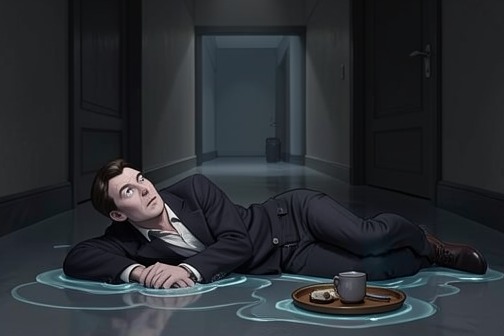
The supplied passage does not depict [Charlie Treadaway](entity:character-recall-character-charlie-treadaway-a17f9b312340)’s trial or establish his conviction. It contains no account of the charges, courtroom proceedings, evidence, verdict, or sentence. Instead, it follows [Lucas](entity:character-recall-character-lucas-32d2e2000d96) after a visit to his mother and shifts into a recollection of the family home and his father’s departure. The passage can therefore offer context about Lucas’s state of mind and the narrative’s movement into memory, but it cannot support a substantive account of the trial itself.
## What the Passage Shows
Lucas is overcome by sleep deprivation and dreams that he is in a boat capsizing in a lake. In the dream, he is certain he will drown and that nobody will save him. Katya wakes him hours later, bringing a tea tray. The scene then returns to his departure: he gathers his jacket and the photograph album, reassures his mother that he will come back, and leaves without kissing her. Her smell, which seems to him to suggest that she is deteriorating, distresses him. These details establish the immediate emotional circumstances of Lucas’s visit, not any event in Charlie Treadaway’s trial.
## The Return to [Chelsea](entity:location-recall-location-chelsea-a4c781a37b29)
Lucas takes a cab back to Chelsea and stops at a newsagent near [Bartholomew Lodge](entity:location-recall-location-bartholomew-lodge-242cf7da3349) for basic provisions, including tea, coffee, milk, sugar, biscuits, cereal, and a tin of Ambrosia creamed rice. Back at his mother’s flat, he takes coffee and the album into the sitting room, adjusts the recliner, and studies a photograph of the house where he grew up. The passage’s concrete sequence—from leaving his mother to returning to the photograph—makes the album a hinge between the present visit and memories of his childhood.
## [River Walk](entity:location-recall-location-river-walk-d74d258763f7) and the Recalled Past
The photographed house is a white-washed 1930s semi in Chelsea, near the river, with a yellow front door framed by roses. Lucas remembers bees in the garden and the security he associated with being inside the house. That remembered safety is not entirely reliable: he wonders whether his father really smoked a pipe in the sitting room or whether the detail has become confused in memory. He recalls more broadly a privileged childhood, including cycling along the Embankment, boating in Battersea Park, and walking along King’s Road between his parents as they swung him off his feet.
The recollection turns to the rupture that followed. When Lucas was ten, his father left River Walk for good. Although he knew other boys whose parents were divorced, he had not expected his own family to separate. Nearly half a century later, encountering the word divorce still produces an acute physical response. This remembered separation gives the passage its clearest account of lasting consequence, but it does not supply information about Charlie Treadaway’s trial or conviction.
Event 22
Sophie Frobisher’s birth
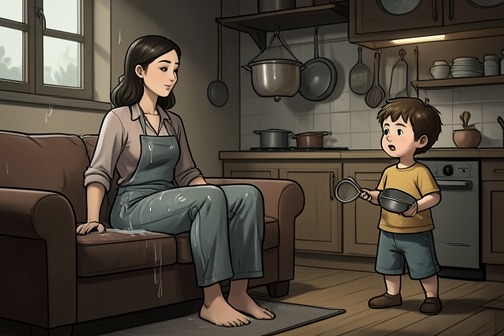
[Sophie Frobisher’s birth](entity:event-recall-event-sophie-frobisher-136c3b9786f0) turns [Fern Woolbright’s pregnancy](entity:state-recall-state-fern-woolbright-s-pregn-3958a2fcbd19) from uncertainty into an immediate family reality. The labor begins at [Three Paddocks](entity:location-recall-location-three-paddocks-a34707439189) in the middle of an ordinary lunch, and the later confirmation that the baby is a girl named [Sophie](entity:character-recall-character-sophie-32e718e90b39) settles the child’s identity without resolving whether [Charlie Treadaway](entity:character-recall-character-charlie-treadaway-a17f9b312340) or [James Frobisher](entity:character-recall-character-james-frobisher-29757649ee53) is her father.
## The Onset of Labor
Fern has been expecting the birth, but its arrival is abrupt. When she pushes herself up from the sofa, she wets her pants and stands dazed in a pool of slightly vinegary fluid. She recognizes what has happened and announces that the baby is coming.
The scene is set against lunch being prepared by [Rosemarie Woolbright](entity:character-recall-character-rosemarie-woolbrigh-16a566c06811). From the kitchen, Rosemarie has called Fern to eat; the soup is either carrot and coriander or leek and potato, warming on the Aga. On hearing Fern’s announcement, Rosemarie takes the soup pan off the stove. The small domestic task gives way at once to the urgency of labor.
## An Uncertain Paternity
Just before the narrative shifts to [Lucas](entity:character-recall-character-lucas-32d2e2000d96), the birth is framed by the unresolved question of whose child Fern is carrying: [Charlie](entity:character-recall-character-charlie-24c3a7bd9408)’s or James’s. That uncertainty accompanies the arrival rather than being settled by it. The evidence of the birth confirms neither man’s paternity, leaving the child’s biological parentage distinct from the later naming of her as Sophie Frobisher.
## Sophie’s Birth Confirmed
Two weeks after the birth, a letter from [Araminta](entity:character-recall-character-araminta-40cc831a6cdc) Landreth to [Barbara Spinner](entity:character-recall-character-barbara-spinner-44ed182cc31a) supplies the outcome. Araminta writes that Fern has given birth to a baby girl and names her Sophie. The letter also reports that Fern and the newborn are living with Rosemarie at Three Paddocks while Fern’s husband is on duty in [Northern Ireland](entity:location-recall-location-8fe638402940).
The birth thus receives two different narrative treatments: first as a sudden physical event experienced by Fern, then as news conveyed through a letter read by Lucas. The later account establishes that the baby survived and identifies her as Sophie, while also placing mother and daughter within Rosemarie’s household during James’s absence.
Event 23
Lucas discovers Barbara’s suicide attempt
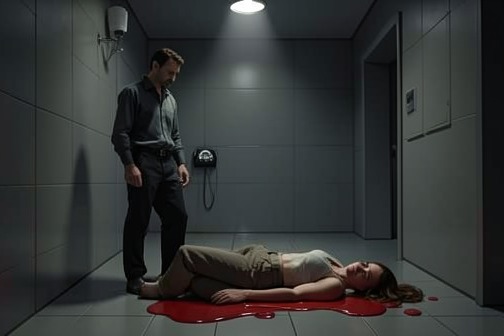
[Lucas](entity:character-recall-character-lucas-32d2e2000d96) discovers [Barbara Spinner](entity:character-recall-character-barbara-spinner-44ed182cc31a) unconscious in the bathroom after her suicide attempt, an emergency that makes him the first to act and leaves him caught between relief at his father’s return and the abrupt break-up of his home. The episode turns a frightening discovery into a defining separation: [Dickie](entity:character-recall-character-dickie-2708dc57cf14) Spinner comes back, but only long enough to take Lucas away.
## The discovery
Lucas arrives home expecting the ordinary comforts of adulthood: he has let himself in with the key from his coat pocket and imagined coming home to dinner and slippers by the fire. Instead, the hallway is cold, the [Christmas](entity:time-recall-time-christmas-a573265d0167) decorations are still not up, and he climbs the stairs trying not to be frightened.
A light is on in the bathroom. Lucas initially mistakes the red liquid for wine, recalling that he has seen his mother use wine in cooking. The comparison breaks down when he sees that [Barbara](entity:character-recall-character-barbara-d5f53d2adcbd) is naked and unconscious. The domestic image of dinner being prepared has become a scene of danger, and the child who had felt grown-up moments earlier must respond to a crisis involving his mother.
## Lucas calls for help
Lucas phones the police. They tell him that he has been clever and brave, while a neighbour stays with him until Dickie arrives. The sequence establishes Lucas not as a passive witness but as the person who summons help and remains at home through the immediate emergency.
Dickie tells Lucas that he is there and will take care of things. But while Lucas is relieved to have his father back in the house, Dickie has no intention of staying under its roof. His reassurance is therefore temporary: the crisis reunites father and son for a moment, then becomes the occasion for their departure.
## Leaving the house
Dickie tells Lucas to fetch a case and pack pyjamas and spare clothes so that they can leave. While Lucas packs, Dickie tries to clean the bathroom. The effort does not remove every trace of what happened: the room is still pink when they go, and drops of blood mark the landing carpet and the stairs.
By the time they reach [Kennington](entity:location-recall-location-kennington-923263ecbcb2), it is very dark. Dickie introduces Lucas to [Edwina Treadaway](entity:character-recall-character-edwina-treadaway-6e3df383ae73), who is waiting at the door and tries to hug him. Lucas gets away from her. His arrival at her house thus follows directly on the bathroom emergency, but the move does not immediately feel like welcome or comfort to him; even an offered embrace is something he evades.
## Significance in Lucas’s recollection
The episode is remembered through the sharp contrast between Lucas’s childish idea of being a man—opening his own door and coming home to dinner—and the responsibility he actually faces when he finds Barbara. His competence in calling the police is followed by circumstances he cannot control: Dickie leaves the house, and Lucas is taken elsewhere with only a case of clothes.
The bathroom’s lingering pinkness and the blood on the stairs make the departure materially inseparable from the attempt. The family does not simply resume its former routine after the emergency; Lucas leaves with Dickie while the traces remain behind. The scene therefore joins Barbara’s crisis to Lucas’s sudden displacement from home and to the complicated arrival at Edwina Treadaway’s door.
Event 24
The sexual assault incident at Wyebourne School
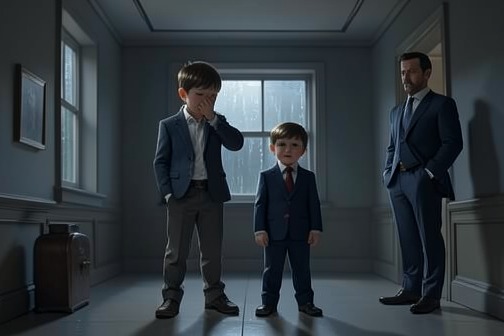
[The sexual assault incident at Wyebourne School](entity:event-recall-event-wyebourne-0e714b055997) becomes a defining memory for [Lucas](entity:character-recall-character-lucas-32d2e2000d96): decades later, he recognizes that when [Charlie](entity:character-recall-character-charlie-24c3a7bd9408) sought his help as a thirteen-year-old, he dismissed the disclosure instead. Charlie went on to report [Mr Robbins](entity:character-recall-character-mr-robbins-3682b062ef6a), and other pupils corroborated him, but the school managed to hush up the scandal. The episode marks both a failure of belief between stepbrothers and the institution’s effort to contain what had happened.
## Disclosure and disbelief
The event returns in Lucas’s recollection of a wet day in November, when he found Charlie waiting outside his dormitory after double divinity. Lucas was already irritated by what he saw as Charlie’s defiance of school rules, and he began by accusing him of looking for trouble. Charlie then told him that Mr Robbins, an old schoolfriend of Lucas’s father, had abused him. Lucas admits that the details were difficult for him to understand at the time: he was naive about relations between boys and older men, and his familiarity with Robbins as a family acquaintance shaped his response. He called Charlie a fantasist and a liar, reasoning that a man who sent [Christmas](entity:time-recall-time-christmas-a573265d0167) cards to his father could not be capable of such conduct. Forty years later, Lucas knows that this judgment was a mistake.
## Report, Removal, and Suppression
After Lucas rejected Charlie’s disclosure, Charlie told the school matron, who already had her suspicions. Two other boys then came forward with similar accounts. The response thus moved beyond a private dispute between stepbrothers: other pupils’ reports corroborated Charlie’s account, and Mr Robbins and Charlie had both left [Wyebourne](entity:location-recall-location-5fa94c701852) by the Christmas break.
The school nevertheless managed to hush up the scandal. When Mr Robbins later died by suicide, the event produced only a small flurry of news coverage; many people interpreted his death as a belated act of decency rather than confronting the abuse and its concealment. That public response echoes the institution’s silence: the harm becomes briefly visible, then is contained by a story that redirects attention from what the pupils reported.
[Barbara](entity:character-recall-character-barbara-d5f53d2adcbd)’s response exposes another form of blame. Though she acknowledged that Mr Robbins’s conduct was heinous, she also suggested that the boys had somehow invited it by flaunting themselves. Her reaction shows how even recognition of wrongdoing could be qualified by suspicion of the children who reported it. Against that pattern, Charlie’s decision to tell the matron—and the other boys’ willingness to come forward—stands as the event’s consequential act of disclosure.
## The School After Wyebourne
After the scandal, Charlie went to an experimental boarding school whose customs sharply differed from those at [Wyebourne College](entity:location-recall-location-wyebourne-college-bb079484b370). Where Wyebourne’s pupils had explored sexuality furtively after lights-out, the new school allowed them to do so openly, and homosexuality was widely accepted. The contrast places Charlie’s departure within a change of institutional setting: the school he left had failed to protect him, while the one he entered permitted forms of sexual expression that Wyebourne had kept hidden. That difference does not erase Lucas’s earlier rejection of his disclosure, but it makes the transfer a consequential aftermath of the incident, moving Charlie from one school culture into another.
## Lucas’s Delayed Recognition
The disclosure also exposes the distance between Lucas’s formal role as Charlie’s guide to school customs and the trust that role might have implied. The housemaster had assigned Lucas to introduce the newcomer to Wyebourne’s traditions, especially its rules about uniform, but Charlie’s contempt for those rules deepened Lucas’s irritation. Lucas then avoided his stepbrother, whose frequent absences from class and detentions made that avoidance easy. When Charlie came to him, Lucas initially read the encounter through this established pattern of recalcitrance rather than as a request for help. Forty years later, the memory is structured around that misreading: Lucas can identify not only what he failed to understand about the abuse, but how his own familiarity with Mr Robbins and impatience with Charlie helped close off the first appeal for support. The incident thus remains a private reckoning as well as a school scandal, its belated significance measured by the moment when Lucas should have listened.
Event 25
Charlie breaks into Kennington Road and injures Alicia
[Charlie](entity:character-recall-character-charlie-24c3a7bd9408)’s burglary of [Edwina](entity:character-recall-character-edwina-5de2c8238c71)’s house is remembered as the last straw in a relationship sustained by her repeated acts of forgiveness. The theft itself was disastrous, but the decisive break came when Charlie fled after [Alicia](entity:character-recall-character-alicia-1f68a746a0ea) was injured, leaving his mother to confront both the harm done in her home and the collapse of her trust in him.
## Background and the Day of the Burglary
[Dickie](entity:character-recall-character-dickie-2708dc57cf14) recalls that it was a weekday in September, on a day whose exact place in the week no longer matters to him. Edwina had gone into town to meet her agent about possible commissions. She hoped to meet Charlie, buy him lunch, and perhaps get him some shoes. He had promised to come but did not appear. She waited until four o’clock before giving up and returning home.
Before this incident, Edwina had continued to care for Charlie despite his repeated disappointments. Dickie recalls her paying for expensive dental work after Charlie lost his two front teeth in a fight, collecting him from a phone box at three in the morning when he called in tears, and bringing him home to feed him soup without demanding thanks. Against that history of patience, the burglary marks the point at which her capacity to forgive reached its limit.
## The Theft and Alicia’s Injury
At home, Edwina found Alicia lying in agony at the bottom of the stairs. Charlie had entered the house and taken antiques that were valuable and easy to sell, including silverware and framed landscapes. He had filled a rucksack and was preparing to leave when Alicia caught him, bringing the theft to a confrontation on the stairs.
Dickie leaves uncertain whether Charlie pushed Alicia or whether she fell, but stresses that the distinction did not change what mattered to Edwina: Charlie did not stop to help. He ran and left Alicia behind. Her injuries were severe, including a badly damaged hip and collarbone. The scene turns the theft into a betrayal of care as well as property: the person Edwina had repeatedly rescued abandoned someone who had been hurt in her home.
## The Rupture and Its Retelling
After the incident, Edwina had the locks changed. Dickie describes the loss of trust as a bolt drawn across the part of her heart that had always belonged to Charlie; from then on, she could not forgive him. The burglary also darkened her understanding of the past: she became convinced that Charlie had stolen her jewellery box years earlier and had been lying to her for years. In her account of the relationship, the incident did not stand alone but confirmed a much longer pattern of deception.
The episode reaches [Lucas](entity:character-recall-character-lucas-32d2e2000d96) through Dickie’s late-night retelling. At one in the morning, Dickie was drunk and exhausted, and Lucas remembers squeezing his eyes shut rather than looking at his father in case he was crying. The account therefore carries both the remembered injury and the strain of recounting it: Charlie’s flight left Alicia badly hurt and Edwina’s trust broken, while its telling exposes the grief that still surrounds the family’s estrangement.
Event 26
Charlie Treadaway’s death in Thailand

[Charlie Treadaway’s death in Thailand](entity:event-recall-event-charlie-treadaway-48b4e3ebeceb) turns an apparently hopeful reunion trip into an irreversible loss. For [Lucas](entity:character-recall-character-lucas-32d2e2000d96), the news arrives first as a terse telephone call from [Dickie](entity:character-recall-character-dickie-2708dc57cf14), then as an account pieced together months later from his father’s grief-stricken recollections. The distance between [Charlie](entity:character-recall-character-charlie-24c3a7bd9408)’s excited plans for the sea and the fact of his cremation gives the event its force: a future that briefly seemed open closes before Lucas can respond.
## Causes and Background
In January 1990, while Lucas was in New York, Dickie telephoned with news that Charlie had gone to [Thailand](entity:location-recall-location-thailand-d96871742cc1). [Rowena](entity:character-recall-character-rowena-e35929bc1a76) had paid for the trip and was going to meet him there so they could spend time together on the beach. [Australia](entity:location-recall-location-australia-443153725cd3) had been the preferred destination, but Charlie could not obtain a visa because of his prison sentence. The change of destination therefore carried the weight of both practical constraint and family hope: Thailand was where the twins could meet, and Dickie entertained the possibility that the trip might help Charlie make a new start.
Lucas did not share that optimism. Remembering the announcement, he resented what looked to him like another instance of Charlie landing on his feet, with a holiday paid for by Rowena. His response reveals the distance between the brothers: while Dickie saw a chance for the trip to change Charlie’s direction, Lucas viewed it through the history of Charlie’s addiction and imprisonment. The trip set hope against suspicion before its outcome was known.
The plans had sounded vivid when Charlie returned to [Kennington Road](entity:location-recall-location-kennington-road-fa5c7dfeae1c) to collect his passport. [Edwina](entity:character-recall-character-edwina-5de2c8238c71) was still refusing to see him, yet she had bought him bright orange swimming trunks. Charlie was excited about snorkeling and perhaps learning to dive properly; if he enjoyed it, he imagined staying in Thailand and joining a dive school. The details make his plans specific without making them secure. He could picture a life organized around the sea, but Lucas heard the idea as the familiar, implausible talk of someone with an addiction.
## The News of Charlie’s Death
Six weeks after the call announcing the trip, Dickie telephoned again. He told Lucas that Charlie was dead and had been cremated, and that there was nothing Lucas could do. Dickie could visit New York later, but for now he needed to stay with Edwina, who was overwhelmed by grief, not eating and not sleeping. The message gives Lucas the finality of the death without giving him any way to intervene: Charlie is already gone, and the immediate consequence is a bereaved household from which Dickie cannot leave.
Lucas’s response does not settle into a single emotion. He feels horror, relief and numbness together, and cannot make himself say aloud that his stepbrother has died of an overdose. The attempt to put the news into casual words fails. Charlie had been younger than Lucas, a fact that makes the death seem less credible to him, almost like a hoax. The mismatch between the bluntness of the reported cause and the unreality of the loss marks how little language can contain what has happened.
[Barbara](entity:character-recall-character-barbara-d5f53d2adcbd)’s reply to Lucas’s letter offers a sharp contrast to his stunned reaction. She treats Charlie’s death as divine punishment and says she feels no grief for him. Her response turns the death into a moral verdict; Lucas, by contrast, cannot reduce his mixed feelings to judgment. The difference shows how the same news can be absorbed into family conflict or leave the person receiving it unable to speak plainly at all.
## Dickie’s Account and the Aftermath
Some months later, Dickie managed a short visit to New York. Lucas barely recognized his father: Dickie’s eyes were red-rimmed, and his stubble looked ash-colored after the flight. He spent most of the four-day stay asleep and arrived with a chest infection that would not clear. On the last night, Lucas ordered food in rather than take him out. Dickie nevertheless went to a drugstore for a bottle of Jack Daniel’s, which he treated as medicinal, and then began to recount the Thailand trip.
Lucas did not want to hear the details. He was embarrassed by Dickie’s closeness to tears and already knew how the story ended, but understood that his father needed to unburden himself to his son. Between coughing fits and sips of whisky, Dickie told him what had happened and how the trip had gone wrong. In the account Lucas recalls, the specific unfolding of Charlie’s death remains less fully present than the surrounding facts: the anticipated reunion, the hopeful plans, the call announcing death, and Dickie’s need to tell someone afterward.
That gap shapes the event’s narrative meaning. Charlie’s possible future in Thailand—a beach holiday that might lead to diving and a new life—stands beside Lucas’s conviction that the plans were merely another piece of addict’s talk. Neither hope nor skepticism prevents the outcome. What remains is the painful difference between the ordinary preparations for a trip and the finality Dickie reports six weeks later, followed by his own exhausted, tearful return to the story.
Event 27
Elise’s heroin overdose

[Elise’s heroin overdose](entity:event-recall-event-elise-s-heroin-overdose-3def7231a4f0) is presented through [Lucas Spinner](entity:character-recall-character-lucas-spinner-d7813d9bd380)’s later memory of addiction and guilt. The account establishes that [Elise](entity:character-recall-character-elise-910ceff1d907) died after snorting heroin, while leaving uncertain whether she intended to do so. Her weakened heart, damaged by an eating disorder in her early teens, forms a crucial part of the circumstances surrounding her death.## Circumstances of the OverdoseThe recollection gives no precise date or location for Elise’s overdose. It identifies the drug and route: she died after snorting heroin. Her intention is explicitly unresolved, so the death is not framed as a clearly deliberate act. The account also links her vulnerability to an earlier history: an eating disorder during her early teenage years had weakened her heart.## [Lucas](entity:character-recall-character-lucas-32d2e2000d96)’s Guilt and Self-PunishmentYears later, Lucas considers Elise’s death alongside [Charlie](entity:character-recall-character-charlie-24c3a7bd9408)’s, who also died of drugs. He wonders whether his own prolonged drinking and drug use amounted to punishing himself, as if his death might make the losses fair and complete a circle of guilt and blame. Each day’s dangerous excess becomes, in this account, a repeated gamble with his survival; yet he wakes alive and begins the cycle again.## Denial and ContrastLucas distinguishes himself from Elise by insisting that heroin, with its needles, is a drug he would never take. That boundary does not protect him from addiction: he continues to drink and use cocaine, presenting himself as a connoisseur rather than a helpless addict. Expensive vodka in crystal glasses and cocaine snorted through a crisp fifty-pound note give his self-image a veneer of class, sharply at odds with his underlying self-destruction.## Place in the RecollectionThe overdose matters not only as a death but as one of the losses Lucas folds into his private logic of blame. His memory leaves him exhausted and bruised; he can barely heat another meal before taking meatballs al forno to bed. The ordinary meal and the depleted body bring the remembered catastrophe back to the present, where Lucas remains alive but caught in the aftermath of Elise’s death.
Event 28
Lucas’s testimony at Charlie’s trial
[Lucas Spinner](entity:character-recall-character-lucas-spinner-d7813d9bd380)’s testimony against [Charlie Treadaway](entity:character-recall-character-charlie-treadaway-a17f9b312340) helped establish the case that [Charlie](entity:character-recall-character-charlie-24c3a7bd9408) had supplied the drugs that killed [Elise Landreth](entity:character-recall-character-elise-landreth-eecd38cf0214), while revealing that the witness and accused were stepbrothers. The evidence was both legal and intimate: [Lucas](entity:character-recall-character-lucas-32d2e2000d96) described what he had seen at the party, then publicly identified a young man whose fate would remain bound to his own sense of guilt.
## Background and Observations
At the [Oxford](entity:location-recall-location-oxford-6b47fed333f9) party, Lucas felt out of place among people who had gained admission to Oxford when he had not. He had been drinking and was struggling to stay awake. From a distance, he watched Charlie arrive and [Rowena](entity:character-recall-character-rowena-e35929bc1a76) introduce her twin around the gathering. Lucas’s resentment was personal as well as social: he was in love with Fern Woolbright and recoiled at the thought of Charlie touching her.
Lucas then saw Charlie and [Elise](entity:character-recall-character-elise-910ceff1d907) circle one another before meeting. Elise repeatedly grabbed Charlie’s arm; Charlie shrugged her off. When Elise found her handbag beneath a pile of coats, she clutched it and hurried back to him. Lucas watched them turn their backs on the party and huddle together during what appeared to be an exchange. Elise then embraced Charlie so tightly that he had to prise her hands away. These observations supplied the basis for Lucas’s later account of their contact.
## Evidence and Identification
At the inquest, Lucas testified that he had driven Elise from [London](entity:location-recall-location-london-420923d4a60a) to the party and described seeing her join Charlie in a corner after retrieving her bag. Asked how he could be certain that Charlie had given Elise the drugs that killed her, Lucas pointed to what he had witnessed. When pressed to explain how he could identify the man, he disclosed that Charlie was his stepbrother and that he had known him since he was eleven. The revelation startled members of the court who had not known of the connection.
The family relationship sharpened the significance of Lucas’s identification without making the observation itself more conclusive: he described seeing Elise and Charlie meet around her bag, while the exchange’s contents were not independently spelled out in his testimony. Charlie did not give an account at the inquest. Through his solicitor, he exercised his right to remain silent pending cross-examination at trial. At the inquest’s conclusion, he was formally charged with possessing amphetamine sulphate and supplying heroin to Elise, with a jury trial set for 19 December [1981](entity:time-recall-time-1981-4636cc9b7e75).
## Trial and Consequences
Lucas later remembered standing in court and giving evidence against Charlie. The trial ended with Charlie going to prison; the evidence here does not set out the full exchange at that later hearing, but Lucas came to regard his testimony as having signed Charlie’s death warrant. His retrospective account makes the legal outcome inseparable from the personal act of identifying his stepbrother. At the time, Fern’s absence from the trial mattered to him: he was relieved not to have to lie in front of her, while acknowledging that the ideal of telling the whole truth had become bitterly ironic.
Lucas also learned at the inquest that Fern was pregnant and had married Captain [James Frobisher](entity:character-recall-character-james-frobisher-29757649ee53). For years he wondered whether Charlie knew the baby was another man’s and whether he cared. The discovery added a private, unresolved question to the consequences of the case, even as Charlie’s conviction and imprisonment appeared to close the public proceedings.
## Guilt and Retrospective Meaning
Eight years after the testimony, [Lucas’s guilt](entity:state-recall-state-lucas-s-guilt-ceac1dba38ee) temporarily fell away. He felt certain that he had been right to speak, and that certainty accompanied the beginning of years of drinking and drug use. He maintained a functioning life in New York while concealing the addiction from his parents, but the courtroom decision remained part of the past he could not settle simply by numbing himself.
Much later, Lucas told [Edwina](entity:character-recall-character-edwina-5de2c8238c71) that he could not change what had happened in court or bring back Charlie or Elise. He returned her stolen keepsakes and confessed that he had arranged the burglary of her house when he was in trouble and in debt. The confession did not retract his testimony or repair its losses; it was, instead, a limited act of restitution. The event’s lasting force lies in that distinction: Lucas could acknowledge the harm and attempt to do something right, but neither his witness statement nor its consequences could be taken back.
Event 29
Charlie’s death in Thailand
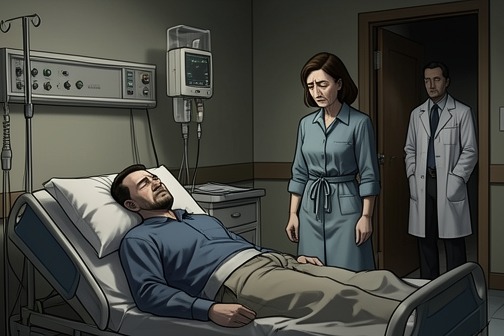
[Charlie’s death in Thailand](entity:event-recall-event-charlie-s-death-in-thai-6598ad7765f0) is the fatal end of his short-lived recovery and the turning point that deepens [Edwina](entity:character-recall-character-edwina-5de2c8238c71)’s grief into a lasting rupture with [Rowena](entity:character-recall-character-rowena-e35929bc1a76). Recounted by [Dickie](entity:character-recall-character-dickie-2708dc57cf14) to [Lucas](entity:character-recall-character-lucas-32d2e2000d96), the death is presented both as a relapse after a promising period of sobriety and as a loss whose blame Edwina initially places on her daughter rather than on [Charlie](entity:character-recall-character-charlie-24c3a7bd9408)’s own final choice.
## Background and Hopes
By Rowena’s account, Charlie had arrived in [Thailand](entity:location-recall-location-thailand-d96871742cc1) sober and healthy, with new white teeth that shone in the sun. He made friends wherever he went and seemed to be welcomed by everyone. The family’s hopes rested in part on this visible transformation: after Charlie’s earlier damage and imprisonment, his recovery appeared to offer a chance for his life to begin again.
Rowena had to return to [Australia](entity:location-recall-location-australia-443153725cd3) for her job and responsibilities. Before leaving, she gave Charlie enough money for a return flight, on the condition that if he stayed in Thailand he would continue yoga and meditation, eat healthily, and drink only occasionally. Her departure therefore came with a plan intended to help him maintain the regime that had seemed to be working.
## Relapse and Death
Charlie kept to the routine for almost a week. He then fell in with a group of travellers and moved to a rougher part of the resort. Ten days after Rowena had returned to Australia, Charlie was found dead in a backpackers’ hostel, a needle hanging out of his arm. The swift reversal—from the healthy, sober man his family had hoped he could become to a fatal relapse—makes the limits of their optimism painfully clear.
Charlie was cremated in Thailand. Edwina carried his ashes home on the plane as if the urn were a small child, an image that joins the physical return of his remains to the helplessness of her grief. The family had hoped Rowena might save him; instead, she was away when he died, and the arrangements for his ashes became part of Edwina’s experience of loss.
## Blame and Aftermath
Edwina blamed Rowena for leaving Charlie, insisting that she should have understood how vulnerable her brother was and that he would not have died had she stayed. She treated Rowena’s departure as if it had caused the death, refusing for years to accept that Charlie himself had chosen to put the needle in his arm. In this way, grief hardened into accusation and deprived Edwina of her daughter as well as her son.
The estrangement lasted for years: Edwina ignored Rowena’s letters and refused to speak to her. By the time Edwina could recognize that Charlie’s death had been his decision, she could also see how her own behavior had punished Rowena for a loss neither daughter nor mother could undo. The death thus remains more than the end of Charlie’s recovery; it is the event around which the family’s grief, guilt, and separation gather.
Event 30
Dickie’s death and funeral
[Dickie’s death and funeral](entity:event-recall-event-dickie-s-death-and-fune-d65827cd63d8) mark both the final silence between [Lucas](entity:character-recall-character-lucas-32d2e2000d96) and his stepmother, [Edwina](entity:character-recall-character-edwina-5de2c8238c71), and a turning point in Lucas’s struggle with addiction and self-destruction. Summoned by the only call Edwina ever made to him, he attends his father’s burial without speaking to her; the journey home ends in a moment of physical collapse and a newly clear wish to live.
## The Death Notice and the Funeral
Edwina left Lucas a long message on his answering machine to tell him when [Dickie](entity:character-recall-character-dickie-2708dc57cf14) had died and when he would be buried. The call was exceptional: it was the only time she contacted him. At the funeral, [Lucas and Edwina](entity:relation-recall-relation-lucas-edwina-d61ec9c2a5b1) did not speak. He stayed with his mother, [Barbara](entity:character-recall-character-barbara-d5f53d2adcbd), while Edwina remained with [Alicia](entity:character-recall-character-alicia-1f68a746a0ea), and the two groups kept to opposite sides of the church, their separation likened to that of the Montagues and Capulets.
The funeral’s visual details sharpen the division. Barbara wore a striking black swan-feather hat; Alicia, who stood constantly beside Edwina, wore an enormous orange-and-green jungle-print turban. Barbara disparaged Alicia’s presence and headwear, making the division between the women public as well as familial. Lucas’s attention, meanwhile, is captured by his mother’s claw-like grip on his suit sleeve.
## A Blurred Day and a Flight Home
The remainder of the day stays with Lucas as fragments: Barbara gripping his sleeve, repeated glasses of gassy, bitter champagne, and lines of white powder. He suspects the powder was speed cut with talcum powder rather than the pure class-A drug he had paid for. By the time he boarded his flight back to New York, he was very drunk, and his suit was stained with canapés, mostly egg and smoked salmon.
During severe turbulence, Lucas became violently sick in a tiny toilet cubicle thirty thousand feet above sea level. In the midst of vomiting, he reached what the narrative presents as rock bottom—and experienced a sudden reversal. He recognized that trying to kill himself no longer felt like fun and, more fundamentally, that he did not want to die.
## Aftermath and Significance
Back in the United States, Lucas enrolled himself in a twelve-step programme and began a faltering effort to get clean. His progress remained precarious: he remembers nearly calling his dealer and nearly buying vodka. The funeral therefore does not resolve his addiction or restore his relationship with Edwina. Instead, its aftermath becomes the setting for a change in his immediate direction: amid grief, intoxication, and physical distress, the wish to continue living becomes strong enough to prompt action.
As a remembered event, the funeral is shaped by the contrast between its formal observance and Lucas’s fractured experience of it. The church preserves the family’s division in space; the day afterward survives in disconnected sensations and images. Yet the flight home, with its humiliating bodily collapse, also interrupts Lucas’s movement toward self-destruction and begins the uncertain course of recovery.
Event 31
Lucas’s entry into recovery
[Lucas’s entry into recovery](entity:event-recall-event-lucas-s-entry-into-reco-36ed4d7a52ee) begins not with confidence but with a crisis in midair: violently sick on a turbulent flight, he recognizes that he no longer wants to die. Enrolling in a twelve-step programme after returning to the United States marks the first, unsteady movement away from self-destruction; the weeks after the [September 11 attacks](entity:event-recall-event-september-11-attacks-8e527031f862) later help him sustain it.
## Causes and Background
The turn follows a day of grief and excess. By the time [Lucas](entity:character-recall-character-lucas-32d2e2000d96) boards his flight back to New York, he is very drunk, his suit stained mostly with egg and smoked-salmon canapés. The funeral champagne and the white powder he has taken belong to the same unraveling: what he paid for as a pure class-A narcotic was more likely speed cut with talcum powder. The journey home carries the consequences of that binge into a confined, uncontrollable setting.
## The Turning Point
During horrendous turbulence, Lucas is violently sick in the plane’s tiny toilet cubicle, thirty thousand feet above sea level. As he vomits again, a blinding realization interrupts the pattern of self-destruction: he is no longer having any fun trying to kill himself, and he does not want to die. The recognition is starkly physical as well as moral. At the point when his body is overwhelmed, the wish to survive becomes newly explicit.
## Beginning Recovery
Back in the United States, Lucas enrolls himself in a twelve-step programme. His progress towards cleaning himself up is described as very wobbly, not as a sudden or complete cure. He repeatedly comes close to calling his dealer and to buying a bottle of vodka. Those near-relapses show how precarious the first stage of recovery remains even after his decision to live.
## September 11 and the Work of Staying Sober
Lucas watches the [World Trade Center Twin Towers](entity:location-recall-location-f589975df856) collapse from the window of his own high-rise apartment block. The sight is unbelievable and sickening; he sinks to his knees and weeps. Yet the weeks that follow become important to his recovery. Seeing others pick themselves up, and a city begin to heal, hardens his resolve to keep himself clean. The external catastrophe does not erase his vulnerability, but it gives his effort a sustaining example: survival, for Lucas, becomes something that must be chosen and continued.
Event 32
September 11 attacks

The [September 11 attacks](entity:event-recall-event-september-11-attacks-8e527031f862) enter the narrative through [Lucas](entity:character-recall-character-lucas-32d2e2000d96)’s witnessing of the [World Trade Center Twin Towers](entity:location-recall-location-f589975df856)’ destruction, an event that sharpens his faltering recovery into a commitment to live. The sight brings him to his knees in grief; in its aftermath, the deaths of people who had no choice become, for Lucas, a reason to recognize his own responsibility to remain alive.
## Lucas’s Recovery Before the Attacks
Back in the United States, Lucas had enrolled in a twelve-step programme and was making an unsteady effort to get clean. Recovery remained precarious: he remembers repeatedly nearly calling his dealer and nearly buying vodka. The attacks arrive within this ongoing struggle, not after it has been resolved, making his response part of a fragile process rather than a sudden, uncomplicated cure.
## Witnessing the Towers Fall
On [September 11, 2001](entity:time-recall-time-september-11-2001-f6eb4c28a3e6), Lucas watches from the window of his own high-rise apartment as the towers come down. He sinks to his knees and weeps on the floor. The sight is, to him, unbelievable and sickening; the physical collapse of the towers is also rendered as a moment of personal collapse, interrupting the near-relapses that had defined his days.
## Aftermath and Resolve
Lucas finds that the weeks after the attacks make recovery possible. Seeing a city begin to heal hardens his determination: if others can pick themselves up, he believes he must at least try to keep himself clean. His reasoning turns on the difference between choice and its absence. He can choose whether to continue living; those killed in the attacks could not. The event does not make him brave, but it brings him to recognize a duty to stay alive.
## [Rowena](entity:character-recall-character-rowena-e35929bc1a76)’s Message
After the attacks, Rowena tracks down Lucas’s email address and sends him a long, rambling message full of kindness. Her reaching out links the public catastrophe to a private reconnection: in the aftermath of the towers’ fall, Lucas receives contact from his twin sister as he tries to hold to the resolve the event has strengthened.
Event 33
Lucas’s arranged burglary of Edwina’s house
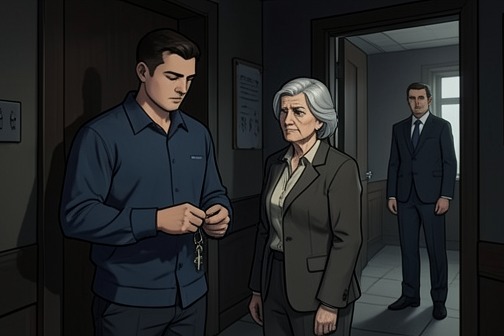
[Lucas’s arranged burglary of Edwina’s house](entity:event-recall-event-lucas-s-arranged-burgla-947327f1de39) was a concealed crime driven by a gambling debt and fear of losing the future his father, [Dickie](entity:character-recall-character-dickie-2708dc57cf14), expected him to pursue. Its delayed disclosure turns an apparently emptied jewellery box into the one remaining link between [Lucas](entity:character-recall-character-lucas-32d2e2000d96) and the theft: he had enabled the burglary by providing access and ensuring the house would be unoccupied.
## Debt and pressure
At the time, Lucas was in the sixth form, close to the end of his schooling. Dickie expected him to go to [Oxford](entity:location-recall-location-oxford-6b47fed333f9), and Lucas feared expulsion at that late stage. His grades were slipping as he worried over the gambling debt he had to repay. When someone offered him a solution, the immediate relief came at the cost of a carefully concealed betrayal.
## How the burglary was arranged
The arrangement depended on Lucas handing over the keys and guaranteeing that the house would be empty. The plan was simple enough that, as the account notes, no one found out at the time. Lucas did not merely benefit from a robbery after the fact: his provision of access and assurance about the house’s occupancy made the theft possible.
## The jewellery and the surviving clue
The jewellery did not remain in the house. It was sold long before the later recollection, passing through intermediaries to buyers willing to take unfashionable post-war garnets and oversized pearls. The description of a trade conducted through contacts and pub acquaintances places the valuables within an informal chain of resale; Lucas ultimately exchanged his stepmother’s collection for a pile of crumpled five-pound notes.
The box’s near-emptiness therefore records both the removal of the jewellery and the passage of time. It had been ransacked, apart from items that people in that trade would not want. Yet the box itself remained important: it was the only evidence that could possibly connect Lucas to the burglary at [Kennington Road](entity:location-recall-location-kennington-road-fa5c7dfeae1c).
## Consequences and significance
The theft answered Lucas’s immediate financial crisis without exposing him at the time, but it left behind a material trace that could surface long after the valuables were gone. The episode binds his fear of failure at school to a crime against [Edwina](entity:character-recall-character-edwina-5de2c8238c71), and gives the apparently depleted box a double significance: the jewellery has vanished, while the possibility of proof remains.
Event 34
Lucas confesses the theft and returns Edwina’s keepsakes
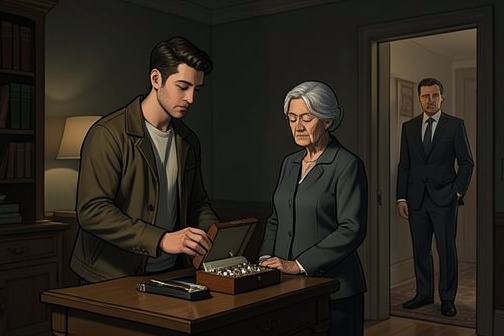
[Lucas](entity:character-recall-character-lucas-32d2e2000d96)’s confession to [Edwina](entity:character-recall-character-edwina-5de2c8238c71) turns the return of a nearly emptied jewellery box into an act of belated accountability. He admits that he arranged the burglary of her house, explains that school debts drove him to accept a solution from a creditor, and returns the small collection of family keepsakes that the thieves left behind. The disclosure gives Edwina the truth and the objects back, but it cannot undo the damage, restore [Charlie](entity:character-recall-character-charlie-24c3a7bd9408), or erase Lucas’s earlier testimony.
## The box and the decision to return
The confession begins before Lucas speaks to Edwina. The box is the only evidence that could possibly connect him to the robbery at [Kennington Road](entity:location-recall-location-kennington-road-fa5c7dfeae1c). It has been ransacked, its valuable contents taken, while the things left inside are precisely those a thief would have no reason to want. Among them are a wedding ring too slight to be worth weighing, a lock of hair in a matchbox, a creased photograph of a family on a sun-bleached beach, and a Parma violets tin that holds baby teeth instead of sweets. The contrast between the box’s lost valuables and these intimate remnants makes its return more than the restoration of property: it carries a family’s private record of attachment and loss.
Lucas wipes his eyes on a pillowcase and recognizes that his decision comes too late to repair what he has done. Still, he does not want to spend the rest of his life ashamed of his actions; he wants, for once, to do something right. He puts the box back into the pillowcase because Edwina may want the keepsakes returned. Going to see her is an obligation he chooses to meet, not a means of retracting the consequences of his past: he cannot take back what he said in court, and he cannot give her son back.
## Returning to Edwina
The pillowcase itself connects Lucas’s present act to the domestic history of the house. Edwina recognizes its floral fabric, bought many years earlier from a market stall for one shilling and thruppence. It first belonged in the nanny’s room, then became part of Lucas’s room, and later served in a spare room with maps on the walls. Now Lucas has returned from America carrying it, although Edwina has not seen it for decades. An ordinary household object has become the wrapping for the evidence of a concealed wrong—and for the belongings that survived it.
Lucas places the box on the table. Edwina recognizes it slowly: the thin leather is worn, its red has faded, and its golden clasp no longer shines. The box feels too light, confirming her fear that its contents are gone. When she opens it, the compartments are empty except for the small drawer at the very bottom. There she finds her tiny wedding ring, Lucas’s hair, the children’s baby teeth, and the photograph taken on that last day. The return restores these particular keepsakes, not the jewellery that was stolen. Their survival gives the encounter its emotional weight: the objects are materially slight, but each bears a family memory that the thieves did not understand.
## What Lucas admits
With his head in his hands and his voice low but steady, Lucas tells Edwina that he had the box stolen. He had got into trouble at school and owed money to someone who would not forget the debt. When that person offered him a way out, Lucas accepted. He handed over the keys to the house and told the others when it would be safe to enter. The plan brought him the money he needed, and at first he believed no one had been hurt. His admission revises that calculation: the theft did injure people, and its consequences cannot be measured only by whether anyone was physically harmed during the burglary.
The confession also includes Lucas’s recognition of the assumptions he carried into his earlier relationship with [Edwina and Alicia](entity:relation-recall-relation-edwina-and-alicia-5aaf8bd972ad). He acknowledges that he probably was stuck up, and connects his attitudes to schools that did not believe in women like [Alicia](entity:character-recall-character-alicia-1f68a746a0ea) or Edwina. He says that he no longer cares about the beliefs those schools wired into him, but he does not use that change to claim innocence. The wrong at the heart of the scene remains specific: he arranged the theft, and he cannot change what happened in court or bring back Charlie or [Elise](entity:character-recall-character-elise-910ceff1d907).
## A limited reconciliation
Edwina cannot speak after the confession. She trembles, presses her fingers hard against her mouth, and cries as Lucas explains what he did. When he stands to leave, she catches his hand with a fierce grip and thanks him. Neither looks at the other, and Edwina does not apologize. Their exchange does not supply a broad reconciliation or erase their history; it records a narrower change, from concealed culpability to acknowledged responsibility and from withheld keepsakes to their return.
The scene’s resolution is deliberately bounded. Lucas has done something he believes he owes Edwina, but he cannot reverse his testimony, restore Charlie, or make the family’s losses disappear. Edwina’s thanks recognizes the act without turning it into absolution. The box therefore holds together the event’s two outcomes: a tangible recovery of what remained, and the painful limit of what any confession can repair.
Event 35
Barbara’s suicide attempt
[Barbara’s suicide attempt](entity:event-recall-event-barbara-s-suicide-attem-4ecd41065c72) is disclosed retrospectively through [Lucas](entity:character-recall-character-lucas-32d2e2000d96)’s account of childhood fear. Its significance lies not only in the attempt itself, but in the enduring vigilance it imposed on her son: he remembers believing that he had to keep watch over [Barbara](entity:character-recall-character-barbara-d5f53d2adcbd) whenever he was at the house.
## The Attempt and Its Aftermath
Some weeks after Barbara’s attempt, she told Lucas that she had cleared out some of his baby books to make room for new ones. His books about Betsy and Tom had disappeared, while his Noddy collection remained; Barbara defended keeping Noddy as a classic. The detail that she had finally removed the dressings from her wrists makes the exchange an oblique record of recovery, set beside the ordinary work of clearing a child’s shelves.
## Lucas’s Childhood Fear
Years later, Lucas explains how Barbara’s suicide attempt shaped his experience of visiting the house. As a child, he feared that she might cut her wrists again, jump from the roof, or kill herself with knives, rope, or poison. He lay awake in the attic bedroom imagining these possibilities, then woke having wet the bed; [Edwina](entity:character-recall-character-edwina-5de2c8238c71) laughed at him. The attempt thus persisted not as a single past crisis but as a threat Lucas believed he had to monitor whenever he was away from Barbara.
Edwina initially answers by recalling her own failed efforts to reach him: she had painted a moon on his bedroom door, only for him to scribble over it and slam doors in her and [Dickie](entity:character-recall-character-dickie-2708dc57cf14)’s faces. But the tile bearing Lucas’s name cracks again before her, and she sees the old scenes differently. The untouched [Christmas](entity:time-recall-time-christmas-a573265d0167) presents, his scowls and silences, and his terror at leaving Barbara unattended now form a pattern she can recognize: the child was frightened, not simply hostile. She distinguishes that fear from her own responsibility, attributing it to Barbara’s mental illness, even as Lucas’s demand that she account for his childhood reopens their conflict.
## The House as a Frame for Recollection
When Lucas returns to [137 Kennington Road](entity:location-recall-location-137-kennington-road-b12673983513) to give something back and make sense of his history with the house, its present condition gives the memory a physical setting: the paint is peeling, grime clouds the windows, and weeds fill the cracked steps. A crooked For Sale sign suggests that the place may soon be lost to him, even as he stands outside trying to account for what happened there. The recollection therefore emerges not as a detached report of Barbara’s crisis but as part of Lucas’s effort to confront the house’s accumulated meanings. Its worn, almost sleeping appearance sits against the urgency of the childhood fear he describes, making the return itself a form of reckoning.
## Competing Accounts of Responsibility
Lucas’s recollection makes Barbara’s suicide attempt the hidden context for behavior Edwina had once read as rejection: his silences and hostility were bound to the fear that, if he stopped watching, his mother might die. Edwina’s response does not erase that fear; she recognizes it in the memory of the untouched Christmas presents and the cracked name tile, while resisting Lucas’s implication that she was responsible for what happened. The scene leaves the attempt’s significance suspended between these accounts: Barbara’s crisis shaped Lucas’s childhood, and its consequences continued to surface in the strained history he and Edwina were trying to explain.