Rowena's eating disorder
MovingRowena's eating disorder is marked by concealment, control, and an incomplete recovery. It first becomes visible to Edwina through the mismatch between the appearance of eating and the reality of what Rowena swallows; later, hidden food and physical traces expose the scale of the behavior. Even after intervention and a period of improvement, Rowena's relationship with food remains strained, carried into adulthood in rituals that Edwina knows not to watch.
From Sanctuary to Secrecy
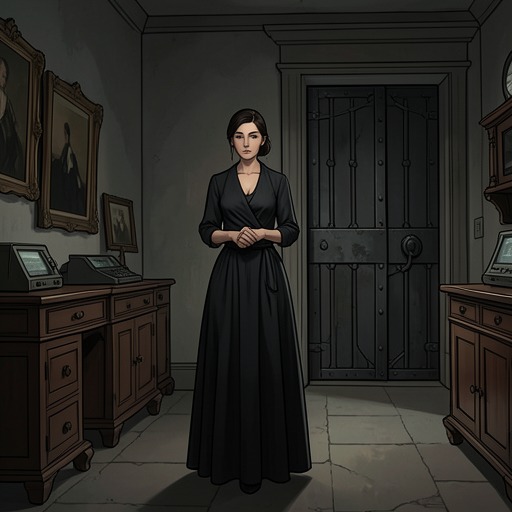
The disorder alters the meaning of Rowena's bedroom. Edwina remembers it first as a quiet sanctuary beside the drawing room, where her daughter did homework, listened to music, read, and cut out pictures of ponies. In retrospect, that same room becomes a nest of lies, with regurgitated food wrapped in tissues and hidden beneath the mattress. The contrast makes the disorder part of the household's concealed history: a private space once associated with a diligent child becomes a place where the evidence of her distress is kept out of sight.
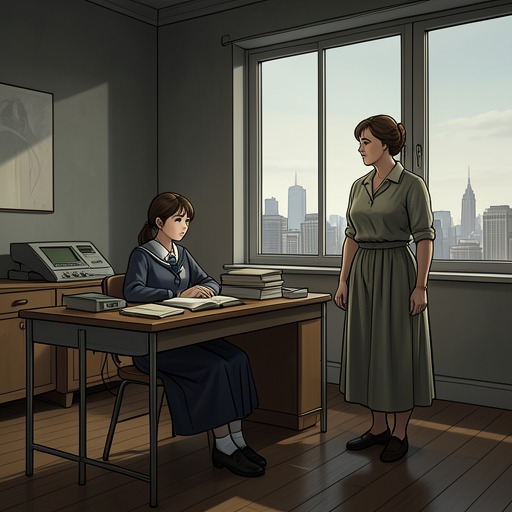
Edwina dates her first suspicion to when Rowena was about fifteen, during her O-level year. At the table, Rowena smeared food across her plate, cut it into minuscule squares, and chewed repeatedly, while swallowing very little. The performance could resemble an ordinary meal, but Edwina later understands that appearance and nourishment had separated. Avoidance followed: Rowena made excuses not to eat with the family and claimed to have had large school dinners or post-school toast. What looked like eating, and what she said about having eaten, obscured the pattern from the adults around her.
Recognition and Intervention
Edwina initially tried to explain away what she saw. She wondered whether Rowena was simply going through a phase or had lost her appetite because she was studying hard, eating alone with two adults, or uncomfortable with the formality of the dining room. The boys were away at school, and Edwina considered whether the family might make meals more casual. These possibilities show her searching for an alteration in circumstance that could account for the behavior, before she could accept how serious it was.
The evidence became harder to dismiss as Rowena's uniform hung loosely on her and she lost a great deal of weight. Dickie reassured Edwina that girls sometimes had strange eating phases. He also pointed to Elise Landreth, the daughter of Paul Landreth and the goddaughter of Barbara, who had been sent home from boarding school after stopping eating and developing what he called anorexia nervosa. Edwina felt that Dickie's attention returned too readily to the House and to another family's experience, while the problem in their own home continued. She had heard Rowena vomiting; Alicia then found napkins containing putrefying food behind the radiators in Rowena's bedroom, along with evidence of chocolate binges and empty laxative packets.
Alicia alerted Edwina to what she had found, and Edwina contacted Rowena's school. That led to upsetting meetings with therapists and doctors. Rowena appeared ashen and caught out, and told her mother that the behavior seemed to be the only thing she could control. Edwina held her as they both cried. The family congratulated itself on having caught the problem early, but that apparent breakthrough did not mark a clean ending.
Recovery Without Resolution
Rowena improved, but Edwina remembers that she never fully recovered. She did not clean her plate or take seconds, and she would eat pudding only when drunk. Being caught eating cheese could bring a desperate expression of guilt. Food remained tied to distress: when upset or stressed, Rowena rejected it. The persistence of these behaviors complicates the family's initial relief after the meetings with professionals. The crisis had become visible and had been addressed, but ordinary meals did not simply return to normal.
At a later birthday, after Rowena had returned from Oxford, Edwina could see that her daughter was much better, yet still governed by rules around eating. Rowena slowly shredded a butterless ham sandwich into tiny crumbs, swallowed them between repeated sips of water, and ate in a ritualized way. Edwina knew from experience not to watch. Instead she wiped surfaces, polished the candlesticks, and went in and out of the garden. Her avoidance is a form of care shaped by the history of illness: the meal takes place in the family home, but Edwina gives her daughter privacy rather than making her eating the object of attention.
Contrast and Narrative Significance
The disorder also distinguishes Rowena's response to emotional difficulty from Lucas's. Edwina recalls that Rowena rejected food when upset or stressed, whereas Lucas went straight to the biscuit tin for comfort. The contrast does not make either response a simple choice; it shows how differently food organizes each person's behavior. For Rowena, the recurring pattern is restriction, concealment, and ritual, while Lucas turns toward eating as immediate comfort.
Across Edwina's memories, the details accumulate rather than resolve into a single recovery scene: tiny squares on a plate, hidden tissues, napkins behind radiators, laxative packets, and, years later, crumbs swallowed with water. The bedroom's changed meaning and the birthday sandwich's painstaking ritual carry the same tension between what can be seen and what remains difficult to repair. Rowena's disorder is no longer hidden in the same way, but its afterlife remains present in the meals her mother remembers and in the care Edwina takes not to watch.