Old Dragon
MulanOld Dragon is an aged Immortal healer whose departure from an island gives rise to Green Island’s Dragon Beard Grass and leaves its people with a lasting charge to protect their peaceful way of life. The story presents him as a benefactor whose medicine, advice, and presence have become woven into village life; even after he is gone, the island’s grass preserves a material trace of his passage and the cost of losing him.
Identity and Background
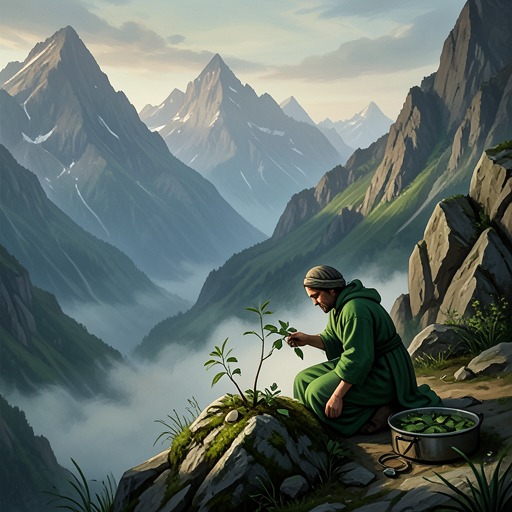
Many centuries before the events of the frame story, Old Dragon lived on an island, where he collected herbs and plants in the hills and made medicines. People from the village came to him every day for remedies, help, or advice. The account emphasizes the breadth of his service: the villagers turned to him for problems both great and small, and regarded him as wise and powerful despite his bent, aged appearance.
His name reflects the villagers’ understanding of him rather than a confirmed dragon identity. Some came to believe that he was a dragon spirit in human form; even those who did not share that belief called him Old Dragon. The title thus records a communal reputation built from healing and counsel, while leaving the supernatural explanation as a belief held by some of the people, not a fact the tale establishes about his nature.
Departure from the Island
One spring day, Old Dragon announced to the people who had come to see him that he would leave. The news spread quickly, drawing the island’s villagers into a crowd. Their questions and pleas show how much they depended on him: his departure was not merely the loss of a respected figure but the end of a familiar source of everyday assistance. Old Dragon answered that he was needed elsewhere, without elaborating on where he was going or what awaited him.
He departed by summoning a shimmering cloud at his feet and stepping onto it. Before rising away from the assembled people, he told them that he had enjoyed his time with them and urged them to cherish the island’s spirit of peace. As the cloud carried him into the sky, he called a farewell down to the villagers. Their grief continued after their initial wonder had passed, and some reached toward him in an attempt to keep him from leaving. In doing so, they grasped the beard hanging over the edge of the cloud. Its hairs came away easily, and the villagers saw red at their ends. Horrified, they released them. The episode makes the separation tangible: their effort to hold on produces only a trace of Old Dragon, not a way to prevent his departure.
The Origin of Dragon Beard Grass
The villagers could not stop Old Dragon from ascending and disappearing, but they responded to his final counsel by vowing to honor the island’s peaceful spirit. The hairs they had pulled free were carried by the wind across the island. In its rich soil, shaped by what the tale calls the island’s peaceful heart, they took root and grew into Dragon Beard Grass. The grass eventually carpeted the island, which came to be called Green Island.
In the frame story, Mulan connects the grass’s appearance to Old Dragon: she asks whether its blades were his hair and whether the roots are red because of his blood. The Jade Rabbit confirms her interpretation. The origin tale therefore ties the landscape to both departure and remembrance. The green covering is the consequence of Old Dragon’s leaving, while the redness at the roots preserves the villagers’ brief, regretful attempt to hold him back. His living guidance is gone, but the plants offer a continuing reminder of the promise the people made in response to it.
Narrative Role and Legacy
Old Dragon’s story is told on Green Island as an explanation of its name and distinctive grass. The Jade Rabbit recounts it after Lu Ting-Pin suggests that Mulan should hear the tale; Mulan listens closely and recognizes the connection between the story and the plants around them. Lu Ting-Pin then remarks that the Jade Rabbit possesses stories even when he does not know he possesses them. That framing presents the legend as knowledge carried through narration and place: the island itself supplies evidence of a past that its listeners can recover by hearing its story.
Old Dragon’s significance lies in the way his departure changes the people’s relationship to the island. While he lived there, villagers sought solutions from him; after he leaves, they must preserve the quality of life he asked them to cherish. The grass does not replace his counsel, but it gives their pledge a visible, enduring form. His legacy is consequently both ethical and material: a request to safeguard peace, and a landscape that recalls the moment the villagers lost their healer.