Green Island's blight
MulanGreen Island’s blight is a prolonged loss of fertility that leaves the island’s soil altered, its vegetation scarce, and the Dragon Beard Grass remembered from its past nowhere to be found. It first appears to be an obstacle in Mulan’s search for the rare grass, but its duration and eventual reversal give the landscape a story of its own: the island’s condition reflects a deeper disturbance, and its greening again marks a return to peace.
Signs of the Blight
When Mulan, Lu Ting-Pin, and the Jade Rabbit reach Green Island, the name seems at odds with what they see. The Jade Rabbit explains that Dragon Beard Grass once grew there abundantly, but no longer does. Lu Ting-Pin insists that some might remain and proposes searching under every rock and bush. After a quick meal from a street peddler, the three climb the sloping countryside, where the grass is said to have covered the land toward the sea. They find no blade of it.
The failed search makes the loss concrete. From a hilltop, Mulan can see their boat, marked by its bright red sail, and a cavern with what appears to be a statue at its entrance; below them, the ground is crumbling. The Jade Rabbit describes the plant so that Mulan can recognize it: fine, wavy, and potentially long, with bright red roots when pulled from the soil. The grass is not merely missing from a particular patch. The landscape offers none of the signs by which the travelers might identify it.
Later, Lu Ting-Pin reports what he has learned from Li Jing’s father: a blight struck all the island’s plants about twenty years earlier, and the land has not recovered. The soil itself has changed and is no longer fertile, so very little grows. Green Island has managed to continue because its livelihood depends chiefly on fishing and trade. That practical means of survival stands in contrast to the extent of the ecological loss: the island’s inhabitants can sustain their community, but the land’s former abundance has not returned.
The Grass and the Island’s Story
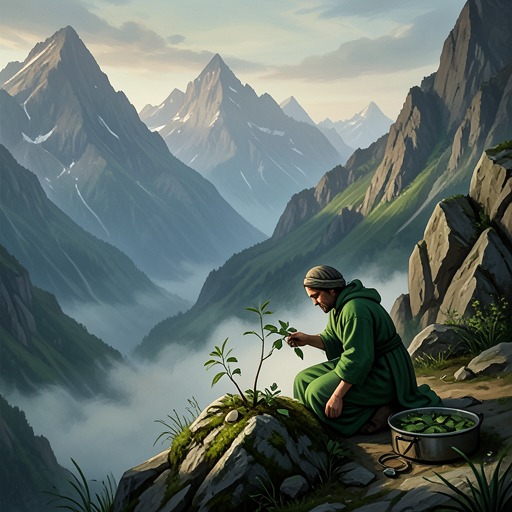
The search leads into a story of the island’s earlier relationship with the Dragon Beard Grass. At Lu Ting-Pin’s urging, the Jade Rabbit tells Mulan about an immortal who lived there many centuries ago. He gathered herbs and plants in the hills and made medicines, helping islanders with problems both large and small. People came to him for remedies, assistance, and advice. Although aged and bent, he seemed so wise and powerful that many believed he was a dragon spirit in human form; even those who did not share that belief called him Old Dragon.
When Old Dragon departed, the people begged him not to leave. Some reached for him as he rose on a cloud, but could grasp only his beard. Its hairs slipped from his chin like young weeds pulled from a garden, and the people saw tiny drops of red blood at their ends. After Old Dragon disappeared, the islanders resolved to honor the peaceful spirit of their home. His beard hairs, carried by the wind, took root in soil described as enriched by that peaceful heart. They grew into a lush carpet of green grass, and the island became known as Green Island. The Jade Rabbit confirms Mulan’s inference that the grass is Old Dragon’s hair and its crimson roots recall his blood.
This origin makes the blight more than the disappearance of a useful plant. In the island’s remembered history, Dragon Beard Grass grows through a relation between Old Dragon’s departing gift, the soil, and the people’s commitment to their home’s peaceful spirit. The Jade Rabbit therefore reads the changed soil as evidence that the island’s heart is in turmoil. The account does not identify a specific cause for the blight, but it connects ecological fertility to the island’s spiritual condition rather than treating the land as an inert backdrop.
Disturbance and Recognition
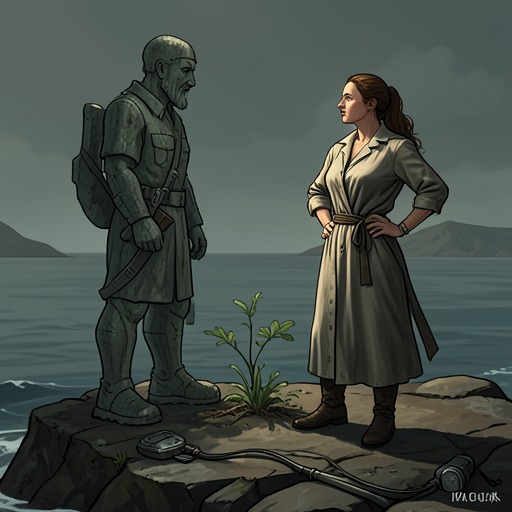
The twenty-year duration of the blight gives Mulan a clue. She recalls that the Stone Statue appeared around the same time the soil changed and wonders whether the two developments are connected. Her thought remains a suspicion, not a confirmed explanation in the conversation: the Jade Rabbit is focused on the apparent impossibility of finding grass in infertile soil, while Mulan’s emerging idea is temporarily interrupted. The timing nevertheless directs attention toward the figures on the island as part of the mystery of its damaged condition.
The next morning, Mulan returns to the Stone Statue and the Odd-Shaped Rock. Neither remains intact: both have crumbled into piles of dust and dirt. When she touches the granules, wind blows the dust into the air. Morning sunlight catches the particles and makes them glitter, then another gust scatters them beyond the cliffs. Among the remaining dust, Mulan finds delicate green stalks. She pulls one and sees crimson roots, matching the Jade Rabbit’s description, then gathers more and runs to show him and Lu Ting-Pin. In the specific place where the stone forms had stood, the sought-after grass has reappeared.
Return to Green
The grass’s discovery accompanies a wider change. As Mulan and her companions sail away, the island no longer looks like a jagged brown mass. Yellow-green spreads over the peaks and rocks toward the sea, and Green Island is green again. Mulan understands this transformation as a sign that the island’s heart is at peace. The return of the grass and the changed appearance of the land thus answer the earlier diagnosis of infertile soil and inner turmoil, although the narrative does not spell out a mechanical cause-and-effect account.
The blight’s resolution also changes the meaning of the search. At first, the island is a hostile absence: the travelers cross barren hills looking for a plant they have been told once grew everywhere. The answer comes not from finding a surviving patch in the countryside but from the crumbling of the Stone Statue and the Odd-Shaped Rock, followed by new shoots in the dust. The island’s recovery is therefore both material and legible as a restoration of the peaceful spirit associated with its founding legend. Its renewed green is not simply scenery glimpsed from the boat; it completes the grass’s return and gives the island’s long decline a visible reversal.