The White Fox’s Honey: Enchantment and Control
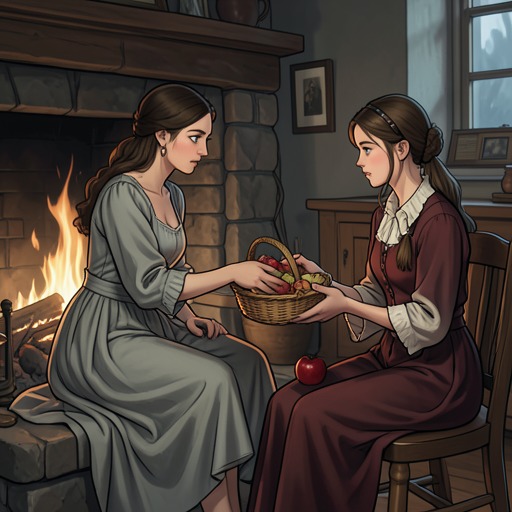
MulanThe White Fox’s honey is a deceptively generous offering that functions as a means of enchantment and control. Its power is not merely that it can kill: while Mulan possesses it, she cannot speak freely about the White Fox, and eating it would ultimately make her carry out the fox’s wishes. The honey thus turns hospitality into restraint, making a gift appear benign while restricting the recipient’s speech and choices.
The Honey as a Means of Control
The Rabbit explains the honey’s first effect after Mulan is able to speak openly about her encounters with the White Fox. While Mulan held the honey, the fox could prevent her from talking about her. The Rabbit describes the effect as though Mulan’s lips were being held together: she could speak only when the White Fox allowed it. Mulan recognizes this as the reason conversation with the woman had repeatedly felt difficult. The honey’s control therefore operates before it is eaten; possession alone interferes with Mulan’s ability to disclose what is happening.
The Rabbit distinguishes this silencing from the poison’s more severe consequences. The honey is definitely poisonous, he tells Mulan, and eating it would eventually kill her. Before that happened, however, the victim would lose the ability to speak without the White Fox’s permission and would have to do her bidding. The sequence matters: the honey offers the White Fox a period in which a victim remains alive but is deprived of independent speech and action. Its danger lies not only in a final fatal outcome, but also in the control exercised in advance of it.
Mulan’s encounters show why that combination is dangerous. She has received the honey from the White Fox, but while holding it cannot readily explain the woman’s conduct. Once she is free to tell the Rabbit what happened, the restriction becomes intelligible: what had seemed like an unexplained difficulty in speaking was itself part of the White Fox’s influence. The honey consequently obstructs the very act of warning another person. Its apparent value as a gift conceals a mechanism that isolates its holder from help and disclosure.
The Scholar and the Sustaining Gift
The Scholar’s story presents a related pattern of control, though the evidence does not identify the food he receives as the same poison. Disguised as his wife, the White Fox gives him honeyed plums, a rare delicacy whose sweetness draws a sound of pleasure from him. When he wonders how they can afford such food, she redirects his attention to the work she says a noblewoman has given him. The pleasure of the food accompanies, and helps sustain, his absorption in the task.
The apparent wife puts the Scholar to work translating an ancient oracle bone. She urges him to begin and keeps him at his desk hour after hour and day after day. As soon as he wakes, she directs him back to work; when he pauses, she presses him to continue. She brings meals, tea, and sweets so that he has no need to leave. He eats without attention to anything beyond the work, fascinated by the bone and the secrets it might contain. Food here is not shown to silence him in the precise way the honey silences Mulan; rather, provision and constant direction form part of the deceptive arrangement that keeps him at the desk.
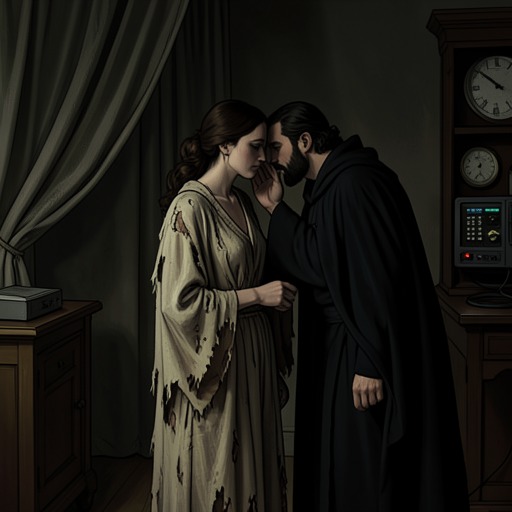
The duration of this arrangement becomes visible in the Scholar himself. While working, he notices that his beard has grown long, then finds it coarse and streaked with white; his fingers are wrinkled and frail. He cannot remember the season or year, or anything beyond the room and his desk. The woman beside him, by contrast, remains young and unchanged. When the Scholar connects the oracle bone’s prophecy of a child who will save the Emperor with his own circumstances, the contrast prompts suspicion. He identifies the bone as evil, then asks why she has kept him working and why he has aged while she has not. When she falls, a white fox tail appears beneath her robe, exposing the false wife as a fox spirit. The episode makes prolonged labor, provision, and concealed identity part of a broader pattern of enchantment, while stopping short of stating that the Scholar’s food has the honey’s particular poison.
The Red Fox and the Cost of Obedience
Mulan asks whether the Unwanted Girl suffered the same kind of control. The Rabbit, whose sadness deepens whenever the girl is mentioned, has no doubt that the White Fox’s poison was involved. The girl’s earlier life gives that conclusion its human context: her mother resented her, struck her, and habitually left her with little food, while the other families treated her as the child who bore the greatest share of her mother’s anger. She also displayed uncanny abilities, surviving danger and even making a threatening beast obey her. Those abilities did not protect her from the White Fox’s power.
After the Unwanted Girl and the Rabbit escape from the garden, the White Fox is waiting. The girl rises and walks toward her; as she approaches, she transforms, and the White Fox gains a servant condemned to follow and obey her. The girl has become the Red Fox. The Rabbit’s account connects this lasting servitude to Mulan’s fear that the honey could turn a victim into an instrument of the White Fox’s will. The story does not make the girl’s unhappy childhood itself a result of the honey; instead, it shows how vulnerability and the fox’s power converge in a permanent loss of freedom.
Deceptive Hospitality and the Pattern of Giving
The honey’s false generosity stands in contrast to the Rabbit’s account of the sacred full-moon night decreed by the Jade Emperor. On that night, people and animals are expected to feed anyone in need, and refusal brings dishonor. The Rabbit gathers food from other animals because grass alone would not make a suitable feast for the hungry. Later, unable to feed a beggar, he offers himself and leaps into the fire. These episodes give the story a clear contrast between giving that answers another’s need and an alluring gift that makes its recipient easier to control.
The contrast clarifies the honey’s narrative function without making every offered food part of the same enchantment. The honeyed plums sustain the Scholar’s deceptive confinement; the White Fox’s honey restricts Mulan’s speech and, if eaten, would compel obedience before killing her. In each case, food is bound to a relation of power, but the stories distinguish genuine generosity from provision used to entrap. Mulan’s eventual ability to tell the Rabbit what happened is consequently more than an explanation of her difficulty speaking: it marks the return of the disclosure and agency that the White Fox’s honey was designed to deny.