Surging, Rushing Rivers in the City of Rushing Water
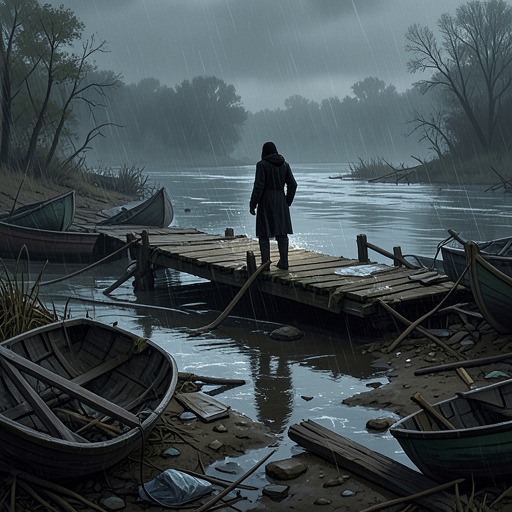
MulanThe river in the City of Rushing Water changes from a fast-moving waterway serving a busy port into a source of sudden destruction. Its dangerous rapids and unpredictable floods make travel by boat perilous, ruin homes, and help leave the surrounding area poor and depopulated. The account gives no cause for the change; instead, it reveals its consequences through the ruined city Hua Mulan encounters on the road.
The River and the Port’s Earlier Prosperity
The river was already known for moving quickly, a feature reflected in the name City of Rushing Water. In the city’s prosperous past, boats regularly docked there, and the port was bustling. The waterway was therefore more than a striking feature of the landscape: it connected the city to boat traffic and supported its life as a port.
That history shapes the contrast with the place Hua Mulan is approaching. The Jade Rabbit describes the port’s former activity before explaining its present condition, giving the river’s transformation a clear before and after. The river itself was once fast, but speed had not yet made it an insurmountable danger; the decisive change came when its flow became wild.
From Fast Current to Unpredictable Danger
The account does not identify why or how the river changed. It describes the change through what the water now does: the formerly fast current has become dangerous rapids, and the river floods without warning. This combination makes the water difficult to rely on, not merely swift. Its danger is both persistent, in the rapids, and sudden, in the floods.
The consequences for river travel are stark. Any boat attempting the route is smashed against rocks and destroyed. The former port’s defining activity has thus become nearly impossible: the river that once received boats now wrecks them. No successful passage or safe season is mentioned, and the account offers no sign that the water has returned to its earlier state.
Damage, Departure, and Decline
Flooding has ruined most of the homes. Residents who were able to leave did so some time earlier, while those events left behind are not described in detail. The Jade Rabbit connects this physical destruction and departure with the area’s present poverty and lack of prospects. The decline is not represented as a single calamity alone: the river’s repeated danger has damaged homes, undermined travel, and accompanied the loss of much of the population.
The contrast is especially severe because the same waterway once made the city a destination for boats. Now the ruined homes and the destroyed vessels point toward a community whose former advantages have turned into liabilities. The narrative does not specify what became of each resident or how the remaining people live, but it makes the broader result plain: the port’s prosperity has given way to hardship and diminished opportunity.
What Hua Mulan Finds on the Road
Before seeing the city, Hua Mulan has imagined a grand place worthy of a visit to Lu Ting-Pin, one of the Mighty Eight Immortals. Her expectations include tiled roofs and ornately carved wooden windows. The account of the river’s floods revises that picture even before she reaches the gate: a once-thriving port now belongs to a poor area with few prospects.
The approach makes the decline visible in the built landscape as well as in the Jade Rabbit’s account. The road is overgrown, with fallen branches and broken, crumbling bricks; ahead, a long grey stone wall and weather-stained pillars stand where Hua Mulan expects the signs of a majestic city. The river’s effects are not shown directly in a flood scene. Instead, its history and consequences prepare the reader to see the damaged road and aging city as the remains of a former prosperity that the waterway can no longer sustain.