Hugh Legat and Leyna’s affair
MunichHugh Legat and Leyna’s affair grows out of a dangerous outing to see Adolf Hitler and culminates in an intimate encounter that Legat later regards as the defining adventure of his carefully ordered youth. The episode binds attraction to political risk and youthful recklessness, but its immediate aftermath is departure: Legat leaves Munich, while his friendship with Paul von Hartmann is left suspended in silence and suspicion.
Origins and the decision to go
Leyna wanted to see Hitler in person, not hear him speak. A self-declared communist, she regarded attending one of his rallies as unthinkable; instead, she proposed waiting outside his apartment in the hope of catching sight of him. Her interest was in the man who had risen so quickly from political insignificance toward the chancellorship, and the proposal drew Legat into an outing that Hartmann opposed from the start.
Hartmann dismissed the plan as a trivial diversion and objected to concentrating on an individual rather than the social forces that had produced him. Legat later understood that this political objection was not the whole explanation: Hartmann knew Leyna’s capacity for recklessness and feared what the visit might entail. Leyna asked Legat to cast the deciding vote, and he supported her. He was curious to see Hitler, but his stronger personal reason was that he was already half in love with Leyna. The attraction was apparent to all three, though they treated it as a joke. Legat was twenty-one, a virgin, and far less experienced than Hartmann.
The three set off after a picnic on the grass at Königsplatz. It was the first week of July, just after midday, and Leyna would not be diverted when Hartmann suggested swimming instead. Her determination carried the group onward toward Hitler’s apartment—and toward the confrontation that would alter the character of their day together.
The confrontation and flight
When Hitler appeared outside the apartment, Leyna publicly insulted him. Hitler’s expression remained unreadable as he got into his car, but several members of the SA broke from their positions and moved toward her. Hartmann seized Leyna and pulled her away. Legat pushed aside a woman who tried to obstruct them, and the woman’s husband struck him. The three ran from the square, with the Brownshirts pursuing them.
Legat became separated from Hartmann and Leyna when he turned down a side road. The pursuers stopped following him, leaving him alone to recover. The contrast in his recollection is striking: he had been frightened during the escape, yet afterward felt intensely alive. His sudden exhilaration belongs to the same break from ordinary routine as the outing itself, which had begun as Leyna’s risky proposal and become a physical flight from the men protecting Hitler.
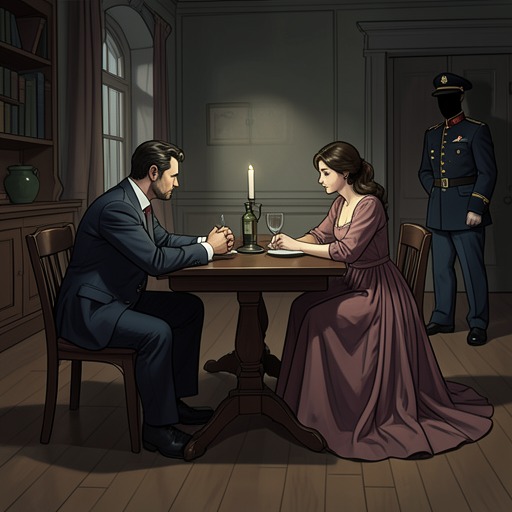
At the hostel, Legat found Leyna sitting in the courtyard. She rose to embrace him and checked whether he was all right. Hartmann was absent. Leyna explained that, after the danger had passed, she and Hartmann had argued; he had then walked away. Her attention shifted to Legat, whom she took upstairs and cared for while he rested. In that quieter setting, her closeness and his long-suppressed attraction met in a kiss. She initially resisted, then returned it. The encounter transformed the triangle’s earlier, jokingly acknowledged tension into an intimacy with consequences.
Separation and retrospective meaning
Hartmann did not return that night. The following morning, Legat left his share of the bill on the dresser and took the earliest train out of Munich. He later described this as the only great adventure in the carefully planned life he had led up to that point. The abrupt departure gives the episode its double character: it was an intensely vivid breach in his orderly existence, but not the beginning of an acknowledged or sustained relationship. Legat left rather than remain to resolve what had happened with Leyna or Hartmann.
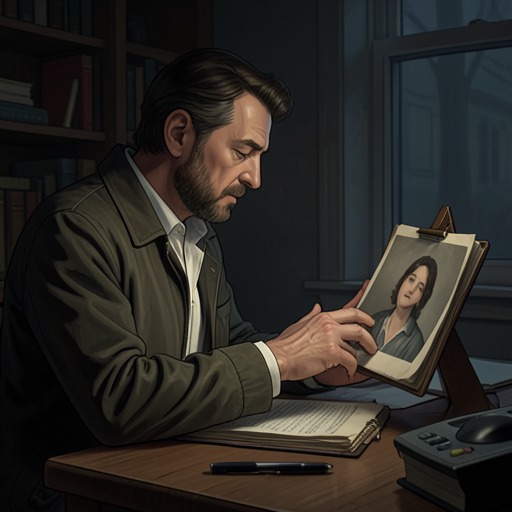
Years later, Legat still did not know whether Hartmann understood the nature of his betrayal. He assumed Hartmann must have known, reasoning that otherwise the long silence between them would be hard to explain. That remains Legat’s interpretation, not a certainty. He had also written Leyna two letters, both filled with love, remorse, and what he later recognized as pompous moral instruction. Both came back unopened. Their return supplies the clearest evidence that his attempt to explain or repair the rupture did not reach her; the record does not establish what she thought or why she refused the letters.
The affair’s place in Legat’s past
The affair is recalled not as a settled romance but as a compact sequence of choice, danger, intimacy, and withdrawal. Legat votes for Leyna’s plan partly from attraction, follows her into a politically charged encounter, and experiences the escape and its aftermath as a release from his habitual restraint. Yet when the moment passes, he leaves without speaking through its consequences. The gap between the force of the memory and the brevity of the relationship is central to its significance in his account.
Hartmann’s absence and Legat’s departure leave their friendship entangled with the affair. Hartmann had opposed the outing partly because he understood Leyna’s recklessness; after the escape, his quarrel with her and his failure to return deepen the sense that the three companions have been divided by what happened. Legat’s later uncertainty about Hartmann’s knowledge, together with Leyna’s returned letters, keeps the episode unresolved. Its lasting weight lies less in a known romantic outcome than in the way one impulsive day interrupts Legat’s planned life and remains, years afterward, a measure of what he risked and abandoned.