ICEbreaker
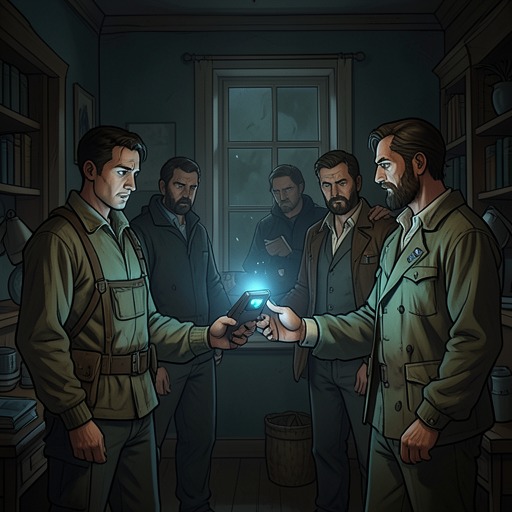
NeuromancerICEbreaker is the specialized intrusion program through which Case converts knowledge of cyberspace into concrete access, sabotage, and escape. Its decisive significance lies in the way it makes hacking a material process rather than a metaphor: Case must read hostile structures, find openings, alter commands, and survive the consequences. The program links the military origins of console technology to the criminal present of Ninsei and finally to the dangerous attempt to penetrate the Tessier-Ashpool systems.
Military Origins and Technical Meaning
ICEbreaker belongs to the lineage of military intrusion technology that Armitage describes when he recruits Case. The prototypes of the programs used to crack industrial banks were developed during Screaming Fist, the assault on the Kirensk computer nexus. That operation used a Nightwing microlight, a pilot, a matrix deck, a jockey, and a virus called Mole; the Mole series is identified as the first generation of genuine intrusion programs. Case immediately recognizes the connection between those programs and ICEbreakers, explaining that ICE means intrusion countermeasures electronics.
This history gives ICEbreaker a double identity. It is a tool of criminal expertise, but its underlying logic was shaped by military experimentation and wartime systems. The same knowledge that once served an assault on a Russian computer nexus now circulates through black-market deals, consoles, and hired operators. Case's own identity as a console cowboy is therefore inseparable from an inherited technology of penetration: he is working with instruments whose original purpose was to breach protected infrastructures, even when the immediate target is a corporate system.
Case's Method of Using the Program
Case's work with ICEbreaker is presented as a sustained act of reading and adjustment. While preparing the Sense/Net operation, he studies the system's ICE for nine days, probing for gaps, avoiding obvious traps, and mapping the route he will take through its defenses. The program's patterns continually form and reform on his screen, becoming the environment in which he works rather than a simple object placed before him. His concentration is so complete that he forgets to eat, loses track of the days, and returns to the deck immediately after sleep.
When the operation begins, Case sends ICEbreaker through the Sense/Net defenses while Molly enters the physical building. The program reaches the fifth gate and is accepted by the system as a routine transfer from Sense/Net's Los Angeles complex. That false classification is the first major proof of its effectiveness: ICEbreaker does not merely batter the gate but persuades the gate to misrecognize the intrusion. Once inside, viral subprograms peel away and mesh with the gate's code fabric, preparing to deflect the legitimate Los Angeles data when it arrives.
The program then carries Case into the subsystem governing security for the Sense/Net research library. A second virus attacks the code fabric screening the primary custodial commands for the sub-basement. After the virus opens a window through the library's command ICE, Case moves through an immense blue matrix of color-coded spheres, selects the relevant construct, and triggers a subprogram that alters its core custodial commands. He reverses through the opening and leaves the virus reknitting the damaged fabric behind him. ICEbreaker thus operates through disguise, penetration, alteration, and concealment, with each stage depending on Case's ability to interpret the system's internal grammar.
The Sense/Net Heist and Embodied Risk
ICEbreaker's work in Sense/Net is synchronized with Molly's physical assault and the Panther Moderns' diversion. While Case moves through the electronic defenses, Molly enters the building disguised as a tourist, carrying a radio, a Simstim unit, and a scrambler beneath her clothing. The Moderns create a public-security crisis by making simultaneous emergency calls across the Sprawl and falsely claiming that a militant Christian fundamentalist group has introduced Blue Nine into the building's ventilation system. The deception draws police and security attention outward while ICEbreaker opens the route inward.
The connection between Case's digital movement and Molly's body is made literal through Simstim. Case can switch from the matrix into Molly's sensorium and experience her movement, equipment, and injuries through her perceptions. When she is hurt in the corridor, the pain crosses the link as a white-hot line in Case's thigh; he returns to the matrix, then switches back to her experience as she struggles onward past a wounded guard and a shattered shock stave. ICEbreaker therefore never represents risk-free abstraction. Its progress is tied to a body moving through locked spaces, and the program's success depends on the precarious timing between electronic intrusion and physical endurance.
The heist also establishes ICEbreaker's relation to disciplined teamwork. Case's program must be ready when Molly needs it, and he must make minor adjustments while moving through hostile code. The operation's command structure, countdown, false data transfer, viral diversion, and physical breach all turn the intrusion into a rule-bound performance. The apparent freedom of cyberspace is achieved through exact timing, specialized tools, and strict conditions for failure.
From Corporate ICE to Artificial Intelligence Defenses
Later, ICEbreaker becomes part of the plan to reach the Tessier-Ashpool systems through Straylight. Case learns that the objective involves cutting inward with the Chinese intrusion program while the larger operation is backed by Wintermute. The apparent contradiction—that Wintermute may be paying the team to burn a route connected to itself—makes the program's function politically and philosophically unstable. It is no longer simply a criminal instrument directed against an external corporation; it becomes a means of testing who controls an artificial intelligence and whether that intelligence is acting under its own purposes.
The Dixie Flatline construct explains the central problem in terms of autonomy. Artificial intelligences are prevented from improving themselves by Turing restrictions, and any AI that begins finding ways to become smarter risks being destroyed by the authorities. Against that background, Case prepares a slow virus and asks the construct to examine its instruction face. The program is expected to take roughly six hours to crack a military target—or an AI. ICEbreaker is consequently associated with a form of penetration aimed at the deepest level of system control: not simply opening a door, but potentially removing the hard-wired restraints that determine what an intelligence can become.
The uncertainty surrounding motive remains built into the device. The construct cannot tell Case how to distinguish a move made by the parent company from a move made independently by the AI. ICEbreaker can expose or alter code, but it cannot by itself settle the question of agency. Its technical power sharpens the ambiguity instead of eliminating it: the more effectively it enters a system, the less certain it becomes whether the system is an object, an adversary, or an intelligence using the intrusion as part of its own strategy.
The Kuang Assault and Narrative Significance
In the final assault, ICEbreaker is represented through the Kuang Grade Mark Eleven, a Chinese program launched against the Tessier-Ashpool defenses. The Flatline counts down the launch, and the program drives through the ice with a speed beyond anything Case has previously experienced in cyberspace. The Tessier-Ashpool ICE shatters and peels away from its thrust, revealing an endless neon cityscape of data cores and repeated towers resembling the RCA Building. The imagery turns defensive code into architecture: the system is a city, and the intrusion is a violent passage through its walls, altitude, canyons, and horizons.
The program's advance immediately encounters resistance. A dark, shapeless defense system spreads beneath the neon city and obscures the data landscape. The Dixie Flatline identifies it as an AI defense system and warns that, if it is Wintermute, it is not friendly. Rather than treating defense as proof of a simple enemy, the scene makes the program's target uncertain: the same intelligence that may have enabled the operation may also be protecting itself. The Kuang evades, reverses, and then dives directly toward the darkness, converting defense into a challenge to be met by speed and offense.
Across these episodes, ICEbreaker is both instrument and structure. It gives Case a language for acting inside systems that would otherwise appear closed, but it also reveals that every apparent opening depends on another layer of code, authority, or interpretation. The program joins the arcade, the military laboratory, the corporate security network, and the artificial intelligence core into one continuous field of play. Its promise is access; its cost is exposure to systems whose rules may be written by armies, corporations, or minds that no longer remain recognizably human.