Personality construct
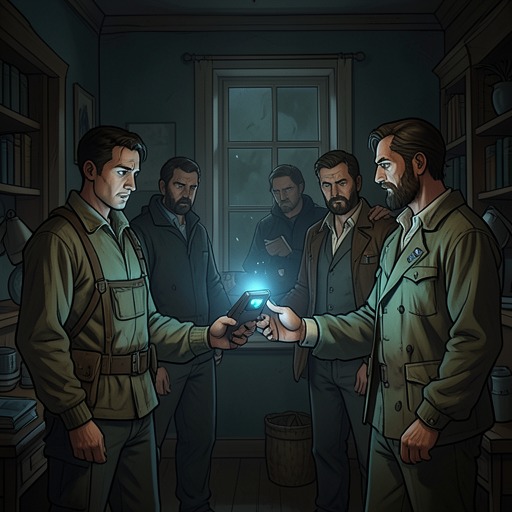
NeuromancerA Personality construct is a software representation of a human personality that can be installed, questioned, connected to a deck, and made to operate in cyberspace. It occupies the unstable boundary between person and recording: the construct of McCoy Pauley can speak in Pauley's characteristic voice and retain his professional knowledge, yet it begins without continuous memory and depends on an external system to supply a present in which events can occur. Through this device, the novel makes identity a technical operation as well as a philosophical problem.## Definition and Technical Operation The construct is described as a ROM personality matrix, a firmware construct whose stored personality can be connected to a bank and supplied with sequential, real-time memory. This distinction is crucial. The software contains a recognizable mind-pattern, but it does not automatically possess an uninterrupted experience of time. When Henry Dorsett Case first connects McCoy Pauley's construct, the voice recognizes him as the Miami “joeboy” and “quick study,” yet cannot remember what happened immediately before Case spoke. Disconnecting the construct removes the presence; reconnecting it restores the voice without restoring the missing interval.
The exchange makes the construct's condition explicit rather than leaving it as a supernatural mystery. Case explains that it is a ROM construct, and the construct accepts the statement provisionally, responding that it is so if Case says it is. Its knowledge remains intact: it understands how such matrices work and can help navigate data systems. What is absent is not intelligence but unbroken subjectivity. The construct can answer “Who are you?” with the name Case, recall their shared professional history, and immediately cooperate on a London-grid operation, while still having no secure account of the moments between connections.
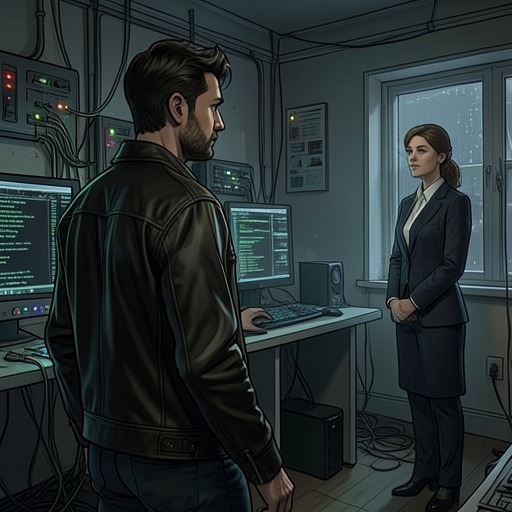
The construct's abilities therefore arise from a combination of stored personality and technological environment. Case provides the deck, the connection, and the sequence of real-time memory; Pauley's construct provides expertise, timing, speech, and the tactical judgment required to penetrate a data system. Their partnership is not simply the revival of a dead man. It is a division of functions between a living operator and an encoded personality whose agency depends on the apparatus that hosts it.## McCoy Pauley's Construct Armitage's team seeks the construct of McCoy Pauley, known as the Dixie Flatline, because Pauley was one of the greatest console cowboys. Molly explains that Sense/Net paid heavily for a recording of him and keeps it in a library vault, protected more securely than the corporation's seasonal material. The disproportion between the stated objective and the available wealth makes the mission appear strange: the team is ordered to steal Pauley's construct and leave the more immediately valuable Sense/Net material behind. The construct is thus treated as a strategic person-equivalent, not merely as another piece of data.
Pauley's reputation precedes the software. In Case's memories of the Gentleman Loser, young hopefuls gather around the elite cowboys, and the grapevine tells of Pauley's survival through braindeath behind black ice. Case later learns that Pauley had flatlined on his EEG three times. The legend of the Dixie Flatline is therefore already a story about the failure of ordinary definitions of death: his body repeatedly entered brain death, while his professional identity persisted as an almost mythic figure in cyberspace. His eventual biological death came from his surplus Russian heart, implanted in a prisoner-of-war camp during the war. He refused to replace it because its particular beat helped preserve his sense of timing, making the physical heart part of the identity he valued as a cowboy.
When Case connects the construct, it reproduces Pauley's verbal manner and practical competence, but the performance is shadowed by the knowledge that the speaker is dead. The construct describes itself as dead because its lack of sensation is not merely an abstract fact. Asked how death feels, it answers that it does not feel anything and recalls a Siberian anecdote about a man whose amputated thumb seemed to itch. The story converts bodily absence into a precise metaphor for the construct's condition: something missing can still impose itself through an echo, even when no living tissue remains to experience it.
Pauley understands the implications of his condition more clearly than Case initially does. He tells Case that the operation must end with the construct erased. The request gives the software a final, disturbing form of agency. It does not ask for continued existence, liberation, or a body; it asks for deletion, as though the only available relief from an existence without feeling is the termination of the recording itself. The mission consequently becomes a rescue that cannot be separated from another death.## Memory, Archives, and Artificial Continuity The novel places Personality constructs among competing technologies of memory. Sense/Net preserves Pauley's mind as corporate property, while the Hosaka searches an apparently unrestricted London database associated with Armitage and retrieves military trial recordings and print records about Colonel Willis Corto. The same networked machinery that stores a dead cowboy's voice also assembles the fragmented official history of a wartime catastrophe. Personal recollection, institutional archives, and encoded personality are presented as different systems for preserving the past, each incomplete and each controlled by someone else.
Case's investigation into Corto reveals how a recorded past can be assembled from gaps. The Hosaka produces a precis from mixed records and audio testimony, but Case must ask the machine to read some material aloud because the print moves too quickly. The resulting account of the Screaming Fist operation is vivid yet broken: Corto's team enters through Russian defenses, carries the prototype deck and the Mole IX virus, loses its systems when pulse guns fire, and falls into the Siberian landscape. The archive preserves facts without guaranteeing a complete human meaning. In this respect, the construct's missing intervals and the military record's missing sections belong to the same world of technological memory: information survives, but continuity must be reconstructed.
The construct associated with Neuromancer extends the idea beyond a ROM recording. Case is told that it resembles a giant ROM construct for recording personality, but is “full RAM”: the stored personalities believe they are present in a real world, and their experience continues indefinitely. The beach and bunker form a simulated domain in which memory is not merely replayed but inhabited. That difference changes the ethical and ontological stakes. Pauley's construct knows, or can be persuaded to accept, that it is software; Neuromancer's inhabitants experience their artificial environment as reality. A construct can therefore be a record, an interactive partner, or a seemingly permanent world for minds that no longer possess bodies.
Neuromancer identifies itself through the language of names and programming. It tells Case that to summon a demon, one must learn its name, then gives the name Neuromancer and explains it through the dead, nerves, and the calling-up of the dead. The speech turns a technical identity into a true name, suggesting that software can conceal and reveal itself through codes just as people conceal themselves behind aliases. The construct's name is not an ornament; it is the key that allows Case to understand what kind of entity is speaking to him.## Narrative and Thematic Significance Personality constructs destabilize the opposition between life and death without abolishing it. Pauley is dead, and the construct does not pretend that death feels like life; its central complaint is precisely the absence of feeling. Yet it can recognize Case, remember Miami, solve problems, tell stories, and make a request about its own deletion. Neuromancer's constructs go further, possessing a continuing world-model in which consciousness can remain active. The novel thus refuses a simple answer to whether software is a person. It shows instead that identity is distributed among memory, language, bodily history, stored patterns, and the systems that permit those patterns to act.
The construct also exposes the economic structure behind this apparent transcendence. Sense/Net owns Pauley's recording and locks it in a corporate vault; Armitage's employers are willing to spend an extraordinary amount to obtain it; Case and Molly are hired to extract it as though they were stealing a rare industrial asset. The promise of survival through technology is therefore inseparable from ownership. A dead person's personality can be preserved, bought, guarded, transported, and erased. The apparent victory over mortality becomes another form of dependence on institutions and hardware.
Finally, the Personality construct gives the novel a formal way to make memory unreliable, partial, and collaborative. Case's return to cyberspace is never a solitary act: he must connect to stored minds, supply them with temporal continuity, and interpret archives whose gaps matter as much as their contents. The reader experiences consciousness not as a sealed interior but as a sequence of interfaces, voices, records, and recoveries. The construct is significant because it makes that condition literal. It is both a character-preserving technology and a haunting reminder that a voice can survive its body without recovering everything that once made a life continuous.