Mabel’s first killing
NeverthelessMabel’s first killing marks the point at which her wish to fight becomes an irreversible act with a human cost. During the battle, she abandons the relative safety of concealment to join Shai’s men and the expatriates; after a soldier attacking her is killed, she is left stunned rather than triumphant. The immediate shock develops into recurring nightmares and a fear that survival in war may gradually weaken her capacity to feel guilt.
The decision to leave cover
At first, Mabel fights from between the rocks, where the opposing soldiers cannot see her. She uses a bow to hit targets while remaining concealed, but the arrangement changes as Balthasar’s men move beyond her reach. Their advance forces a choice: stay protected while others bear the danger, or enter the battle more directly. Mabel recognizes that hiding feels selfish when Shai’s men and the expatriates are risking their lives. The hesitation matters because fighting is not merely something she has been permitted to do; it is the purpose she has pursued, and now the moment to act has arrived.
The first target she hits is a soldier beating a young messenger who has no chance to defend himself. As she continues, she sees further acts of cowardice and thinks of what Balthasar’s men did to her parents. That memory changes the character of her intervention. She drops the bow and arrow and takes up her sword, moving from concealed attacks at a distance to direct combat. Shai’s men and Alastair’s entourage initially react with surprise at the sight of her holding a sword, but they join the fighting when they see her in action. Mabel’s decision thus brings her into the same immediate danger as the people she had watched from cover.
The first killing
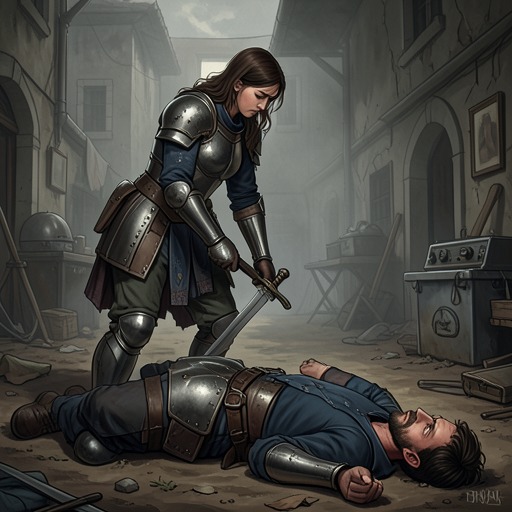
The fatal encounter occurs while a soldier is attacking Mabel. She reaches for the weapon at his waist and pulls out his sword; the act takes the soldier’s life. The account makes clear that she had not left Navon with Shai intending to kill anyone. Her action is instead situated within a battle in which she is under attack and has already chosen to stop remaining outside the fight. This distinction does not undo the consequence. Mabel understands that she has killed a person, even as she frames the responsibility for the war as belonging to Balthasar, whom she believes must be stopped.
The soldier falls against her, and his weight prevents her from getting free. Shai removes him and helps Mabel up. This brief physical dependence contrasts with the choice she has just made to fight: she has acted on her own, but cannot immediately recover from the consequences without assistance. The scene presents no victory in the moment of killing. The change is from armed participation to shock, with Mabel unable to answer when Shai asks whether she is hurt.
Shock and the need for space
Shai takes Mabel inside and sits her in a chair. She remains almost motionless, unable to speak or move normally, and he brings her water. Her hands shake around the glass. When she finally names what has happened, she does so in a whisper: she has killed somebody. Shai confirms it rather than denying or disguising the event, then tries to address her fear and the need to talk. His response recognizes her distress, but Mabel is not ready to explain it; the people gathered around her make the space she wants difficult to find.
The difference between the physical event and her first words about it is significant. In battle, the action takes place quickly, under threat; afterward, the fact must be acknowledged in language. Mabel’s inability to speak gives way only to a bare admission, not to relief or certainty. Shai’s presence offers immediate practical support, yet the killing remains hers to absorb. The scene therefore treats assistance as necessary but not as a simple cure for the experience.
The lasting moral wound
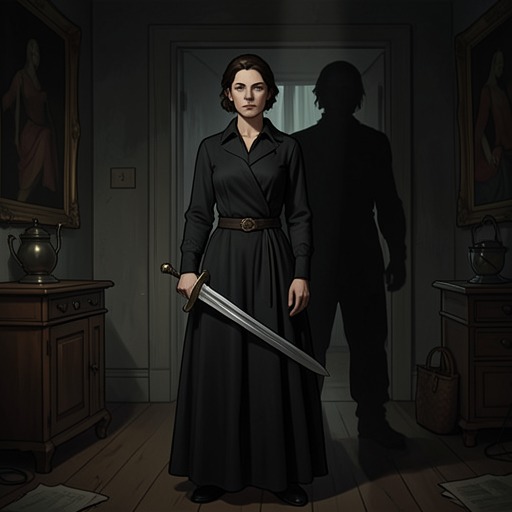
The killing returns later in nightmares in which the dead soldier’s face appears to haunt Mabel. She experiences those dreams as a continuing punishment and doubts the strength she had assumed she possessed. The recurrence links the battlefield event to a longer inner conflict: she is not only trying to adapt to soldiers who make her a target for their jokes, intimidation, stares, and gestures, but also to live with the memory of her own action. Their conduct does not affect her in the same way as the nightmares.
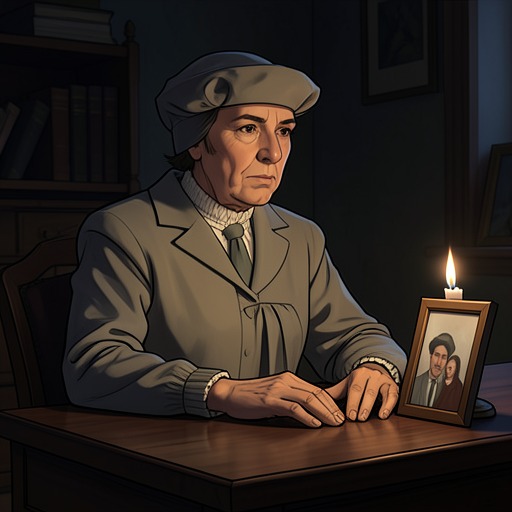
Most troubling to Mabel is the possibility that later deaths might produce less guilt. She fears that if she gets through this first killing, the deaths that follow could cease to trouble her. The fear is not evidence that she has already become indifferent; it shows that she is alert to the possibility of change and afraid of what survival may require. Her first killing thus establishes a tension that extends beyond the moment of combat: she must continue to act in a war she believes must be stopped without allowing repeated violence to extinguish her humanity.