Tzara’s invasion and the Battle of Navon
NeverthelessTzara’s invasion and the Battle of Navon expose the cost of a kingdom that has long relied on alliances instead of preparing to defend itself. As the threat becomes immediate, Navi and Shai assemble a defense, civilians are moved toward the castle, and Mabel chooses to fight rather than accept safety behind its walls. The battle makes protection a shared political and personal question: who is sheltered, who is expected to stand, and what each person is willing to risk for Navon.
Causes and Vulnerability
Navon’s danger has a history. Before Tzara threatened the kingdom, Navon’s battles had largely been fought on behalf of other kingdoms. Its alliances offered military support in exchange for men sent to defend the lands of powerful neighbors. Many Navonians deserted rather than fight those distant wars, and the kingdom’s punitive exile system made desertion a permanent severance from home. Now, when Navon itself is threatened, it has too few soldiers and cannot rely on an ally that fears Tzara’s retaliation. The account presents this shortage not as an accident but as the consequence of choices made in the name of alliance.
That weakness shapes the kingdom’s attempts to secure help. In Navi’s council, he favors offering Navon’s best products in exchange for political alliances, while his counselors resist conditions that would burden the kingdom over the long term. Navi recognizes that neighboring kingdoms are exploiting Navon’s vulnerability and that special privileges in exchange for protection would be unfair; nevertheless, the lack of better options leaves him bargaining from weakness. The approaching invasion gives those negotiations a sharper meaning: a kingdom that has given military service to others must now find protection for itself.
Shai’s band offers a different route to defense. Its members do not begin as royal troops: Shai describes them as mercenaries who perform paid services, including rescuing people and recovering stolen money. Their proposed support therefore raises the question of resources and terms. When Navi asks what the group wants, Shai says they are not doing it for money. The eventual alliance rests on a commitment that cannot be reduced to the ordinary exchange Navi has been struggling to negotiate.
Warning and Preparations
Shai brings the warning directly to Navi: Tzara will cross Navon’s boundaries, and there is little time. He has brought his own men, and the expatriates will come as well. His knowledge comes from scouts and allies, giving the defenders advance notice rather than leaving them to discover the invasion only when the enemy arrives. Navi agrees to let Shai’s men enter, then turns to the immediate work of preparing the kingdom.
Navi’s first stated priority is to bring the whole village to the castle, acknowledging that evacuation will be difficult and take time. He also needs to find the soldiers and call the army. Shai follows him with a separate concern, asking where he can find Mabel. When Shai asks Navi to ensure that Mabel survives, he makes clear that this is a personal concern, not his own reason for joining the defense; his men are fighting for Navon, while he wants her alive. Navi promises to have someone look for her.
The warning becomes action in the middle of the night. Villagers emerge from their homes in sleeping clothes, initially afraid that Tzara has attacked again. Instead, Shai’s men are guiding them toward the castle for shelter. The plan distinguishes between those directed to safety and those expected to fight: women and children are to go inside the castle walls, while men are told to stand and defend the kingdom. The evacuation is thus both a practical response to danger and a visible assignment of wartime roles.
Mabel’s Choice and the Battle
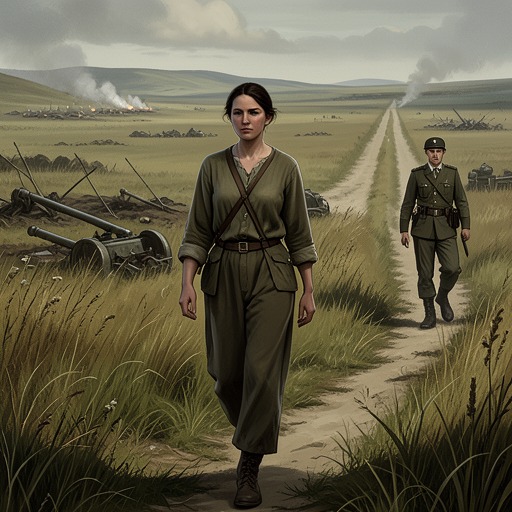
Mabel understands the instructions but cannot accept leaving the soldiers to face the invasion while she hides. She has stood with them, and she sees remaining in the fight as part of what that commitment requires. As villagers follow the route to shelter, she returns to her house, changes into trousers and armor, takes her sword, and goes to defend her city. The choice reverses the evacuation’s expected direction: while others move toward the castle, Mabel prepares to meet the attack.
The geography gives the defense its own strategic shape. Navon’s castle stands on a hill amid trees and forest, with the stone bridge providing the passage to it from the front. In the village, Navi’s forces use their knowledge of the area: eight hundred men of the King’s Army of Navon wait among empty houses and alleys, preparing to conceal themselves. Navi leaves the castle as civilians seek shelter, joins Shai, and tells his soldiers to let Tzara come to them. The closed doors of the palace leave him outside with the danger, but also mark his decision to defend his home.
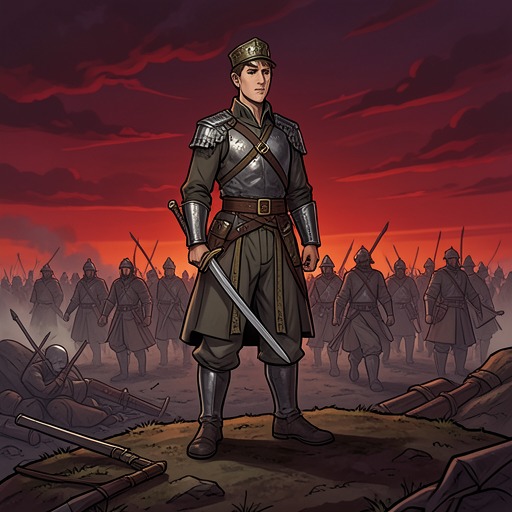
When the attack begins, Mabel walks into the village with her sword and fights among the soldiers. Her anger makes her feel fearless, though she knows she may not return home. She first tries to push opponents away and avoid killing, consistent with a promise she had made not to kill again. But as her friends are threatened, survival and their defense take precedence over that promise. The account frames the turn not as a clean triumph but as a change forced by battle: the wish to avoid harm meets the reality of defending people under attack.
Losses and Significance
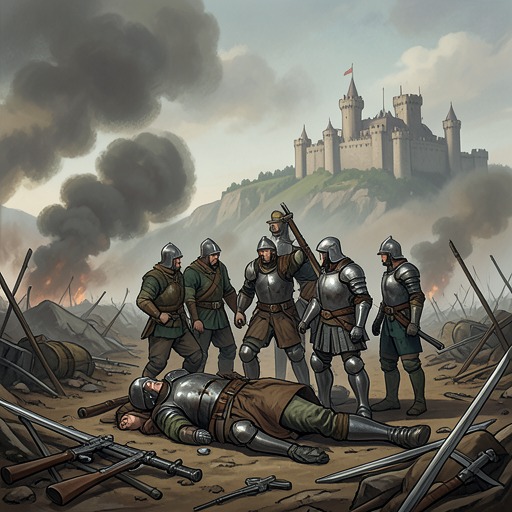
The battle continues through the night, and the narrative refuses to make the losses anonymous. Vilanis is wounded and nearly killed; a Navonian soldier intervenes, but the fighting around them continues in a cycle of attack and retaliation. Aury dies during the battle. When the fallen are gathered, he is among the dead, remembered not simply as a soldier but as a boy who wanted to paint what he saw and had hoped to marry someone he loved. His death gives the defense a cost that cannot be absorbed into a count of troops or a claim of glory.
The invasion also changes the meaning of Navon’s defenses. Shelter at the castle depends on removing civilians from the village, while the battle depends on the army’s knowledge of familiar streets and houses. Shai’s forces and the expatriates enter the defense despite Navon’s history of excluding and banishing people; Navi’s decision to admit them makes collective survival more urgent than the old boundary. At the same time, Mabel’s refusal to be assigned safety demonstrates that the kingdom’s defense cannot be described only through royal command or the army’s numbers.
The event brings Navon’s political failures and its capacity for solidarity into the same crisis. A kingdom once drawn into other people’s wars must now defend its own people with limited forces, help from Shai’s band and the expatriates, and a civilian evacuation organized under pressure. The battle’s human consequences remain part of that account: the city is defended by people who choose to stand together, but their courage does not spare them loss.