The Dog Park Sighting of Wanda White
NightbitchThe Dog Park Sighting of Wanda White is the moment when Nightbitch’s search for confirmation takes visible form. At the dog park with The Boy, she encounters a trio of apparently ownerless dogs and identifies one of them as Jen, then sees a distant woman whom she instinctively recognizes as Wanda White. The woman’s refusal to acknowledge the dogs and her sudden flight into the bordering woods transform an ordinary afternoon into a failed meeting with the figure who represents an alternative mode of being. The sighting leaves Nightbitch with certainty without proof, intensifying the mystery rather than resolving it.
Setting and Initial Encounter
The event occurs on a Monday near the end of summer, during one of the last September days warm enough for an outing to the ice-cream stand by the river. Nightbitch and The Boy go to the dog park even though they do not have a dog. She presents their presence as uncomplicated enthusiasm, declaring that they love dogs and asking other owners whether she and The Boy may pet or chase theirs. The park therefore begins as a public space for harmless imitation and shared play, but it also places Nightbitch among animals whose behavior she increasingly understands from within.
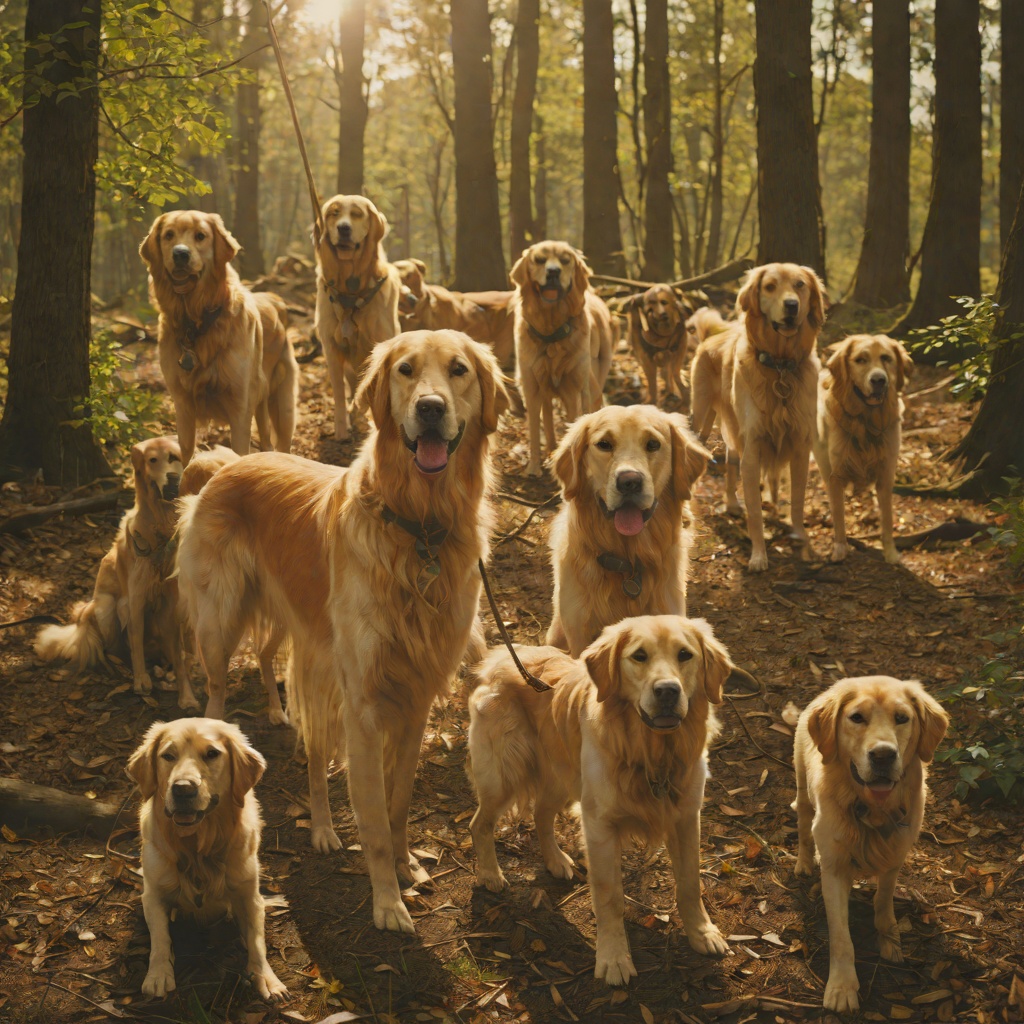
The decisive visual discovery comes at the pond, where a Golden Retriever, a basset hound, and a collie stand together with their front paws in the cool water, panting in the heat. The dogs emerge with wet fur and muddy paws, accept the family’s touch, lick The Boy’s hands, and press their noses into Nightbitch’s legs. When she takes the Golden Retriever’s head in her hands, she whispers the name Jen. The dog merely blinks and maintains an inscrutable composure. Nightbitch accepts the ambiguity, slaps the dog’s haunch, and lets it go, but the possibility that Jen has appeared in canine form makes the park’s animals participants in a hidden social world rather than simple domestic companions.
Recognition and Pursuit
Nightbitch then searches the park’s edges for anyone claiming the dogs. The other figures are absorbed in ordinary dog-park activity: chasing or being chased, shouting, whistling, throwing objects, and picking up waste. None seems attached to the trio. The dogs’ apparent independence and the absence of an identifiable owner create the conditions for Nightbitch’s recognition of Wanda White, who stands alone at the farthest reach of the park with a notebook in hand.
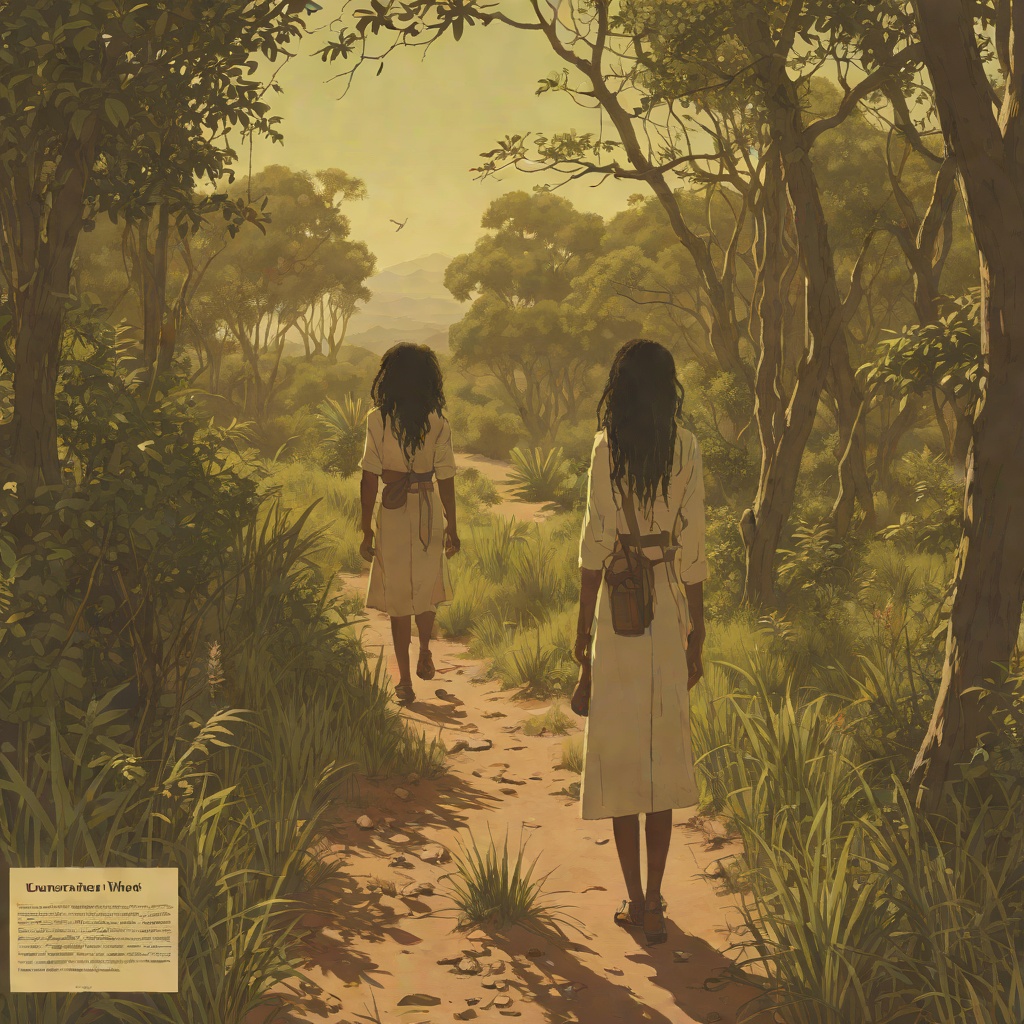
The woman matches Nightbitch’s imagined Wanda: slim and lithe, crowned by silver hair, wearing a smart shirtdress, sensible shoes, and a straw hat. Distance prevents Nightbitch from reading her face or expression, yet the lack of visual certainty does not weaken the recognition. Nightbitch becomes jubilant, runs toward the solitary figure with her arms outstretched, and asks whether the dogs belong to her. The question is practical on its surface, but it is also an attempt to establish a relationship between Wanda and the animal identities Nightbitch has been trying to understand.
The woman answers that the dogs are not hers, then walks briskly away toward the woods. When Nightbitch shouts for her to stop, the woman runs, removes her hat, and disappears into the trees. Nightbitch follows as far as she can while The Boy, alarmed, chases after his mother. She cannot abandon him to pursue the fleeing woman, so the scene becomes a confrontation between two urgent attachments: the desire to reach Wanda and the responsibility of remaining with her child. At the edge of the woods, Nightbitch pleads for the woman to return and calls her name repeatedly into the brush, but receives no response.
Stakes of the Sighting
The encounter carries unusual force because Nightbitch’s transformation has made animality feel like a release from the demands that have defined her human life. Earlier, she has felt the dogs’ presence as a summons to survival and instinct: surrounded by The Dog Pack, she experiences herself as hair, blood, bone, anger, and movement, with the thought that she is an animal arriving only after the bodily knowledge has already taken over. Later, she embraces the dog identity because it permits barking and snarling without justification, freedom from work and artistic ambition, and existence as hunger, rage, thirst, and fear. The dog park is consequently both playground and threshold, a place where her private metamorphosis might connect with others who have crossed the same boundary.
That possibility also carries an ethical and emotional charge. Nightbitch has discovered that a violent nocturnal act—sinking her teeth into something living and feeling its essence drain away—seemed to answer a need that medical attention, psychotherapy, and enforced optimism had not addressed. Her animal body gives her a temporary escape from being needed by every living thing, yet it also binds her more closely to bodily instinct and to the creatures around her. The Golden Retriever who may be Jen, the three dogs without an owner, and Wanda’s retreat all suggest a community that can be sensed but not securely entered.
The sighting therefore shifts Nightbitch from imaginative expectation to frustrated certainty. She knows, or believes she knows, that the woman is Wanda, but Wanda’s refusal to remain visible prevents recognition from becoming dialogue. The event exposes the instability of a world in which a dog may be a human acquaintance, a distant woman may be the author of an animal mythology, and an apparently ordinary park may contain a hidden order inaccessible to conventional explanation. Even The Husband’s failure to investigate the dog he once saw in the nearly empty house has already suggested that rational reality may be quietly yielding to enchantment.
Aftermath and Narrative Significance
That evening Nightbitch texts Jen to ask whether the dog at the park was her, surrounding the message with puppy, tree, sunshine, and upside-down-smile emojis. The emojis make the approach playful and deniable: she does not ask directly whether Jen is sometimes a dog, but creates a safe route into the subject. The message also reveals how the failed sighting has altered Nightbitch’s conduct. She has had little contact with Jen beyond occasional Book Babies meetings since Jen’s party, yet the park encounter compels her to risk a new form of intimacy.
Wanda’s disappearance becomes more than a missed introduction because Wanda White is ultimately defined not as a stable person but as a place at which someone finally arrives. The fleeing woman thus embodies the paradox of that definition. Nightbitch reaches the boundary of the woods, close enough to call out, but not close enough to possess an explanation. Wanda is simultaneously an imagined mentor, a possible transformed woman, and a destination associated with the performance space behind the velvet curtain, where Nightbitch will eventually stand in darkness before an audience.
The event also anticipates the later public meaning of Nightbitch’s animal identity. Her fans will wear pins asking where people go at night, decorated with a ferocious attacking dog, while Jen turns the mystery into a successful publicity campaign. The dog-park sighting is the private prototype of that public mythology: an elusive figure, a cluster of animals, a question without proof, and a story sustained precisely because no one can fully verify it. Its value lies in the unresolved crossing between human and animal, private transformation and collective belief, and maternal confinement and the possibility of a freer, stranger community.
Most importantly, the scene gives Wanda’s absence a constructive role. Nightbitch does not receive instruction, reassurance, or confirmation, but the failed pursuit makes her longing legible. She is seeking not merely a person who might explain her symptoms; she is seeking a form of life in which bodies, offspring, instinct, and mutual dependence can coexist without the shame imposed by ordinary social roles. In that sense, the woman’s flight deepens the event’s significance. Wanda remains unreachable in the woods, yet the chase directs Nightbitch toward the place where her own animal and artistic selves will eventually become visible to others.